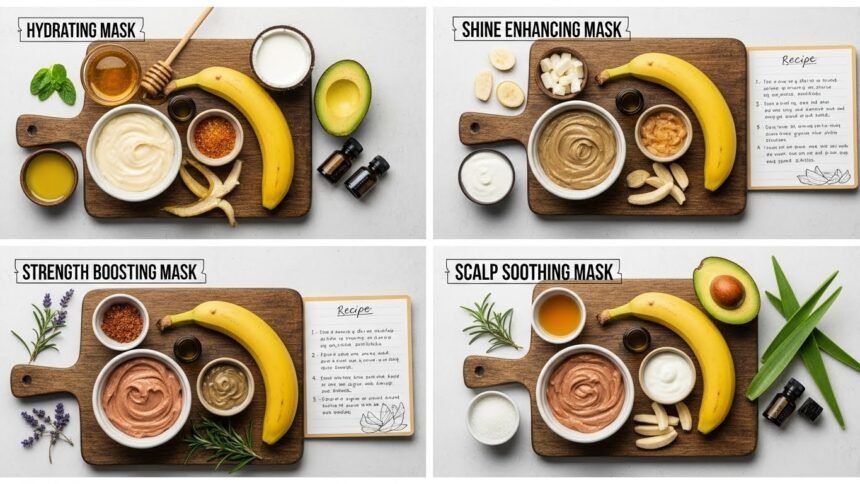
There are few things more frustrating than waking up to hair that feels dry, brittle, or completely unmanageable. We have all experienced those days where our hair simply refuses to cooperate, looking lacklustre despite our best efforts. While the market is flooded with expensive conditioners and serums promising miraculous results, sometimes the most effective solutions can be found right in your fruit bowl.
Bananas are not just a convenient snack; they are a nutritional powerhouse for your hair. Rich in potassium, natural oils, carbohydrates, and vitamins, they help soften the hair and protect its natural elasticity. If you have been searching for a way to tackle frizz, reduce breakage, or soothe an itchy scalp without resorting to harsh chemicals, a banana hair mask might be the perfect natural remedy.
In this article, we explore the science behind this fruit, the causes of hair damage, and provide five specific recipes to help you achieve the luscious locks you deserve.
Overview
Bananas are arguably one of the most popular fruits worldwide, but their cosmetic applications are often overlooked. The secret to the banana’s efficacy in hair care lies in its rich mineral content, particularly silica. Silica is a mineral related to collagen production, which may help your hair become stronger and thicker.
Furthermore, bananas possess antimicrobial properties that can heal flaky and dry scalps, relieving dandruff symptoms. According to Healthline, the fruit is packed with potassium, vitamin B6, and vitamin C, all of which are essential for maintaining skin and hair health.
When applied topically, these nutrients can penetrate the hair shaft, providing deep hydration. This is particularly beneficial for those with chemically treated or naturally dry hair types, such as Afro-textured or curly hair, which often struggles to retain moisture.
Symptoms and causes
Before diving into the remedies, it is helpful to understand why your hair might need a mask in the first place. Hair damage manifests in several ways, often serving as a symptom of environmental stress or nutritional gaps.
Common symptoms of damaged hair include:
- Split ends: The protective outer layer of the hair cuticle wears away.
- Dryness and dullness: A lack of natural oils leads to a rough texture.
- Breakage: Hair snaps easily when brushed or styled.
- Frizz: The hair cuticle is raised, allowing moisture to escape and humidity to enter.
The causes of these symptoms are varied:
- Heat Styling: Frequent use of straighteners and curling tongs strips the hair of its natural moisture.
- Chemical Treatments: Bleaching, colouring, and perming weaken the protein structure of the hair.
- Environmental Factors: UV exposure and pollution can oxidise the hair, leading to colour fade and brittleness. As noted by the NHS, diet and stress also play significant roles in the overall health of your hair and scalp.
- Nutritional Deficiencies: A lack of protein or vitamins in your diet often reflects in the quality of your hair.
Diagnosis and treatment
Diagnosing your specific hair needs is the first step toward selecting the right treatment. If your hair snaps when stretched, it lacks protein. If it feels rough like straw, it lacks moisture. The following five banana hair mask recipes are designed to treat specific hair “diagnoses,” from dryness to dandruff.
1. Banana and Avocado for Brittle Hair
If your hair feels prone to snapping, this combination is ideal. Avocados are rich in vitamin E and healthy fats. Research highlighted by Medical News Today suggests that the oils in avocados can help seal cuticle cells, which can prevent hair from breaking.
- Ingredients: 1 ripe banana, 1/2 ripe avocado, 2 tbsp olive oil.
- Method: Mash the banana and avocado together until completely smooth. Stir in the olive oil. Apply from roots to tips.
- Treatment Time: Leave on for 30 minutes before rinsing with lukewarm water.
2. Banana and Coconut Oil for Shine
For hair that looks dull and lifeless, coconut oil provides deep conditioning. Unlike many other oils, coconut oil has a low molecular weight, allowing it to penetrate the hair shaft rather than sitting on top. Experts at Harvard School of Public Health note that coconut oil is high in saturated fats, which are excellent for moisturising.
- Ingredients: 1 ripe banana, 1 tbsp coconut oil.
- Method: Mash the banana. Melt the coconut oil if solidified and mix in. Apply to damp hair.
- Treatment Time: 20–30 minutes.
3. Banana and Honey for Intense Moisture
This mask is a powerful humectant treatment for chronically dry hair. Honey is a natural humectant, meaning it draws moisture from the air into your hair. Furthermore, studies found in the National Library of Medicine (NCBI) indicate that honey exerts emollient and humectant effects that soothe the scalp and condition the hair.
- Ingredients: 1 ripe banana, 2 tbsp organic honey.
- Method: Blend the ingredients until a creamy consistency is reached. Apply generously, focusing on the ends.
- Treatment Time: 20 minutes. Rinse thoroughly to ensure no stickiness remains.
4. Banana and Egg for Growth and Strength
If your diagnosis is thinning or weak hair, protein is the required treatment. Eggs are a dense source of protein and biotin. According to Nutrition.org.uk, protein is a fundamental building block for the body’s tissues, including hair keratin.
- Ingredients: 1 ripe banana, 1 egg.
- Method: Whisk the egg and mix it with the mashed banana. Apply to the hair.
- Warning: Do not rinse with hot water, as this will ‘cook’ the egg in your hair. Use cool or lukewarm water.
- Treatment Time: 15–20 minutes.
5. Banana and Aloe Vera for Scalp Health
Aloe vera is renowned for its soothing properties. If you suffer from an itchy scalp or dandruff, this mixture can help calm inflammation. The National Eczema Society acknowledges that while natural remedies vary in effectiveness, aloe is widely used for skin soothing.
- Ingredients: 1 ripe banana, 2 tbsp aloe vera gel.
- Method: Extract fresh aloe gel or use a store-bought version. Blend with the banana. Massage into the scalp.
- Treatment Time: 30 minutes.
Comparison of Ingredients
| Ingredient | Primary Benefit | Best For |
|---|---|---|
| Avocado | Strengthening fatty acids | Brittle, breaking hair |
| Coconut Oil | Deep penetration | Dull, lustreless hair |
| Honey | Humectant (moisture retention) | Very dry, frizzy hair |
| Egg | Protein & Biotin | Weak, thinning hair |
| Aloe Vera | Soothing & Anti-inflammatory | Itchy, flaky scalp |

Tips for management
Managing the application of these masks is crucial to avoid a messy experience. The most common complaint with banana masks is the difficulty of washing out chunks of fruit. To avoid this, ensuring a completely smooth consistency is key.
Follow these management tips for the best results:
- Blend, Don’t Mash: While mashing works, using a blender ensures a lump-free puree that rinses out easily. If you do not have a blender, sieve the pulp before application.
- Patch Test: Before applying any new ingredient to your scalp, perform a patch test. The British Association of Dermatologists recommends testing substances on a small area of skin to check for allergic contact dermatitis.
- Use a Shower Cap: Once the mask is applied, cover your hair with a shower cap. This traps heat, which helps the hair cuticle open up and absorb the nutrients more effectively.
- Rinse Thoroughly: You may need to shampoo twice to remove all residue, especially with the oil-based recipes.
- Frequency: For most hair types, applying a mask once a week is sufficient. Over-moisturising can lead to hygral fatigue, where the hair cuticle becomes damaged from excessive expanding and contracting.
For those interested in the broader efficacy of topical treatments, the Cochrane Library offers systematic reviews on various dermatological interventions, though specific studies on DIY banana masks are limited, anecdotal evidence remains strong.
Frequently asked questions
Can I leave a banana hair mask on overnight?
It is generally not recommended. As the banana dries, it can become sticky and difficult to wash out. Furthermore, leaving wet ingredients on the scalp for prolonged periods can encourage fungal growth. Limit treatment to 30–60 minutes.
Will bananas change my hair colour?
No, bananas do not contain strong pigments that stain the hair. However, ingredients like honey can have a very mild lightening effect if left on for long periods in the sun, though this is negligible in a 20-minute mask.
Is this suitable for dandruff?
Yes, particularly the Banana and Aloe Vera recipe. Bananas help moisturise the scalp, which can reduce flaking caused by dryness. For persistent dandruff or seborrhoeic dermatitis, consult a medical professional. Sources like PubMed contain various studies on the antifungal properties of plant extracts that may support scalp health.
The bottom line
Banana hair masks offer a cost-effective, natural, and chemical-free alternative to commercial hair treatments. Whether you are battling dryness, breakage, or a lack of shine, the high silica and vitamin content in bananas can provide a significant boost to your hair health.
Remember that consistency is key. A single treatment may make your hair feel softer, but regular application is required to see long-term improvements in texture and strength. Always ensure you wash the mixture out thoroughly to prevent residue buildup.
If your hair issues persist despite natural treatments, or if you experience sudden hair loss, it is vital to consult a healthcare professional to rule out underlying health conditions. By incorporating these simple recipes into your weekly routine, you can nourish your hair from the outside in.