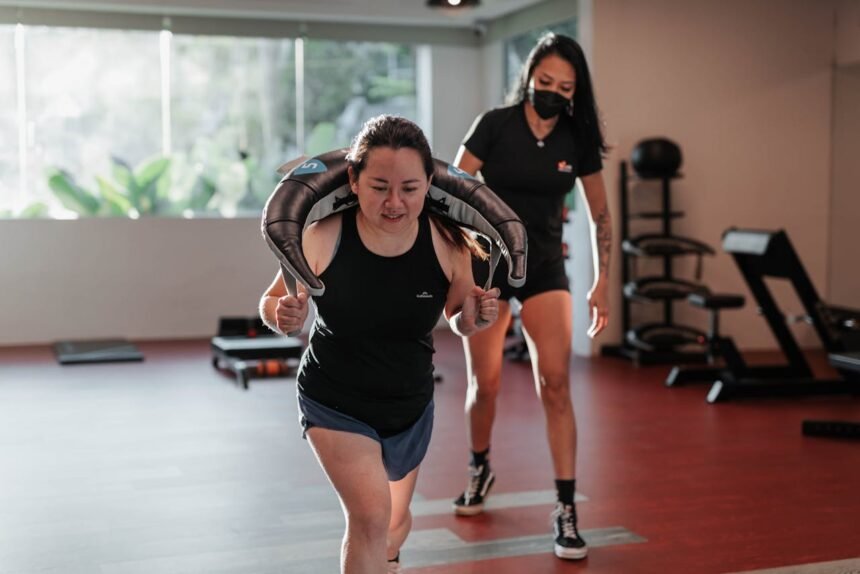
If you have walked into a functional fitness gym recently, you may have noticed distinct, bowling-pin-shaped weights lined up alongside the dumbbells. These are steel clubs, tools that are rapidly gaining popularity for their ability to forge iron-clad grip strength and resilient joints.
While they might look like modern novelties, the steel club is actually a contemporary evolution of ancient Persian strength tools known as Meels. Originally used by wrestlers to prepare their shoulders for the rigours of grappling, these tools rely on leverage and torque rather than simple gravity-based loading.
Unlike standard weightlifting, which often compresses joints, circular strength training benefits the body by improving mobility and stability simultaneously. Whether you are rehabilitating an injury or looking to improve your athletic performance, incorporating club training can be transformative.
This article provides a comprehensive overview of steel club training, exploring how offset loading mechanics improve joint health, increase grip endurance, and offer a unique alternative to traditional lifting.
Understanding the Mechanics: Why Levers Matter
To understand why the steel club is so effective, one must understand the physics behind it. In a dumbbell or barbell, the weight is balanced evenly in your hand or across your shoulders. This allows you to lift heavier absolute loads, which is excellent for raw force production.
However, absolute strength vs relative strength are two different metrics. While you might be able to bench press a heavy load, stabilising a moving object requires a different type of strength. Because the weight of a steel club is displaced at the end of a long lever, the torque applied to your wrist, elbow, and shoulder increases exponentially the further you hold it from your body.
The Challenge of Offset Loading
This offset loading mechanics forces your stabiliser muscles to work overtime. Even a light club can feel incredibly heavy when held at arm’s length. This creates a high demand for unilateral core stability, as your body must fight to stay upright against the leverage of the club.
According to the Mayo Clinic, functional fitness exercises that mimic daily activities can help protect your joints and prevent injury. Steel clubs replicate real-world leverage challenges, making them superior tools for functional preparation.
Benefits for Grip and Connective Tissue
One of the primary reasons athletes turn to clubs is for grip strength endurance. Unlike a deadlift where the force is vertical, swinging a club requires you to control the weight through multiple planes of motion. This dynamic tension strengthens not just the muscles of the hand, but the tendons and ligaments extending up to the elbow.
Elbow and Wrist Health
Many lifters suffer from tendonitis due to repetitive linear movements. Elbow connective tissue health can actually be improved through the tractional forces of club swinging. When you swing a club, the centrifugal force pulls gently on the joint, creating space and allowing for better synovial fluid circulation.
This concept, often referred to as decompression of the wrist and shoulder, is a key differentiator between clubs and static weights. For those interested in restorative movement, Exploring the History and Benefits of Indian Clubs for Active Recovery offers further insight into lighter variations of this training.
Steel Club vs Kettlebell: What is the Difference?
A common question arises regarding the steel club vs kettlebell. While both are ballistic tools, the kettlebell’s centre of mass is closer to the handle than a club’s. The steel club has a much longer lever arm, which means it requires more rotational control and less ballistic power generation from the hips compared to a kettlebell swing.
If your goal is cardiovascular conditioning and explosive hip power, the kettlebell is king. However, for shoulder mobility, grip stability, and rotational strength training, the steel club is unrivalled.
Key Exercises for Joint Health
To maximise the benefits of the steel club, you must focus on technique. These movements utilise proprioceptive neuromuscular facilitation (PNF) patterns, moving across the body’s midline.
1. The Steel Club Mill
Steel club mills are the quintessential exercise for shoulder mobility. This movement involves swinging the club in a circular pattern behind the head and across the body. It requires significant coordination and opens up the chest and thoracic spine.
Proper execution ensures you are moving the shoulder blade through its full range of motion. For those struggling with shoulder restrictions, reading about The Benefits of Macebell Training for Shoulder Mobility and Power can provide complementary strategies.
2. The Gamma Cast
The steel club gamma cast is a premier exercise for building robust shoulders and triceps. Starting from a “rack” position, you cast the club behind your head and pull it back over the shoulder. This movement utilises eccentric loading, which is crucial for strengthening tendons. Learn more about how How Eccentric Loading Can Accelerate Muscle Growth and Repair to understand the physiology behind this benefit.
3. The Torch Press
This is an isometric hold combined with a press. You hold the club vertically (torch style) to maximise functional wrist mobility and stability before pressing it overhead. This engages the rotator cuff significantly. The American Academy of Orthopaedic Surgeons notes that strengthening the rotator cuff is essential for preventing common shoulder injuries.

Incorporating Heavy Clubbell Exercises
Once you have mastered the basics with a lighter weight, you can progress to heavy clubbell exercises. Heavier clubs shift the focus from mobility to raw power and core integration. However, the jump in difficulty is steep.
When handling heavy clubs, the need for a strong brace is paramount. Similar to the principles found in How to Master the Zercher Squat for Superior Core Strength, you must learn to create intra-abdominal pressure to protect your spine while manipulating the leverage.
Heavy swings also function similarly to carries in their demand on the CNS and grip. If you enjoy this type of challenge, you might also appreciate Why Sandbag Carries are the Ultimate Functional Strength Exercise.
Treatment and Management: Programming for Health
If you are using steel clubs for rehabilitation or joint maintenance, frequency and volume matter more than intensity. This approach aligns with sarcoplasmic hypertrophy training, where metabolic stress and fluid accumulation help nourish the joints. See Sarcoplasmic Hypertrophy: What It Is and How to Achieve It for a deeper dive into this training style.
Sample Routine for Shoulder Health
- Mills: 3 sets of 10 repetitions per side (light weight).
- Pullovers: 3 sets of 12 repetitions (slow tempo).
- Torch Press: 3 sets of 8 repetitions.
Using a controlled tempo is vital. Rapid, jerky movements with a lever can cause injury. Check Understanding Tempo Lifting for Maximised Muscle Hypertrophy to master control.
According to Harvard Health, keeping muscles flexible and strong is the best way to maintain range of motion as we age. Steel clubs do both simultaneously.
Tips for Safe Steel Club Training
1. Start Lighter Than You Think
Due to the leverage, a 4kg club can feel like a 10kg dumbbell. Ego lifting here will lead to wrist strain. It is better to focus on Relative Strength Matters for Athletes and Daily Function rather than chasing heavy numbers immediately.
2. Grip Confirmation
At the apex of every swing, ensure you have a solid grip. This split-second hold is a form of isometric training. Read more on this in The Science of Isometric Holds for Building Functional Strength.
3. Clear Your Space
You need ample room to swing. Ensure you are not near others or equipment.
4. Consult a Professional
If you have existing joint issues, consult a physiotherapist or check resources from the NHS before starting new rotational movements.
5. Monitor Fatigue
Grip fatigue sets in fast. According to the National Institutes of Health (NIH), grip strength is a reliable biomarker for overall health, but training to failure with ballistic tools can be dangerous. Stop before your form degrades.
The Bottom Line
The steel club is more than just a heavy piece of metal; it is a sophisticated tool for restoring movement patterns, enhancing functional wrist mobility, and building a bulletproof grip.
By integrating rotational strength training and understanding the physics of leverage, you can unlock new levels of shoulder health and athletic durability. Whether you are performing steel club mills for mobility or heavy casts for power, the benefits extend far beyond the gym.
Remember to prioritise technique over weight. The goal is longevity and joint health. For more information on maintaining healthy joints, the Arthritis Foundation provides excellent guidelines on low-impact activity.
Start light, swing safe, and reclaim your range of motion.