For decades, we treated the stomach like a simple fuel tank: you put food in, and energy comes out. If you had a stomachache, you took an antacid. If you felt bloated, you waited it out.
But modern science has uncovered something revolutionary: your gut is not just a fuel tank. It is a command center.
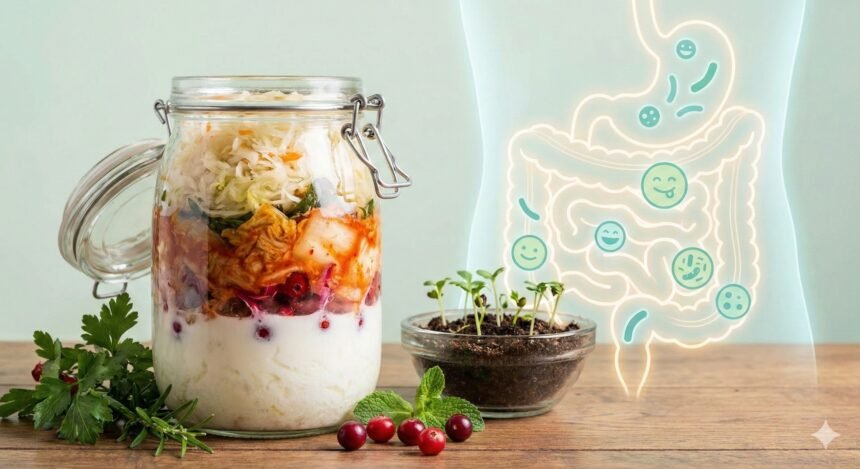
Often referred to as the “Second Brain,” your gut is home to the microbiome—a vast ecosystem of trillions of bacteria, fungi, and viruses. These microscopic tenants dictate almost every aspect of your health, from how easily you lose weight to how well you sleep, and even how you handle stress.
When your microbiome is balanced, you feel invincible. When it is out of whack (a state called dysbiosis), it can manifest in ways that seem completely unrelated to digestion.
If you have been feeling “off” but your doctor says your blood work is normal, your gut might be the culprit. Here are the 7 silent signs of poor gut health and the step-by-step roadmap to fixing it naturally.
The Science: What is the Microbiome?
Imagine a lush, thriving garden.
In a healthy gut, this garden is diverse. You have the “flowers” (beneficial bacteria like Lactobacillus and Bifidobacterium) that help digest food and produce vitamins. You also have a few “weeds” (harmful bacteria and yeast), but as long as the flowers are dominant, the weeds are kept in check.
However, modern life is like a storm that destroys this garden. Antibiotics, processed sugar, chronic stress, and environmental toxins can kill the good bacteria. When this happens, the “weeds” take over.
Explore
The 7 Silent Signs of an Unhealthy Gut
While bloating and gas are obvious signs, the most dangerous symptoms are the ones that don’t happen in your stomach at all.
1. Persistent Brain Fog and Poor Focus
Have you ever walked into a room and forgotten why? Or felt like you are thinking through a thick haze?
The gut and the brain are connected by the Vagus Nerve. If your gut is inflamed, it sends “danger signals” up this nerve to the brain. Furthermore, neuroinflammation caused by a leaky gut can slow down cognitive firing speeds. You aren’t losing your mind; you are losing your gut barrier.
2. Unexplained Skin Issues (Acne, Eczema, Rosacea)
Your skin is often a mirror of your gut. This is known as the Gut-Skin Axis.
When toxins leak into the bloodstream, the body tries to eliminate them through other channels—often the skin. Conditions like eczema and psoriasis are frequently autoimmune responses triggered by gut inflammation. If you are buying expensive creams but eating sugar, you are only treating the symptom, not the root cause.
3. Constant Sugar Cravings
You aren’t weak; you are being manipulated.
Bad bacteria and yeast (specifically Candida albicans) feed on sugar. When they overgrow in your gut, they release proteins that actually alter your hunger signals, making you crave sugar and refined carbs. They are literally demanding to be fed.
4. Mood Swings, Anxiety, and Depression
Here is a staggering statistic: 95% of your body’s serotonin (the “happy hormone”) is produced in your gut, not your brain.
If your gut bacteria are dead or struggling, serotonin production plummets. This is why many scientists now look at the gut as the first line of defense against depression. A messy gut often leads to a messy mood.
5. Autoimmune Conditions
If you have thyroid issues (Hashimoto’s), rheumatoid arthritis, or psoriasis, you almost certainly have gut issues.
When particles “leak” into the blood, your immune system marks them as foreign invaders and attacks. Over time, the immune system gets confused and starts attacking your own tissues that resemble those particles. This is the mechanism behind molecular mimicry and autoimmune disease.
6. Chronic Fatigue & Sluggishness
If you sleep 8 hours but wake up feeling like you were hit by a truck, look to your digestion.
An imbalanced gut struggles to absorb nutrients. You might be eating healthy food, but if you aren’t absorbing the B12, Magnesium, or Iron from it, your cells will starve, leading to chronic exhaustion.
7. Food Intolerances
Did you used to eat dairy or gluten with no problem, but now they make you sick?
This isn’t necessarily a “allergy.” It is often a sign that you lack the specific bacteria required to break those foods down, or that your gut lining is so sensitive that it reacts to proteins it used to ignore.

How to Heal Your Gut: The “4 R” Protocol
Healing the gut isn’t about taking a single pill. It requires a lifestyle shift. Functional medicine doctors use the “4 R” framework to restore the microbiome.
Phase 1: REMOVE (The Triggers)
You cannot heal a wound if you keep scratching it. For 30 days, you must remove the inflammatory triggers that are destroying your gut lining.
- The Big Offenders: Gluten, dairy, refined sugar, and alcohol.
- The Hidden Killers: Artificial sweeteners (which kill good bacteria) and seed oils (canola, soybean oil).
- Stress: Chronic stress keeps your body in “fight or flight” mode, which shuts down digestion. You must “remove” stress through breathwork or meditation.
Phase 2: REPLACE (The Helpers)
If your digestion has been weak for years, you likely have low stomach acid or enzyme production.
- Digestive Enzymes: Take a broad-spectrum enzyme supplement before heavy meals to help break down food.
- Apple Cider Vinegar: One tablespoon in water before meals can stimulate natural stomach acid production, reducing bloating and reflux.
Phase 3: REINOCULATE (The Good Guys)
Now that the weeds are gone, you need to plant new flowers.
- Probiotics: Look for a high-quality supplement with diverse strains (Lactobacillus and Bifidobacterium are key).
- Prebiotics: This is “fertilizer” for the bacteria. Eat garlic, onions, asparagus, bananas, and oats.
- Fermented Foods: The holy grail of gut health. Try to eat one serving a day of:
- Sauerkraut (refrigerated, not canned)
- Kimchi
- Kefir
- Miso soup
Phase 4: REPAIR (The Lining)
Finally, you need to seal the leaks in the net.
- L-Glutamine: An amino acid that acts as the primary fuel source for the cells lining your intestinal wall. It is the number one supplement for leaky gut.
- Bone Broth: Rich in collagen and gelatin, which help rebuild the tissue of the gut lining.
- Zinc Carnosine: A specific form of zinc that helps stabilize the gut mucosa.
The “Die-Off” Warning
A quick warning: When you stop eating sugar and start taking probiotics, the bad bacteria starve and die. As they die, they release toxins.
You might feel worse for a few days (headaches, fatigue, flu-like symptoms). This is called the Herxheimer Reaction or “die-off.”
Do not quit! This is a sign that the bad guys are losing the war. Drink plenty of water to flush out the toxins, and the symptoms will pass in 3–5 days.
Action Plan: Your First 3 Days
If you are ready to banish the bloat and clear the brain fog, start here:
Day 1: Buy a high-quality Probiotic and a jar of L-Glutamine.
Day 2: Throw out the “white” foods (white bread, white pasta, white sugar).
Day 3: Incorporate one fermented food into your lunch or dinner.
Your gut is the foundation of your health. It affects how you look, how you feel, and even how you think. By listening to these silent signs and taking action today, you aren’t just healing your stomach—you are upgrading your entire life.