In a world dominated by high-tech fitness trackers and complex gym memberships, it is easy to fall into the trap of believing that fitness requires a significant financial investment. We often convince ourselves that without a rack of dumbbells or a treadmill, we cannot achieve meaningful results. This misconception is one of the greatest barriers to public health. The truth is, your body is the most sophisticated piece of machinery you will ever own, and you can leverage gravity to build strength, endurance, and flexibility.
For those just starting their fitness journey, beginner bodyweight exercises at home no equipment required, offer the perfect entry point. This approach, formally known as calisthenics, prioritizes functional movement patterns that improve daily life while sculpting a stronger physique. This article explores the science behind bodyweight training, provides a structured routine, and explains why sweating smarter is often better than sweating harder.
The Physiology of Bodyweight Training
Understanding Resistance
At a physiological level, your muscles cannot distinguish between a metal plate, a resistance band, or your own limb. They simply recognize tension. According to the American College of Sports Medicine (ACSM), resistance training is essential for preserving bone density and muscle mass, particularly as we age. Bodyweight exercises utilize the mass of your body and the force of gravity to create this necessary tension.
Functional Fitness vs. Isolation
Unlike gym machines that isolate specific muscles (often in unnatural seated positions), bodyweight movements are compound exercises. They recruit multiple muscle groups and joints simultaneously. This improves neuromuscular coordination and “functional fitness”—the ability to perform daily tasks, such as lifting groceries or climbing stairs, with ease. Research from Harvard Health Publishing suggests that this type of training can also significantly improve balance and flexibility, reducing the risk of falls later in life.
Comparison: Bodyweight vs. Gym Machines vs. Cardio
To understand where bodyweight training fits into the fitness landscape, it helps to compare it directly with other popular modalities. The table below outlines the key differences for beginners.
| Feature | Bodyweight Training | Gym Machines | Steady-State Cardio (Running) |
|---|---|---|---|
| Cost | Free | High (Membership fees) | Low to Medium (Shoes/Apparel) |
| Equipment Needed | None | Specialized Machines | Good footwear |
| Risk of Injury | Low (Self-limiting load) | Moderate (Incorrect settings) | Moderate (High impact on joints) |
| Primary Benefit | Functional Strength & Mobility | Muscle Isolation & Hypertrophy | Cardiovascular Endurance |
| Convenience | High (Anywhere, anytime) | Low (Travel required) | Medium (Weather dependent) |
| Core Engagement | High | Low to Moderate | Low |
The Ultimate “No Equipment” Routine
If you are looking for beginner bodyweight exercises at home no equipment is necessary to start this full-body circuit. This routine focuses on the fundamental movement patterns: squat, push, lunge, and hinge.
Instructions: Perform each exercise for 45 seconds, followed by 15 seconds of rest. Complete the circuit 3 times.
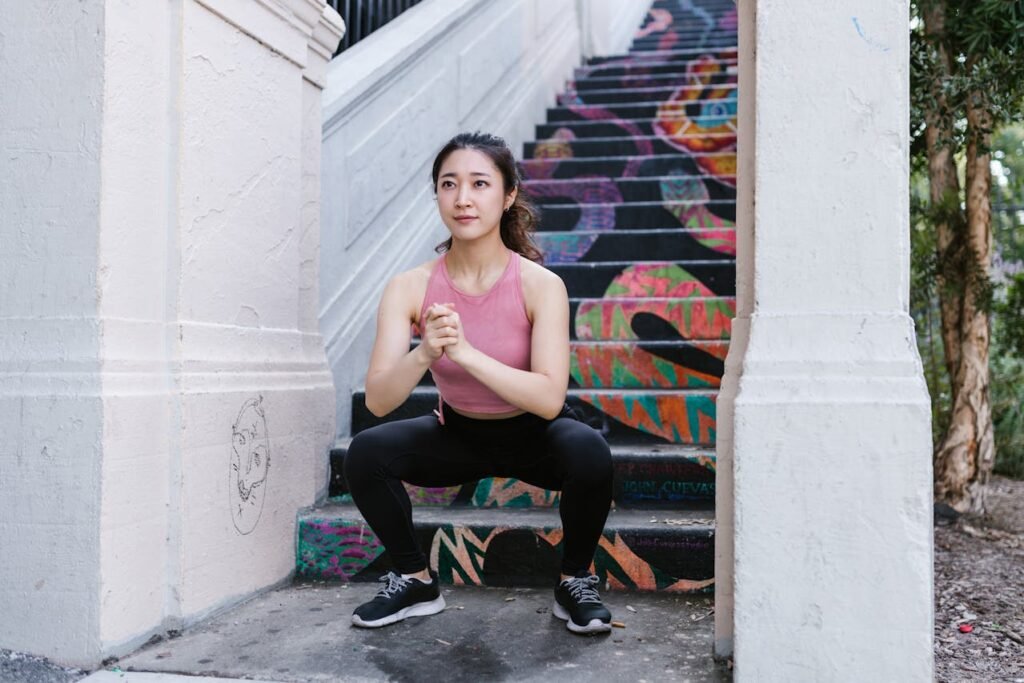
1. The Bodyweight Squat (Legs & Glutes)
Squats are the king of lower body exercises. They target the quadriceps, hamstrings, and glutes while engaging the core.
- How to do it: Stand with feet shoulder-width apart. Lower your hips back and down as if sitting in an invisible chair. Keep your chest up and back straight. Drive through your heels to return to standing.
- Pro Tip: proper form is crucial. The Mayo Clinic emphasizes keeping your knees aligned with your toes to prevent injury.
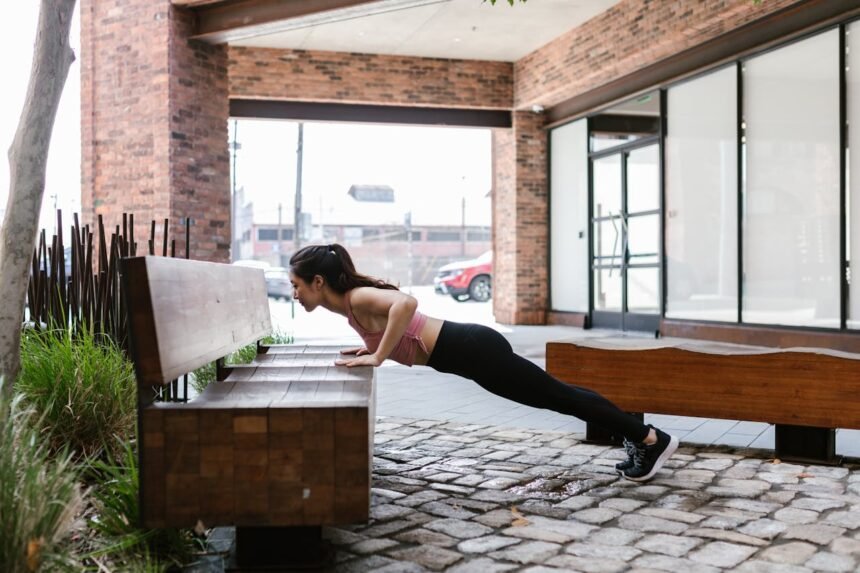
2. The Modified Push-Up (Chest, Shoulders, Triceps)
Push-ups build upper body pushing strength and core stability.
- How to do it: Start in a plank position. If this is too difficult, drop to your knees (modified). Lower your chest toward the floor by bending your elbows, keeping them close to your body (about a 45-degree angle). Push back up.
- Why it works: It forces your core to stabilize your spine, acting as a moving plank.
3. Glute Bridges (Posterior Chain)
Many of us sit all day, leading to weak glutes and lower back pain. Glute bridges counteract this.
- How to do it: Lie on your back with knees bent and feet flat on the floor. Lift your hips toward the ceiling, squeezing your glutes at the top. Lower slowly.
- Comparison: Unlike deadlifts which require weights, bridges are a safe, low-impact way to target the posterior chain.
4. Reverse Lunges (Balance & Legs)
Lunges develop unilateral (single-leg) strength and balance.
- How to do it: Stand tall. Take a large step backward with your right foot. Lower your hips so that your right knee hovers just above the floor. Your front knee should be at a 90-degree angle. Return to standing and switch legs.
- Expert Insight: The American Council on Exercise (ACE) notes that lunges are exceptional for challenging coordination and stability simultaneously.
5. The Plank (Core Stability)
Forget crunches; planks are superior for protecting the spine.
- How to do it: Hold a push-up position, but rest on your forearms instead of your hands. Keep your body in a straight line from head to heels. Squeeze your glutes and abs tight.
Structuring Your Fitness Journey
Doing the exercises is only half the battle. Consistency is the other half. The Centers for Disease Control and Prevention (CDC) recommends at least 150 minutes of moderate-intensity activity per week. Here is how to structure your week:
- Monday: Bodyweight Circuit (3 rounds)
- Tuesday: Active Recovery (30-min brisk walk)
- Wednesday: Bodyweight Circuit (3 rounds)
- Thursday: Active Recovery or Yoga
- Friday: Bodyweight Circuit (Challenge day: try 4 rounds)
- Weekend: Rest or recreational activity (hiking, biking)
The Role of Recovery and Nutrition
Muscle isn’t built while you exercise; it is built while you rest. Ensure you are getting adequate sleep, which the Sleep Foundation cites as critical for tissue repair and hormonal balance. Furthermore, hydration plays a massive role in performance. The National Institutes of Health (NIH) highlights that even mild dehydration can impair physical performance and cognitive function.
Advanced Progressions: High-Intensity Circuit Training (HICT)
Once the beginner routine feels easy, you don’t necessarily need equipment to make it harder. You can increase intensity. A famous study published in the ACSM’s Health & Fitness Journal popularized the “7-Minute Workout,” a form of High-Intensity Circuit Training (HICT). This method combines aerobic and resistance training into a single bout. According to PubMed Central, HICT can elicit VO2 max improvements comparable to traditional endurance training but in much less time.
To upgrade your routine to HICT, reduce rest times between exercises to 10 seconds and increase the speed of repetitions without sacrificing form.
Safety First: Listen to Your Body
Before starting any new exercise regimen, it is vital to warm up. A proper warm-up increases blood flow and prepares your joints for movement. The National Health Service (NHS) recommends dynamic movements like marching in place or arm circles rather than static stretching before a workout.
Furthermore, if you feel sharp pain (as opposed to muscle fatigue), stop immediately. Consistency beats intensity; it is better to skip one rep than to sustain an injury that sidelines you for a month. If you have pre-existing heart conditions, consulting the guidelines from the American Heart Association or your physician is a necessary first step.
Conclusion
Fitness does not require a monthly subscription or a room full of iron. By utilizing beginner bodyweight exercises at home no equipment protocols, you are stripping away the excuses and focusing on what matters: movement, consistency, and health. Whether you are doing push-ups in your living room or lunges in a hotel room, you are building a functional, resilient body capable of tackling life’s challenges.
Start today. Pick three exercises from the list above, set a timer for five minutes, and move. Your future self will thank you.