If you have spent any time in a commercial gym or scrolled through fitness social media recently, you have likely noticed the rise in popularity of glute loops. Often referred to as resistance bands, mini bands, or booty bands, these simple loops of elastic or fabric have become a staple in warm-up routines and strength programmes alike.
While they are frequently marketed as tools for aesthetic improvements, their true value lies in injury prevention and functional stability. For athletes and casual gym-goers alike, neglecting hip strength can lead to a cascade of issues down the kinetic chain, resulting in knee, ankle, and lower back pain.
Using a glute activation warm-up before your main workout can fundamentally change how your body moves under load. By specifically targeting the gluteal complex, you prepare your hips to stabilise the femur, ensuring that your knees track correctly and your lower back remains protected.
This article explores the science behind glute loops, how they help correct muscular imbalances, and practical ways to integrate them into your routine to stay injury-free.
The Anatomy of Lower Body Vulnerability
To understand why glute loops are effective, we must first look at what happens when the hips are weak. The gluteal muscles—specifically the gluteus maximus, medius, and minimus—are the primary stabilisers of the pelvis and hips.
Hip Abductor Weakness and Knee Valgus
A common issue among runners and weightlifters is hip abductor weakness. When the gluteus medius is underactive, it fails to abduct the thigh effectively during movement. This often results in knee valgus—a condition where the knees collapse inward during squats, jumps, or running strides.
Knee valgus correction is crucial because this inward collapse places immense stress on the anterior cruciate ligament (ACL) and the patellofemoral joint. According to research published in the Journal of Orthopaedic & Sports Physical Therapy, strengthening the hip abductors significantly reduces the risk of knee injuries in athletes.
The Lower Back Connection
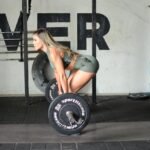
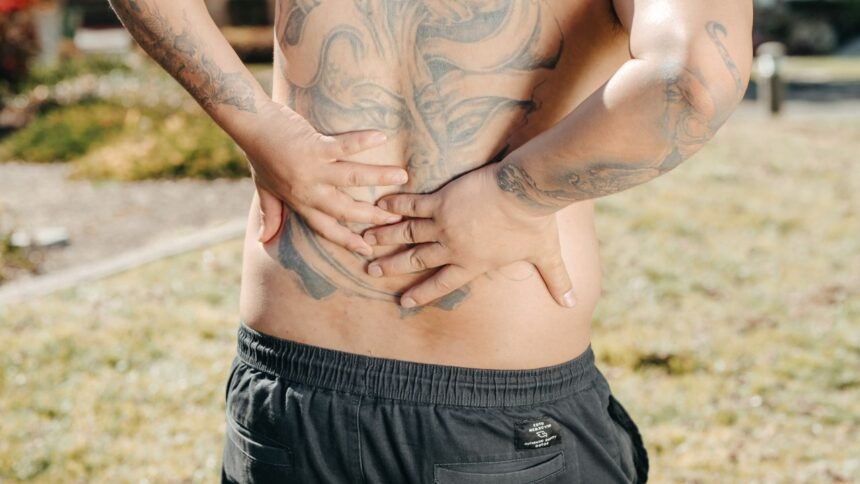
Your hips and lower back are intrinsically linked. When the glutes are dormant (often called “gluteal amnesia”), the lower back muscles (erector spinae) frequently overcompensate to extend the hips. This compensatory pattern is a leading cause of chronic lumbar pain.
Incorporating lower back pain relief exercises that focus on waking up the glutes can alleviate this strain. By forcing the glutes to do the work they were designed for, you offload the spine. This concept of load distribution is vital whether you are training for Why Relative Strength Matters for Athletes and Daily Function or simply trying to pick up heavy groceries without discomfort.
How Glute Loops facilitate Injury Prevention
Glute loops work through a mechanism known as Reactive Neuromuscular Training (RNT). When you place a band around your knees, the elastic tension pulls your knees inward. In response, your brain signals your hip abductors to push outward against the resistance to maintain alignment.
This instantaneous feedback loop forces posterior chain activation. It is not just about strength; it is about teaching your nervous system to fire the right muscles at the right time. This is particularly beneficial before performing complex compound movements like the How to Master the Zercher Squat for Superior Core Strength or How to Perform the Jefferson Squat Safely and Effectively.
Preventing Overuse Injuries
Repetitive strain injuries, such as iliotibial (IT) band syndrome, are often caused by poor hip mechanics. IT band syndrome prevention relies heavily on ensuring the tensor fasciae latae (TFL) muscle doesn’t become dominant over the glutes. Glute loops help isolate the gluteus medius, ensuring it takes the brunt of the stabilising work, sparing the IT band from excessive tension. The Cleveland Clinic notes that hip strengthening is a primary treatment for IT band issues.
Essential Glute Loop Exercises
To build a resilient lower body, integrate these movements into your routine. They can be performed as a dynamic warm-up or as part of a dedicated strength session.
1. Lateral Band Walks
This is the gold standard for gluteus medius strengthening. It targets the outer hip muscles responsible for pelvic stability.
- Setup: Place the loop around your ankles (harder) or above your knees (easier).
- Action: Assume a quarter-squat position. Step laterally, pushing against the band. Keep your toes pointed forward, not outward.
- Focus: Maintain constant tension on the band. Ensure you are executing lateral band walk proper form by not rocking your upper body side-to-side.
2. Banded Glute Bridges
The glute bridge with band adds an element of abduction to the standard hip extension, hitting all three gluteal muscles simultaneously.
- Setup: Place the loop above your knees. Lie on your back with feet flat.
- Action: Drive through your heels to lift your hips. At the top, actively push your knees outward against the band.
- Tip: Hold the top position for a few seconds. This utilises The Science of Isometric Holds for Building Functional Strength to enhance motor unit recruitment.
3. Clamshells
If you struggle with knee pain, clamshell exercise variations are non-negotiable. They isolate the external rotators of the hip without loading the spine.
- Setup: Lie on your side with knees bent at 90 degrees. Loop the band above your knees.
- Action: Keeping your feet touching, rotate your top knee open like a clamshell.
- Insight: The Mayo Clinic highlights this movement for restoring hip rotation mechanics.
4. Banded Squats
Adding a loop to your warm-up squats can drastically improve your form for heavier lifts. Resistance band squats benefits include heightened awareness of knee position and increased glute recruitment at the bottom of the squat.
- Application: Use this technique before engaging in heavy Using Pin Squats to Overcome Training Plateaus and Build Power or Why You Should Include Pause Squats in Your Leg Day Routine to prime the hips.
Tips for Safe and Effective Use
While glute loops are generally safe, proper usage is key to avoiding injury and maximising benefits.
Material Matters: Fabric vs. Latex
When choosing your equipment, consider fabric resistance bands vs latex. Latex bands are excellent for mobility and lighter movements but can roll up or pinch the skin. Fabric bands are generally more durable, offer higher resistance, and stay in place better, making them ideal for heavy activation work.
Progressive Overload
Just like weights, you should progress your band work. Start with a light resistance to master the movement pattern. Once you can perform 15–20 reps with perfect form, move to a heavier band. You can also increase intensity by slowing down the movement. Understanding Tempo Lifting for Maximised Muscle Hypertrophy applies to bands as well; slower eccentric phases yield better results.
Mobility and Recovery
Strength is only half the equation. Tight hips can inhibit glute activation regardless of how many banded walks you do. Incorporate hip mobility drills into your routine alongside strength work. For runners, combining a dynamic warm-up for runners with glute activation is the best defence against preventing runner’s knee.
Furthermore, consider how your recovery modalities interact with your training. Tools like The Benefits of Macebell Training for Shoulder Mobility and Power can help upper body mobility, but for the lower body, you might look into How Eccentric Loading Can Accelerate Muscle Growth and Repair to manage tendon health.
Integrating Glute Loops into a Functional Routine
A holistic approach to fitness involves carrying heavy loads and moving in multiple planes. Glute loops prepare you for these demands.
For example, before performing Why Sandbag Carries are the Ultimate Functional Strength Exercise, a quick circuit of banded side steps ensures your pelvis remains stable under the shifting load of the sandbag. Similarly, if you enjoy outdoor running, the NHS recommends strengthening exercises to support joints; glute loops are a portable solution for this.
According to the American Council on Exercise (ACE), mini-bands are effective for lateral plane movements, which are often neglected in traditional forward-backward running or lifting programmes.
The Bottom Line
Glute loops are far more than a trend; they are a scientifically backed tool for preventing lower body injuries. by addressing hip abductor weakness and correcting movement patterns like knee valgus, these simple bands can keep you training pain-free.
Whether you are rehabilitating an injury or looking to improve your squat performance, consistent use of glute loops can enhance your neuromuscular control. Remember to focus on form over speed. As noted by Harvard Health, a strong core and hip complex is the foundation of all movement.
Start incorporating a glute activation circuit into your warm-up today. Your knees and lower back will thank you.
Always consult with a physiotherapist or medical professional before starting a new exercise programme, especially if you have a history of injury. Resources like the Arthritis Foundation offer excellent guidance on starting safely.