You might be familiar with the groggy, sluggish feeling that greets you after a few too many drinks the night before. Perhaps you have noticed that your “occasional” glass of wine has slowly morphed into a nightly habit. You are certainly not alone in this realisation.
Taking a break from drinking is becoming increasingly popular across the UK. Whether it is participating in established campaigns like Dry January or simply choosing a quiet month to reset, the “sober curious” movement is gaining significant momentum. It offers a chance to reassess your relationship with alcohol without necessarily committing to lifelong abstinence.
Embarking on an alcohol-free month can seem daunting at first, especially if socialising revolves around the pub. However, the potential rewards for your physical and mental well-being are profound. From sharper focus to deeper sleep, the body begins to repair itself surprisingly quickly.
This guide explores exactly what happens when you take a break, the hurdles you might face, and evidence-based strategies to ensure you cross the finish line feeling revitalised.
What Are Alcohol-Free Months?
An alcohol-free month is a designated period of 30 or 31 days where an individual voluntarily chooses to abstain from consuming alcohol entirely.
While many people participate in charitable events organised by groups like Alcohol Change UK, you can start an alcohol-free month at any time of the year. The primary goal is often to break the cycle of habitual drinking and allow the body time to recover.
It is important to distinguish this from medical detoxification. For those with a severe alcohol dependency, stopping abruptly can be dangerous. If you experience physical withdrawal symptoms like shaking or sweating, you should consult a medical professional or refer to NHS advice on alcohol support before stopping.
For the majority of “grey area” drinkers—those who drink more than they would like but are not clinically dependent—a month off acts as a powerful circuit breaker. It provides a clear window to observe how alcohol affects your mood, energy, and sleep patterns.
The Physiology of the Break
When you stop drinking, your body goes through several stages of restoration. Alcohol is a toxin that the liver must prioritise breaking down. By removing this toxin, you free up your metabolic resources for other critical functions, such as regulating blood sugar and burning fat.
Benefits of Taking a Break
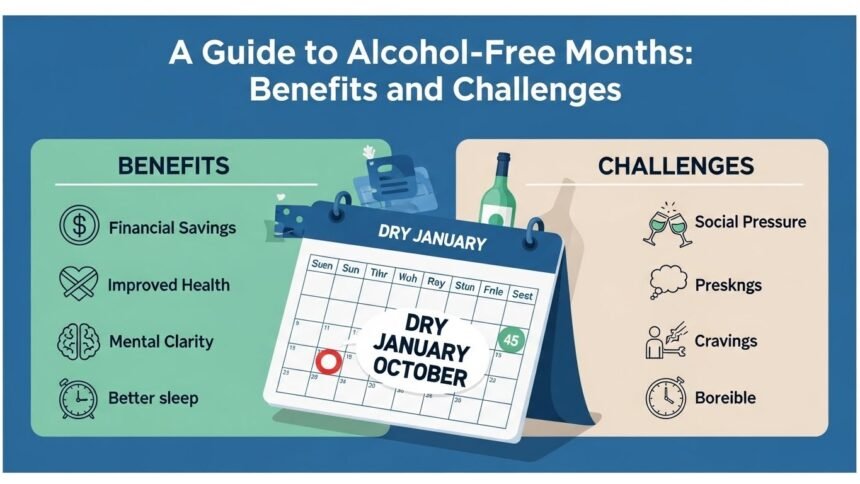
The benefits of a dry month often extend far beyond just saving money at the pub. Research suggests that even short-term abstinence can lead to measurable improvements in health markers.
1. Improved Liver Function
Your liver is remarkably resilient. Continuous drinking can lead to a build-up of fat in the liver, known as alcohol-related fatty liver disease. However, the British Liver Trust notes that the liver can often repair itself and regenerate if given the chance. A month off can significantly reduce liver fat and lower inflammation markers.
2. Better Sleep Quality
Many people use alcohol as a sleep aid, believing it helps them nod off. While it may induce sleep faster, it severely disrupts the quality of that sleep. Alcohol reduces Rapid Eye Movement (REM) sleep, which is essential for cognitive restoration. Without alcohol, you are likely to experience deeper, more restorative rest, leaving you feeling more alert in the mornings.
3. Mental Health and Clarity
Alcohol is a depressant. It disrupts the balance of neurotransmitters in the brain, often leading to increased anxiety and low mood the following day—a phenomenon often dubbed “hanxiety”. By removing alcohol, many people report a stabilisation in their mood and a reduction in general anxiety levels. For more on this connection, the Mental Health Foundation offers excellent resources on how alcohol impacts emotional well-being.
4. Weight Management
Alcoholic drinks are often “empty calories”. A standard glass of wine can contain as many calories as a piece of chocolate, and a pint of lager can be equivalent to a slice of pizza. Cutting these out creates a natural calorie deficit. Furthermore, alcohol lowers inhibitions, often leading to poor dietary choices (like the late-night kebab).
5. Reduced Risk of Serious Illness
Long-term alcohol consumption is linked to various chronic diseases. According to Cancer Research UK, alcohol causes 7 types of cancer, including breast and bowel cancer. Reducing your intake lowers these risks over time.
Actionable Steps for Success
Deciding to stop is the easy part; sticking to it requires a strategy. Here is a breakdown of how to navigate the month successfully.
Planning and Preparation
Remove Temptation
If it is in the house, you are more likely to drink it. Clear your cupboards of alcohol before your start date. Replace them with sophisticated alternatives so the ritual of having a drink remains, even if the alcohol content does not.
Know Your Triggers
Identify the times you usually reach for a drink. Is it 6 pm on a Friday? Is it when you are cooking dinner?
- Stress: If you drink to relax, find a new coping mechanism like a hot bath, a walk, or meditation.
- Celebration: If you drink to celebrate, treat yourself to a nice meal or a cinema trip instead.
Finding Alternatives
The market for alcohol-free drinks has exploded in recent years. You no longer have to stick to lime and soda.
- 0.0% Beers: Many major brands now offer indistinguishable alcohol-free versions.
- Botanical Spirits: These mimic the complexity of gin without the hangover.
- Mocktails: You can get creative in the kitchen. BBC Good Food provides a fantastic list of non-alcoholic cocktail recipes to keep things interesting.
Managing Social Situations
This is often the biggest hurdle. British culture is heavily centred around drinking, and refusing a pint can sometimes draw questions.
- Be Direct: A simple “I’m taking a month off for my health” usually suffices.
- Be the Driver: Being the designated driver is the perfect iron-clad excuse.
- Suggest Activities: Instead of meeting at the pub, suggest a coffee, a walk, or an activity like bowling where drinking is not the main focus.
It is also helpful to check the GOV.UK low-risk drinking guidelines to understand what a healthy relationship with alcohol looks like once your month is over.
Tracking Progress
Use technology to your advantage. There are numerous apps available that track the days you have been dry, the money you have saved, and the calories avoided. Seeing these numbers add up can be incredibly motivating. You can also use the Drinkaware unit and calorie calculator to see exactly what your usual habits were costing you in health and wealth.

Timeline of Recovery
Understanding what is happening to your body can keep you motivated. Here is a comparison of the short-term and medium-term effects.
| Time Period | Physical Changes | Mental/Emotional Changes |
|---|---|---|
| 24 Hours | Alcohol is cleared from the blood. Blood sugar levels begin to normalise. | You may feel groggy or anxious (withdrawal) initially, followed by clarity. |
| 1 Week | Sleep patterns begin to improve. Hydration levels restore, leading to better skin. | mood swings may settle. You might start feeling more energetic in the mornings. |
| 2 Weeks | Stomach acid reflux reduces. Weight loss may become noticeable as bloating subsides. | Motivation increases. You may find it easier to concentrate on work or hobbies. |
| 1 Month | Liver fat can reduce by up to 15-20%. Blood pressure may lower. | Anxiety related to drinking disappears. A sense of achievement boosts self-esteem. |
Frequently Asked Questions
Will I lose weight during an alcohol-free month?
Most likely. Alcohol is calorie-dense and slows down your metabolism. By cutting it out, you reduce your daily calorie intake. However, be careful not to replace alcohol with sugary snacks, which is a common craving when stopping.
Can I just have one drink?
Technically, it is your challenge, so you make the rules. However, having “just one” can reset the physiological benefits and make it harder to resist the next one. Strict abstinence is usually easier to maintain than moderation for a short period.
What if I experience withdrawal symptoms?
If you experience tremors, sweating, nausea, or hallucinations, you may be chemically dependent. This requires medical attention. You can find resources via the charity Mind or consult your GP immediately.
Will my tolerance decrease?
Yes. After a month off, your tolerance to alcohol will be significantly lower. If you decide to drink again, the effects will hit you faster. Read more about this phenomenon in Healthline’s guide to alcohol withdrawal and tolerance.
Is one month enough to heal my liver?
One month can make a massive difference in reducing liver fat and inflammation. However, for long-term health, it is vital to maintain low-risk drinking habits after the month ends.
The Bottom Line
Taking a month off alcohol is one of the most effective ways to reset your health and reassess your relationship with drinking. While the social and habit-breaking challenges are real, the benefits to your sleep, liver, and mental clarity are undeniable.
You do not need to label yourself to take a break. Whether for health, productivity, or curiosity, an alcohol-free month puts you back in the driver’s seat. By planning ahead, using available resources, and focusing on the positives, you can navigate the month successfully.
Ultimately, the goal is not just to survive 30 days without a drink, but to thrive and carry those healthy habits forward into the future.