In an era where the pursuit of holistic well-being often intersects with scientific validation, certain natural remedies stand out for their enduring popularity and proven efficacy. Among these, Aloe barbadensis miller, commonly known as Aloe Vera, reigns supreme as a time-honored botanical renowned for its remarkable therapeutic properties, particularly in the realm of dermatological care. For centuries, this succulent plant has been a cornerstone in traditional medicine systems across the globe, lauded for its ability to soothe, heal, and rejuvenate the skin.
This comprehensive guide delves into the intricate science behind Aloe Vera’s powerful capabilities, offering a professional and authoritative exploration of its role as an effective natural remedy for burns and a potent agent for skin regeneration. We will meticulously examine its bioactive components, elucidate its mechanisms of action, review compelling clinical evidence, and provide practical insights for its application, aiming to furnish professionals with a definitive resource on this remarkable plant.
What is Aloe Vera? A Botanical Overview
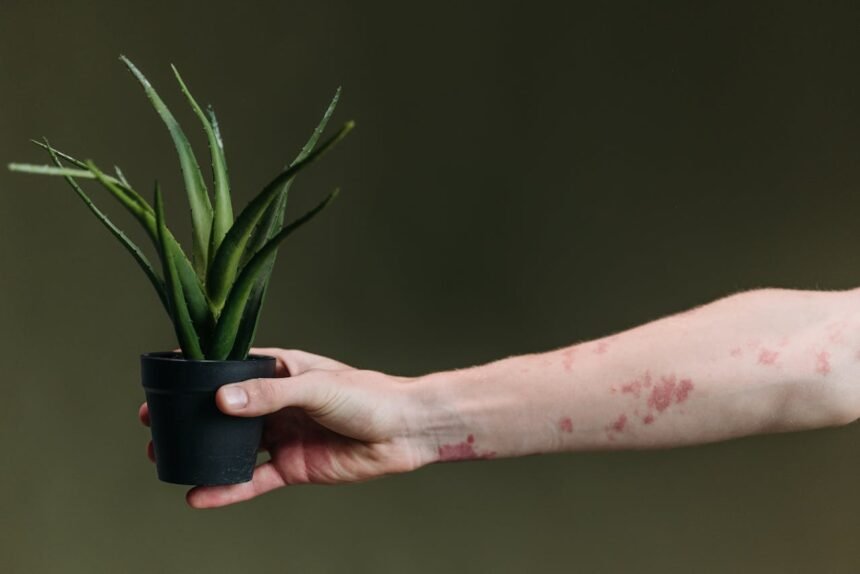
Aloe Vera is a species of succulent plant that likely originated in the Arabian Peninsula but now grows wild in tropical, semi-tropical, and arid climates around the world. It is easily recognized by its thick, fleshy, spear-like leaves, which contain a clear, gelatinous inner pulp – the “Aloe Vera gel” – and a yellow latex layer beneath the leaf’s epidermis. The clear gel is the primary source of its medicinal properties, while the latex, containing compounds like aloin, can have laxative effects and is generally avoided in topical applications for skin.
Historically, references to Aloe Vera’s medicinal use date back over 6,000 years to early Egyptian civilizations, where it was depicted on stone carvings and referred to as the “plant of immortality.” Ancient Greeks, Romans, Indians, and Chinese cultures also extensively documented its benefits. Today, it remains a staple in cosmetic, pharmaceutical, and food industries, celebrated for its versatility and profound impact on human health, especially skin health.
The Bioactive Powerhouse: Key Compounds in Aloe Vera
The therapeutic potency of Aloe Vera is attributed to its complex composition, featuring over 75 active constituents. These include vitamins, enzymes, minerals, sugars, lignins, saponins, salicylic acids, and amino acids. Understanding these components is crucial to appreciating its efficacy.
Polysaccharides (Acemannan)
Perhaps the most significant active ingredient in the Aloe Vera gel are the long-chain carbohydrates known as polysaccharides, particularly acemannan. This compound is a potent immunostimulant and has been extensively studied for its role in wound healing and tissue repair. Acemannan stimulates the production of macrophages and fibroblasts, which are vital cells in the healing process. Macrophages help to clean the wound site, while fibroblasts produce collagen, the structural protein essential for new tissue formation. You can learn more about the diverse functions of polysaccharides in biology.
Anthraquinones
Anthraquinones, such as aloin and emodin, are compounds present in the yellow latex of the Aloe leaf, but also in smaller amounts within the gel. These compounds are known for their strong laxative effects, but when applied topically in lower concentrations, they exhibit analgesic, antibacterial, and antiviral properties. Their contribution to the plant’s antiseptic profile helps protect wounds from infection, a critical aspect of skin regeneration.
Vitamins and Minerals
Aloe Vera gel is a rich source of essential vitamins and minerals that support skin health. It contains vitamins A (beta-carotene), C, and E, which are powerful antioxidants that help neutralize free radicals and protect skin cells from damage. It also provides B12, folic acid, and choline. Essential minerals like calcium, chromium, copper, selenium, magnesium, manganese, potassium, sodium, and zinc are also present, playing various roles in enzymatic reactions and cellular functions necessary for wound healing and healthy skin. For a deeper dive into the role of vitamins in skin health, a study published in Nutrients provides valuable insights.
Enzymes and Amino Acids
The gel contains eight beneficial enzymes: aliiase, alkaline phosphatase, amylase, bradykinase, carboxypeptidase, catalase, cellulase, lipase, and peroxidase. Bradykinase, in particular, helps to reduce excessive inflammation when applied topically, making Aloe Vera an excellent natural remedy for irritated skin. Additionally, Aloe Vera provides 20 of the 22 human-required amino acids and all 8 essential amino acids, which are the building blocks of proteins and vital for cell repair and growth.
Mechanism of Action: How Aloe Vera Promotes Healing
The synergistic action of Aloe Vera’s numerous constituents underpins its multifaceted approach to healing and skin regeneration. Its efficacy stems from a combination of anti-inflammatory, antimicrobial, and cell-proliferative effects.
Anti-inflammatory Properties
One of the most immediate benefits of Aloe Vera is its potent anti-inflammatory action. The presence of bradykinase, along with C-glucosyl chromone and various glycoproteins, helps to reduce pain, swelling, and redness associated with burns and other skin injuries. This localized anti-inflammatory effect is crucial for early wound management, creating an optimal environment for healing. Research has highlighted Aloe Vera’s ability to modulate immune responses, as detailed by studies accessible on the National Institutes of Health (NIH) PubMed database.
Antimicrobial and Antiseptic Effects
Aloe Vera contains several compounds with antimicrobial properties, including saponins, anthraquinones (like barbaloin and isobarbaloin), and lupeol. These substances exhibit antibacterial, antiviral, and antifungal activity, helping to prevent infections in open wounds and burns. By creating an unfavorable environment for pathogens, Aloe Vera reduces the risk of complications and supports a cleaner healing process, a critical aspect when using natural remedies for wound care. Further information on natural antiseptics can be found via the Centers for Disease Control and Prevention (CDC).
Collagen Production and Tissue Repair
The polysaccharides, particularly acemannan, stimulate fibroblast cells, which are responsible for producing collagen and elastin. Collagen is the primary structural protein in the skin, essential for wound closure and scar tissue formation. By accelerating collagen synthesis, Aloe Vera helps to reconstruct damaged tissue more effectively, leading to improved wound strength and elasticity. This acceleration of cellular proliferation and differentiation significantly contributes to efficient skin regeneration. A review in the Indian Journal of Dermatology elaborates on these reparative mechanisms.
Moisturizing and Protective Barrier
Aloe Vera gel is approximately 98% water, making it an excellent natural moisturizer. Its mucopolysaccharides bind moisture into the skin, preventing dehydration and maintaining skin integrity. When applied, it forms a protective layer that shields the wound from environmental irritants while allowing oxygen exchange, which is vital for cellular respiration and healing. This humectant quality, combined with its ability to enhance epithelial migration, makes it an effective aloe vera burn gel. The American Academy of Dermatology Association emphasizes the importance of proper skin hydration.
Clinical Evidence: Aloe Vera for Burns and Wounds
Numerous scientific studies have investigated Aloe Vera’s efficacy in treating various skin conditions, with a significant focus on burns and wound healing.
First and Second-Degree Burns
For minor burns, including first and second-degree burns (superficial and partial-thickness), Aloe Vera has shown promising results. Studies indicate that it can significantly reduce healing time compared to conventional treatments like silver sulfadiazine, a common burn cream. Its cooling effect provides immediate relief, while its anti-inflammatory and antiseptic properties reduce blistering and infection risk. A meta-analysis published in the Burns Journal has supported its use for accelerating the healing of first and second-degree burns.
Post-Surgical Wounds and Ulcers
Beyond burns, Aloe Vera has demonstrated potential in aiding the healing of surgical wounds and chronic ulcers, such as diabetic foot ulcers and pressure sores. Its ability to stimulate collagen synthesis, reduce inflammation, and offer antimicrobial protection contributes to faster wound closure and improved tissue quality. However, the application on deep or complex wounds should always be under medical supervision.
Radiation Dermatitis
Patients undergoing radiation therapy often suffer from radiation dermatitis, a painful skin inflammation. Topical application of Aloe Vera has been explored as a supportive measure to alleviate symptoms, reduce skin peeling, and promote healing in these cases. While some studies show benefit, more robust clinical trials are needed to establish definitive guidelines for its use in this specific context. The National Cancer Institute provides extensive information on radiation therapy and its side effects.
Practical Applications and Considerations
When incorporating Aloe Vera into a skin care regimen or as a natural remedy for burns and wounds, understanding its forms and proper application is key.
Forms of Aloe Vera
- Fresh Gel: Directly extracted from the plant leaf, this is often considered the most potent form, retaining all natural compounds.
- Commercial Gels: Widely available, these products typically contain stabilized Aloe Vera gel, often combined with other soothing or preservative ingredients. Ensure the product has a high percentage of pure Aloe Vera (ideally 95% or more) and minimal additives.
- Creams and Lotions: These formulations offer a convenient way to apply Aloe Vera, often blended with emollients and humectants for enhanced moisturizing effects.
Proper Application Techniques
For minor burns (first and second-degree with intact skin) and superficial wounds:
- Cleanse: Gently clean the affected area with mild soap and water.
- Apply: If using fresh gel, break off a piece of the leaf, squeeze out the clear gel, and apply a thick layer directly to the burn or wound. For commercial products, follow product instructions.
- Frequency: Apply 2-3 times daily, or as needed, ensuring the area remains moist.
- Cover (Optional): For small areas, a loose sterile dressing can be applied after the gel has absorbed slightly, to protect the area.
Potential Side Effects and Precautions
While generally safe for topical use, some individuals may experience allergic reactions, such as redness, itching, or hives, particularly from the latex component if not properly processed. It is always advisable to perform a patch test on a small area of skin before widespread application. Pregnant or breastfeeding women, and individuals with severe burns or deep wounds, should consult a healthcare professional before using Aloe Vera as a primary treatment. For insights into herbal remedies and their interactions, the World Health Organization (WHO) offers valuable resources.
Table: Key Bioactive Compounds of Aloe Vera and Their Functions in Skin Healing
| Bioactive Compound Group | Primary Examples | Key Functions in Skin Healing & Regeneration |
|---|---|---|
| Polysaccharides | Acemannan, Glucomannans | Stimulates fibroblast growth & collagen production; accelerates wound contraction; enhances immune response; anti-inflammatory. |
| Anthraquinones | Aloin, Emodin, Barbaloin | Possesses antibacterial, antiviral, and antifungal properties; mild analgesic effects; aids in preventing infection. |
| Vitamins | A, C, E, B12, Folic Acid | Potent antioxidants (A, C, E) protect against free radical damage; supports cell growth and repair. |
| Minerals | Zinc, Copper, Magnesium, Selenium | Co-factors for enzymatic reactions crucial for wound healing; supports immune function and collagen synthesis. |
| Enzymes | Bradykinase, Catalase, Amylase | Bradykinase reduces inflammation; Catalase protects against oxidative damage; aids in breaking down dead tissue. |
| Amino Acids | All 8 essential, 12 non-essential | Building blocks for proteins, essential for cell repair, tissue growth, and collagen formation. |
| Fatty Acids | Lupeol | Anti-inflammatory and antiseptic properties. |
| Lignins | N/A (structural) | Enhances penetration of other active ingredients into the skin. |
| Saponins | N/A (soap-like) | Cleansing and antiseptic properties. |
Frequently Asked Questions (FAQ)
Q1: Is fresh Aloe Vera gel more effective than commercial products?
A1: Fresh Aloe Vera gel, directly extracted from the plant, is often considered more potent as it retains all its natural enzymes and compounds without processing or additives. However, high-quality commercial gels with a high percentage of pure Aloe Vera (95%+) can also be very effective and offer convenience, especially if stabilized correctly. Always check the ingredient list for purity.
Q2: Can Aloe Vera completely prevent scarring from burns?
A2: While Aloe Vera promotes healthy skin regeneration and aids in collagen remodeling, which can significantly improve the appearance of scars and reduce their severity, it cannot guarantee complete scar prevention, especially for deeper burns. Its anti-inflammatory and tissue-repairing properties contribute to smoother, less noticeable scarring.
Q3: How long does it take for Aloe Vera to heal a burn?
A3: The healing time for a burn treated with Aloe Vera varies greatly depending on the severity of the burn. For minor first-degree burns, relief can be felt almost immediately, with healing occurring within a few days. For second-degree burns, healing might take 1-3 weeks. Aloe Vera is shown to accelerate healing compared to no treatment or some conventional methods, but it’s not an instant cure. Consistent application is key.
Q4: Are there any specific types of burns Aloe Vera should NOT be used on?
A4: Aloe Vera is generally recommended for superficial (first-degree) and partial-thickness (second-degree) burns. It should not be used on severe third-degree burns, deep open wounds, or burns that cover a large body surface area without immediate medical consultation. These types of injuries require professional medical attention due to the high risk of infection and systemic complications.
Conclusion
Aloe Vera stands as a testament to the power of natural remedies in modern healthcare. Its rich biochemical profile, encompassing a symphony of polysaccharides, vitamins, minerals, enzymes, and amino acids, collectively orchestrates a profound healing response in the skin. From its remarkable anti-inflammatory and antimicrobial actions to its ability to stimulate collagen synthesis and promote cellular regeneration, Aloe Vera offers a scientifically substantiated approach to managing burns and fostering skin regeneration. As an effective aloe vera burn gel and a versatile dermatological agent, its continued relevance in both traditional and contemporary medicine is undeniable. While always advising caution and professional consultation for severe conditions, the evidence overwhelmingly supports Aloe Vera’s position as a definitive and invaluable natural remedy for promoting skin health and recovery.