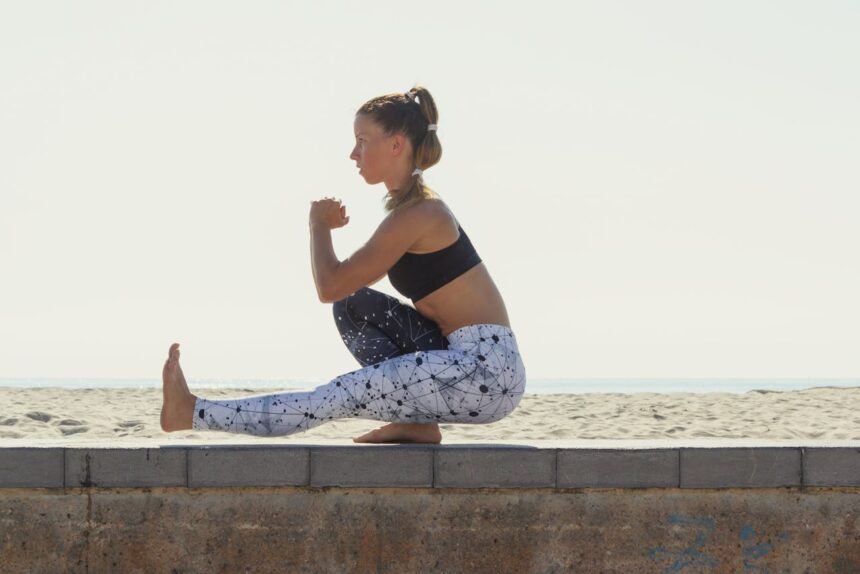
Training on sand is one of the most metabolically demanding yet joint-friendly environments you can use to upgrade your conditioning, mobility, and mental health in a single session.
Compared with firm ground, running on sand significantly increases energy expenditure because every step sinks and slips, forcing greater activation of the calves, hamstrings, and stabilizers while reducing peak impact forces on the joints.[[1]]
Below is an expert framework to build a data-driven beach wellness routine for beginners, seniors, and anyone looking for morning beach yoga for a stiff back or a simple beach meditation for anxiety relief, while safely burning calories alongside the shoreline.
Why Training on Sand Is Metabolically Powerful
From an exercise physiology standpoint, sand behaves like an unstable, compliant surface, which alters biomechanics in ways that increase caloric cost:
- Greater muscle recruitment in the posterior chain and intrinsic foot muscles to stabilize each step.[[1]]
- Lower ground reaction forces versus asphalt or concrete, which can decrease impact-related joint stress, particularly at the knees and hips.[[1]]
- Increased heart rate response at a given speed, meaning you can achieve vigorous-intensity workloads at lower mechanical speeds—valuable for older adults or anyone managing joint issues.
Sports-performance practitioners frequently use sand sprints and drills during off‑season conditioning blocks because this surface delivers a high neuromuscular demand with relatively low orthopedic risk, as noted by elite strength and conditioning organizations.[[2]]
Structuring a Beach Wellness Routine for Beginners
A comprehensive beach wellness routine for beginners should integrate three pillars:
- Therapeutic movement (mobility, low-load strength, gait drills)
- Cardiometabolic conditioning (interval walks, light jogs)
- Mind–body regulation (breathwork and simple meditation)
Recommended Session Architecture (45–60 minutes)
- 5–10 minutes: Breath-led warm-up and soft-tissue prep
- 15–20 minutes: Low-impact locomotion + basic strength
- 10–15 minutes: Mobility and morning beach yoga for a stiff back
- 5–10 minutes: Simple beach meditation for anxiety relief
According to major public health guidelines, accumulating 150–300 minutes of moderate or 75–150 minutes of vigorous activity per week is associated with significant cardiometabolic risk reduction; you can efficiently achieve this using structured beach sessions.[[3]]
Evidence-Informed Warm-Up on the Sand
Effective warm-ups on sand should emphasize progressive tissue loading, end‑range joint mobility, and cardiorespiratory ramp‑up.
1. Breath and Grounding (3–5 minutes)
- Stand barefoot near the waterline where the sand is firm.
- Inhale through the nose for 4 seconds, exhale for 6–8 seconds.
- Feel the contact of the sand under each metatarsal head and heel to improve proprioception.
Breath-based grounding is consistent with guided imagery and relaxation protocols often used in clinical settings for stress reduction, where visualizing a calm beach environment lowers perceived stress and autonomic arousal.[[8]]
2. Dynamic Mobility (5 minutes)
Perform on flat, packed sand:
- Ankle circles and dorsiflexion/plantarflexion
- Hip CARs (controlled articular rotations)
- Leg swings (front–back and side–side)
- Thoracic spine rotations with arms extended
Mobility sequences of this type are aligned with widely used sports medicine warm‑up templates to raise tissue temperature and improve range of motion prior to higher‑load work.[[2]]
Low-Impact Beach Workout for Seniors and Joint-Sensitive Athletes
A low impact beach workout for seniors prioritizes stability, balance, and safe loading of the lower extremities while still driving cardiovascular benefit.
1. Interval Beach Walking (10–15 minutes)
- Use firm sand close to the waterline to minimize instability.
- Alternate 2 minutes at a comfortable pace with 1 minute at a brisk pace.
- Maintain nasal breathing when possible to limit excessive sympathetic drive.
Interval walking protocols like this have been associated with improvements in VO₂max, blood pressure, and glycemic control, especially in older adults and deconditioned populations, when progressed gradually in intensity and volume.[[3]]
2. Static and Dynamic Balance (8–10 minutes)
Perform with optional support from a trekking pole or stable object:
- Single-leg stance (20–30 seconds per side)
- Tandem stance walk (heel-to-toe walk along a line in the sand)
- Lateral stepping with mini-squat (10–15 steps each direction)
Balance-focused regimens are recommended in fall-prevention guidelines for seniors because they improve postural control and lower fall risk when practiced consistently 2–3 times per week.[[4]]
3. Sand-Based Strength Work (8–10 minutes)
On level sand, complete 2–3 sets:
- Box or bench squat to a beach chair (8–10 reps)
- Wall or railing push-ups (8–12 reps)
- Standing hip abductions using the sand’s resistance (10 reps per leg)
The compliant surface slightly increases stabilizer demand but keeps axial loading modest, aligning with recommendations for older adults to perform multijoint resistance training 2+ days per week using safe, controllable loads.[[3]]
Morning Beach Yoga for a Stiff Back
If you wake with a stiff thoracolumbar spine, carefully sequenced morning beach yoga can promote disc hydration, segmental motion, and neuromuscular relaxation.
Targeted Sequence (10–15 minutes)
- Cat–Cow in Quadruped on a Towel
8–12 slow cycles focusing on segmental flexion and extension.
Low Sphinx Pose
30–45 seconds, 2–3 rounds, encouraging gentle lumbar extension without hinging at one level.
Thread the Needle
5–8 reps per side for thoracic rotation.
Supported Child’s Pose
- 60–90 seconds with a folded towel under the hips if needed.
Systematic reviews of yoga-based interventions have reported modest improvements in chronic low back pain and functional disability compared with usual care, when integrated 1–2 times weekly.

Conditioning Blocks: Calorie-Burning Beach Intervals
Once foundational capacity is in place, you can add moderate sand intervals to elevate caloric expenditure while preserving joint health.
Option A: Power Walk + Short Jog (Intermediate)
On firm sand:
- 1 minute light jog, 2 minutes brisk walk; repeat 6–10 cycles.
Option B: Sand Drills Without Running (Joint-Sensitive)
- High-knee walk in place (30 seconds)
- Lateral shuffle walk (30 seconds each direction)
- Backward walk (30 seconds), focusing on controlled foot placement
Perform 2–4 rounds based on your fitness and medical clearance.
Higher-intensity intervals have been shown to improve cardiorespiratory fitness and insulin sensitivity in less total time compared with continuous moderate exercise, when scaled appropriately to the individual.[[6]]
Simple Beach Meditation for Anxiety Relief
The autonomic nervous system benefit of training at the beach is often underrated.
5–10 Minute Protocol
- Sit facing the ocean, hips elevated on a towel.
- Inhale through the nose as a wave approaches; exhale slowly as it recedes.
- Maintain an inhale:exhale ratio of roughly 1:1.5 or 1:2 (for example, 4 seconds in, 6–8 seconds out).
Clinical resources on guided imagery frequently use beach scenarios to help patients shift from sympathetic dominance (fight-or-flight) toward parasympathetic activity (rest-and-digest), reducing anxiety and perceived pain.[[8]]
For additional structure, you can follow professionally produced short guided beach meditations for anxiety relief that layer breath cues over ocean-wave audio, a format widely used in digital mental-health platforms.[[2]]
Recovery, Hydration, and Sun Exposure
Even low-impact sand sessions carry environmental stressors—heat, UV exposure, and variable footing—that need proactive management.
- Train in early morning or late afternoon to reduce heat load and UV intensity.
- Use broad-spectrum sun protection and periodically move to shaded areas.
- Hydrate before, during, and after; beach training often drives higher sweat rates due to radiant heat from both sun and sand.
Sports medicine organizations emphasize environmental acclimatization and hydration planning as critical for safe outdoor conditioning, particularly in older adults or those with cardiometabolic disease.[[6]]
Progression and Safety Considerations
To ensure that your beach wellness routine for beginners remains safe and sustainable:
- Progress volume before intensity—extend total session time gradually before adding speed or complexity.
- Start on firmer, wetter sand, then explore softer sand only after mastering basic mechanics.
- If you have a history of foot, ankle, or spine pathology, consider alternating barefoot segments with supportive footwear, and consult a qualified clinician about load tolerances.
Integrating low impact beach workouts for seniors and beginners into a weekly schedule can provide a robust blend of cardiorespiratory conditioning, strength, balance, and mental health benefits, especially when paired with morning beach yoga for a stiff back and a simple beach meditation for anxiety relief at the end of each session.
Resources & References
- Video discussion of the increased muscular demand of walking and running on sand compared with firm surfaces.[1]
- Educational content from a strength and conditioning–oriented channel explaining how sand-based drills are used in athletic performance programming.[2]
- Public health guidelines outlining evidence-based aerobic and resistance training recommendations for adults and older adults.[3]
- Clinical fall-prevention materials describing the role of balance and lower-body strength training in reducing fall risk in seniors.[4]
- Patient-facing resources summarizing research on yoga for chronic low back pain and stiffness.[5]
- Sports medicine guidance on interval training, environmental heat stress, and hydration strategies for outdoor exercise.[6]
- Audio-based programming that uses ocean-wave sounds for breath-focused relaxation and anxiety reduction.[1]
- Clinical explanation of guided imagery techniques that frequently feature beach environments to reduce stress and anxiety.[8]
- Counseling-resource article describing a brief beach mini-meditation protocol for rapid stress reduction.[5]
- Family-focused hospital resource on guided imagery for relaxation using a beach visualization, designed to lower stress in children and caregivers.[6]
- A general-audience article outlining multiple meditation techniques for anxiety relief, including breathwork and body scans that can be adapted to a beach setting.[7]
- App-based ocean-wave meditation track designed to release anxiety with calming ocean sounds and paced breathing.[3]
- Guided imagery audio session cueing listeners through a peaceful day at the beach to facilitate full-body relaxation.[4]
- Unguided long-form beach meditation soundscape intended to support extended anxiety-relief sessions with wave audio.[1]
- Short guided beach meditation session that integrates visualization, posture cues, and breath pacing to reduce stress and anxiety.[2]