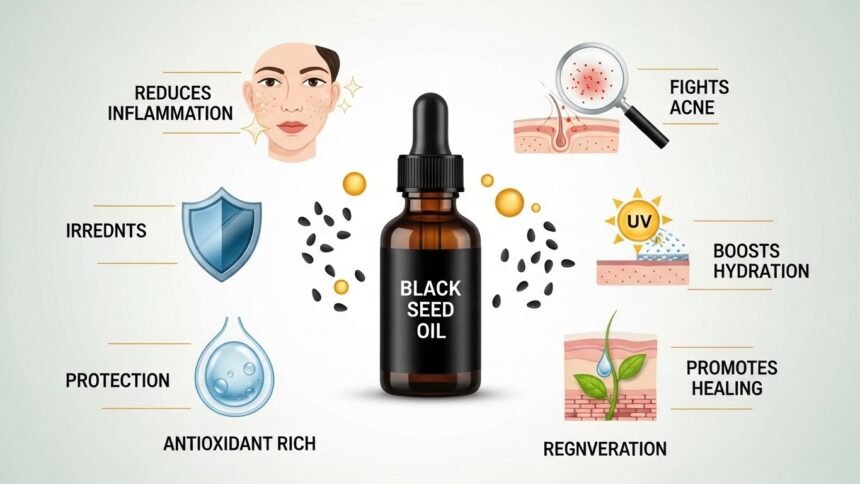
For thousands of years, people have turned to nature for healing. One remedy stands out for its rich history and powerful properties: black seed oil. Often called the “seed of blessing”, this oil has been found in the tombs of Egyptian pharaohs and was reportedly part of Cleopatra’s beauty regimen. Today, modern science is finally catching up with ancient wisdom.
Research now supports what traditional healers have known for centuries. The benefits of black seed oil for skin are vast, ranging from fighting acne to smoothing fine lines. Whether you are dealing with stubborn breakouts, dry patches, or signs of ageing, this versatile oil might be the solution you need.
In this guide, we will explore exactly how black seed oil works, its top benefits, and how you can add it to your daily skincare routine.
What is Black Seed Oil?
Black seed oil comes from the Nigella sativa plant. This small shrub with purple or white flowers grows natively in Eastern Europe, Western Asia, and the Middle East. The seeds are tiny and black, often known as black cumin, black caraway, or kalonji.
While these seeds are popular in cooking, the oil extracted from them is a powerhouse for health. It is packed with vitamins, amino acids, and fatty acids. However, the true magic lies in a compound called thymoquinone.
The Power of Thymoquinone
Thymoquinone is the main active ingredient in black seed oil. It is an antioxidant with strong anti-inflammatory properties. This compound helps protect your skin from damage caused by free radicals. It also helps to calm redness and swelling, which is vital for treating conditions like acne and eczema.
> Did You Know?
> Thymoquinone skin benefits include reducing inflammation and fighting bacteria, making it a natural alternative to harsh chemical treatments.
7 Amazing Benefits of Black Seed Oil for Skin
If you are looking for a natural way to improve your complexion, here are the key reasons to try this oil.
1. Fights Acne and Clogged Pores
Acne is one of the most common skin complaints for both teenagers and adults. Clogged pores and bacteria are usually to blame. Black seed oil has natural antibacterial properties that help keep your skin clear.
Studies show that applying a lotion with black seed oil can significantly reduce acne lesions. It works by killing the bacteria that cause breakouts. Additionally, its anti-inflammatory effects help reduce the redness and pain associated with angry spots. For those struggling with marks left behind by spots, black seed oil for acne scars is a gentle way to promote healing and even out skin texture.
According to research highlighted by Medical News Today, black seed oil may be as effective as some prescription treatments for mild to moderate acne.
2. Soothes Eczema and Psoriasis
Dry, itchy, and inflamed skin can be incredibly uncomfortable. Conditions like eczema and psoriasis are often caused by an overactive immune response or a compromised skin barrier.
Nigella sativa oil for eczema has shown promising results in clinical trials. Its anti-inflammatory nature helps to calm the itch and reduce redness. It also acts as a fantastic moisturiser, creating a protective barrier that locks in hydration.
A review published by the National Institutes of Health (NIH) notes that black seed oil can improve the symptoms of hand eczema effectively. For psoriasis, it helps to slow down the rapid growth of skin cells that causes scaly patches.
3. Reduces Signs of Ageing
We all want to keep our skin looking youthful and fresh. As we age, our skin loses elasticity and collagen. This leads to fine lines and wrinkles.
The anti-ageing benefits of black seed oil are largely due to its rich antioxidant content. Antioxidants fight oxidative stress, which is a major cause of premature ageing. By neutralising free radicals, black seed oil protects your skin cells from damage.
Furthermore, the oil contains essential fatty acids that help maintain the skin’s lipid barrier. This keeps the skin plump and hydrated, reducing the appearance of wrinkles. If you are looking for black cumin seed oil for wrinkles, you will be pleased to know it also supports collagen production.
4. Fades Dark Spots and Pigmentation
Hyperpigmentation occurs when patches of skin become darker than the surrounding area. This can happen due to sun damage, hormonal changes, or inflammation.
Using black seed oil for dark spots can be a game-changer. The vitamin A and amino acids in the oil help to encourage skin cell turnover. Over time, this can fade dark spots and reveal a brighter, more even complexion. It is a slow process, but consistent use often yields visible results.
5. Moisturises Dry Skin
If you ask, “is black seed oil good for dry skin?”, the answer is a resounding yes. It is rich in linoleic acid, an essential fatty acid that our bodies do not produce on their own.
Linoleic acid is crucial for maintaining the skin barrier. When this barrier is strong, it holds onto water better, preventing dryness and flakiness. Unlike heavy creams that sit on top of the skin, black seed oil penetrates deep into the epidermis to provide lasting hydration.
6. Promotes Wound Healing
Minor cuts, scrapes, and burns are part of life. Black seed oil can speed up the healing process.
Research indicates that the oil stimulates the production of new tissue and collagen. Its antibacterial properties also prevent infections in open wounds. This makes it an excellent addition to your first aid kit. A study cited by Healthline suggests that thymoquinone can enhance tissue growth and wound repair.
7. Fights Fungal Infections
Fungal infections like ringworm or athlete’s foot can be stubborn. Black seed oil for fungal infections is a potent natural remedy.
The oil has proven antifungal activities against common yeasts and moulds. Applying it directly to the affected area can stop the growth of the fungus and relieve itching. It is a safe, natural alternative to some over-the-counter antifungal creams.
How to Use Black Seed Oil for Skin
You can use black seed oil in two main ways: applying it to your skin or taking it as a supplement.
Topical Application
Applying the oil directly to your face or body is the best way to target specific skin issues. However, the oil is potent.
* Dilute It: If you have sensitive skin, it is wise to dilute black seed oil with a carrier oil like jojoba or almond oil. A good ratio is one part black seed oil to two parts carrier oil.
* Spot Treatment: For acne, you can dab a tiny amount of undiluted oil directly onto the spot.
Face Oil**: Mix a few drops into your nightly moisturiser. *Mixing black seed oil with moisturiser is an easy way to get the benefits without an extra step in your routine.
DIY Face Mask Recipe
For a pampering session, try this simple black seed oil face mask recipe:
- Mix 1 teaspoon of organic black seed oil.
- Add 1 teaspoon of raw honey (great for soothing).
- Add 1 teaspoon of yoghurt (gentle exfoliation).
- Apply to your face and leave for 15 minutes.
- Rinse with warm water.
This mask is excellent for calming inflamed skin naturally.
Oral Consumption
Beauty starts from within. Taking black seed oil orally can support your overall health, which reflects in your skin.
* Capsules: An easy way to get a controlled dose.
* Liquid: You can take a teaspoon of oil daily. Be warned, the taste is quite strong and peppery. Many people mix it with honey or juice.
Always choose organic black seed oil for skin to ensure you are avoiding pesticides and getting the highest quality nutrients.
Safety and Side Effects
While black seed oil is natural, it is powerful. You should always be aware of potential side effects of black seed oil on face or body.
* Patch Test: Before using it on your face, apply a small drop to your inner arm. Wait 24 hours to see if there is any redness or itching.
* Allergic Reactions: Some people may develop a rash known as contact dermatitis. If this happens, stop using it immediately.
* Pregnancy: If you are pregnant or breastfeeding, consult your doctor before using black seed oil, especially orally.
According to WebMD, black seed oil is possibly safe when used short-term, but high doses should be avoided.
Frequently Asked Questions
1. How long does it take to see results from black seed oil?
Results vary depending on the condition. For moisture, you might feel a difference overnight. For acne or black seed oil for acne scars, it may take 4 to 8 weeks of consistent use to see significant changes.
2. Can I use black seed oil on my face every day?
Yes, most people can use it daily. However, start with every other day to let your skin adjust. If you notice any irritation, reduce the frequency or dilute the oil further.
3. Does black seed oil clog pores?
Black seed oil has a comedogenic rating of 2, which means it is moderately low. It is unlikely to clog pores for most people, but if you have very oily skin, monitor how your skin reacts.
4. Is it better to drink black seed oil or apply it to the skin?
For skin issues like acne or eczema, topical application is usually more effective as it targets the problem directly. However, taking it orally boosts your immune system, which can help skin health from the inside out. Many people do both.
5. Can I leave black seed oil on my face overnight?
Yes, you can leave it on as an overnight treatment. Just be sure to use a small amount so it absorbs fully and does not stain your pillowcase. How to apply black seed oil to face correctly involves warming a few drops in your hands and pressing it gently into your skin.
Conclusion
The benefits of black seed oil for skin are backed by both history and modern research. From its ability to fight acne to its anti-ageing powers, it is a versatile addition to any skincare cabinet. Whether you choose to apply it topically or take it as a supplement, this ancient remedy offers a natural path to healthier, glowing skin.
Remember to choose high-quality, cold-pressed oil and always perform a patch test. With patience and consistency, you might just find that this “seed of blessing” is the skincare miracle you have been looking for.
Additional References
* Examine.com: Black Seed Skin Research
* Cleveland Clinic: Is Black Seed Oil Real?
* Nutritional Outlook: Topical Black Seed Oil Study
* NIH: Role of Nigella sativa in preventing photoaging
* Dr. Axe: Black Seed Oil Uses
* Typology: Is Topical Black Seed Oil Dangerous?
* Banner Health: Natural Remedies
* Clearstem: Black Cumin Seed Oil for Skin