
If you have ever wandered through the dried fruit aisle or a health food shop, you have likely spotted candied ginger. Often coated in a sparkling layer of sugar, it bridges the gap between a sweet confection and a medicinal herb. But is it truly good for you, or is it merely a sugary snack masquerading as a health food?
Ginger (Zingiber officinale) has been used for thousands of years in traditional medicine. However, the candied version—also known as crystallised ginger—undergoes a significant processing method involving boiling and sugar preservation. This article explores the nutritional landscape of candied ginger, weighing its potent health benefits against its high sugar content.
What Is Candied Ginger?
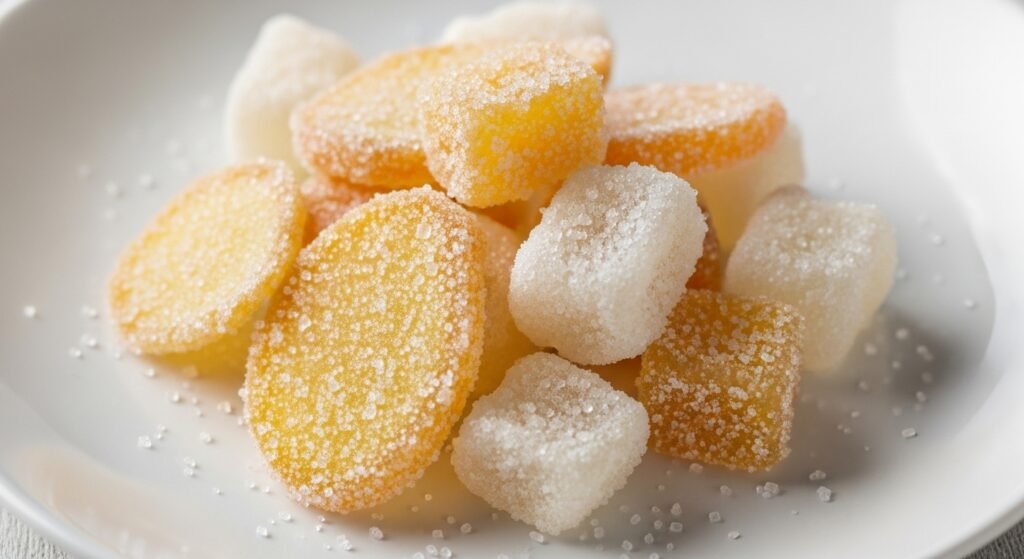
Candied ginger is essentially fresh ginger root that has been peeled, cut into pieces, and boiled in a simple syrup (sugar and water) until soft. It is then allowed to dry slightly before being rolled in granulated sugar to prevent sticking. The result is a chewy, sweet, and spicy treat.
Unlike raw ginger, which can be fibrous and intensely pungent, the candied variety is more palatable to those who find the raw root too overpowering. However, this palatability comes at a cost. While you still ingest the beneficial compounds found in the rhizome, you are also consuming a significant amount of added sugar.
To understand the baseline benefits before the sugar is added, it is helpful to look at Fresh Ginger: Selection, Storage, and Health Uses. The processing method changes the nutritional profile, creating a distinct difference between candied ginger vs raw ginger regarding caloric density and carbohydrate content.
Nutritional Profile and Bioactive Compounds
The primary reason ginger is revered in health circles is due to its bioactive compounds, specifically gingerols and shogaols. Gingerols are abundant in fresh ginger, while shogaols are formed when ginger is dried or cooked. Because candied ginger is cooked in syrup, it contains a unique balance of these compounds.
According to research, these compounds are responsible for the antioxidant and anti-inflammatory effects of the plant. However, when you consume candied ginger, you must consider the sugar content in dried fruit and confectionery products. A typical 30-gram serving of candied ginger can contain upwards of 20 grams of sugar.
For a comparison on how processing affects nutritional density, you might read Dried Ginger vs Fresh: Which is Better for You?, which explores how dehydration concentrates both nutrients and sugars.
Health Benefit: Soothing Nausea and Digestion
One of the most well-documented uses of ginger is for digestive distress. Crystallised ginger benefits include a rapid reduction in nausea symptoms. The sugar provides a quick energy spike, while the ginger acts on the stomach.
Motion Sickness
Many travellers swear by motion sickness natural remedies rather than pharmaceutical options that may cause drowsiness. The convenience of candied ginger makes it a popular choice for car journeys or flights. It helps accelerate gastric emptying, meaning food moves from the stomach to the small intestine more quickly, reducing that feeling of heaviness or queasiness.
For a deeper dive into liquid alternatives for digestion, consider reading How to Make Ginger Juice for Better Digestion.
Pregnancy-Related Nausea
Ginger for nausea during pregnancy (often called morning sickness) is widely recommended by midwives and obstetricians. The NHS confirms that ginger supplements or products may help reduce vomiting and nausea in some pregnant women. However, because candied ginger is high in sugar, pregnant women should consume it in moderation to avoid spikes in blood glucose levels.
Chemotherapy-Induced Nausea
Research suggests ginger can be an effective adjunct treatment for nausea associated with chemotherapy. According to the National Center for Complementary and Integrative Health (NCCIH), studies have shown positive results in using ginger as an antiemetic. While clinical settings often use capsules, patients sometimes find chewing on a piece of candied ginger helps remove the metallic taste often caused by treatment.
Health Benefit: Fighting Inflammation
Chronic inflammation is a driver for many modern diseases, including arthritis and heart disease. The gingerols and shogaols in candied ginger possess strong anti-inflammatory properties.
Those suffering from osteoarthritis may find that regular consumption of ginger helps reduce pain levels. A study published in PubMed highlights ginger’s ability to inhibit pro-inflammatory cytokines. While Are Ginger Shots Actually Good for Your Immunity? explores high-concentration methods, candied ginger offers a gentler, slower-release way to ingest these compounds.
Furthermore, ginger is classed among warming spices for circulation. In traditional medicine, it is used to warm the body and improve blood flow, which can be beneficial during cold months or for those with poor circulation.
Health Benefit: Pain Relief
Beyond inflammation, ginger has been shown to act as a natural analgesic. This includes relief from menstrual pain (dysmenorrhea). Some studies suggest that ginger can be as effective as ibuprofen for period pain when taken at the onset of the cycle.
If you are interested in topical applications for pain, you might explore A Guide to Using Ginger Oil for Aromatherapy, which avoids the sugar intake entirely.
The Sugar Caveat: When to Be Careful
Despite the crystallised ginger benefits, we cannot ignore the sugar. Treating candied ginger as a health supplement requires discipline. It is essentially a sweet treat with benefits, rather than a pure health supplement.
Blood Sugar Management
For individuals with diabetes or insulin resistance, candied ginger can cause rapid spikes in blood sugar. The Diabetes UK guidelines suggest being wary of dried and crystallised fruits due to the concentrated carbohydrate content. In these cases, Soothing Your Stomach with Ginger Root Tea is a far safer alternative.
Sulfites and Additives
Commercial candied ginger sometimes contains sulfur dioxide as a preservative to maintain the bright yellow colour. Sulfite sensitivity can cause asthma-like symptoms in some people. If you are sensitive, look for organic brands or make your own to ensure it is sulfite-free. The FDA lists sulfites as generally recognized as safe (GRAS), but they require labelling due to potential allergic reactions.
Culinary Uses: More Than Just a Snack
Candied ginger is incredibly versatile in the kitchen. It can be chopped and added to biscuits, cakes, and even savoury dishes.
- Baking: Adds a chewy texture and spicy kick to cookies.
- Toppings: Perfect for porridge or yoghurt.
- Savoury: Balances the heat in curries.
Its usage is distinct from other forms. For instance, The Nutritional Benefits of Pickled Ginger focuses on the vinegar-brined slices served with sushi, which have a completely different flavour profile and sodium content compared to the sweet heat of candied ginger.
If you enjoy cooking with ginger, check out How to Use Ginger Paste in Your Daily Cooking for savoury applications, or Ginger Syrup Recipes for Drinks and Desserts if you want to utilise the leftover syrup from making candied ginger.
How to Select and Store Candied Ginger
When purchasing, look for “stem ginger” or “crystallised ginger.” The nutritional value of stem ginger (often preserved in syrup jars) is similar to the dry crystallised version, though usually moister.
Check the ingredient list. Ideally, it should just be ginger, sugar, and water. Avoid high fructose corn syrup or artificial colourings.
Store your ginger in an airtight container in a cool, dark place. Properly stored, it can last for months. This longevity is one reason for the rich ginger root history, where it was carried on long sea voyages to prevent scurvy and seasickness, preserved in sugar.
DIY: Making Your Own
Controlling the ingredients is the best way to maximise health benefits. A homemade crystallised ginger recipe allows you to dictate the type of sugar used and ensure no preservatives are added.
- Peel and slice fresh ginger.
- Boil in water until tender (approx. 30 mins).
- Drain (keep the water for tea!).
- Simmer the ginger in a syrup of equal parts sugar and water until the ginger becomes translucent.
- Dry on a rack and toss in sugar.
This process is simpler than extracting pure compounds, as discussed in Understanding the Uses of Potent Ginger Extract.
Potential Side Effects
While generally safe, there are side effects of too much ginger. Consuming large amounts can actually cause heartburn and diarrhoea—ironic, given its use for stomach settling.
The Mayo Clinic advises moderation. Furthermore, ginger can interact with blood-thinning medications like warfarin. If you are on medication, consult your GP before adding significant amounts of ginger to your diet.
It is also worth noting that different ginger species exist. For safety regarding non-standard varieties, read Wild Ginger: Safety and Culinary Applications.
The Bottom Line
Is candied ginger a sweet treat or a health remedy? It is both.
As one of the most effective stomach settling snacks, it serves a genuine medicinal purpose for nausea and digestion. It also contributes to inflammation reduction foods protocols, provided the sugar intake doesn’t counteract the anti-inflammatory benefits.
However, it should not replace fresh ginger or ginger supplements if your goal is strictly therapeutic, due to the high sugar load. Think of candied ginger as a healthier alternative to a boiled sweet or a biscuit—a way to satisfy a sweet tooth while doing something good for your gut.
Ginger for digestive health is a powerful tool. Whether you choose fresh, tea, or candied, incorporating this ancient root into your life can yield significant benefits.