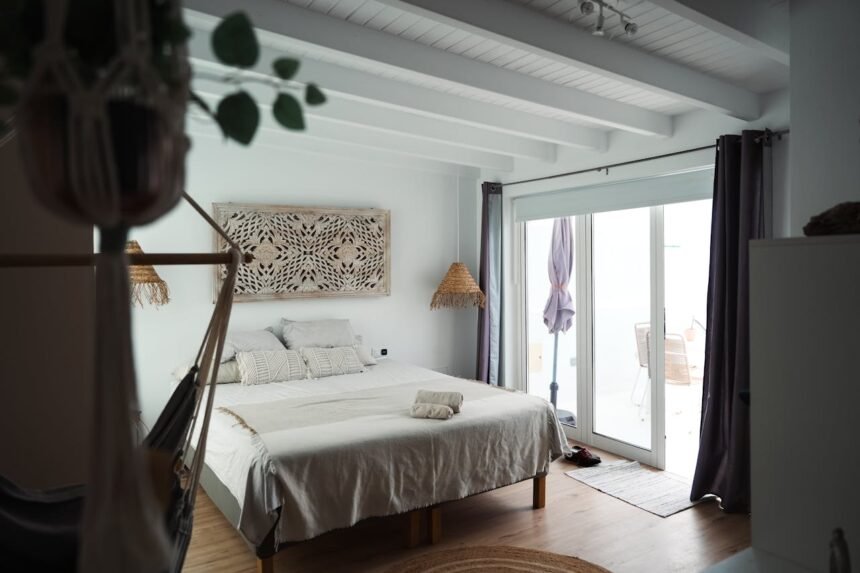
There is a profound reason why many of us flock to the shore when we need to recharge. The intersection of sand, sea, and sky offers more than just a pretty view; it provides a sensory reset that lowers cortisol and quiets the mind. Bringing that sense of coastal bedroom calm into your sleeping quarters isn’t just about aesthetics—it is a powerful tool for improving your psychological well-being and sleep quality.
In this guide, we explore how to utilise biophilic design and the science of “blue spaces” to transform your bedroom into a restorative sanctuary. By focusing on sensory elements, you can create a space that encourages rhythmic breathing and deeper rest.
The Science of Blue Space and Sleep
Research suggests that being near water, or even viewing images of water, can induce a state of relaxation. This phenomenon, often called “blue space” theory, posits that aquatic environments have a unique ability to reduce stress. A study published in Nature found that people who spend time near water report better mental health outcomes. When we translate this into a coastal bedroom calm, we are effectively hacking our brains to enter a “parasympathetic” state—the “rest and digest” mode necessary for sleep.
According to the NHS sleep guide, our environment plays a critical role in how quickly we drift off. By mimicking the seaside aesthetics of the coast, we create a restorative environment that signals to the brain that the day’s work is done.
Key Elements for Achieving Coastal Bedroom Calm
Creating this atmosphere requires a thoughtful approach to colour, light, and material. It is about more than just seashells on a shelf; it is about the tactile and visual “weight” of the room.
1. A Muted Palette for Visual Quiet
The foundation of coastal bedroom calm is a muted palette. Instead of high-contrast colours that stimulate the brain, look to the horizon for inspiration. Use soft blues, seafoam greens, and sandy beiges. Psychology Today notes that blue is globally the most preferred colour for promoting calmness and productivity.
2. Tactile Natural Textures
Touch is often overlooked in interior design, yet it is vital for comfort. Incorporate natural textures such as jute rugs, driftwood bedside tables, and linen bedding. Linen is particularly beneficial for sleep; according to ScienceDirect, linen is highly breathable and helps regulate body temperature, which is essential for maintaining a healthy circadian rhythm.
3. Airflow and Airy Curtains
Stagnant air can hinder sleep quality. To achieve true coastal bedroom calm, ensure your space feels ventilated. Use airy curtains made of sheer voile or light cotton that move slightly with the breeze. This mimicry of coastal wind creates a sense of openness and freshness.

Comparing Design Elements for Restorative Sleep
To help you decide where to focus your efforts, the table below compares standard bedroom features with coastal-inspired alternatives and their associated benefits.
| Feature | Standard Bedroom | Coastal Calm Bedroom | Health Benefit |
|---|---|---|---|
| Bedding | Synthetic polyester blends | Organic materials (Linen/Cotton) | Improved thermoregulation (Mayo Clinic) |
| Lighting | Harsh overhead LEDs | Layered, warm amber tones | Melatonin production support |
| Window Dressing | Heavy, dark block-out fabric | Airy curtains + light-filtering layers | Syncs circadian rhythm with natural light |
| Flooring | Wall-to-wall synthetic carpet | Wood or jute with natural textures | Reduced allergens and grounding sensation |
Managing Light and the Circadian Rhythm
The circadian rhythm is your body’s internal clock, primarily influenced by light exposure. Exposure to blue light from screens can disrupt this cycle, as highlighted by Harvard Health. In a coastal-themed room, we want to maximise natural daylight during the hours you are awake and ensure total darkness at night.
Utilising the principles of biophilic design, you can arrange your furniture to face the window, allowing the morning sun to wake you naturally. This mimics the sunrise over the ocean, providing a gentle start to the day that supports psychological well-being.
5 Tips for Instant Coastal Serenity
- Scent Scaping: Use essential oils like sea salt, sage, or eucalyptus to evoke the ocean air. Scent is a direct pathway to the limbic system, which controls emotion.
- Declutter the Horizon: A cluttered room leads to a cluttered mind. Keep surfaces clear to mimic the vast, open horizon of the sea.
- Incorporate Blue Space Elements: Even if you live in a city, a small water feature or a high-quality photograph of the ocean can trigger a “restoration” response.
- Prioritise Sleep Hygiene: Follow the Royal College of Psychiatrists’ advice on sleep hygiene by keeping tech out of the bedroom.
- Layer Your Linens: Use different weights of linen bedding to create a cocoon-like feel that is still breathable.
The Importance of Restorative Environments
A restorative environment is one that allows you to recover from “directed attention fatigue”—the mental exhaustion caused by modern life. According to research on ScienceDirect, nature-based environments are the most effective at providing this recovery. By consciously designing for coastal bedroom calm, you are creating a permanent space for neurological recovery.
Organisations like the World Health Organization (WHO) emphasise that our physical surroundings are a key determinant of mental health. Similarly, studies from UCL and the University of Exeter have consistently shown that people living near blue space report lower levels of psychological distress.
Final Thoughts on Coastal Design
Your bedroom should be the place where the noise of the world fades away. By embracing soft blues, organic materials, and the airy lightness of the coast, you create a space that does more than just look good—it feels good. For more tips on setting up your space, the Sleep Foundation offers excellent resources on optimising your bedroom for health. Remember, the goal of coastal bedroom calm is to create a sanctuary that supports your body’s natural need for rest and restoration.
Frequently Asked Questions (FAQs)
Does coastal decor actually help you sleep?
While decor alone isn’t a cure for insomnia, the elements of coastal bedroom calm—such as soft blues and natural textures—are scientifically linked to lower stress levels. According to the National Institutes of Health (NIH), a calming environment is a pillar of effective sleep hygiene.
What are the best colours for a coastal bedroom?
Stick to a muted palette. Think of the colours found at the beach: driftwood grey, pale sand, mist white, and various shades of soft blues. Avoid neon or overly bright tones, as these can be overstimulating for the brain before bed.
How can I incorporate biophilic design if I don’t live near the sea?
Biophilic design is about bringing the essence of nature indoors. You can achieve this through organic materials like wood and stone, keeping indoor plants, and ensuring plenty of natural light. The Frontiers in Psychology journal highlights that even indirect contact with nature (like textures and colours) can significantly reduce stress.
Is linen bedding better than cotton for a coastal look?
Both are great organic materials, but linen bedding is often preferred for a coastal aesthetic because of its natural “crinkle” and superior breathability. This helps in maintaining the coastal bedroom calm by providing a relaxed, lived-in feel while supporting your circadian rhythm through better temperature control.
What is “blue space” and why does it matter?
Blue space refers to outdoor environments that prominently feature water. Research from the British Journal of Sports Medicine suggests that these spaces have a more significant positive impact on mental health than even green spaces. Replicating these vibes in your bedroom helps foster a sense of peace and tranquility.