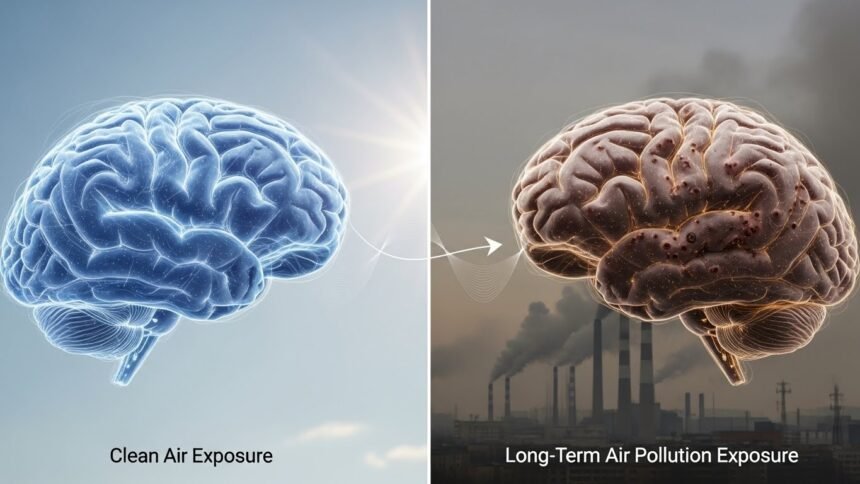
Most of us check the weather before we leave the house, but rarely do we check the air quality index. We tend to associate smog and exhaust fumes with coughing, asthma, or lung conditions. However, emerging research paints a more complex and concerning picture.
It is becoming increasingly clear that the air we breathe has a profound impact on our most vital organ: the brain.
It can be unsettling to realise that invisible particles in the environment might be influencing your cognitive health or your long-term risk of neurodegenerative diseases. You might feel a sense of powerlessness when thinking about urban pollution or industrial emissions.
However, understanding the connection between air quality and brain health is the first step toward protection. Knowledge empowers us to make changes—both in our daily habits and in our communities—to safeguard our neurological future.
This article explores the evidence linking long-term air pollution exposure to brain health, the signs of cognitive impact, and actionable steps you can take to minimise your risk.
What Is the Link Between Air Pollution and the Brain?
For decades, scientists focused primarily on the respiratory and cardiovascular effects of dirty air. Today, the focus has widened significantly.
Recent studies suggest that the brain may be just as vulnerable to pollutants as the lungs. The primary culprit in this equation is Particulate Matter (PM), specifically fine particles known as PM2.5.
How Pollutants Enter the Brain
To understand the risk, we must look at the biological mechanism. PM2.5 refers to tiny particles—droplets, dust, and soot—that are 2.5 microns or less in width. For context, that is roughly 30 times smaller than a single strand of human hair.
Because they are so microscopic, these particles behave differently than larger dust specks:
- Bloodstream Entry: When inhaled, PM2.5 travels deep into the lungs and passes directly into the bloodstream.
- Blood-Brain Barrier: Once in the blood, these toxic particles can travel to the brain. Some evidence suggests they may even bypass the blood-brain barrier—the brain’s primary defence system against toxins.
- Olfactory Route: There is also evidence that particles can enter the brain directly through the nose, travelling up the olfactory nerve.
Inflammation and Oxidative Stress
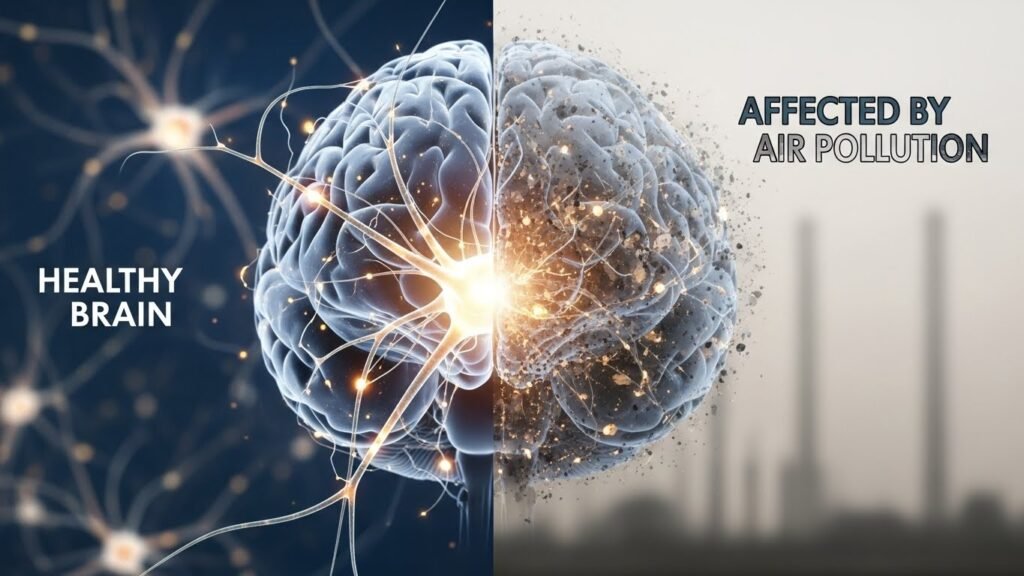
Once these pollutants reach the brain, they do not just sit there. They trigger a defensive response from the body’s immune system.
This response often leads to neuroinflammation (inflammation of nervous tissue) and oxidative stress. Over time, chronic inflammation can damage brain cells (neurons). According to the World Health Organization (WHO), air pollution is now recognised as a major environmental risk factor for health, contributing to chronic conditions globally.
This cellular damage is similar to what is observed in patients with Alzheimer’s disease and other forms of dementia. It suggests that long-term exposure acts as a slow-burning accelerant for neurological decline.
The Role of Nitrogen Dioxide (NO2)
It is not just solid particles that are dangerous. Gases like Nitrogen Dioxide (NO2), primarily emitted by diesel cars and industrial processes, are also linked to reduced cognitive function.
High levels of NO2 are a common feature of modern city living. Data from GOV.UK highlights that while emissions have fallen in some areas, traffic-related pollution remains a significant challenge in urban centres across the UK.
Signs, Risks, and Features of Cognitive Impact
The effects of air pollution on the brain are not uniform. They vary by age, existing health conditions, and the duration of exposure. However, the risks generally fall into three critical categories.
1. Accelerated Cognitive Decline in Older Adults
As we age, our brains naturally change. However, pollution appears to speed up this process.
Research indicates that older adults living in areas with high levels of PM2.5 and NO2 may experience faster rates of memory loss and reduced executive function. The Alzheimer’s Society notes that while age and genetics are the biggest risk factors for dementia, environmental factors like air pollution are increasingly significant modifiable risks.
Key features of this decline may include:
- Difficulty recalling recent events.
- Slower problem-solving skills.
- Struggling to find the right words during conversation.
2. Developmental Issues in Children
Children are uniquely vulnerable because their brains are still developing. Their bodies are smaller, and they breathe more rapidly than adults, taking in more air relative to their body weight.
Exposure to traffic-related pollution has been linked to slower cognitive development. This can manifest as reduced attention span, working memory deficits, and decreased performance in school.
Organisations like UNICEF have warned that protecting children from toxic air is essential for safeguarding the next generation’s intellectual potential.
3. Mental Health and Mood Disorders
The impact isn’t purely neurological; it is psychological too. There is a growing body of evidence connecting air quality to mental health outcomes.
Studies have shown correlations between high pollution days and increased hospital admissions for depression and anxiety. The charity Mind emphasises that our environment plays a crucial role in our mental wellbeing, and poor air quality may exacerbate existing mental health struggles.
Comparing Pollutants and Their Brain Impacts
Understanding the specific threats can help you identify sources of danger in your daily life. The table below outlines the primary pollutants affecting brain health.
| Pollutant Type | Primary Sources | Potential Brain Health Impact |
|---|---|---|
| PM2.5 (Fine Particles) | Vehicle exhaust, wood burning, industrial emissions. | Penetrates blood-brain barrier; triggers inflammation and protein build-up linked to Alzheimer’s. |
| Nitrogen Dioxide (NO2) | Diesel engines, gas cookers, power stations. | Linked to reduced cognitive function and attention deficits, particularly in children and the elderly. |
| Ozone (O3) | Chemical reactions between sunlight and traffic fumes. | Induces oxidative stress; associated with accelerated brain ageing. |
| Heavy Metals | Industrial waste, lead paint dust, vehicle brakes. | Highly neurotoxic; can cause direct damage to neurons and disrupt neurotransmitters. |
Tips for Protecting Your Brain from Air Pollution
While we cannot control the air outside entirely, we can control our exposure and our body’s resilience. Here are evidence-based strategies to prioritise your brain health.
1. Monitor Local Air Quality
Make checking air quality a habit, just like checking the temperature. Resources like the European Environment Agency provide up-to-date data on air quality across Europe.
- Action: Download an air quality app.
- Adjustment: On days with “High” or “Very High” pollution alerts, limit outdoor exercise or move your workout indoors.
2. Optimise Your Route
Pollution levels can drop significantly just a few metres away from a busy road. Walking along a main road exposes you to far more exhaust fumes than walking parallel on a quiet side street.
- Action: Walk on the inside of the pavement, furthest from the kerb.
- Adjustment: Choose routes through parks or residential areas, even if it adds a few minutes to your commute.
3. Fortify Your Diet
To combat the oxidative stress caused by pollution, your brain needs antioxidants. A nutrient-dense diet can act as a shield.
Focus on foods rich in Omega-3 fatty acids and vitamins C and E. For a comprehensive list of dietary suggestions, check out this guide on Healthline regarding the best brain foods to include in your weekly meal plan.
4. Improve Indoor Air Quality
We spend the vast majority of our time indoors. Indoor air can sometimes be more polluted than outdoor air due to cooking fumes, cleaning products, and lack of ventilation.
- Ventilate: Open windows when traffic is light (usually early morning or late evening).
- Filter: Consider using a HEPA air purifier, especially in the bedroom.
- Cook Smart: Always use the extractor fan when cooking. The British Lung Foundation (now Asthma + Lung UK) recommends good ventilation to prevent moisture and mould, which also affect respiratory and cognitive health.
5. Support Cardiovascular Health
What is good for the heart is generally good for the brain. Air pollution damages blood vessels, increasing the risk of stroke and vascular dementia.
By maintaining a healthy blood pressure and staying active, you improve your brain’s resilience to damage. The British Heart Foundation provides excellent resources on how air pollution affects the circulatory system and how to mitigate these risks.
Frequently Asked Questions
Can the brain repair damage from air pollution?
The brain has remarkable plasticity, meaning it can adapt and rewire itself. While chronic cell death is hard to reverse, reducing exposure and adopting a healthy lifestyle can halt further damage and improve cognitive reserve.
Is it safe to exercise outdoors in a city?
Generally, the benefits of exercise outweigh the risks of pollution. However, try to avoid rush hour. Exercising in green spaces or parks significantly reduces your exposure to direct exhaust fumes compared to running alongside a busy road.
Do face masks protect against PM2.5?
Standard cloth masks offer little protection against gases or fine particles. To filter out PM2.5 effectively, you would need a properly fitted N95 or FFP2 respirator mask. For most people, avoidance strategies are more practical than daily masking.
Are rural areas always safe?
Not necessarily. While cities have traffic smog, rural areas can have high levels of ozone, agricultural emissions (ammonia), and smoke from wood burners. Always check the specific air quality data for your location, regardless of how “green” it looks.
The Bottom Line
The link between long-term exposure to air pollution and brain health is undeniable. It contributes to cognitive decline, increases the risk of dementia, and affects development in children.
However, this news should not induce panic. Instead, let it be a catalyst for awareness. By monitoring air quality, adjusting your travel routes, and bolstering your diet with antioxidants, you can significantly reduce your personal risk.
Prioritising clean air is not just about lung health; it is about preserving the memories, clarity, and mental sharpness that define who you are. Small changes today can yield profound benefits for your brain tomorrow. For more guidance on healthy living, consulting resources from the NHS is always a recommended first step.