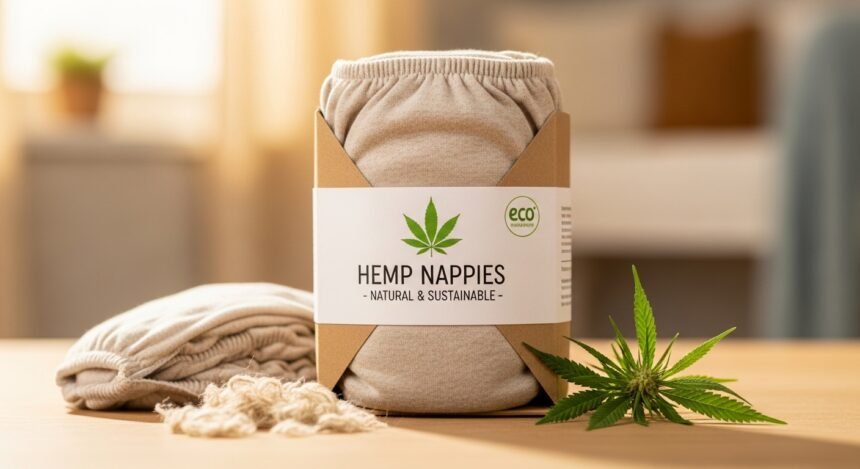
For modern parents, the journey toward eco-friendly parenting often begins at the changing table. With billions of disposable nappies ending up in landfills annually, the shift toward reusable nappies is more than just a trend—it is a vital step in carbon footprint reduction. Among the various materials available, one fibre stands out for its legendary performance: hemp. In this “Hemp Nappies: The Ultimate Sustainable Absorbency Guide”, we explore why this ancient plant is the future of modern childcare.

Why Hemp is the Gold Standard for Absorbency
When it comes to natural fibres, hemp is a heavyweight champion. Derived from the Cannabis sativa plant, organic hemp fabric is prized for its incredible tensile strength and porous structure. Unlike synthetic materials, hemp can hold up to 2.5 times its weight in water, making it the ideal choice for heavy wetters who frequently out-soak standard cotton or microfibre alternatives.
According to research published in Nature, hemp cultivation requires significantly less water than cotton, making it a frontrunner in sustainable diapering. Its density means that while it may be thinner than other inserts, its capacity to retain liquid is vastly superior, preventing the dreaded “compression leaks” often seen in synthetic boosters.
The Benefits of Hemp Nappies for Your Baby
Choosing hemp nappies: the ultimate sustainable absorbency guide is not just about the environment; it is about your baby’s comfort and skin health. Here is why hemp is a top-tier choice:
- Antimicrobial Properties: Hemp possesses natural antimicrobial properties that inhibit the growth of bacteria and fungi, which is crucial for nappy rash prevention.
- Breathable Fabric: Despite its high density, hemp is a remarkably breathable fabric, helping to regulate temperature and keep your baby’s skin dry.
- Durability: Hemp fibres are exceptionally strong. While other materials may degrade after dozens of washes, hemp actually becomes softer and more absorbent over time.
- Chemical-Free: Most biodegradable nappies and hemp inserts are free from the dioxins and perfumes found in disposables, reducing the risk of contact dermatitis as noted by the Mayo Clinic.
Comparing Nappy Materials: Which is Best?
To help you navigate the world of cloth, we have compared the most common materials used in absorbent inserts and cloth nappy boosters.
| Material | Absorbency Speed | Liquid Capacity | Sustainability Score |
|---|---|---|---|
| Hemp | Slow | Very High | Excellent |
| Bamboo | Medium | High | Good |
| Cotton | Fast | Medium | Moderate |
| Microfibre | Very Fast | Low | Poor |
How to Integrate Hemp into Your Routine
Because hemp absorbs slowly but holds a lot, many parents utilise it as a “booster” rather than a standalone insert. For night-time nappies, placing a hemp insert underneath a faster-absorbing layer like bamboo or cotton creates the perfect moisture-wicking system. This combination ensures that the baby feels dry instantly, while the hemp core handles the volume over several hours.
The NHS highlights the importance of frequent changes to maintain skin integrity, but with high-quality hemp, you can often extend the intervals between changes during sleep without risking leaks.
Mastering the Nappy Laundry Routine
Hemp requires a bit of special care to maintain its longevity. Follow these steps to keep your nappies in peak condition:
- The Pre-Wash: New hemp inserts must be washed 3 to 5 times before use to strip away natural oils and reach maximum absorbency.
- Temperature Control: Wash at 40-60°C. High temperatures can damage the elasticity of nappy covers, as cautioned by WHO hygiene guidelines.
- Avoid Softeners: Fabric softeners coat the fibres and drastically reduce absorbency.
- Line Dry: Whenever possible, air dry your nappies to save energy and utilise the sun’s natural bleaching properties, a technique supported by environmental groups like Greenpeace UK.
Environmental Impact and Global Sustainability
The environmental case for hemp is undeniable. According to the UN Environment Programme, textile production is a major contributor to global pollution. Hemp, however, acts as a “carbon sink,” absorbing more CO2 per hectare than most forests. Furthermore, it requires no pesticides, which protects local water sources from chemical runoff, a topic extensively covered by the Environmental Protection Agency.
By choosing hemp over disposable options, you are actively participating in a circular economy. For more information on sustainable materials, the Ellen MacArthur Foundation provides excellent resources on how textiles can be managed more responsibly.
Skin Sensitivity and Healthcare Advice
If your child has particularly sensitive skin or eczema, hemp’s hypoallergenic nature is a significant advantage. The British Skin Foundation suggests that natural, breathable fabrics are often better for those prone to irritation. Always ensure the nappy is not too tight to allow for air circulation, which helps in preventing the growth of Candida albicans, the yeast often responsible for severe nappy rash, as detailed in reports from The CDC.
For parents concerned about the safety of agricultural products, The Food Standards Agency and DEFRA provide oversight on industrial hemp production in the UK, ensuring the fibres used in your baby’s nappies are safe and strictly regulated.
Final Thoughts on Hemp Nappies
Transitioning to hemp nappies is an investment in your baby’s comfort and the planet’s future. While the nappy laundry routine may seem daunting at first, the benefits—ranging from superior absorbency for night-time nappies to significant carbon footprint reduction—far outweigh the initial learning curve. By understanding the science behind Hemp Nappies: The Ultimate Sustainable Absorbency Guide, you are empowered to make the best choice for your family.
Frequently Asked Questions (FAQs)
Are hemp nappies suitable for newborns?
Yes, hemp nappies are excellent for newborns, especially when paired with a softer top layer. However, because newborns need very frequent changes, you may find that the high capacity of hemp is even more beneficial as the baby grows and begins to sleep for longer stretches.
Do hemp nappies smell more than others?
Hemp itself is resistant to odours due to its antimicrobial properties. However, because it is a very dense natural fibre, it requires a thorough nappy laundry routine to ensure all ammonia is rinsed out. If you notice a smell, a “strip wash” as recommended by cloth nappy experts may be necessary.
Can I use hemp inserts in any nappy brand?
Absolutely. One of the best things about hemp absorbent inserts is their versatility. They can be stuffed into pocket nappies, laid inside wraps, or used as extra cloth nappy boosters in almost any brand of reusable nappy system available on the market.
For further reading on infant health and sustainability, consider visiting UNICEF UK or exploring textile innovations at ScienceDirect.