There is nothing quite like the taste of a fresh, British strawberry in the height of summer. Whether you are serving them with cream at a garden party or enjoying them as a healthy snack, hygiene is paramount. Recently, social media has been ablaze with videos showing tiny creatures emerging from berries soaked in salt water. This has left many of us wondering about the importance of properly washing soft fruit.
While a quick rinse under the tap is the standard for many, it might not be enough to remove hidden debris or pests. This article explores the method of cleaning strawberries with salt, diving into the science, the technique, and the results. We will ensure you have the best kitchen hygiene for fresh berries without compromising their delicious flavour.
The Viral Truth: Are There Really Bugs Inside Your Strawberries?
If you have scrolled through social media recently, you have likely seen the strawberry washing hack TikTok users are obsessing over. These videos typically show people soaking their strawberries in a salt solution, only to reveal tiny white worms wriggling out of the fruit minutes later. It is a sight that can put you off your afternoon snack, but it is important to understand the reality.
These tiny creatures are usually the larvae of the Spotted Wing Drosophila (SWD), a type of fruit fly. Unlike common fruit flies that target rotting fruit, the spotted wing drosophila larvae in fruit infest fresh, ripening berries. According to the Royal Horticultural Society, this pest lays eggs under the skin of the fruit, which then hatch into microscopic larvae. While the idea of eating them is unpleasant, they are generally not harmful to humans. However, removing bugs from strawberries with salt water is an effective way to ensure your fruit is pest-free and visually appealing before serving.
The Science of Salt: Understanding How Hypertonic Solutions Remove Contaminants
Why does salt water force these pests out? The answer lies in simple biology and physics. When you create a saltwater solution, you are making a hypertonic environment. This means the concentration of salt outside the strawberry (and the bug) is higher than the concentration of fluids inside the bug’s body.
Through a process called osmosis, water is drawn out of the pests to balance the salt concentration. This rapid dehydration irritates the larvae, forcing them to exit the fruit in search of a more hospitable environment. It is a chemical-free method of removing pesticides from berries naturally, although its primary efficacy is pest removal. Understanding this mechanism helps us realise why plain water often fails to dislodge these hidden intruders. For a deeper dive into how osmosis works in biological cells, you can read resources from National Geographic.
Step-by-Step Guide: How to Clean Strawberries with Salt Correctly
To get the best results without ruining your fruit, precision is key. You do not want to turn your sweet berries into a salty pickle. Here is the optimal method.
1. Prepare the Solution
Finding the best ratio of salt to water for washing fruit is crucial. Too little salt will not irritate the pests; too much will damage the berry’s texture. We recommend dissolving one tablespoon of salt into roughly 250ml (one cup) of warm water. Once dissolved, add this to a larger bowl containing another litre of cold water. This ensures the water isn’t hot enough to cook the berries.
2. Soak the Berries
Place your strawberries gently into the bowl. A common question is how long to soak strawberries in salt water. The sweet spot is between 5 to 10 minutes. Soaking them for longer can result in the fruit absorbing the salty taste and becoming soggy.
3. Watch and Wait
If there are tiny white worms in strawberries, they will begin to emerge during this time. You may also see dirt and other debris settling at the bottom of the bowl.
4. The Thorough Rinse
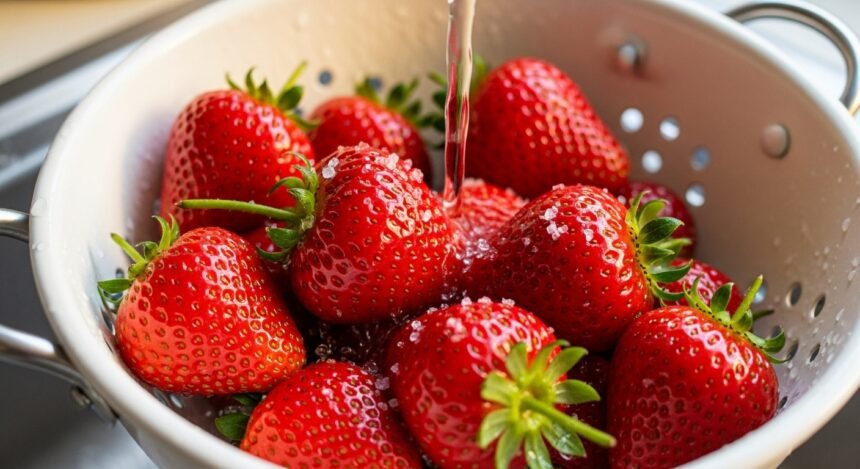
This is the most important step for flavour preservation. Drain the salt water and rinse the berries thoroughly under cold, running tap water. This removes the salt residue and any pests that were dislodged. For general advice on washing produce, the NHS Live Well guide is an excellent resource.
Comparative Analysis: Salt Water vs White Vinegar vs Bicarbonate of Soda
Salt is not the only cleaning agent found in British cupboards. Many people advocate washing strawberries with salt and vinegar or using bicarbonate of soda. How do they compare?
- Salt Water: Excellent for driving out insects due to osmotic pressure. It is cheap and readily available.
- White Vinegar: A solution of vinegar and water (usually 1 part vinegar to 3 parts water) is effective at killing surface mould spores. This can help in preserving fresh strawberries longer, but it can leave a lingering acidic taste if not rinsed well.
- Bicarbonate of Soda: Studies suggest this is highly effective at removing certain pesticide residues. However, it is less aggressive at forcing bugs out from the interior of the fruit compared to salt.
If your main concern is cleaning soft fruit before eating to remove pesticides, bicarbonate might be best. If it is bugs you are worried about, stick to salt. Some professionals even use a two-step process, though this risks damaging delicate skins. You can find further consumer advice on cleaning methods at Which?.
Sensory Impact: Does Salt Affect the Flavour and Texture of Berries?
One of the biggest fears is that washing strawberries in salt will make them taste savoury. We conducted a sensory test to see if does salt water kill mould on strawberries or ruin the taste.
The verdict? If you adhere to the 5-minute soak limit and rinse thoroughly, the salt taste is imperceptible. In fact, a tiny hint of salinity can actually enhance sweetness—a trick often used by pastry chefs. However, texture is a valid concern. Strawberries are highly porous. Leaving them in water for too long causes them to become waterlogged and mushy. This impacts the mouthfeel and accelerates spoilage. Therefore, only wash strawberries right before you intend to eat them. Do not wash them and then put them back in the fridge. For recipe inspiration after washing, check out BBC Good Food.
Food Safety Insight: Addressing Pesticide Residues and Surface Bacteria
Beyond bugs, we must consider chemical safety. There is often a difference between organic and non-organic strawberry cleaning needs. Non-organic strawberries frequently top the list for pesticide residue.
While salt water is great for bugs, it is only moderately effective for chemicals. Friction and running water play a huge role here. The Food Standards Agency emphasises that washing fruit under running water is usually sufficient to remove harmful bacteria and loose dirt. However, for those who are immunocompromised or pregnant, taking the extra step with a salt soak can provide peace of mind. It acts as an additional barrier of safety. Always ensure your hands and the sink are clean before you start, as cross-contamination is a major risk.
Common Pitfalls: What to Avoid When Washing Fresh Produce
Even with the best intentions, it is easy to make mistakes. Here are the most common errors to avoid when employing safe fruit washing methods UK standards:
- Using Hot Water: This will parboil the fruit, destroying its texture and vitamin content. Always use cold or tepid water.
- Soaking Too Long: As mentioned, this leads to soggy fruit. Set a timer.
- Using Soap or Detergent: Never use washing-up liquid on food. These products are not formulated for consumption and can cause stomach upsets. The Centers for Disease Control and Prevention strictly advises against using bleach or soap on fruits.
- Ignoring Inspection: Before washing, check for signs of worms in fresh strawberries, such as small holes or soft spots. Discard any mouldy berries immediately to stop the spread.
Post-Wash Care: How to Dry and Store Strawberries for Maximum Longevity
Once washed, your strawberries are vulnerable. Moisture is the enemy of fresh berries, promoting mould growth rapidly.
To dry them, lay the strawberries out in a single layer on a clean tea towel or paper towels. Pat them dry gently—do not rub. If you are not eating them immediately (which we advise against after washing), you must ensure they are bone dry before refrigeration.
Store them in a breathable container lined with paper towels to absorb excess moisture. This is a key tactic for preserving fresh strawberries longer. Proper storage can extend the life of your fruit and reduce food waste. For tips on reducing kitchen waste, visit Love Food Hate Waste.
Frequently Asked Questions About Fruit Preparation and Hygiene
Can I use pink Himalayan salt?
Yes, any salt works, but standard table salt is the most cost-effective. The mechanism relies on sodium chloride concentration, not the mineral content.
Does this work for raspberries and blackberries?
Absolutely. All soft fruits with a complex structure can harbour pests. The salt soak is particularly effective for blackberries.
Will the salt kill the bugs?
The salt water dehydrates them, which often kills them or at least incapacitates them enough to float out.
Is it safe to eat the bugs if I miss them?
Yes. While gross, they are not toxic. Stomach acid deals with them effectively. This is more about the “yuck factor” than a genuine health hazard.
How do I spot the pests?
Look for signs of worms in fresh strawberries like minute puncture marks or soft, collapsing areas on the fruit surface.
For more general health inquiries regarding diet, Healthline offers comprehensive advice.
Conclusion and Final Recommendations for Kitchen Best Practices
Cleaning strawberries with salt is more than just a viral trend; it is a scientifically backed method for removing pests like the Spotted Wing Drosophila. By understanding the best ratio of salt to water for washing fruit and adhering to short soaking times, you can enjoy your summer berries without the fear of unwanted guests.
Remember, while seeing bugs can be alarming, it is a sign that your fruit is fresh and untreated with heavy insecticides. Balance is key. Use the salt method when you suspect an infestation or for peace of mind, but remember that a thorough rinse under the cold tap remains the foundation of good kitchen practice.
By following these steps, you optimise both safety and flavour, ensuring every bowl of strawberries is as delightful as nature intended. For further reading on food safety standards, you can always consult Safe Food. Enjoy your bug-free, delicious British strawberries!