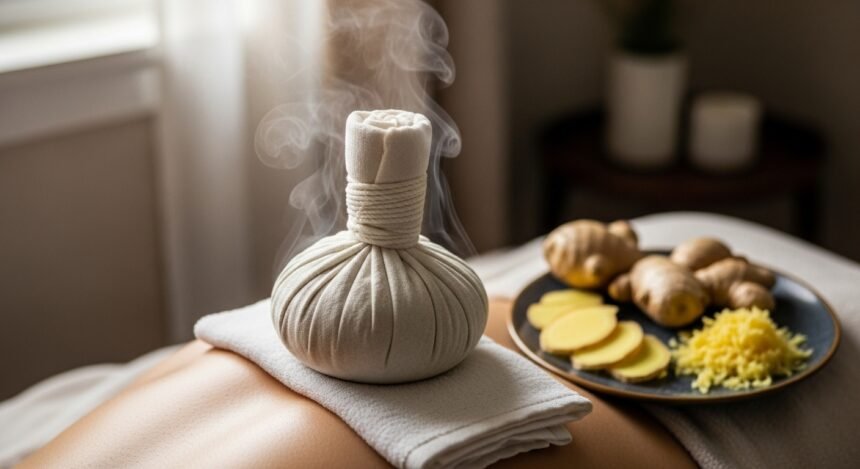
Chronic pain and muscle stiffness can significantly impact your daily quality of life. While modern medicine offers various pharmaceutical interventions, many individuals are turning towards natural, integrative therapies to manage discomfort. One such remedy, rooted in traditional practices, is the ginger compress.
Also known as a ginger root fomentation, this topical treatment harnesses the potent anti-inflammatory properties of ginger to stimulate circulation and disperse stagnation within the body. Whether you are dealing with an aching back, arthritic joints, or general muscle fatigue, applying a hot ginger infusion to the skin can provide profound relief.
In this article, we will explore the science behind this remedy, how to prepare a safe homemade ginger wrap, and the specific conditions that may benefit from this warming therapy.
Overview: The Power of Topical Ginger
Ginger (Zingiber officinale) has been a cornerstone of traditional medicine for thousands of years. While we often associate it with digestive health—perhaps sipping a tea while Soothing Your Stomach with Ginger Root Tea—its external applications are equally powerful.
A ginger compress works on the principle of ginger heat therapy. The heat from the water opens the pores, while the active compounds in ginger, primarily gingerols and shogaols, penetrate the tissues. This combination creates a stimulating effect that encourages blood flow to the affected area.
According to the National Center for Complementary and Integrative Health, ginger possesses distinct anti-inflammatory properties. When applied as a topical ginger application, it can help reduce the inflammatory cytokines that cause pain. This makes it a favoured remedy in macrobiotic and holistic circles, particularly in the form of a macrobiotic ginger compress used to support organ health.
Symptoms and Causes of Stagnation
Pain often arises from what traditional medicine calls “stagnation.” This can be a lack of blood flow, an accumulation of toxins, or tension held in the muscles. Modern life, with its sedentary nature, often contributes to this.
Conditions That Benefit
While a compress is versatile, it is particularly renowned for addressing specific issues:
- Arthritis and Joint Pain: A ginger compress for arthritis can help loosen stiff joints by increasing the temperature of the surrounding soft tissues.
- Kidney Pain: In macrobiotics, a ginger kidney compress is frequently used to stimulate the kidneys and dissolve mucus or fat accumulation.
- Muscle Tension: Tight shoulders or lower back spasms respond well to the penetrating heat.
- Poor Circulation: The stimulating blood flow effect is immediate, bringing fresh oxygen to the area.
If you are interested in the wider varieties of ginger that might be used for health, you might find our guide on Blue Ginger: Identification and Health Benefits enlightening, though common yellow ginger is standard for compresses.
Treatment: How to Make a Ginger Compress
Creating a natural pain relief compress at home is straightforward, but it requires attention to detail to prevent skin irritation. You want the water hot enough to be effective, but not so hot that it burns.
What You Will Need
- Fresh Ginger: Roughly 120 grams of fresh root. Do not use powder; you need the live enzymes. For tips on choosing the best rhizome, read Fresh Ginger: Selection, Storage, and Health Uses.
- Water: About 2 to 3 litres.
- Cotton Cloth: A grate or cheesecloth to hold the ginger.
- Towels: Two thick cotton hand towels (flannels).
- A Pot and Lid: To heat the water.
Step-by-Step Instructions
Prepare the Ginger: Grate the ginger root, leaving the skin on. Place the grated ginger into a cheesecloth or a cotton bag and tie it securely. This bundle will serve as the “tea bag” for your compress. If you are accustomed to making pastes, as seen in How to Use Ginger Paste in Your Daily Cooking, the texture should be similar but looser.Heat the Water: Bring the pot of water to a boil, then reduce the heat to a sub-boil. It is crucial not to let the water boil actively once the ginger is added, as high heat can destroy some of the active enzymes.
Infuse: Squeeze the ginger bundle into the water to release the yellow juices. Drop the bundle into the pot and let it steep for about 5 minutes. The water should turn a yellow-golden colour and smell strongly of ginger.
Soak the Towel: Dip one of your towels into the hot ginger water. Leaving the ends dry can help you wring it out without burning your hands.
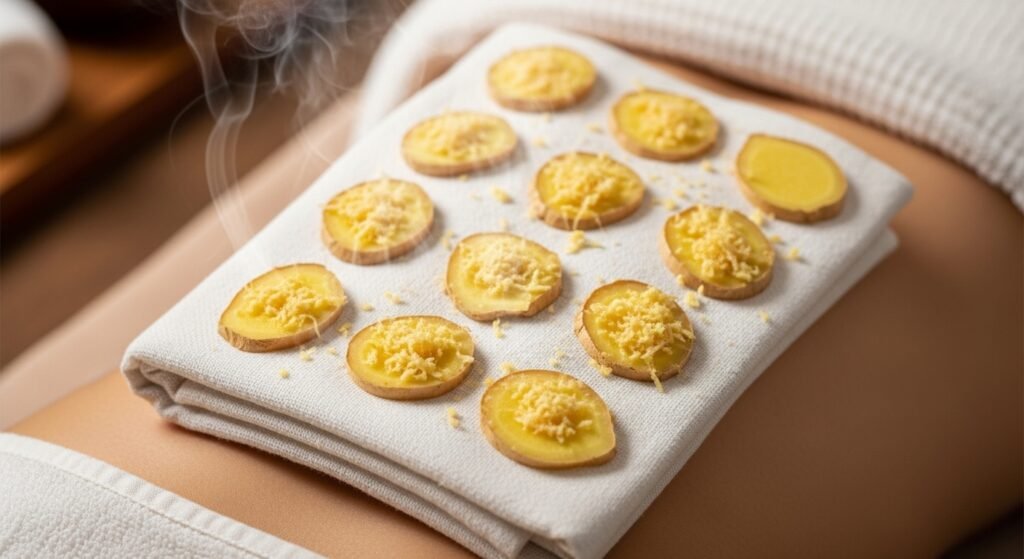
Wring and Apply: Wring the towel out tightly. It should be hot and steamy but not dripping. Apply this directly to the affected area (e.g., the lower back). Cover this towel with a dry towel to retain the heat
Rotate: As the first towel begins to cool (usually after 2–3 minutes), prepare the second towel in the same manner. Swap them out quickly to maintain continuous heat.
Duration: Continue this cycle for about 15 to 20 minutes. The skin should become pink, indicating increased blood flow.
Important Safety Note
Always test the temperature. While Versus Arthritis recommends heat therapy for joint pain, they emphasise avoiding burns. If the compress feels too hot, shake it in the air for a few seconds before applying.
Management and Variations
There are several ways to adapt this therapy depending on your specific needs or the materials you have on hand.
The Ginger Poultice vs. Compress
It is important to distinguish between a compress (liquid infusion) and a poultice. A ginger poultice recipe typically involves placing the ginger paste directly onto the skin or separated by a thin gauze. This is far more potent and can cause skin irritation if not monitored. For sensitive areas, a compress is safer. If you are interested in topical applications for beauty rather than pain, consider reading about The Skin Benefits of Using Natural Ginger Soap.
Aromatherapy Integration
To enhance the relaxing effects of your circulation boosting compress, you can add drops of essential oils to the outer dry towel (not the water). For specific pairings, refer to A Guide to Using Ginger Oil for Aromatherapy. The olfactory stimulation combined with the heat creates a powerful holistic pain management experience.
For Lower Back Pain
Using ginger for lower back pain is one of the most common applications. The NHS suggests heat as a primary self-management technique for non-specific back pain. The added anti-inflammatory compounds of ginger make it superior to a standard hot water bottle. Lie on your stomach and have a partner change the towels for you to ensure total relaxation.
Tips for Maximising Benefits
To get the most out of your ginger wrap for inflammation, consider these additional tips:
- Hydration: Heat therapy promotes detoxification. Ensure you are drinking plenty of fluids. Perhaps try a glass of juice; learn How to Make Ginger Juice for Better Digestion to keep the theme going.
- Rest: Do not expose the treated area to cold drafts immediately after the treatment. Rest for at least 10 minutes.
- Frequency: For chronic conditions, this can be done 2–3 times a week. However, listen to your body.
- Sourcing: If you have a green thumb, growing your own rhizomes ensures the freshest supply. Check out The Ultimate Guide to Ginger Plant Care at Home.
When to Avoid Ginger Compresses
While generally safe, this therapy is not for everyone. Avoid using a ginger compress if:
- You have a high fever.
- There is suspicion of appendicitis or pneumonia.
- The skin is broken or there is a rash.
- The area is inflamed due to a fresh injury (acute trauma usually requires ice first, not heat).
Always consult a healthcare professional before starting new therapies. The Mayo Clinic notes that integrative medicine should work alongside conventional treatments, not replace them.
The Science of Gingerol
Why does this work? Research published in PubMed highlights that gingerol, the bioactive substance in fresh ginger, can inhibit the production of nitric oxide, a molecule that plays a key role in the inflammation process. Furthermore, studies on ScienceDirect discuss the efficacy of ginger extract in pain modulation.
While consuming ginger—such as asking Are Ginger Shots Actually Good for Your Immunity?—works systemically, the topical ginger application targets the localized tissue. Some practitioners even use potent ginger extract for stronger applications, which you can learn about in Understanding the Uses of Potent Ginger Extract.
Alternative Ginger Applications
If a wet compress feels too messy, there are other ways to utilise ginger.
- Wild Ginger: While different from the culinary variety, it has its own history. Read more at Wild Ginger: Safety and Culinary Applications.
- Internal Support: Supporting your body from the inside is crucial. While external heat helps, reducing systemic inflammation via diet is key. Resources like the Arthritis Foundation recommend ginger in the diet.
The Bottom Line
A ginger compress is a time-honoured, effective, and low-cost method for managing pain and improving circulation. By combining the thermal benefits of water with the chemical properties of ginger, you create a ginger heat therapy session that rivals expensive spa treatments.
Whether you are applying a ginger kidney compress for organ health or a simple homemade ginger wrap for a stiff neck, the key is consistency and quality ingredients.
Remember to monitor your skin’s reaction and enjoy the soothing warmth. For more on the versatility of ginger, see what the WebMD archives say about its varied uses. Integrating this simple practice into your routine could be the natural relief your body has been waiting for.