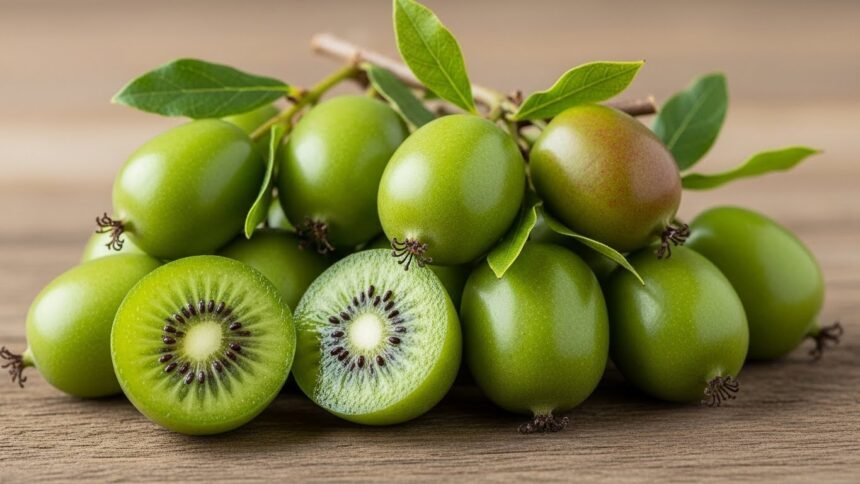
Every parent knows the struggle: the daily negotiation to get children to eat their recommended daily intake of fruits and vegetables. While apples and bananas are reliable staples, routine can breed boredom. Enter the kiwiberry—a grape-sized, fuzz-free powerhouse that is transforming lunchboxes across the globe. Introducing kiwiberries for kids is not just about adding variety; it is about providing a nutrient-dense, convenient superfood that children actually enjoy eating.
In this comprehensive guide, we will explore the nutritional profile of this unique fruit, compare it to its larger cousins, and offer creative, safety-conscious ways to integrate them into your family’s diet.
Unmasking the Kiwiberry: What Is It?
Before diving into the nutritional benefits, it is essential to understand what this fruit actually is. Scientifically known as Actinidia arguta, the kiwiberry is also referred to as the hardy kiwi, baby kiwi, or grape kiwi. Unlike the common fuzzy kiwifruit (Actinidia deliciosa), kiwiberries are native to colder climates in Northern Asia (Japan, Korea, Northern China) and Russia, though they are now successfully cultivated in the United States, New Zealand, and Chile.
The most distinct feature of the kiwiberry is its skin. It is smooth, hairless, and entirely edible. About the size of a large grape or a cherry tomato, these fruits require no peeling, making them the ultimate fast food from nature. Their internal structure mimics a standard kiwi, complete with an emerald green interior and tiny, crunchy black seeds, but the flavor profile is often described as sweeter and more aromatic.
The Nutritional Powerhouse: Why Choose Kiwiberries for Kids?
When looking for kiwiberries for kids, parents are often surprised by how much nutrition is packed into such a small package. These berries are not just sugary treats; they are functional foods supporting growth and development.
1. Immune System Support (Vitamin C)
One of the standout features of the kiwiberry is its Vitamin C content. According to nutritional data from the USDA FoodData Central, kiwiberries contain significantly more Vitamin C, gram for gram, than oranges. Vitamin C is vital for children as it aids in the synthesis of collagen (essential for growing bones and tissues) and acts as a powerful antioxidant to support the immune system.
2. Digestive Health (Dietary Fiber)
Digestive regularity is often a concern in pediatric health. The skin of fruits usually houses a significant portion of their fiber. Since kiwiberries are eaten whole—skin and all—they are an excellent source of dietary fiber. Adequate fiber intake helps prevent constipation and promotes a healthy gut microbiome, which is linked to overall health according to the Mayo Clinic.
3. Antioxidant Protection (Vitamin E)
While Vitamin E is commonly found in nuts and oils, it is rare to find high concentrations in fat-free fruits. Kiwiberries are a notable exception. Vitamin E protects cells from oxidative damage. As noted by Harvard T.H. Chan School of Public Health, Vitamin E also plays a role in immune function and metabolic processes.
4. Potassium for Muscle Function
Active children require electrolytes for muscle function and hydration. Kiwiberries provide a healthy dose of potassium, comparable to bananas. The American Heart Association highlights potassium’s role in counteracting the effects of sodium and maintaining healthy blood pressure levels.
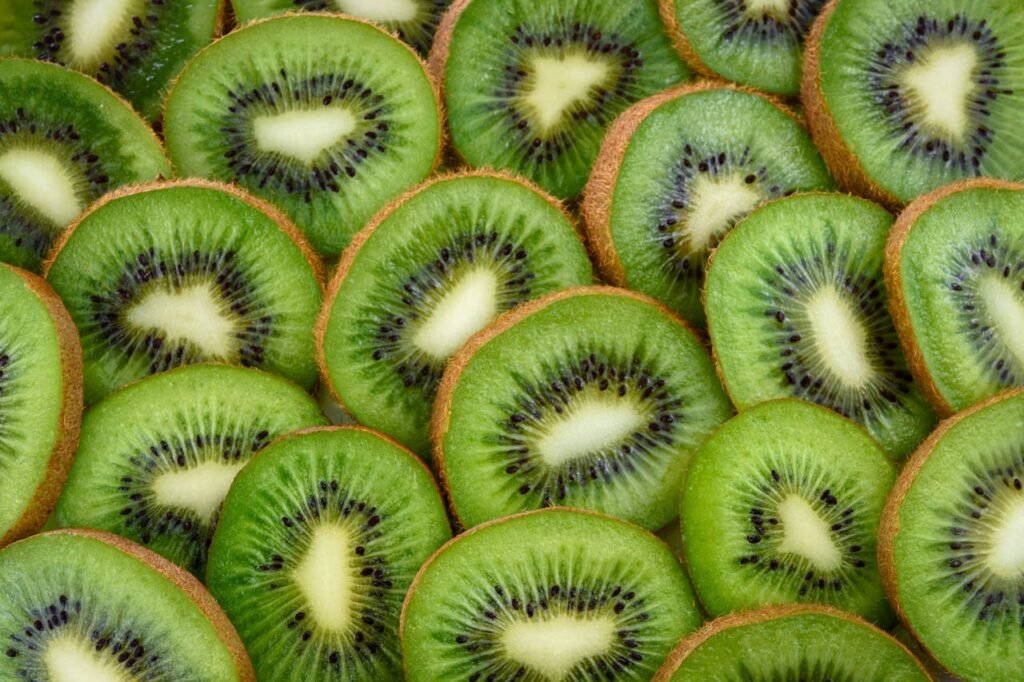
Kiwiberries vs. Standard Kiwifruit: A Comparison
To better understand why kiwiberries for kids might be a superior choice for school snacks or on-the-go eating, let’s compare them directly to the standard fuzzy kiwi.
| Feature | Standard Green Kiwifruit | Kiwiberry (Hardy Kiwi) | Advantage for Kids |
|---|---|---|---|
| Size | Large (Egg-sized) | Small (Grape-sized) | Perfect portion control; easy for small hands to hold. |
| Skin Texture | Fuzzy, thick, generally inedible | Smooth, thin, edible | No peeling required; immediate consumption. |
| Preparation | Requires a knife and spoon (cut & scoop) | Wash and eat | High convenience; less mess in the car or classroom. |
| Taste Profile | Sweet-tart balance | Often sweeter, less acidic | More palatable for picky eaters sensitive to sourness. |
| Edible Waste | Skin is usually discarded | 100% edible | Zero food waste. |
The Sensory Experience: Overcoming Picky Eating
Texture is frequently a barrier for children when trying new fruits. The “fuzz” on a traditional kiwi can be a sensory nightmare for some toddlers and young children. Kiwiberries solve this problem entirely. The snap of the skin followed by the soft, sweet interior offers a sensory experience similar to a grape but with a more complex, tropical flavor.
According to the Academy of Nutrition and Dietetics, repeated exposure and making food “fun” are key strategies in handling picky eaters. The novelty of the kiwiberry—often marketed as “baby kiwis”—can pique a child’s curiosity, making them more willing to try it.
Safety First: Selection, Storage, and Choking Hazards
While kiwiberries for kids are a fantastic nutritional addition, safety and proper handling are paramount.
Selection and Ripeness
Kiwiberries are climacteric fruits, meaning they continue to ripen after being picked. When purchasing, look for berries that are firm and free of blemishes. However, they are sweetest when they are slightly soft to the touch. If they are hard, leave them at room temperature for a few days. Once ripe, store them in the refrigerator to extend their shelf life, which is generally shorter than standard kiwis.
Food Safety
As with all produce, thoroughly washing kiwiberries is essential to remove any potential residues or bacteria. The FDA guidelines on produce safety recommend washing hands for 20 seconds before preparation and rinsing fruits under running water—even if you plan to peel them (though you won’t peel these!).
Choking Prevention
For toddlers and young children (generally under age 4), small, round foods present a choking hazard. While softer than a raw carrot, a whole kiwiberry could still block an airway. The American Academy of Pediatrics (AAP) advises cutting round foods like grapes into halves or quarters lengthwise. The same rule applies here: Slice kiwiberries lengthwise for toddlers to ensure safe snacking.
5 Creative Ways to Serve Kiwiberries
Need inspiration? Here is how to incorporate these berries into your child’s menu:
- The “Frog Eye” Salad: Capitalize on the look of the cut fruit. Mix sliced kiwiberries with strawberries and blueberries for a colorful fruit salad. The visual appeal aligns with the Produce for Better Health Foundation’s “Have A Plant” initiative to make fruits visually exciting.
- Lunchbox Skewers: Thread kiwiberries onto blunt-edged skewers alternating with cheese cubes. This creates a balanced snack of carbohydrates and protein.
- Green Smoothie Booster: Because they are sweeter than regular kiwis, they add natural sugar and a vibrant green color to spinach or kale smoothies without the need for honey or maple syrup.
- Frozen Treats: Freeze whole (for older kids) or sliced kiwiberries. They turn into miniature sorbet bites, perfect for hot summer days.
- Yogurt Parfaits: Layer halved kiwiberries with Greek yogurt and granola. The acidity of the yogurt pairs perfectly with the sweetness of the berry.
Conclusion
Kiwiberries represent the perfect intersection of convenience, nutrition, and taste. By incorporating kiwiberries for kids into your rotation, you are offering a high-fiber, Vitamin C-rich snack that requires zero preparation time. Whether serving them as a “fuzz-free” alternative to standard kiwis or using them to create visually engaging lunchboxes, these tiny fruits offer massive benefits.
Next time you are in the produce aisle during late summer or early autumn, look for the small clamshells of green berries. Your kids—and their immune systems—will thank you.
Frequently Asked Questions
When are kiwiberries in season? Generally, they are available in late September through October in the Northern Hemisphere, though imports from Chile can make them available in February and March.
Can you eat the skin of a kiwiberry? Yes! The skin is entirely edible, smooth, and full of antioxidants.
Are kiwiberries genetically modified (GMO)? No. Kiwiberries are a natural species (Actinidia arguta) and are not a GMO product.