We all strive for a radiant, glowing complexion that exudes health and vitality. In the pursuit of youthful skin, it is easy to become overwhelmed by the sheer volume of expensive serums, retinoids, and invasive treatments available on the market today. However, sometimes the most effective solutions are found not in the cosmetic aisle, but in the fruit bowl.
Nature provides an abundance of resources to support our physiology, and when it comes to skin health, the kiwi fruit is arguably an unsung hero. Often overlooked in favour of citrus fruits, this small, fuzzy powerhouse is packed with an impressive density of nutrients specifically calibrated to support the skin’s structural integrity.
From combating the visible signs of ageing to actively facilitating the synthesis of collagen, incorporating kiwi into your diet—and even your skincare routine—can yield transformative results. If you have been struggling with dullness, fine lines, or uneven texture, understanding the science behind kiwi for skin might just change your approach to beauty entirely.
Overview
The kiwi fruit, also known as the Chinese gooseberry, is a nutrient-dense fruit native to China and widely cultivated in New Zealand. While it is celebrated for its tangy flavour and vibrant green or gold flesh, its nutritional profile is what makes it a dermatological superstar.
Kiwi is exceptionally rich in Vitamin C (ascorbic acid), containing more per gram than oranges. Vitamin C is the primary cofactor required for collagen synthesis, the process that keeps skin firm and plump. Furthermore, kiwis are loaded with Vitamin E, Vitamin K, and a host of phytonutrients and antioxidants that protect cells from oxidative stress.
According to Healthline, the unique combination of these vitamins creates a synergistic effect that boosts immune function and tissue repair. For the skin, this means an enhanced ability to heal from sun damage and environmental pollutants. The high water content of the fruit also aids in systemic hydration, which is essential for maintaining a healthy skin barrier and preventing the dryness that often accentuates wrinkles.
Symptoms and Causes of Skin Ageing
To understand why kiwi is so effective, we must first look at the symptoms and causes of skin degradation. While ageing is a natural biological process, ‘premature’ ageing is often a result of external factors and nutritional deficiencies.
The Decline of Collagen
The most prominent symptom of ageing skin is the formation of fine lines and wrinkles. This is primarily caused by the degradation of collagen and elastin, the protein fibres that provide structural support to the dermis. As we age, our bodies naturally produce less collagen. However, this decline is accelerated by lifestyle factors such as high sugar intake, smoking, and UV exposure.
Oxidative Stress
Dullness and hyperpigmentation are often symptoms of oxidative stress. This occurs when unstable molecules known as free radicals damage skin cells. These free radicals are generated by exposure to UV rays and pollution. Without sufficient antioxidants to neutralise them, they break down DNA and lipids in the skin barrier.
Dehydration and Inflammation
Chronic dehydration manifests as rough texture and a lack of elasticity. Furthermore, inflammation caused by diet or stress can lead to redness and acne. Research from the NHS highlights that deficiencies in essential micronutrients like Vitamin C can impair the body’s ability to repair this damage, leading to a complexion that looks tired and weathered.
Diagnosis and Treatment: The Kiwi Solution
If your ‘diagnosis’ is lackluster, ageing, or dehydrated skin, the ‘treatment’ involves a two-pronged approach: internal nutrition and external application. Kiwi fruit offers a potent remedy for the biological mechanisms described above.
Boosting Collagen Production
The primary mechanism by which kiwi treats skin concerns is through its massive Vitamin C content. Collagen synthesis relies on two amino acids, glycine and proline. For these amino acids to form the collagen helix structure, they must be ‘hydroxylated’—a chemical process that is entirely dependent on Vitamin C.
Without adequate Vitamin C, your body simply cannot produce high-quality collagen, regardless of how much protein you eat. A study cited by the National Institutes of Health (NIH) confirms that Vitamin C regulates the synthesis of structural proteins. Eating just one kiwi can provide over 100% of your daily recommended intake, effectively fuelling your body’s collagen factories.
Antioxidant Defence
Kiwi is rich in Vitamin E, a lipid-soluble antioxidant that protects the cell membrane. While Vitamin C protects the inside of the cell, Vitamin E guards the outer layer. Together, they offer comprehensive protection against UV-induced damage. The British Skin Foundation emphasises that protecting skin from UV radiation is critical in preventing premature ageing, and dietary antioxidants act as an internal sunscreen of sorts (though they do not replace SPF).
Promoting Healing and Hydration
The fruit contains an enzyme called actinidin, which aids in protein digestion. Better digestion means better absorption of nutrients necessary for skin repair. Additionally, the potassium content in kiwi helps balance fluids in the body, ensuring that cells remain hydrated. The Cleveland Clinic notes that proper hydration is key to maintaining skin elasticity.
Nutritional Breakdown for Skin Health
| Nutrient | Amount per 100g | Benefit for Skin |
|---|---|---|
| Vitamin C | ~92.7 mg | Essential for collagen production; brightens complexion. |
| Vitamin E | ~1.46 mg | Protects cell membranes from UV damage; moisturising. |
| Vitamin K | ~40.3 mcg | Helps heal bruises; reduces dark circles under eyes. |
| Potassium | ~312 mg | Maintains fluid balance and hydration. |
| Folate | ~25 mcg | Supports cell division and DNA repair. |
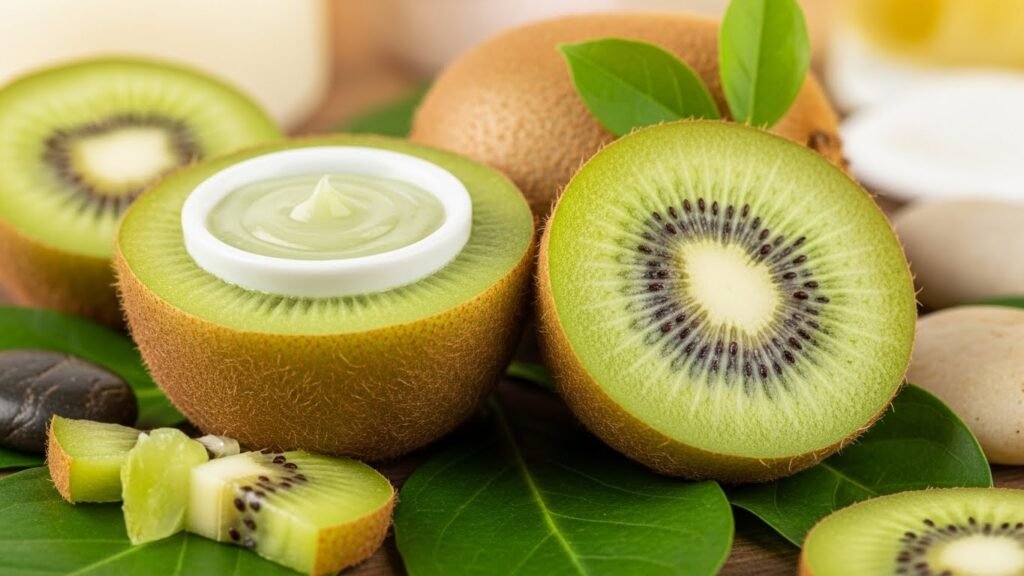
Tips for Management
Managing your skin health with kiwi involves consistency. Here are practical ways to incorporate this superfruit into your daily regimen for maximum benefit.
1. Dietary Integration
The most effective way to utilise kiwi is to eat it raw. Cooking the fruit can destroy the heat-sensitive Vitamin C.
- Morning Boost: Add sliced kiwi to your porridge or Greek yoghurt. The fats in the yoghurt help absorb the Vitamin E in the kiwi.
- Smoothies: Blend kiwi with spinach and pineapple for a potent detox drink. According to BBC Good Food, blending retains the fibre, which is crucial for gut health—a factor deeply linked to clear skin.
2. Topical Application (DIY Masks)
Kiwi can be applied topically to exfoliate dead skin cells, thanks to its alpha-hydroxy acids (AHAs) and actinidin.
- Brightening Mask: Mash half a peeled kiwi with one tablespoon of yoghurt. Apply to the face for 15 minutes and rinse with lukewarm water. The lactic acid in yoghurt combined with kiwi’s Vitamin C creates a powerful brightening effect.
- Exfoliating Scrub: Mix mashed kiwi with a teaspoon of sugar and olive oil for a gentle body scrub.
3. Patch Testing
Before applying kiwi to your face, always perform a patch test on your inner arm. The acidic nature of the fruit can cause irritation for those with sensitive skin conditions like eczema. DermNet NZ warns that some individuals may have a latex-fruit syndrome, where allergies to latex correlate with allergies to kiwi.
4. Hydration Synergy
Pair your kiwi intake with plenty of water. As advised by GOV.UK, drinking 6 to 8 glasses of fluid a day is essential. The electrolytes in kiwi will help your body retain this fluid more effectively within the cells.
5. Consistency is Key
Collagen production does not happen overnight. You must prioritise a daily intake of Vitamin C. Unlike fat-soluble vitamins, Vitamin C is water-soluble and leaves the body quickly, meaning you need a fresh supply every day.
Frequently Asked Questions
Can I eat the skin of the kiwi?
Yes, you absolutely can. The skin is high in fibre and antioxidants. Just ensure you wash it thoroughly to remove any pesticides. Some people find the texture unpleasant, but blending it into a smoothie eliminates this issue.
Is kiwi better than oranges for Vitamin C?
Generally, yes. Kiwi fruit contains a higher concentration of Vitamin C per gram compared to oranges. This makes it a more efficient choice for boosting collagen production if you are limiting sugar intake, as you need to eat less fruit to get the same vitamin benefit.
Can applying kiwi to my face cure acne?
While it cannot ‘cure’ acne, the anti-inflammatory properties and natural acids can help reduce redness and unclog pores. However, as noted by Medical News Today, severe acne should always be treated under the guidance of a dermatologist.
Are there any side effects?
Kiwi is generally safe, but consuming it in immense quantities could cause acidity or stomach upset due to the actinidin enzyme. Furthermore, it has a mild blood-thinning effect, similar to aspirin, due to its Vitamin K and salicylate content.
The Bottom Line
Achieving healthy, youthful skin is a marathon, not a sprint, and diet plays a pivotal role in the condition of your complexion. Kiwi fruit offers a scientifically backed, natural method to boost collagen production, fight free radical damage, and maintain hydration.
By understanding the powerful connection between what you eat and how you look, you can take control of your skin’s ageing process. Whether you choose to slice it over your breakfast cereal or apply it as a refreshing face mask, the humble kiwi is a versatile tool in your skincare arsenal.
For more advice on maintaining a balanced diet for skin health, resources from Harvard Health and the British Nutrition Foundation offer excellent guidance on how whole foods contribute to systemic wellness. Prioritise your internal health, and your external glow will surely follow.