Picking the Perfect Avocado at the Store: A Ripeness Checklist
Avocados have become a staple in modern diets, celebrated for their creamy texture and robust nutritional profile. Whether you are preparing a smashed avocado toast for breakfast or a fresh bowl of guacamole for a gathering, the success of your dish relies entirely on the quality of the fruit.
However, selecting this unique berry (yes, botanically, it is a single-seeded berry) often feels like a gamble. We have all experienced the disappointment of slicing into an avocado only to find brown, stringy flesh, or conversely, a stone-hard interior that refuses to mash.
Mastering the art of picking the perfect avocado at the store does not require a degree in botany, but it does require a sensory checklist. By understanding the visual and tactile cues of ripeness, you can minimise waste and ensure you get the best value for your money.
This guide provides an exhaustive look at how to identify the ideal avocado, the science behind its ripening process, and how to manage the fruit once you get it home.
Overview
The avocado (Persea americana) is unique among fruits because it does not ripen on the tree. It is a climacteric fruit, meaning its ripening process is triggered by the production of ethylene gas only after it has been harvested.
While this allows for easier transport, it places the burden of timing on the consumer. The goal when picking the perfect avocado at the store is to identify exactly where the fruit sits on this timeline relative to when you plan to eat it.
Nutritionally, avocados are a powerhouse. They are rich in monounsaturated fats, specifically oleic acid, which is linked to reduced inflammation. They also contain more potassium than bananas and are loaded with fibre, vitamins K, C, and E.
Because they are often sold at varying stages of maturity, the "perfect" avocado depends entirely on your schedule. If you need it for dinner tonight, you require immediate ripeness. If you are shopping for the week ahead, you need a firm fruit that will soften gradually.
Symptoms and Causes: Identifying Ripeness and Spoilage
In the context of selecting produce, think of "symptoms" as the physical manifestations of the fruit's maturity and health. The "causes" are the biological processes—primarily oxidation and enzymatic activity—that determine its state.
Visual Symptoms of the Perfect Avocado
Your first filter when scanning the produce bin is colour. While there are hundreds of avocado varieties, the Hass avocado is the most common in UK supermarkets. Its skin changes colour as it ripens.
1. Bright Green:
A bright, grass-green skin usually indicates the avocado is undeniably unripe. It will be hard to the touch and requires 4 to 5 days on your counter to reach maturity. Buy this if you are planning a meal for later in the week.
2. Forest Green to Dark Purple:
As the Hass avocado ripens, it transitions to a deeper green, eventually turning dark purple or maroon. An avocado that is ready to eat immediately is typically a dark, blackened purple. However, colour can be deceiving; some varieties, like the Fuerte or Zutano, remain green even when fully ripe. Always pair the visual check with a tactile one.
3. The Stem Check:
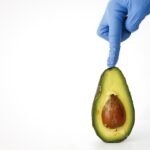
This is a critical "symptom" of internal quality. Locate the small stem or "cap" at the top of the fruit. If you can gently flick it off with your thumb and see bright green underneath, the fruit is likely creamy and healthy. If the area under the stem is brown, the avocado is likely over-ripe or oxidised inside. If the stem refuses to budge, the fruit is under-ripe.
Tactile Symptoms: The Squeeze Test
Texture is the most reliable indicator when picking the perfect avocado at the store.
1. Rock Hard:
If the fruit feels like a cricket ball, it is under-ripe. The flesh will be waxy and flavourless.
2. Mushy or Dented:
If the fruit leaves a permanent indentation when pressed, or feels like a deflated balloon, the cellular structure has broken down. This is a symptom of spoilage.
3. The Goldilocks Zone:
The perfect avocado should yield to gentle pressure but not collapse. It should feel slightly soft, similar to pressing the tip of your nose.
Causes of Spoilage
Understanding why avocados go bad can help you spot the duds.
Bruising:
Shoppers often squeeze avocados with their fingertips. This causes internal bruising, appearing as dark spots in the flesh later. Always squeeze with the palm of your hand to distribute pressure evenly.
Chilling Injury:
If an avocado is stored below 5°C before it has ripened, it suffers chilling injury. This halts the enzymatic ripening process permanently. In the store, if you see hard, green avocados in a very cold chiller, they may never ripen properly at home, resulting in a rubbery texture.
Oxidation:
Once the internal flesh is exposed to air (via cracks or stem removal), phenolic compounds in the fruit react with oxygen to produce melanin, turning the flesh brown. Avoid fruit with visible skin breaks.
Treatment and Management: Selection and Storage Strategy
Once you have successfully navigated picking the perfect avocado at the store, the "treatment" involves managing the ripening process to suit your culinary timeline.
Management Strategy 1: Buying for Now vs. Later
The most effective strategy is the "staggered purchase" method.
If you eat avocados daily, do not buy five ripe ones at once. Instead, purchase:
- Two Ripe (Dark, yields to pressure): For use within 24 hours.
- Two Breaking (Dark green, slight give): For use in 2–3 days.
- One Hard (Bright green, firm): For use in 4–5 days.
This management style ensures a continuous supply of perfect fruit without the stress of them all rotting simultaneously.
Treatment for Unripe Avocados
If you have purchased hard avocados and need to accelerate the ripening process (the "treatment"), you can harness the power of ethylene gas.
The Paper Bag Method:
Place the unripe avocado in a brown paper bag with a banana or an apple. These fruits are high ethylene producers. The paper bag traps the gas, concentrating it around the avocado and speeding up the ripening process significantly. Check the fruit daily; it can ripen in as little as 1–2 days using this method.
Management of Ripe Avocados
Once an avocado reaches peak ripeness, the biological clock is ticking loudly. To "treat" this, you must pause the process.
Refrigeration:
While you should never fridge a hard avocado, you absolutely should fridge a ripe one. Placing a perfectly ripe avocado in the refrigerator can extend its life by 2 to 3 days. The cold temperature slows the metabolic rate of the fruit, maintaining that perfect texture until you are ready to eat it.
Handling Cut Avocados:
If you only use half, keeping the other half fresh is a common struggle. The management goal here is to block oxygen.
- Keep the stone (pit) in the unused half.
- Brush the exposed flesh with lemon or lime juice (citric acid slows oxidation).
- Wrap it tightly in cling film, ensuring the plastic touches the surface of the flesh to eliminate air pockets.
Tips for Safe Preparation and Usage
Beyond selection, how you handle the fruit matters.
1. Wash the Skin
Even though you do not eat the skin, you should rinse the avocado under running water before cutting. The knife blade can drag bacteria (like Listeria or Salmonella) from the skin onto the edible flesh.
2. Avoid "Avocado Hand"
This is a surprisingly common injury where the knife slips off the stone and into the palm. To treat the avocado safely, place it on a cutting board to slice it. Never hold the half in your hand while trying to whack the stone with a knife. Use a spoon to scoop the stone out safely.
3. Check Under the Nub
We mentioned the stem test, but be careful not to trigger rot. If you remove the stem in the store to check the colour, you have broken the seal. If you don't buy that specific avocado, you have likely doomed it to rot faster for the next shopper. Only perform the stem check if you are 90% sure you are going to buy it based on touch.
4. Texture Matters for the Dish
- Guacamole: You want an avocado that is on the softer side of ripe. It should mash easily without lumps.
- Salads/Slicing: You want an avocado that is "firm-ripe." It should hold its shape when cubed but still have a creamy mouthfeel.
The Bottom Line
Picking the perfect avocado at the store is a skill that combines observation and gentle handling. It requires looking past the rough exterior to understand the biological stage of the fruit.
Remember the three-step checklist: check the colour (darker is usually riper for Hass), check the touch (yields to gentle palm pressure), and check the stem (green underneath is good).
By managing how you buy and store them—utilising the paper bag trick for speed and the fridge for preservation—you can ensure that you always have a perfect, nutrient-dense avocado ready for your next meal. No more gambling; just delicious, creamy consistency.