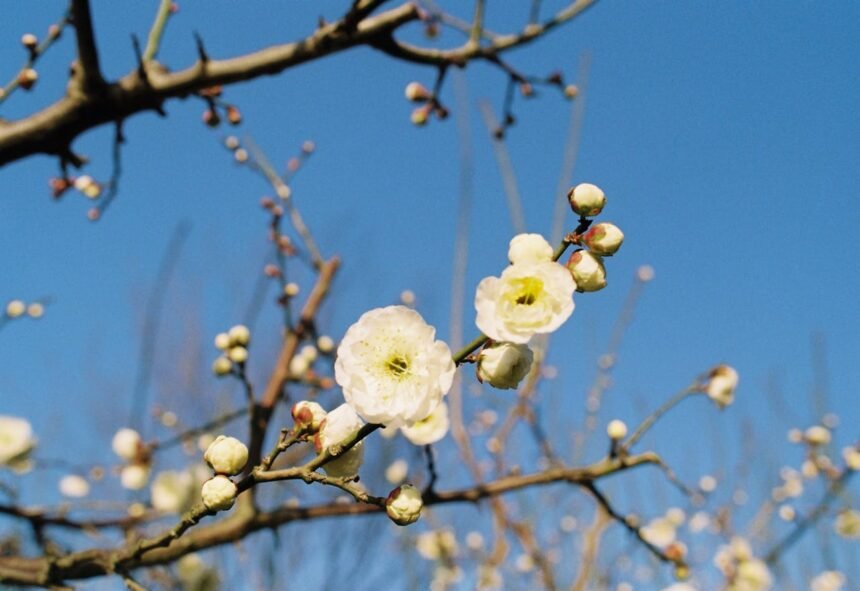
As the frost of winter still clings to the earth, a delicate yet defiant flower begins to unfurl its petals. This is the plum blossom, scientifically known as Prunus mume. Unlike the celebrated cherry blossom that waits for the warmth of late spring, the plum blossom arrives when the air is still crisp, often blooming amidst the snow. Understanding the plum blossom meaning requires a journey through history, art, and even modern wellness.
For centuries, this flower has served as a powerful spring herald, signalling the end of the dark, cold months and the promise of new life. In this guide, we will explore the deep cultural roots, the hidden symbolism of its five petals, and why this hardy plant is as much a symbol of mental well-being as it is of botanical beauty.
The Cultural Significance of the Plum Blossom
In East Asian culture, the plum blossom is more than just a plant; it is a philosophy. Historically celebrated in China, Japan, and Korea, the flower is a staple of classical poetry and ink wash painting. According to the Metropolitan Museum of Art, the plum blossom is often grouped with the pine and bamboo as one of the “Three Friends of Winter,” representing steadfastness in the face of adversity.
While many people associate the tradition of flower viewing or Hanami strictly with cherries, the plum tree (or Ume) actually holds its own dedicated festivals in Japan during February. You can learn more about these seasonal transitions at Kew Gardens.
Resilience and Perseverance
Perhaps the most profound plum blossom meaning is that of resilience and perseverance. Because it blooms in the harshest conditions of winter, it has become a metaphor for the human spirit overcoming obstacles. Just as the flower thrives in the cold, we too can find strength in challenging times. This concept mirrors modern psychological approaches to building grit, which you can explore through resources on Psychology Today.
The Symbolism of the Five Petals
Most plum blossoms feature five petals, and in traditional Chinese culture, these are not merely aesthetic. They are said to represent the “Five Blessings” (Wufu), which are essential components of a flourishing life. These include:
- Longevity: A life lived fully and healthily.
- Wealth: Prosperity in both material and spiritual terms.
- Health and Composure: A balanced state of mind and body.
- Virtue: Living a life of moral integrity.
- A Natural Death: Passing peacefully at an old age.
This floral symbolism is deeply embedded in New Year traditions across Asia, where plum blossoms are used to decorate homes to invite these blessings for the coming year. Historians at History.com highlight how these symbols shape cultural identity.
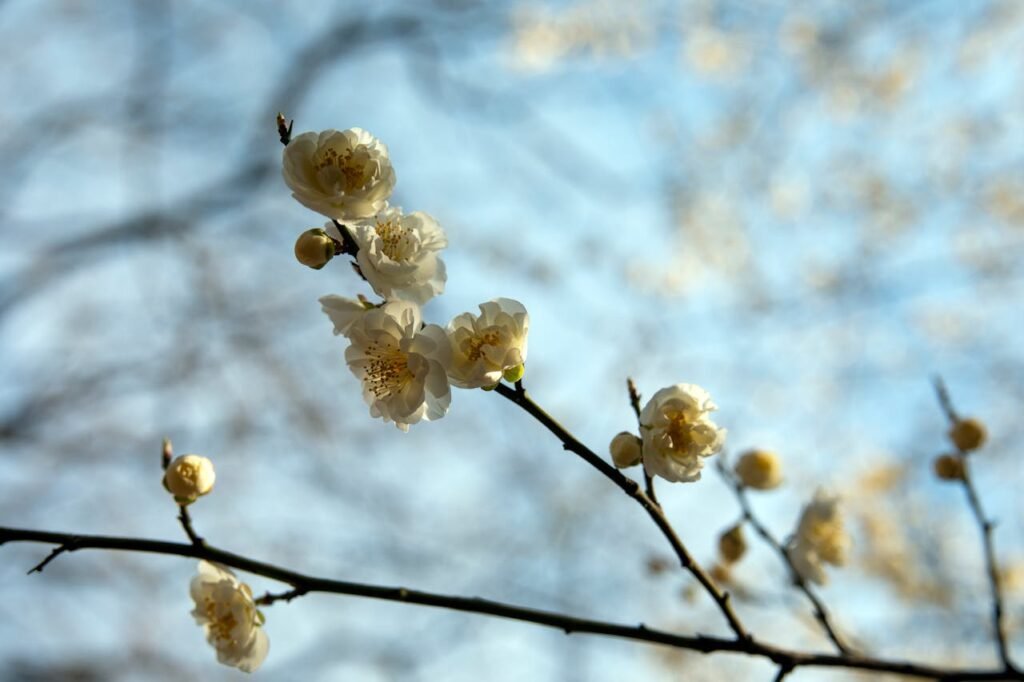
Health and Medicinal Uses of Prunus Mume
Beyond its beauty, the plum tree offers significant biological value. In traditional herbal remedies, the fruit of the Prunus mume (often called the smoked plum or Wumei) is utilised for its various medicinal uses. Research published on PubMed Central suggests that the extracts of this plant may have antimicrobial effects.
Furthermore, the plum fruit is known for its high antioxidant properties, which help the body fight oxidative stress. Incorporating antioxidant-rich foods into your diet is a cornerstone of preventative health, a topic frequently discussed by the NHS. The plum blossom reminds us that longevity is often rooted in the natural world.
Comparing the Plum and Cherry Blossom
It is easy to confuse the plum blossom with its cousin, the cherry blossom. However, their physical traits and symbolic meanings differ significantly. The following table provides a quick reference for distinguishing between these two iconic winter flowers and spring blooms.
| Feature | Plum Blossom (Ume) | Cherry Blossom (Sakura) |
|---|---|---|
| Bloom Timing | Late Winter (January – February) | Early Spring (March – April) |
| Petal Shape | Rounded tips | Cleft or notched at the tip |
| Fragrance | Strong, sweet, spicy scent | Very faint or no scent |
| Key Symbolism | Perseverance, hope, and endurance | Transience and the beauty of life |
| Leaf Appearance | No leaves during initial bloom | Leaves may appear with blossoms |
Plum Blossoms and Mental Well-being
In the modern world, the plum blossom meaning has evolved to include a focus on mindfulness. Engaging with nature, a practice sometimes called “forest bathing,” has been shown to reduce cortisol levels. Scientific studies documented by Nature indicate that spending time in green spaces—or even observing the first blooms of winter—can significantly improve mood.
The act of seeking out plum blossoms during the cold months encourages us to stay active and connected to the environment. Physical activity, even a brisk walk to a local park, is vital for cardiovascular health, as noted by the Mayo Clinic.
The Legacy of the Plum in Art and Literature
From the delicate porcelain of the Ming Dynasty to the modern digital photography of today, the plum blossom remains a favourite subject. Its crooked, dark branches contrasting with soft pink or white flowers create a visual representation of “Yin and Yang”—the balance of hard and soft. Scholarly articles from Oxford University often highlight how botanical art served as a bridge between science and spirituality in ancient times.
If you are interested in the botanical classification of these trees, the Royal Horticultural Society provides detailed guides on how to grow and care for Prunus species in your own garden, ensuring that the spirit of resilience is always within reach.
For more insights into how plants affect our daily lives, you can visit Britannica for an in-depth look at the Prunus genus or check out ScienceDirect for the latest agricultural research on the species.
Frequently Asked Questions (FAQs)
What does the plum blossom symbolise in tattoos?
In tattoo art, the plum blossom meaning often relates to a person’s ability to overcome a difficult period in their life. It represents “blooming under pressure” and is frequently chosen to symbolise survival and new beginnings after a personal struggle.
Is the fruit of the plum blossom tree edible?
Yes, the fruit of the Prunus mume is edible, though it is rarely eaten raw because it is very sour. It is usually pickled to make Umeboshi or used to infuse liqueurs and syrups. For nutritional guidelines on stone fruits, refer to BBC Food.
Can plum blossoms grow in the UK?
Plum trees are quite hardy and can thrive in the UK climate. They prefer a sunny, sheltered spot to protect the early blossoms from the harshest winds. Advice on planting can be found via the Smithsonian Gardens resources, which cover a wide range of global temperate plants.
Why are plum blossoms associated with winter?
They are associated with winter because they are among the first trees to bloom, often while snow is still on the ground. This unique timing is what gives them their reputation for perseverance and strength compared to other more delicate winter flowers.