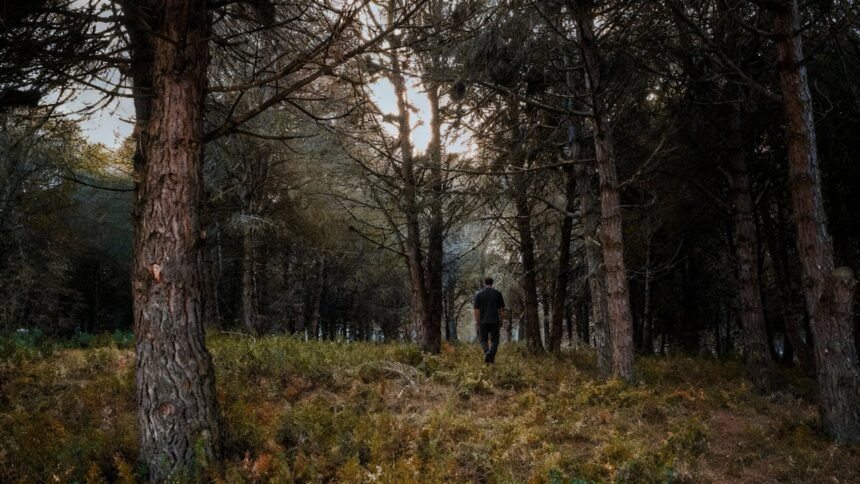
In an era defined by rapid urbanization and digital saturation, the human mind is increasingly taxed. We are tethered to screens, bombarded by notifications, and surrounded by concrete. The resulting epidemic of burnout, anxiety, and stress has health professionals looking for sustainable solutions. While medication and therapy remain pillars of treatment, a powerful, accessible prescription is gaining scientific traction: nature itself. Specifically, the practice of forest bathing mental health interventions—known in Japan as Shinrin-yoku—is emerging as a vital tool for psychological resilience.
This article delves into the science behind this practice, exploring how immersive nature experiences can physiologically resets our nervous systems and foster profound mental well-being.
What is Forest Bathing (Shinrin-Yoku)?
Unlike hiking, which focuses on reaching a destination or physical exertion, forest bathing is the practice of immersing oneself in nature with the aim of slowing down and engaging the senses. The term Shinrin-yoku was coined by the Japanese Ministry of Agriculture, Forestry, and Fisheries in 1982. It was developed not just as a marketing tool to encourage people to visit forests, but as a direct response to a public health crisis involving high stress levels in the workforce.
At its core, forest bathing involves connecting with the atmosphere of the forest. It implies bridging the gap between us and the natural world. According to the Association of Nature and Forest Therapy, the practice is about opening the doors of the senses—sight, hearing, taste, smell, and touch—to the forest environment.
The Biological Mechanism: Why It Works
To understand the connection between forest bathing mental health benefits and physiology, we must look at chemistry. Trees and plants emit volatile organic compounds called phytoncides. These wood essential oils are intended to protect plants from rotting and insects, but they offer surprising benefits to humans.
Research published by the National Institutes of Health (NIH) indicates that inhaling phytoncides can increase the number and activity of Natural Killer (NK) cells—a type of white blood cell that supports the immune system. However, the benefits extend beyond immunity into the realm of the nervous system.
The Parasympathetic Shift
Modern life keeps many individuals in a state of sympathetic nervous system dominance—the “fight or flight” mode. This results in chronically elevated cortisol levels. Immersion in a forest environment encourages a shift toward the parasympathetic nervous system, often called the “rest and digest” mode. This physiological shift is the foundation upon which mental wellness is built.
Key Mental Health Benefits of Forest Bathing
The psychological benefits of time spent in nature are well-documented. Below are the primary ways forest bathing positively impacts mental health.
1. Significant Reduction in Stress Hormones
One of the most quantifiable benefits of forest bathing is the reduction of stress markers. A landmark study comparing participants walking in a city center versus a forest environment showed that the forest walkers exhibited significantly lower concentrations of cortisol, lower pulse rates, and lower blood pressure.
According to Harvard Health Publishing, time in nature acts as a natural antidote to the stress response, lowering blood pressure and reducing the production of stress hormones.
2. Alleviating Anxiety and Depression
As urbanization increases, so do rates of mood disorders. The World Health Organization (WHO) identifies depression as a leading cause of disability worldwide. Forest bathing offers a complementary approach to management. The sensory immersion interrupts the cycle of rumination—the repetitive, negative thinking patterns often associated with anxiety and depression.
3. Boosting Cognitive Function and Creativity
Information overload leads to “directed attention fatigue.” Nature restores this capacity through what environmental psychologists call Attention Restoration Theory (ART). The soft fascination of rustling leaves or rippling water allows the brain’s executive functions to rest and recharge, leading to improved focus and creativity upon returning to daily tasks.

Comparative Data: Urban Environment vs. Forest Environment
The physiological distinction between walking in a city and walking in a forest is stark. The following table summarizes average findings from various studies comparing a 20-minute walk in an urban setting versus a forest setting.
| Physiological Marker | Urban Environment Impact | Forest Environment Impact | Change/Benefit |
|---|---|---|---|
| Salivary Cortisol | Remains constant or increases | Decreases by approx. 12-16% | Significant Stress Reduction |
| Sympathetic Nerve Activity | Elevated (High Alert) | Decreases by approx. 18-20% | Reduced “Fight or Flight” Response |
| Parasympathetic Nerve Activity | Suppressed | Increases by approx. 50-56% | Enhanced Relaxation/Recovery |
| Heart Rate | Variable / Elevated | Lowered by approx. 4-6% | Cardiovascular Calmness |
| Mood States (POMS Score) | Higher Anxiety/Fatigue scores | Higher Vigor scores | Improved Emotional State |
Note: Data approximates findings from aggregate studies on Shinrin-yoku physiological effects.
The Role of “Awe” in Mental Wellness
Beyond the chemical and physiological changes, forest bathing induces a psychological state known as “awe.” Awe is the feeling of being in the presence of something vast that transcends our current understanding of the world.
Research cited by the Greater Good Science Center at UC Berkeley suggests that experiencing awe can make us more generous, less entitled, and more connected to others. In a forest, standing beneath a canopy of ancient trees provides a healthy perspective on our problems, shrinking the ego and fostering a sense of interconnectedness.
Urbanization and Nature Deficit Disorder
Richard Louv, author and journalist, coined the term Nature Deficit Disorder to describe the human costs of alienation from nature. While not a medical diagnosis, it serves as a useful framework for understanding why forest bathing mental health practices are becoming essential.
With the United Nations projecting that 68% of the world population will live in urban areas by 2050, the conscious effort to seek out green spaces is no longer a luxury—it is a necessity for maintaining mental hygiene.
How to Practice Forest Bathing
You do not need a dense, remote wilderness to experience these benefits. A local park with significant tree cover can suffice. Here is a guide to getting started:
- Leave Devices Behind: The goal is digital detoxification. Leave your phone in the car or turn it off completely.
- Go Slow: This is not exercise. Aimless wandering is encouraged. The New York Times describes the pace as “meandering.”
- Engage the Senses:
- Sight: Look at the fractals in the leaves and the play of light.
- Smell: Inhale deeply to take in the phytoncides from the soil and wood.
- Hearing: Listen to the wind and birdsong.
- Touch: Place your hands on a tree trunk or dip your fingers in a stream.
- Duration: While even 20 minutes helps, research suggests that two hours provides a sustained immune boost and mood lift.
Conclusion: A Return to Roots
The concept of forest bathing reminds us that we are biological beings who evolved in nature, not in cubicles. The integration of forest bathing mental health strategies into our weekly routines offers a low-cost, high-reward method for combating the stressors of modern life.
Scientific literature supports what poets and philosophers have known for centuries: nature heals. Whether you are struggling with burnout, anxiety, or simply a lack of focus, the antidote may not be found in a pill, but on a path through the woods.
Take the time this week to disconnect from the grid and reconnect with the earth. Your mind—and your immune system—will thank you.