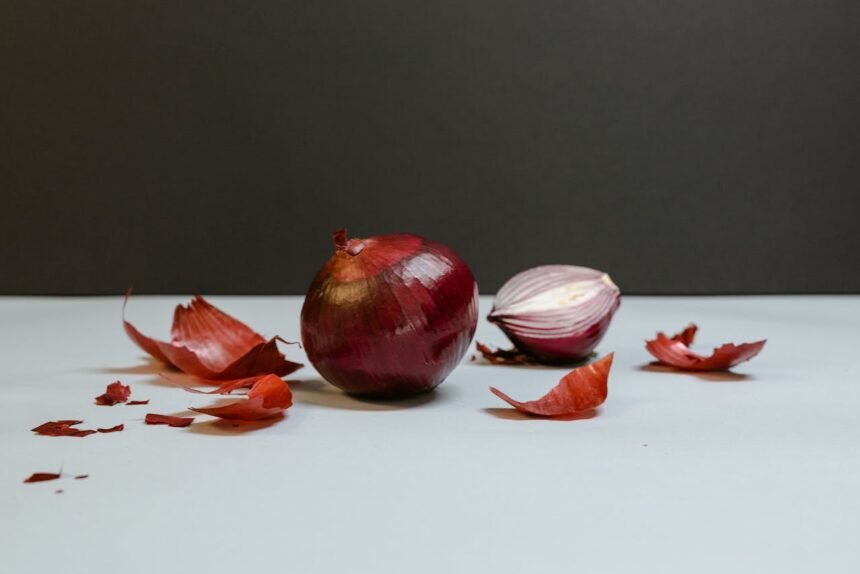
Onions are a staple ingredient in kitchens across the globe. They add depth and flavour to countless dishes, from hearty stews to fresh salads. Beyond their culinary uses, onions boast an impressive nutritional profile.
This vegetable belongs to the Allium genus, which also includes garlic and chives. Whether you are interested in growing your own vegetables or simply want to improve your diet, the humble onion is a powerhouse.
Here is everything you need to know about onions, from planting to plating.
Nutritional Breakdown
Onions are nutrient-dense, meaning they are low in calories but high in vitamins and minerals.
A medium onion provides a significant amount of Vitamin C. This nutrient is essential for regulating immune health and collagen production.
Onions are also a good source of dietary fibre and folic acid. They contain Vitamin B6, which plays a role in metabolism and red blood cell function.
For a detailed look at vegetable nutrients, you can consult the NHS nutritional guidelines.
Key Nutrients in Onions
- Vitamin C: Supports immune defence.
- Folate (B9): Crucial for cell growth.
- Vitamin B6: Aids in protein metabolism.
- Potassium: Helps lower blood pressure.
Health Benefits of Onions
The health benefits of this vegetable extend far beyond basic vitamins.
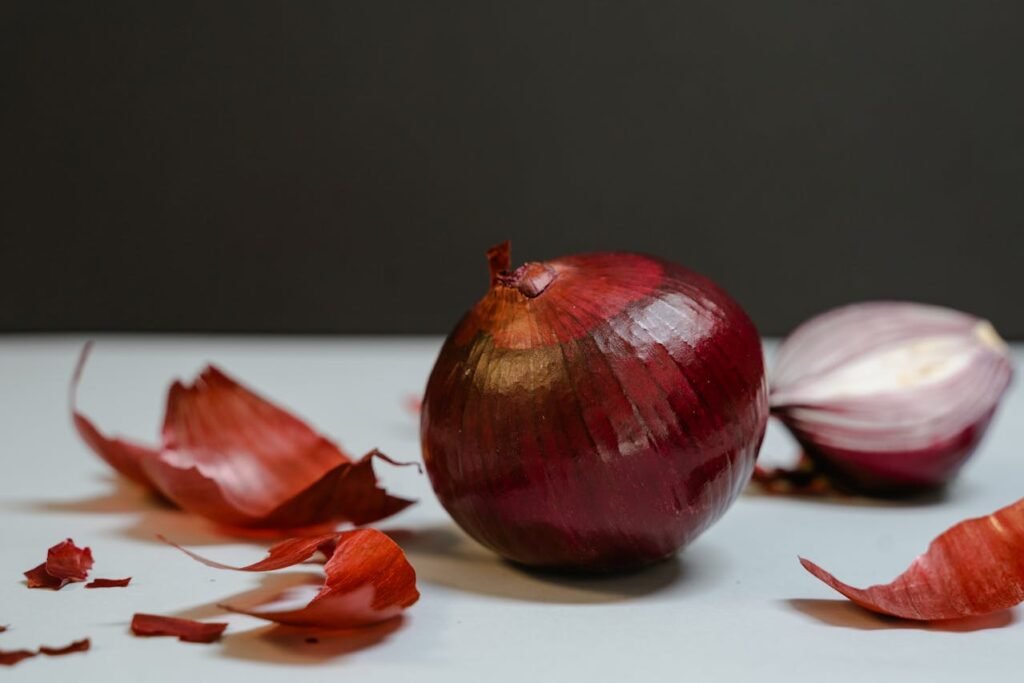
Red onion health benefits are particularly notable due to anthocyanins. These are pigments that give red onions their deep colour and act as powerful antioxidants.
Studies suggest that the quercetin found in onions may help reduce high blood pressure. You can read more about antioxidants and heart health to understand this mechanism.
Unique Remedies
Some people use onion juice hair treatments to stimulate growth. While scientific evidence is mixed, traditional medicine has used onion juice for alopecia for decades.
You can also make onion skin tea. Boiling the skins releases quercetin, creating a soothing, nutrient-rich broth.
For more on the science of plant compounds, visit PubMed to search for current studies on quercetin.
Types of Onions
Not all onions are created equal. Understanding the varieties can help you choose the right one for your dish.
Sweet and Mild Varieties
- Vidalia onions: Extremely sweet and grown in low-sulphur soil.
- Walla Walla onion: A famous sweet variety from Washington State.
- Sweet onion types: generally have a higher water content and less pungency.
Small and Speciality Onions
- Pearl onions: Tiny onions often used in stews or creamed dishes.
- Cipollini onions: Flat, disc-shaped onions perfect for roasting.
- Boiling onions: Slightly larger than pearls, used in soups.
Green and Unique Varieties
Spring onions (or scallions) are harvested young before the bulb swells. They offer a milder taste suitable for raw garnishes.
The Egyptian walking onion is a fascinating perennial. It produces bulbils at the top of the stalk that weigh it down, causing the plant to “walk” across the garden.
If you are confused about shallot vs onion, remember that shallots grow in clusters like garlic and have a finer, sweeter flavour.
Learn more about different plant varieties at the Royal Horticultural Society (RHS).
Growing Onions: A Gardener’s Guide
Growing onions is a rewarding project for any gardener.
You can start from seeds or onion sets (immature bulbs). Sets are generally easier for beginners and establish quickly.
If you choose seeds, you may need to start onion seedlings indoors in late winter.
Planting and Spacing
Proper onion spacing is vital for bulb development. Plant sets about 10–15 cm apart in rows.
Ensure the soil is loose and well-drained. Before planting, incorporate a balanced onion fertilizer to boost nitrogen levels.
For those with limited space, growing onions onions is possible on a windowsill, though you will mostly harvest greens.
Transplanting
Onion transplanting should happen when the soil is workable. Be gentle with the roots to avoid transplant shock.
Check out this guide on starting a garden for more tips on soil preparation.
Science in the Garden
Onions are often used in education to study cell division. The onion root tip grows rapidly, making it perfect for observing mitosis under a microscope.
For a deeper dive into plant biology, ScienceDirect offers comprehensive resources on Allium cepa.
Pests and Diseases
Unfortunately, onions attract several specific pests.
Onion maggots can decimate a crop by tunneling into the bulbs. Onion thrips are tiny insects that suck the sap from the leaves, causing them to turn silver.
The onion fly is another common pest in the UK. They lay eggs near the base of the plant, and the larvae eat the roots.
Common Issues
- Onion diseases: White rot and downy mildew are fungal issues to watch for.
- Prevention: Rotate your crops annually to prevent soil-borne diseases.
For expert advice on pest management, refer to the Agriculture and Horticulture Development Board (AHDB).
Learn more about organic pest control methods to keep your garden chemical-free.
Harvesting and Storage
Knowing when and how to harvest is crucial for long-term storage.
Stop watering when the leaves begin to yellow and fall over. This signals the plant is entering dormancy.
Curing Onions
Onion curing is the process of drying the outer skins. Lay them out in a warm, dry, ventilated area for two weeks.
Once cured, you can make onion braids. This traditional method allows for excellent air circulation and looks beautiful in the pantry.
Storage Solutions
Proper onion storage requires a cool, dark, and dry place.
If you have too many, you can make frozen onions. Simply chop them and freeze them on a tray before bagging.
Dehydrated onions are another great option. They take up little space and rehydrate quickly in soups.
For official food safety guidelines on preservation, visit the Food Standards Agency.
Cooking with Onions
Onions are the foundation of flavour in Western cuisine.
Sautéing onions is the most common method. Cook them gently in oil until translucent.
For a richer flavour, try caramelizing onions. This involves cooking them slowly for 30–45 minutes until they turn deep brown and sweet.
Delicious Preparations
- Braised onions: Cooked slowly in stock until tender.
- Pickling onions: Small onions preserved in vinegar and spices.
- Onion jam recipe: A savoury-sweet condiment perfect for cheese boards.
- Grilling onions: Slice thick rings and char them on the BBQ.
If you enjoy making your own condiments, read our guide on healthy homemade sauces.
Convenience Products
Sometimes fresh isn’t an option. Onion powder bulk buying is cost-effective for frequent cooks.
You can also make your own onion soup mix using dried onion flakes, beef bouillon, and spices.
If you run out, a common onion powder substitute is celery salt or garlic powder, though the flavour profile will shift.
For recipe inspiration, the BBC Good Food glossary is an excellent resource.
Preparation Hacks
Preparing onions can be tearful work.
When you cut an onion, it releases a gas that irritates the eyes. Wearing onion goggles creates a seal that prevents tears.
Using a sharp knife reduces cell damage, which releases less gas. Alternatively, use a manual onion chopper to contain the fumes.
Peeling and Chopping
A popular onion peeling hack involves soaking the onion in water for a few minutes before peeling. The skins slip off more easily.
If you have leftover chopped onions, store them in an airtight container in the fridge to prevent the smell from spreading.
For more kitchen efficiency, check out our list of essential kitchen tools.
Unusual Uses and Facts
Onions are surprisingly versatile beyond food.
Onion skin dye produces a beautiful yellow-orange colour for fabrics or Easter eggs. It is a natural and chemical-free dye method.
Wild onions can be foraged in the UK, often found in woodlands. Be careful to distinguish them from poisonous lookalikes.
Leek vs Onion
The debate of leek vs onion often comes down to texture. Leeks are milder and do not form a firm bulb like onions.
White onion uses are typically for Mexican cuisine or raw in salsas, as they have a sharp, clean finish.
The flowering onion (Allium giganteum) is grown purely for its massive purple blooms, not for eating.
If you are interested in wild plants, the Woodland Trust has a guide on foraging wild garlic and onions.
Troubleshooting
Smell Removal
The smell of onions can linger on hands. Onion smell removal is best achieved by rubbing your hands with stainless steel or lemon juice.
Flowering Prematurely
If your onions send up a flower stalk (bolting), harvest them immediately. They will not store well.
Read about common gardening mistakes to avoid bolting in the future.
Conclusion
Onions are an essential crop for both the gardener and the cook.
From onion nutrition to the satisfaction of braiding your own harvest, there is much to appreciate.
Whether you are transplanting onions in the allotment or sautéing onions for dinner, this vegetable delivers on all fronts.
Remember to experiment with different types, from Vidalia onions to spring onions, to discover your favourites.
For more information on healthy eating, visit the British Nutrition Foundation.
Actionable Tips
- Store properly: Keep onions in a cool, dark place, away from potatoes.
- Sharpen knives: A sharp knife prevents tears.
- Eat the rainbow: Try red, white, and brown onions for different antioxidants.
Explore more about seasonal eating in the UK to see when onions are at their best.
Note: This article is for informational purposes only. Consult a medical professional for dietary advice.
Additional Resources:
- Royal Botanic Gardens, Kew – Allium
- Cancer Research UK – Diet and Health
- Gov.uk – Horticulture Statistics
- National Vegetable Society
Related Articles: