Walking into a yoga studio or rolling out your mat at home can be intimidating, especially when you are greeted by an array of props like straps, bolsters, and rectangular foam bricks. For many beginners, there is a common misconception that using yoga props is a sign of inflexibility or weakness. In reality, the opposite is true.
Yoga blocks are among the most versatile tools in a yogi’s arsenal. Whether you are a complete novice or an advanced practitioner, blocks are essential for maintaining structural integrity, preventing injury, and deepening your mind-muscle connection. From an orthopedic perspective, blocks function as an extension of your skeletal system, bringing the floor closer to you to accommodate your unique anatomical range of motion.
In this comprehensive guide, we will explore the science of support, how to choose the right blocks, and step-by-step instructions on how to use yoga blocks to enhance your practice safely.
What Are Yoga Blocks and Why Do You Need Them?
Popularized by B.K.S. Iyengar, a pioneer in bringing yoga to the West who emphasized precision and alignment, yoga blocks are brick-shaped props used to support the body. They typically come in three standard materials: foam, cork, and wood. While they may look simple, their impact on your biomechanics is profound.
Using a block isn’t about “cheating” a pose; it is about honoring your current range of motion. According to the National Center for Complementary and Integrative Health (NCCIH), yoga is generally safe, but injuries can occur when practitioners force their bodies into positions they aren’t ready for. Blocks mitigate this risk by reducing the angle of articulation required at the joints.
Key Benefits of Using Blocks
- Improved Alignment: They help keep your spine straight and your hips square, preventing compensatory patterns that lead to pain.
- Injury Prevention: By providing stability, blocks reduce the strain on muscles and ligaments, particularly in the hamstrings and lower back.
- Deeper Relaxation: In restorative yoga, blocks support the body’s weight, allowing the parasympathetic nervous system to engage for deeper stress relief.
- Enhanced Proprioception: The tactile feedback from a block helps you understand where your body is in space.
Choosing the Right Block for Your Practice
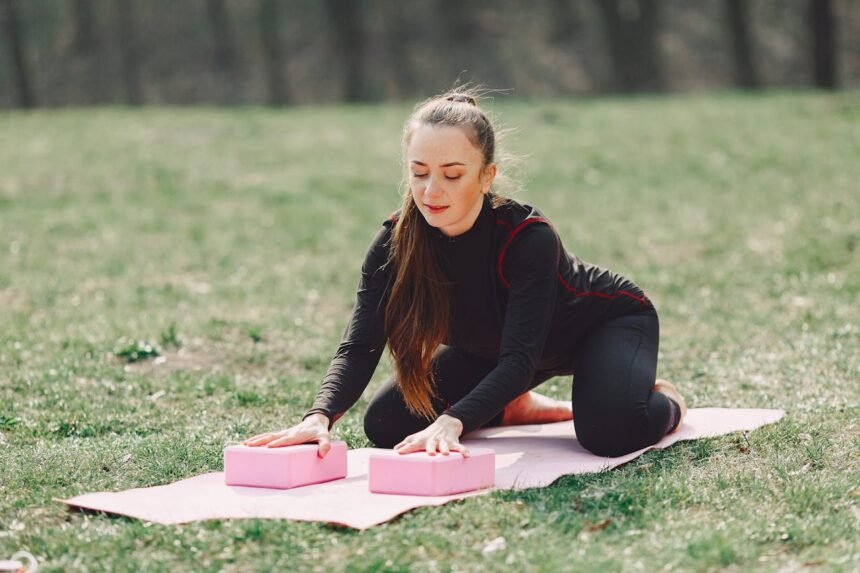
Before diving into the poses, it is important to select the right tool. Blocks generally measure 4 x 6 x 9 inches, though thinner versions exist. The material you choose depends on your specific needs and the type of yoga style you practice.
1. Foam Blocks
These are lightweight, inexpensive, and soft. They are excellent for restorative poses where the block rests against the spine or head. However, they can be slightly unstable under heavy weight in standing balance poses.
2. Cork Blocks
Cork offers a middle ground. They are heavier and sturdier than foam, providing excellent traction even when you are sweating. Cork is naturally antimicrobial and eco-friendly. This is often the preferred choice for Vinyasa or Power Yoga classes.
3. Wood Blocks
Traditional and aesthetically pleasing, wood blocks are very heavy and durable. They offer the most stability but can be uncomfortable against bony prominences (like the spine or sacrum) without a blanket layer.
The Three Heights of a Yoga Block
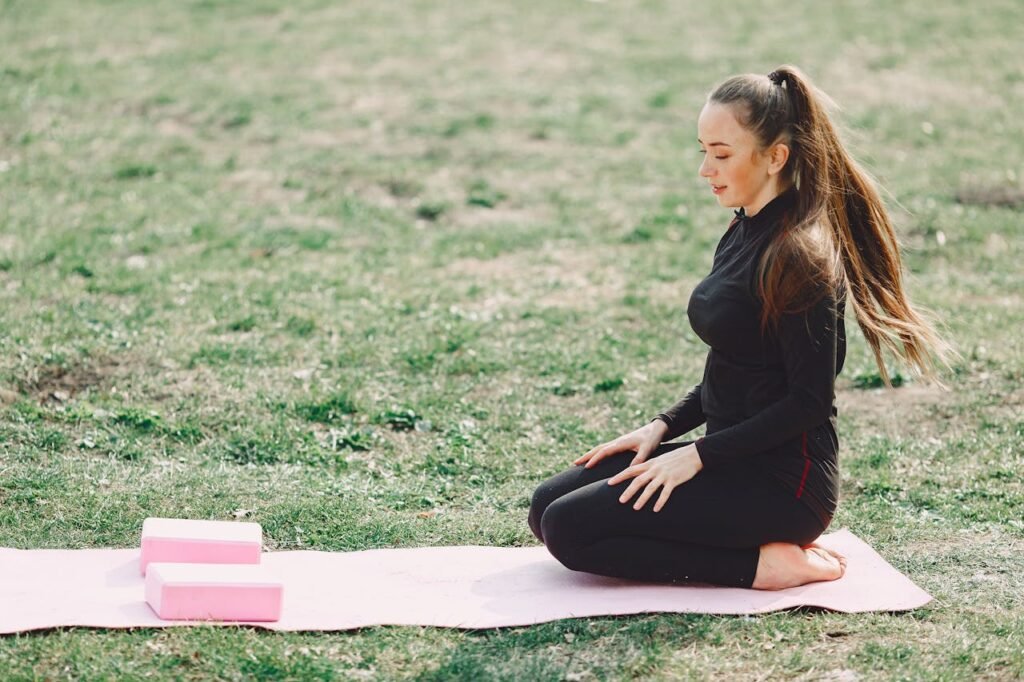
One of the most functional aspects of a yoga block is its dimensionality. You can use it at three distinct heights, depending on your flexibility level:
- Low Setting (Flat): The largest surface area, offering the most stability.
- Medium Setting: Resting on the long edge.
- High Setting: Standing on the short end. This brings the floor closest to you but is the least stable.
How to Use Yoga Blocks in Standing Poses
Standing poses build strength and heat, but they often require significant hamstring and hip flexibility. Blocks can prevent you from compromising your spinal integrity.
Triangle Pose (Trikonasana)
In Triangle Pose, beginners often collapse their chest toward the floor in an effort to touch the ground. This rounds the spine and compresses the diaphragm, making breathing difficult.
How to use the block: Place the block on the outside of your front foot (pinky toe side). Place your hand on the block at any height. Press down into the block to lengthen your spine and rotate your chest open toward the ceiling. This creates a straight line of energy from your tailbone to the crown of your head.
Read more about improving posture through alignment-based movement.
Half Moon Pose (Ardha Chandrasana)
Balancing on one leg while rotating the torso is a complex motor skill. Without a block, many students wobble or strain their lower back.
How to use the block: Place the block about 12 inches in front of your standing foot and slightly to the outside. Rest your hand on the block (usually on the high setting). This acts as a third limb, stabilizing your center of gravity. According to the American Council on Exercise (ACE), stability aids are crucial for safely progressing in balance training.
Using Blocks for Flexibility and Seated Poses
Tight hips and hamstrings are common complaints, especially for those who sit at desks all day. Blocks can help modify seated poses to protect the lumbar spine.
Seated Forward Fold (Paschimottanasana)
If your hamstrings are tight, sitting flat on the floor can cause your pelvis to tuck under, rounding the lower back. This puts pressure on the lumbar discs.
How to use the block: Sit on the edge of a foam block. Elevating the hips above the knees encourages an anterior pelvic tilt, allowing you to fold forward from the hip crease rather than the waist. This protects the lower back and targets the hamstrings more effectively.
Pigeon Pose (Eka Pada Rajakapotasana)
Pigeon pose is a deep hip opener, but if your hip doesn’t touch the floor, gravity can torque the knee joint, leading to potential meniscus injury.
How to use the block: Slide a block (or a folded blanket) under the glute of the bent leg. This fills the gap between your body and the floor, ensuring your hips remain square and your knee is supported. Research published in the Journal of Bodywork and Movement Therapies emphasizes the importance of pelvic alignment in preventing lower extremity injuries in yoga.
Restorative Yoga: The Science of Support
In active yoga, blocks provide stability. In restorative yoga, they facilitate release. By fully supporting the body, you signal to your neuromuscular system that it is safe to let go of tension.
Supported Bridge Pose (Setu Bandha Sarvangasana)
This is an excellent pose for relieving back pain and opening the hip flexors after prolonged sitting.
Steps:
- Lie on your back with your knees bent and feet flat on the floor.
- Lift your hips and slide a block under your sacrum (the flat triangular bone at the base of the spine, not the lower back vertebrae).
- Start on the low or medium height.
- Rest your arms by your sides and breathe deeply.
This gentle inversion helps regulate blood pressure and can induce the relaxation response, as noted by the Mayo Clinic.
Supported Fish Pose (Matsyasana)
This pose counters the “tech neck” posture by opening the chest and shoulders.
How to use the blocks: You will need two blocks. Place one block flat or on medium height to support your shoulder blades (thoracic spine). Place the second block behind it to support your head. The head block should be high enough that your neck feels long and comfortable, not compressed. This passive extension expands the rib cage, improving respiratory capacity.
Modifications for Special Conditions
Yoga blocks are indispensable for adapting practice to specific medical needs or life stages.
Wrist Pain and Carpal Tunnel
In poses like Downward Dog or Plank, the wrists are often at a 90-degree angle, which can compress the carpal tunnel. Wrist pain is a common barrier for beginners.
Modification: Place two blocks flat on the mat at shoulder width. Place your hands on the blocks, gripping the edges. This reduces the angle of extension in the wrist, alleviating pressure on the median nerve.
Pregnancy
During pregnancy, the hormone relaxin loosens ligaments, making joints less stable. The American College of Obstetricians and Gynecologists (ACOG) recommends modifying exercise to accommodate a shifting center of gravity.
Modification: Use blocks for standing poses to widen your stance and maintain balance. In forward folds, use blocks to bring the floor up, creating space for the belly and preventing compression.
Common Mistakes to Avoid
Even with props, errors in technique can occur. Be mindful of the following:
- The “Death Grip”: Don’t squeeze the block too hard with your hands. This creates unnecessary tension in the shoulders and neck. Rest your hand gently for support.
- Incorrect Placement: Ensure the block is directly under your shoulder (in standing poses) or supporting bone rather than soft tissue.
- Ignoring Pain: A block should alleviate pain, not cause it. If a block feels too hard against your spine, cover it with a yoga towel or switch to a foam block.
Integrating Blocks into Your Routine
If you are attending a studio class, grab two blocks before the session starts. Place them at the top of your mat. Instructors often cue block usage, but you do not need permission to use them. If you feel your spine rounding or your breath becoming shallow, reach for your support.
For home practice, keeping blocks visible can remind you to prioritize alignment over depth. You can find high-quality blocks at major retailers or specialized fitness stores. For more on setting up your space, read our guide on home gym essentials.
Furthermore, studies in the ScienceDaily archives suggest that mindfulness-based interventions, including yoga, are most effective when the practitioner feels physically comfortable and safe. Blocks are the primary tool to achieve that safety.
The Bottom Line
Yoga blocks are not training wheels; they are sophisticated tools for anatomical intelligence. By bringing the floor to you, they allow you to experience the full benefits of a pose without compromising your joints or alignment.
Whether you are using them to stabilize a Half Moon pose, protect your knees in Pigeon, or melt stress away in a Supported Bridge, blocks empower you to customize your practice to your body’s needs. Embrace the support, lengthen your spine, and breathe easier knowing you are practicing with safety and longevity in mind.
Always consult with a healthcare professional before beginning a new exercise regimen, especially if you have pre-existing injuries or chronic conditions.