Strawberries are a quintessential part of British summertime, often associated with picnics, tennis, and sunny afternoons. Their vibrant red colour, juicy texture, and sweet flavour make them a favourite among fruit lovers of all ages. However, many people often restrict their consumption of this berry to sugary desserts or cream-laden bowls, overlooking their potential as a staple ingredient in healthy meals.
Incorporating this nutrient-dense fruit into your daily routine does not require complicated culinary skills. Whether you are looking to boost your immune system or simply want to add more variety to your diet, strawberries offer versatility that goes far beyond the fruit bowl. They are packed with essential vitamins, fibre, and potent antioxidants that support overall wellbeing.
Finding creative, healthy strawberry recipes is easier than you might think. By making small, strategic adjustments to your breakfast, lunch, or snacks, you can enjoy the health benefits of this fruit without the added refined sugars. Below, we explore the science behind the berry and provide seven actionable ways to include them in your everyday diet.
Why Strawberries Are a Nutritional Powerhouse
Before diving into the methods of preparation, it is crucial to understand why nutritionists and dietitians frequently recommend strawberries. These berries are not just delicious; they are a functional food with a robust nutritional profile.
First and foremost, strawberries are an excellent source of vitamin C. In fact, a single serving can provide more of this essential immune-boosting nutrient than an orange. According to comprehensive nutritional profile data, strawberries are also rich in manganese and folate (vitamin B9), which are vital for normal tissue growth and cell function.
Furthermore, strawberries obtain their bright red hue from flavonoids known as anthocyanins. Research suggests that these compounds have powerful antioxidant properties. Studies linking fruit intake to health markers indicate that anthocyanins may help in reducing oxidative stress within the body, potentially lowering the risk of chronic diseases.
Another significant benefit is their impact on heart health. The British Heart Foundation highlights the importance of consuming a variety of colourful fruits to maintain a healthy cardiovascular system. Strawberries also contain potassium, which helps regulate blood pressure levels.
Finally, for those monitoring their blood sugar, strawberries are a low glycaemic index (GI) fruit. This means they should not cause massive spikes in blood sugar when eaten in moderation, making them a suitable choice for those managing blood sugar levels effectively.
7 Healthy Ways to Add Strawberries to Your Daily Diet
Incorporating strawberries into your diet does not have to be monotonous. By moving away from plain raw fruit, you can unlock new flavours and nutritional benefits. Here are seven dietitian-approved methods to increase your intake.
1. Vitality-Boosting Morning Porridge
Oats are a staple breakfast for many, but they can often taste bland without sweeteners. Instead of adding spoonfuls of brown sugar or syrup, use fresh strawberries to sweeten your bowl naturally.
Why it works:
The heat from the porridge softens the berries, releasing their natural juices and creating a compote-like texture throughout the oats. This increases the volume of your meal without significantly increasing the calorie density. Furthermore, the combination of soluble fibre from oats and insoluble fibre from strawberries helps keep you fuller for longer.
How to do it:
Dice a handful of strawberries and stir them into your oats while they are cooking on the hob. Top with a sprinkle of flaxseeds for added omega-3 fatty acids.
2. Savoury Strawberry and Spinach Salad
Strawberries are botanically complex and pair surprisingly well with savoury ingredients. A salad is one of the easiest ways to hit your 5 A Day guidelines set out by health authorities.
Why it works:
The acidity of the strawberries cuts through rich fats, making them the perfect partner for creamy cheeses like feta or goat cheese. The vitamin C in the strawberries also aids in the absorption of iron found in leafy greens like spinach.
How to do it:
Toss fresh baby spinach, sliced strawberries, crumbled feta, and walnuts. Dress with a light vinaigrette made from balsamic vinegar and olive oil. The balsamic vinegar enhances the berry flavour, creating a sophisticated lunch option.
3. Homemade Low-Sugar Strawberry Chia Jam
Traditional store-bought jams are often loaded with high-fructose corn syrup and preservatives. Making your own chia jam is a rapid, healthy alternative that utilises the natural gelling properties of chia seeds.
Why it works:
Chia seeds are rich in fibre and healthy fats. When mixed with mashed fruit, they absorb the liquid and create a thick, spreadable consistency without the need for boiling sugar or adding pectin. This aligns well with advice on importance of dietary fibre for digestive health.
How to do it:
Mash 200g of strawberries in a pan over low heat until they break down. Remove from heat and stir in two tablespoons of chia seeds. Let it sit for 15 minutes until thickened.
4. Protein-Packed Strawberry Smoothies
Smoothies can be a sugar trap if they are made solely of fruit juice and sweet syrups. To make a healthy strawberry recipe, you must balance the natural sugars with protein and healthy fats.
Why it works:
Using whole strawberries (fresh or frozen) provides texture and fibre that juice lacks. Blending them with Greek yoghurt or a plant-based protein powder creates a satiating meal replacement or post-workout snack.
How to do it:
Blend one cup of frozen strawberries, half a banana, a scoop of unsweetened protein powder, and unsweetened almond milk. This ensures a creamy texture and a slow release of energy.
5. Spicy Strawberry Salsa
If you enjoy Mexican cuisine, strawberry salsa is a vibrant twist on the classic tomato pico de gallo. It serves as a testament to the innovative culinary uses of seasonal British fruit.
Why it works:
This preparation creates a high-volume, low-calorie condiment that adds immense flavour to grilled chicken or fish. It replaces calorie-dense sauces like mayonnaise or BBQ sauce.
How to do it:
Finely dice strawberries, red onion, jalapeños, and coriander. Squeeze fresh lime juice over the mixture and season with a pinch of sea salt. The sweetness of the berry balances the heat of the chilli perfectly.
6. Roasted Strawberries with Balsamic
Roasting fruit intensifies its natural sweetness, meaning you need fewer added sweeteners. This technique transforms the texture of the berry into something luxurious and dessert-like.
Why it works:
Cooking tomatoes increases their lycopene availability; similarly, gently cooking strawberries can make them easier to digest for some individuals while concentrating the flavour profile. This can satisfy a sweet tooth effectively, reducing the temptation to reach for processed confectionery.
How to do it:
Toss whole strawberries in a teaspoon of balsamic vinegar and roast at 180°C for 15 minutes. Serve warm over natural yoghurt.
7. Hydrating Strawberry Infused Water
Staying hydrated is fundamental to health, yet many struggle to drink enough plain water. Infusing water with fruit adds subtle flavour without the calories or erosive acids of carbonated sodas.
Why it works:
According to seasonal produce recommendations, swapping sugary drinks for water is a primary step in weight management. The visual appeal of the fruit also acts as a psychological cue to drink more frequently.
How to do it:
Slice strawberries and place them in a jug of cold water. Add mint leaves or cucumber slices. Let it infuse in the fridge for at least two hours before serving.
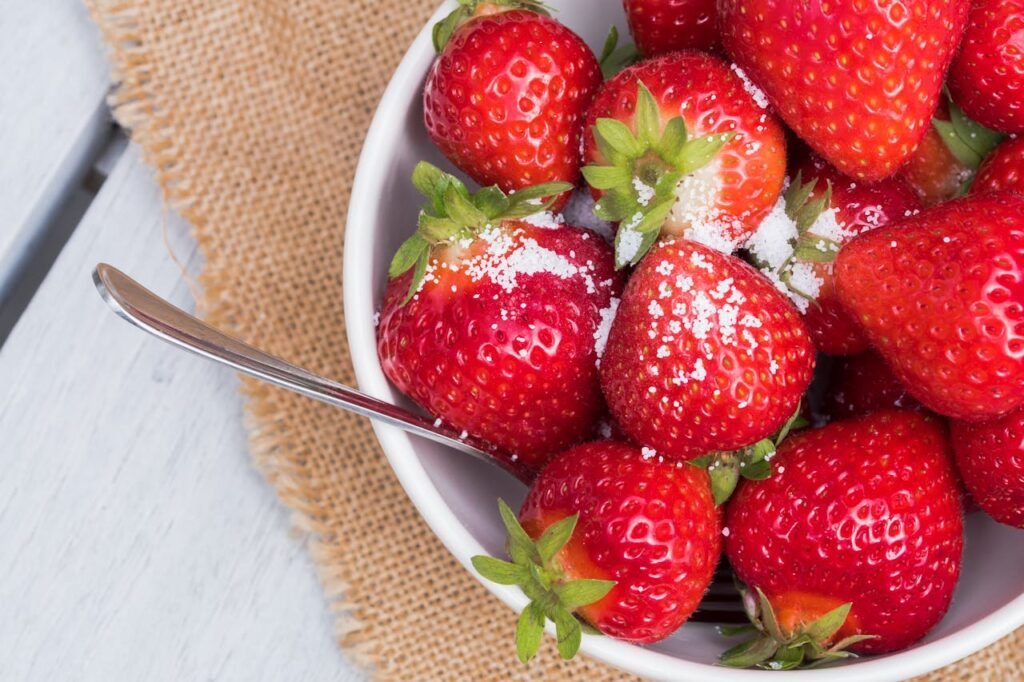
Comparison: Fresh vs. Frozen vs. Dried
It is common to wonder if the form of the fruit matters. While fresh is often preferred for texture, frozen and dried options have their place in a balanced diet. However, there are nutritional variances to consider.
| Feature | Fresh Strawberries (100g) | Frozen Strawberries (100g) | Dried Strawberries (100g) |
|---|---|---|---|
| Calories | ~32 kcal | ~35 kcal | ~300+ kcal (concentrated) |
| Sugars | ~4.9g | ~4.9g | ~60g (often added sugar) |
| Vitamin C | High | High (preserved by freezing) | Low (degrades with heat) |
| Texture | Firm, Juicy | Soft when thawed | Chewy, Dense |
| Best Use | Salads, Snacking | Smoothies, Baking | Trail Mix, Granola |
It is vital to check labels on dried fruit, as they often contain added oils and sugars. Frozen berries are generally flash-frozen at peak ripeness, locking in nutrients effectively.
Frequently Asked Questions
Can I eat strawberries every day?
Yes, for most people, eating strawberries daily is a healthy habit. They are low in calories and high in nutrients. However, variety is key in any diet to ensure you receive a broad spectrum of vitamins.
Are organic strawberries necessary?
Strawberries frequently appear on lists of produce with higher pesticide residues. While organic options reduce this exposure, the health benefits of eating conventional fruit far outweigh the risks of not eating fruit at all. Wash them thoroughly before eating.
Do strawberries help with weight loss?
Strawberries are incredibly weight-loss friendly due to their high water content and fibre. They have a low caloric density, allowing you to eat a large portion for very few calories, which helps with satiety. Read more about anti-inflammatory properties and weight management to understand this mechanism better.
Is strawberry jam healthy?
Traditional strawberry jam is high in sugar and should be consumed sparingly. The chia jam recipe mentioned above is a much healthier alternative, providing protein and fibre without the blood sugar spike.
The Bottom Line
Strawberries are far more than just a garnish for desserts; they are a nutritional powerhouse that can be integrated into savoury and sweet dishes alike. From boosting your morning oats to adding a fresh twist to salsa, the versatility of this berry makes it easy to maintain a healthy diet without sacrificing flavour.
Remember that while fresh berries are delightful, frozen options are just as nutritious and can be more convenient for smoothies. By experimenting with these healthy strawberry recipes, you can increase your fibre intake, support your immune system, and enjoy one of nature’s finest sweets responsibly. Prioritise whole fruit sources over processed strawberry-flavoured products to gain the maximum benefit for your body.