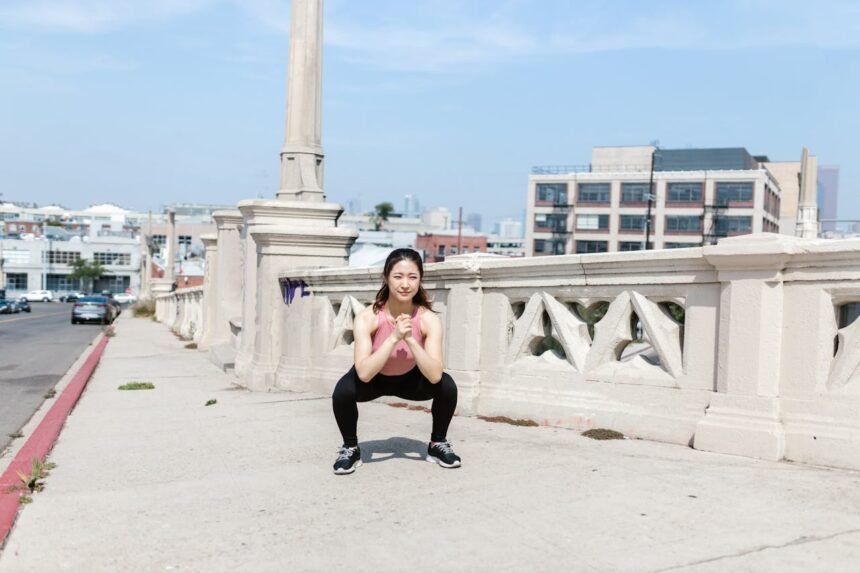
For decades, the deep squat has been a topic of debate in gyms and physiotherapy clinics alike. You may have heard that “going low” is bad for your knees or that a partial squat is safer for your spine. However, modern sports science suggests that mastering the full range of motion is one of the most effective ways to build a resilient, functional body.
In this guide, we will explore why the deep squat is a fundamental functional movement, how to perform it safely, and the science-backed benefits of taking your training below parallel.
What Exactly Is a Deep Squat?
A deep squat occurs when the hip crease drops below the top of the knee. Unlike a partial or parallel squat, this movement requires significant ankle flexibility and hip mobility. While many people in Western cultures find this position challenging, it is a natural resting posture for a large portion of the global population.
From a biomechanical perspective, reaching full squat depth allows for greater glute activation and places a healthy demand on the connective tissue of the lower body. When performed with proper technique, it can be a powerful tool for strength training and injury prevention.
The Science-Backed Benefits of Going Deep
Incorporating deep squats into your fitness programme offers more than just aesthetic gains. It impacts everything from hormonal response to long-term joint health.
- Increased Hypertrophy: Research suggests that a larger range of motion leads to greater muscle hypertrophy (growth), particularly in the quadriceps and glutes.
- Enhanced Posterior Chain Development: Deep squats recruit the hamstrings and lower back more effectively than shallow variations, strengthening the entire posterior chain.
- Improved Core Stability: Maintaining an upright torso at the bottom of a squat requires significant core stability and spinal control.
- Better Joint Resilience: Contrary to old myths, deep squats can actually aid in knee rehabilitation by distributing pressure across the joint more evenly.
Deep Squat vs. Partial Squat: A Comparison
To help you decide which variation suits your goals, here is a comparison of how squat depth influences your results:
| Feature | Partial Squat (Above Parallel) | Deep Squat (Below Parallel) |
|---|---|---|
| Muscle Recruitment | Mainly Quadriceps | Quads, Glutes, and Adductors |
| Mobility Requirement | Low | High (Hips, Ankles, T-Spine) |
| Joint Pressure | Higher Shear Force on Knees | Better Compression Distribution |
| Functional Carryover | Specific to jumping/running | High (daily lifting and moving) |
How to Perform the Perfect Deep Squat
Whether you are performing a bodyweight exercise or using a barbell, the mechanics of a deep squat remain largely the same. Follow these steps to ensure safety and efficiency:
- The Setup: Stand with your feet slightly wider than shoulder-width apart. Flare your toes slightly outward to accommodate hip anatomy.
- The Descent: Initiate the movement by “unlocking” your hips and knees simultaneously. Keep your chest up and your weight distributed across the centre of your feet.
- The Bottom Position: Continue descending until your hip crease is below your knees. Ensure your heels remain firmly on the floor. If they lift, you may need to work on your ankle flexibility.
- The Drive: Push through the floor, keeping your knees in line with your toes. Avoid letting your knees “cave in” as you ascend.
If you experience sharp lower back pain during this movement, it is essential to stop and assess your form or consult a professional, such as a member of the Chartered Society of Physiotherapy.
Overcoming Common Barriers
Not everyone can perform a deep squat immediately. Sedentary lifestyles often lead to tight muscles and restricted joints. To improve your depth, focus on the following areas:
Improving Ankle Mobility
If your ankles are stiff, your body will compensate by leaning too far forward or rounding the back. Utilise stretching techniques like the half-kneeling dorsiflexion stretch to increase your range.
Unlocking the Hips
Tight hip flexors can limit your ability to sit deep. Practising the “pigeon stretch” or “90/90 transitions” can help open the hips, allowing for a more vertical torso during the squat. You can find more on hip health through resources like the American College of Sports Medicine (ACSM).
Addressing the “Butt Wink”
A “butt wink” occurs when the pelvis tucks under at the bottom of the movement. While a small amount is natural, excessive rounding can lead to disc issues. Strengthening your core stability and improving hamstring length often resolves this.

Debunking the Knee Myth
A common misconception is that the deep squat is inherently dangerous for the knees. However, research published in journals such as Sports Medicine suggests that the highest forces on the knee occur at 90 degrees (parallel). When you go deeper, the “wrapping effect” of the quadriceps tendon actually helps stabilise the joint.
For those worried about long-term wear and tear, it is worth noting that controlled strength training through a full range of motion can strengthen the connective tissue and cartilage, potentially protecting against osteoarthritis in later life. High-authority medical sites like the British Medical Journal (BMJ) frequently highlight the importance of resistance training for ageing populations.
When to Consult a Professional
While the deep squat is generally safe, those with a history of acute injuries should seek advice. If you have recently undergone knee surgery or have chronic spinal conditions, consult a specialist. Organizations like Cochrane provide extensive reviews on exercise interventions for various musculoskeletal conditions.
Additionally, if you are an athlete looking to maximise performance, following guidelines from the National Strength and Conditioning Association (NSCA) can help you integrate deep squats into a periodised training plan.
Frequently Asked Questions (FAQs)
Is a deep squat better than a parallel squat?
Neither is “better” in a vacuum, but the deep squat generally provides more glute activation and better functional mobility. However, a parallel squat may be more appropriate for those with significant mobility restrictions or specific athletic goals.
Will deep squats hurt my lower back?
When performed with a neutral spine and adequate core stability, deep squats are safe. Lower back pain usually occurs due to poor form, such as excessive lumbar rounding (the “butt wink”) or using weights that are too heavy for your current technique.
Can anyone learn to deep squat?
Most people can achieve a deep squat with consistent practice and mobility work. However, individual bone structure (specifically the shape of the hip socket) can influence how deep someone can comfortably go. It is important to listen to your body and focus on your own range of motion.
How often should I practice deep squats?
For general health and hypertrophy, performing squats 2-3 times per week is often recommended by health authorities such as Medical News Today. Ensure you allow adequate recovery time for your muscles and joints to adapt.
Mastering the deep squat is a journey, not a sprint. By focusing on mobility, respecting your current limits, and prioritising form over the weight on the bar, you can unlock a new level of physical freedom and strength. For more information on staying active, visit the Lancet Public Health archives for insights into the benefits of lifelong exercise.