Every year, across the vast oceans and winding rivers of the Northern Hemisphere, one of the most gruelling and awe-inspiring spectacles of the natural world unfolds. The wild salmon migration is not merely a seasonal move; it is a heroic, biological odyssey that bridges the gap between the saltwater depths of the sea and the gravelly beds of inland streams. For health enthusiasts and nature lovers alike, understanding this journey reveals a lot about the resilience of life and the delicate balance of our planet’s health.
Wild salmon are unique because they are anadromous. This means they spend their lives in both freshwater and saltwater, navigating thousands of miles to return to the exact spot where they were born. In this guide, we explore the science, the struggle, and the ecological importance of this incredible phenomenon.
The Science of Survival: How Do They Find Their Way?
The most fascinating aspect of the wild salmon migration is the salmon homing mechanism. How does a fish, after years in the open ocean, find a tiny stream hidden deep within a mountain range? Research published in Nature.com suggests that salmon utilise a combination of biological tools to navigate. When they are in the ocean, they likely use the Earth’s magnetic field as a compass. However, as they approach the coast, they switch to a far more intimate sense: smell.
Salmon possess an extraordinary olfactory memory. As juveniles, they “imprint” on the unique chemical signature of their home waters. This chemical “bouquet” is a mix of minerals, decaying vegetation, and soil specific to that one location. You can read more about these sensory wonders at Smithsonian Magazine. When the time comes to return, they follow their noses back to their spawning grounds with unerring accuracy.
The Anadromous Life Cycle: From Egg to Ocean and Back
To appreciate the wild salmon migration, one must understand the anadromous life cycle. It is a journey of transformation that occurs in several distinct stages:
- Alevin and Fry: Emerging from gravel in freshwater streams, these tiny fish start their lives in a sheltered environment.
- Parr: As they grow, they develop vertical markings to help them camouflage within freshwater ecosystems.
- Smolt: This is a critical physiological turning point. During the smoltification process, the fish’s body changes to allow it to survive in saltwater.
- Adult: Salmon spend one to five years in the ocean, growing large and strong on a diet of shrimp, squid, and smaller fish.
- Spawning Adult: The final stage where they cease eating, enter the rivers, and swim upstream to reproduce and, in most cases, die.
According to Britannica, this cycle ensures that the next generation begins life in a nutrient-rich, protected environment before heading to the calorie-dense ocean.
Ecosystem Heroes: Why Salmon Migration Matters
Wild salmon are often described as a keystone species. This means they are the “glue” that holds an ecosystem together. When they return to the rivers, they don’t just bring themselves; they bring a massive influx of marine-derived nutrients. After they spawn and die, their bodies decompose, providing nitrogen and phosphorus to the surrounding forests.
This process of nutrient cycling is vital for the growth of massive trees in the Pacific Northwest rivers and throughout the UK’s own river systems. Furthermore, World Wildlife Fund highlights that over 100 species, including bears, eagles, and wolves, depend on salmon as a primary food source. Without the wild salmon migration, these habitats would face significant decline.
The Different Types of Salmon Migrations
Not all salmon migrations are created equal. Different species have adapted to different environments, from the icy waters of Alaska to the historic Atlantic salmon runs in Europe.
| Species | Migration Distance | Key Characteristics | Primary Habitat |
|---|---|---|---|
| Chinook (King) | Over 1,000 miles | Largest salmon species; high fat content. | Pacific Ocean / NW Rivers |
| Sockeye (Red) | Up to 1,000 miles | Turn a vibrant red colour during spawning. | Pacific Ocean / Alaska |
| Atlantic Salmon | Variable | Iteroparous (some can spawn multiple times). | North Atlantic / UK Rivers |
| Coho (Silver) | Short to Medium | Known for leaping over high waterfalls. | Coastal Streams |
For more details on species identification and habitats, visit NOAA Fisheries.
The Modern Challenges: Why the Journey is Getting Harder
While the wild salmon migration has occurred for millennia, today’s fish face unprecedented hurdles. Man-made river obstacles, such as dams and culverts, physically block their path. Even if a salmon is strong enough to jump, it cannot bypass a concrete wall. Organizations like The Wildlife Trusts in the UK work tirelessly to remove these barriers.
Furthermore, the climate change impact is causing river temperatures to rise. Salmon are cold-water fish; when water becomes too warm, it holds less oxygen, making the strenuous upstream swim even more exhausting. You can find research on these environmental shifts at Frontiers in Marine Science.
Key threats include:
- Habitat Loss: Urbanisation and logging destroy the gravel beds needed for spawning.
- Pollution: Agricultural runoff and plastics contaminate the water.
- Overfishing: Unregulated commercial fishing reduces the number of fish reaching the rivers.
Conservation and What You Can Do
Protecting the wild salmon migration requires global cooperation. Supporting sustainable fishing practices is one of the most effective ways consumers can help. When buying salmon, look for the Blue Fish Label from the Marine Stewardship Council to ensure your meal was sourced responsibly.
Local efforts are equally important. Habitat restoration projects, such as planting trees along riverbanks to provide shade and cooling, are making a real difference. Groups like the Atlantic Salmon Federation and Conservation International are leading the charge in preserving these vital pathways. You can also learn about policy changes through Pew Charitable Trusts.
Finally, for those in the UK, the government provides resources on how we manage our local waters at Gov.uk. Understanding the life cycle of these fish is the first step toward advocating for their survival.
Frequently Asked Questions (FAQs)
Do all salmon die after they migrate and spawn?
Most Pacific salmon species are semelparous, meaning they spawn once and die. Their bodies then provide essential marine-derived nutrients to the ecosystem. However, some Atlantic salmon are iteroparous and can return to the ocean to spawn again in future years, though the journey is so taxing that many do not survive the return trip.
How high can salmon jump during their migration?
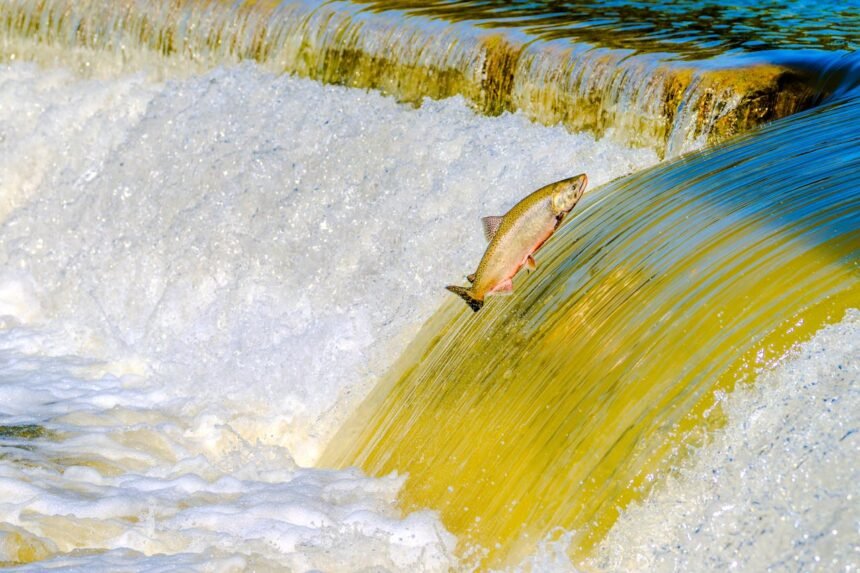
Salmon are incredible athletes. Some species, particularly the Coho and Atlantic salmon, can leap up to 3 or 4 metres into the air to bypass waterfalls and other river obstacles. This requires immense power and precise timing, often requiring multiple attempts to succeed.
How does climate change affect the timing of the migration?
Rising temperatures often cause salmon to begin their migration earlier or later than usual. If the timing is off, they may arrive at their spawning grounds when water levels are too low or when food sources for their offspring are not yet available. More information on animal ecology can be found via the Journal of Animal Ecology.
Is wild salmon healthier than farmed salmon?
Wild salmon typically have a more diverse nutrient profile because of their natural diet during the wild salmon migration. They are usually higher in minerals and have a different fatty acid composition compared to farmed fish. Choosing wild-caught salmon also supports sustainable fishing practices when managed correctly.
The wild salmon migration is a powerful reminder of the connection between the land and the sea. By protecting these fish, we aren’t just saving a species; we are preserving the health of entire forests, rivers, and our own food systems.