If you have ever enjoyed a fresh fillet of wild-caught salmon, you are likely aware of its status as a nutritional powerhouse. Rich in omega-3 fatty acids, high-quality protein, and essential vitamins, this fish is a staple of a heart-healthy diet. However, the journey that salmon take to reach our plates—and to sustain their own species—is fraught with man-made obstacles. This is where salmon bypass systems come into play.
As we modernise our world with hydropower dams and irrigation channels, we inadvertently create barriers for these remarkable creatures. To maintain our ecological balance, engineers and biologists have developed sophisticated solutions to help fish navigate these hurdles. Understanding how these systems work is not just for environmentalists; it is vital for anyone who cares about sustainable food sources and the health of our planet.
What Are Salmon Bypass Systems?
At its core, a salmon bypass system is a structural intervention designed to allow fish to move safely around barriers like dams. Salmon are anadromous fish, meaning they are born in freshwater, migrate to the ocean to mature, and eventually return to their original spawning grounds to reproduce. This lifecycle is essential for the survival of the species.
When a dam blocks a river, it prevents adult salmon from swimming upstream and poses a deadly threat to juvenile salmon (known as smolts) heading downstream. Modern bypass systems utilise advanced technology to ensure fish passage is as natural and stress-free as possible.
The Two-Way Street of Fish Migration
Bypass systems must address two distinct directions of travel:
- Upstream Migration: Helping adults reach their home streams to spawn.
- Downstream Migration: Ensuring young smolts avoid the dangerous blades of hydroelectric turbines.
Common Types of Salmon Bypass Systems
Not all rivers are the same, and neither are the solutions. Engineers must carefully consider the water velocity and the specific behaviour of the fish when designing these structures. Here are the most prevalent methods used today:
1. Fish Ladders
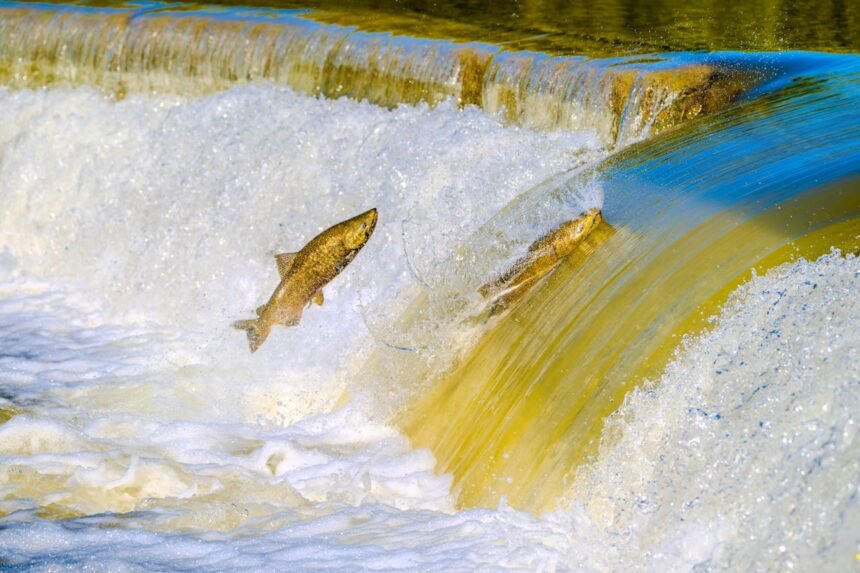
Perhaps the most well-known method, fish ladders consist of a series of stepped pools. Fish can leap from one pool to the next, gradually gaining elevation to move over a dam. These are widely used in the Columbia River basin and across Europe.
2. Juvenile Bypass Systems (JBS)
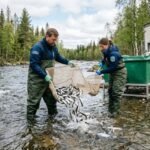
To prevent turbine mortality, many dams use screens to divert young fish away from the powerhouse and into a dedicated channel. These collection facilities then safely transport the smolts to the other side of the dam via a specialised pipe or flume.
3. Surface Passage Routes
Recent research suggests that smolts prefer to stay near the surface. Surface spillway systems create a more natural flow that encourages fish to “spill” over the dam safely rather than diving deep into dangerous intakes.
4. Fish Innovations: The “Salmon Cannon”
Technically known as the Whooshh Passage Portal, this innovative system uses a soft, flexible tube to “mist” fish through a vacuum-sealed environment, transporting them over high barriers in seconds. This method is becoming a key part of habitat restoration programmes globally.
Comparing Fish Passage Solutions
The following table outlines the pros and cons of the most common salmon bypass systems currently in operation:
| System Type | Primary Use | Pros | Cons |
|---|---|---|---|
| Fish Ladders | Upstream (Adults) | Low energy cost; proven over decades. | Can be physically exhausting for fish. |
| Juvenile Bypass | Downstream (Smolts) | Significantly reduces turbine strikes. | Expensive to install and maintain. |
| Surface Spill | Downstream | Follows natural fish behaviour. | Uses water that could generate power. |
| Fish Lifts/Elevators | Upstream | Good for very high dams. | Requires active mechanical operation. |
Why Salmon Survival Impacts Human Health
You might wonder why we invest millions into salmon bypass systems. Beyond the moral obligation to protect wildlife, there is a direct link to human well-being. Salmon are considered a “keystone species.” Their presence (or absence) dictates the health of entire ecosystems.
According to the World Wildlife Fund, healthy salmon runs transport essential nutrients from the ocean back to inland forests. This cycle supports biodiversity, which in turn ensures cleaner water and more resilient environments for humans. Furthermore, maintaining high smolt survival rates is the only way to ensure the long-term availability of wild salmon, which remains one of the healthiest protein sources available, as highlighted by ScienceDirect studies on nutrition.
The Technical Challenges of Smolt Survival
Designing an effective bypass isn’t just about building a slide. It requires a deep understanding of fluid dynamics. If the water velocity is too high, fish can become disoriented or physically injured. If it is too low, they may get lost or fall prey to predators lurking near the collection facilities.
Organizations like American Rivers advocate for the removal of obsolete dams, but where dams remain, the goal is to mimic a natural river’s flow as closely as possible. High-tech sensors and acoustic tags are now used to track individual fish to see which salmon bypass systems offer the highest success rates.
How You Can Help
While the engineering happens at the riverbank, public support for conservation is what drives funding and legislation. You can make a difference by:
- Choosing sustainably sourced seafood certified by the Marine Management Organisation or similar bodies.
- Supporting charities like Trout Unlimited that focus on river health.
- Staying informed about local habitat restoration projects through outlets like The Guardian.
The Bottom Line
Salmon bypass systems are a testament to human ingenuity. By acknowledging the impact of our infrastructure on the natural world, we can take steps to rectify it. These systems ensure that anadromous fish can continue their ancient journey, preserving the ecological balance and keeping our food systems secure. As we look to a future of greener energy, integrating these bypasses is essential for a planet where both humans and nature can thrive.
Frequently Asked Questions (FAQs)
Do fish ladders actually work?
Yes, fish ladders are highly effective for many species. According to National Geographic, when designed correctly, they allow thousands of fish to return to their spawning grounds annually. However, they must be maintained regularly to ensure they don’t become blocked by debris.
Are bypass systems expensive?
Initial construction can be costly, often running into millions of pounds. However, the long-term economic benefits of a healthy fishing industry and a balanced ecosystem far outweigh these initial costs, as noted in research published in PNAS.
What is the biggest threat to salmon today?
While dams are a major factor, climate change and rising water temperatures also pose significant risks. Efforts to improve fish passage must work in tandem with broader climate action to ensure species survival. You can read more about these environmental stressors in Frontiers in Marine Science.
How do fish know where to go?
Salmon have an incredible “homing” instinct based on scent and the Earth’s magnetic field. Bypass systems rely on these natural instincts by using “attraction flow” (specific water currents) to lead the fish toward the entrance of the salmon bypass systems. More details on fish sensory biology can be found at the Journal of Experimental Biology.
Can I see these systems in the UK?
Yes, there are several fish passes across the UK. The Environment Agency and GOV.UK provide maps and information on local river projects, including those designed to protect the Atlantic Salmon. For practical advice on local fishing and conservation, visit the Oregon Department of Fish and Wildlife website, which is a global leader in bypass research.