


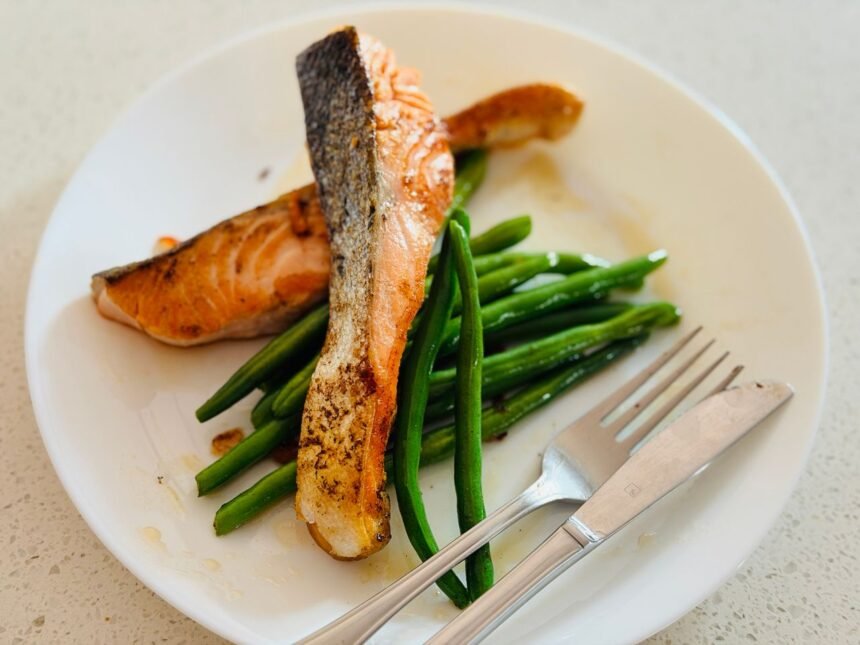
Wondering how much salmon protein is actually on your plate? You are in the right place. This guide breaks down the salmon protein content of wild, farmed, and smoked fillets in simple numbers you can use today.
You will see exactly how much protein sits in a 4 oz, 5 oz, 6 oz, and 8 oz portion. We also cover salmon protein per 100g, calories, fat, and the real difference between wild and farmed fish. Every number is based on USDA data and trusted nutrition sources.
Finally, you will learn the best ways to cook salmon so you keep the protein, the flavor, and the healthy fats. Whether you lift weights, count macros, or just want a smarter dinner, this article gives you clear answers without the fluff.
Educational content only. This article is not medical advice. Please talk to your doctor or a registered dietitian before making major diet changes.
What Is Salmon Protein and Why Does It Matter?
Salmon is one of the most popular fish in the world. It is tasty, easy to cook, and packed with nutrients. The star nutrient for many people is salmon protein.
Protein builds and repairs muscle, skin, and organs. It also keeps you full longer after a meal. That is why so many athletes, busy parents, and people trying to lose weight reach for salmon.
What makes salmon special is the full package. You get high-quality protein, omega-3 fats, vitamin D, B vitamins, and selenium in one fillet. Few foods deliver that much value in a single serving.
Why Protein Quality Counts
Not all protein is equal. Quality depends on the amino acids a food provides and how well your body can use them. Fish protein scores very well on both.
Salmon protein is easy to digest. Most people absorb it efficiently, which means more of what you eat actually reaches your muscles.
Salmon also contains a lot of leucine, an amino acid that helps trigger muscle repair. This is one reason fish is popular after workouts.
Who Benefits Most?
Almost everyone can benefit from adding fish to their week. Adults who train, older adults who want to protect muscle, and people who eat less red meat all do well with salmon.
It is also a smart choice if you want protein without a heavy feeling after eating. A baked fillet feels light but still keeps hunger away.
If you have a medical condition, a seafood allergy, or you are pregnant, check with your healthcare provider first. We cover safety in detail later in this guide.
Salmon Protein Content: The Basics
Let us start with the big picture. The salmon protein content depends on three things: the type of salmon, whether it is raw or cooked, and the portion size.
Raw salmon contains more water. Cooked salmon loses some water, so the protein becomes more concentrated per gram. That is why cooked numbers look higher than raw numbers.
The figures below are rounded averages from USDA data. You can check the original entries yourself on USDA FoodData Central, which is the official U.S. nutrient database.
Quick Reference Table: Protein per 100g
| Type of Salmon | Protein (g) | Calories | Fat (g) |
|---|---|---|---|
| Farmed Atlantic, raw | 20.4 | 208 | 13.4 |
| Farmed Atlantic, cooked | 22.1 | 206 | 12.4 |
| Wild Atlantic, raw | 19.8 | 142 | 6.3 |
| Wild Atlantic, cooked | 25.4 | 182 | 8.1 |
| Smoked (lox style) | 18.3 | 117 | 4.3 |
Values are approximate and rounded. Exact numbers vary by species, feed, and cut.
A few things stand out right away. Cooked wild salmon has the most protein per 100g. Smoked salmon has the least protein but also the fewest calories.
Farmed salmon sits in the middle for protein but is higher in fat and calories. We explore why in the wild vs farmed section.
How to Read These Numbers
A single fillet usually weighs between 4 and 8 ounces. So the 100g numbers are a starting point, not your final answer.
To find your own number, weigh your fish and multiply. For example, a 150g cooked farmed fillet gives about 33g of protein.
A cheap kitchen scale is the easiest way to track this. It beats guessing every time.
Salmon Protein per 100g and per Ounce
Many people search for salmon protein per 100g because most nutrition labels and databases use that unit. It makes comparing foods simple.
On average, cooked salmon gives you between 22g and 25g of protein per 100g. Raw salmon gives you roughly 20g.
If you live in the United States, ounces are probably easier. One ounce equals about 28.35 grams, so the math is quick.
Protein per Ounce
Cooked farmed salmon provides about 6.3g of protein per ounce. Cooked wild salmon provides about 7.2g per ounce.
Raw salmon is lower, at around 5.8g per ounce for farmed fish. Smoked salmon gives about 5.2g per ounce.
These small differences add up fast once you move from a snack portion to a full dinner portion.
Raw vs Cooked: Why the Numbers Change
Heat does not destroy protein in any meaningful way. What changes is the water content. As salmon cooks, it loses moisture and shrinks.
So 100g of raw salmon turns into about 75g to 80g of cooked salmon. The same protein is packed into less weight.
The golden rule is simple. Always compare raw to raw and cooked to cooked. Mixing them leads to wrong totals in your food app.
How Much Protein Is in 4, 5, 6, and 8 Ounces of Salmon?
This is the question people ask most. How much protein is in a normal serving? The answer depends on your portion, so here is a clear chart.
The table uses cooked weights. If you weigh your salmon raw, subtract roughly 20% to estimate the cooked weight, or use the raw numbers from the first table.
Portion Table: Protein, Calories, and Fat
| Cooked Portion | Farmed Protein (g) | Wild Protein (g) | Farmed Calories | Wild Calories |
|---|---|---|---|---|
| 4 oz (113g) | 25 | 29 | 233 | 206 |
| 5 oz (142g) | 31 | 36 | 293 | 258 |
| 6 oz (170g) | 38 | 43 | 350 | 309 |
| 8 oz (227g) | 50 | 58 | 468 | 413 |
Rounded from USDA values for cooked Atlantic salmon. Your results may vary slightly.
Notice how the gap between wild and farmed grows with portion size. At 8 ounces, wild salmon gives you about 8g more protein and 55 fewer calories.
That said, both choices are excellent. The best salmon is the one you will actually buy, cook, and enjoy.
4 oz Salmon Protein
A 4 oz salmon protein serving gives you about 25g to 29g of protein once cooked. This is a standard portion size recommended in many dietary guidelines.
It works well for lunch bowls, salads, and lighter dinners. You also get roughly 200 to 230 calories, which fits most meal plans.
If you are new to eating fish, start here. It is easy to prepare and hard to overcook.
5 oz Salmon Protein
A 5 oz salmon protein portion provides about 31g to 36g of protein. Many grocery stores sell individual fillets at this size.
This portion hits the sweet spot for many adults. It delivers a solid protein hit without feeling too heavy.
One 5 oz fillet can cover about half of the daily protein goal for a lot of people.
6 oz Salmon Protein
The 6 oz salmon protein amount is about 38g to 43g. People often search for 6oz salmon protein because 6 ounces is the classic restaurant fillet.
This is a strong choice for dinner, especially after a workout. You get enough protein to support muscle repair in a single sitting.
Expect about 310 to 350 calories and 14g to 21g of fat, depending on whether the fish is wild or farmed.
8 oz Salmon Protein
A large 8 oz salmon protein serving delivers roughly 50g to 58g of protein. That is a lot for one meal.
This size suits bodybuilders, very active people, and anyone eating one big meal per day. For most people, it is more than needed.
Because 8 ounces also brings 410 to 470 calories and plenty of fat, check that it fits your daily targets.
Is Salmon Protein a Complete Protein?
Yes. When people ask, is salmon protein complete, the answer is a confident yes. Salmon contains all nine essential amino acids your body cannot make on its own.
That means you do not need to combine it with other foods to get a full amino acid profile. A plain fillet does the job by itself.
Plant proteins like rice or beans often miss one or more essential amino acids. Salmon does not have that problem.
Amino Acids in Salmon
Salmon is rich in leucine, lysine, and valine. These amino acids support muscle growth, tissue repair, and energy.
It also provides good amounts of tryptophan, which your body uses to make serotonin and melatonin. That is one reason some people sleep well after a fish dinner.
Because the protein is easy to digest, your body gets to use it quickly.
How Salmon Compares to Other Proteins
Cooked chicken breast has about 31g of protein per 100g, which beats salmon on protein alone. Cooked lean beef sits near 26g to 30g.
So why choose salmon? Because chicken breast has almost no omega-3 fats, while salmon delivers a large dose of them.
Think of salmon as protein plus heart-friendly fat plus vitamin D. That combination is hard to beat.
Wild vs Farmed Salmon Protein
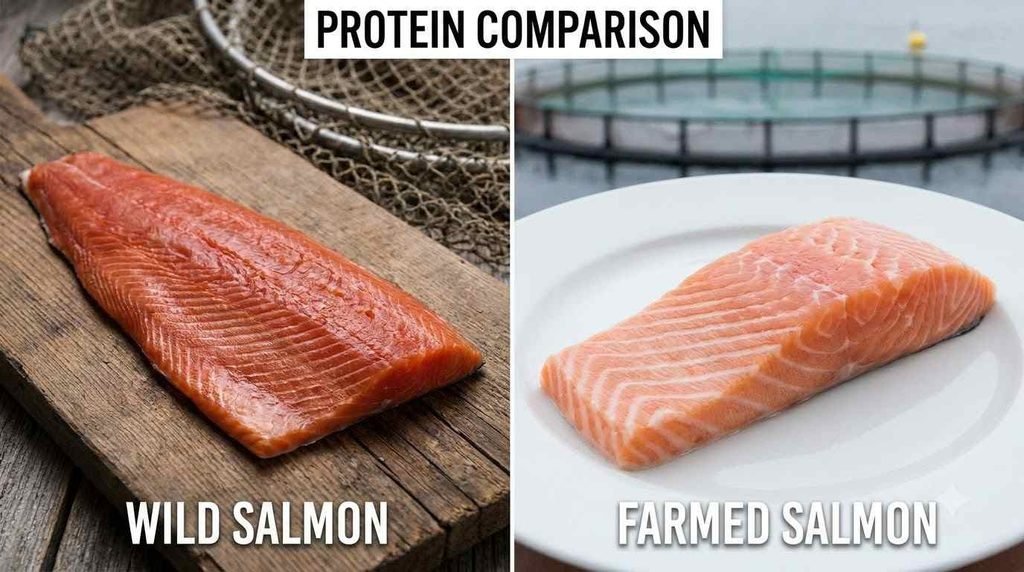
This is one of the biggest debates in the fish aisle. Does wild or farmed salmon give you more protein? Let us look at the facts.
Per 100g cooked, wild Atlantic salmon provides about 25g of protein, while farmed provides about 22g. Wild salmon is usually leaner, so there is more muscle and less fat in each gram.
Farmed salmon eats a controlled diet and swims less. That leads to more fat, more calories, and slightly less protein by weight.
Side-by-Side Comparison
| Factor | Wild Salmon | Farmed Salmon |
|---|---|---|
| Protein per 100g (cooked) | About 25g | About 22g |
| Calories per 100g (cooked) | About 182 | About 206 |
| Fat per 100g (cooked) | About 8g | About 12g |
| Omega-3 content | Moderate to high | Often higher by weight |
| Price | Usually higher | Usually lower |
| Availability | Seasonal, varies | Year-round |
| Texture | Firmer, leaner | Softer, richer |
Approximate values. Species such as sockeye, coho, king, and pink all differ.
The table shows a clear trade-off. Wild salmon wins on protein and calories. Farmed salmon is easier to find, cheaper, and richer in flavor.
You may also see differences within wild salmon. Sockeye and coho tend to be lean, while king salmon is richer in fat.
Which One Should You Buy?
If your main goal is maximum salmon protein with fewer calories, choose wild. It is a smart pick for cutting phases and calorie-conscious meal plans.
If you want a budget-friendly option you can buy any day of the year, farmed salmon is a solid choice. It still delivers plenty of protein.
Look for fish from responsible sources, such as those with third-party sustainability certifications. Your fishmonger can tell you where the fish came from.
A Note on Omega-3 Fats
Omega-3 fats, mainly EPA and DHA, are a big reason salmon is called a health food. They support heart and brain health.
Because farmed salmon carries more total fat, it often contains as much or even more omega-3 per serving than wild. This surprises many people.
The Healthline salmon guide explains these benefits in more depth if you want to keep reading.
Smoked Salmon Protein
Smoked salmon is a favorite on bagels, toast, and salads. People often wonder how smoked salmon protein compares with fresh fillets.
Smoked salmon provides about 18g of protein per 100g. That is lower than cooked fresh salmon but still a respectable amount.
Part of the reason is simple. Smoked salmon is cured and sliced thin, so it holds more salt and less cooked muscle weight per gram.
Smoked Salmon Protein by Serving
A typical serving is 2 to 3 ounces. A 2 oz portion has about 10g of protein, and a 3 oz portion has about 15g.
A 4 oz serving of smoked salmon protein reaches roughly 21g. That is a good snack-sized portion, though it comes with a lot of sodium.
Smoked salmon is usually around 100 to 120 calories per 100g, which makes it light and convenient.
Watch the Sodium
Curing adds salt. A single serving can contain several hundred milligrams of sodium, and some brands go much higher.
If you watch your blood pressure, read the label and choose lower-sodium products. Balance the rest of your day accordingly.
Pregnant women should also be careful with cold-smoked salmon because of listeria risk. We cover this in the safety section below.
Calories and Fat per Serving
Protein is only part of the story. If you track macros, you also need to know the calories and fat in each fillet. Salmon is higher in fat than most white fish, and that is a good thing in moderation.
The fat in salmon is mostly unsaturated. It includes omega-3 fats that support your heart, brain, and joints. A serving also brings a small amount of saturated fat.
For a quick estimate, a cooked 6 oz farmed fillet has about 350 calories and 21g of fat. A cooked 6 oz wild fillet has about 310 calories and 14g of fat.
Calories and Fat at a Glance
Here is a simple way to remember it. A 4 oz portion lands near 210 to 235 calories. A 6 oz portion lands near 310 to 350 calories. An 8 oz portion lands near 410 to 470 calories.
Fat follows the same pattern. Expect about 9g to 14g in a 4 oz portion and 18g to 28g in an 8 oz portion.
These numbers are easy to fit into a balanced day, especially because salmon keeps you full. Many people find that one fillet replaces a snack later.
Is the Fat in Salmon Bad for You?
No. The fat in salmon is considered heart-friendly for most healthy adults. Health organizations often recommend fatty fish once or twice a week for this very reason.
What matters most is how you cook it. Frying in a lot of butter or oil can double the fat without you noticing.
If you have high cholesterol or a heart condition, talk to your doctor about the right amount of fish for you. The WebMD salmon nutrition overview is another helpful read on how salmon fits into a healthy diet.
Best Ways to Cook Salmon
How you cook salmon changes the taste, the texture, and the calorie count. It barely changes the salmon protein content, which is good news. Your protein stays put no matter which method you pick.
The real goal is to avoid overcooking. Dry, chalky salmon is no fun, and it makes the fish harder to enjoy week after week.
The U.S. Department of Agriculture recommends cooking fish to an internal temperature of 145°F (63°C). Many home cooks pull it a little earlier for a softer center, but the safest choice is to follow the official number, especially for children, older adults, and pregnant women.
Cooking Methods Compared
| Method | Temperature | Time | Texture | Best For |
|---|---|---|---|---|
| Baking | 400°F (200°C) | 12 to 15 min | Tender, flaky | Easy weeknight dinners |
| Pan-searing | Medium-high heat | 4 to 5 min per side | Crispy skin, juicy inside | Restaurant-style meals |
| Grilling | Medium heat | 6 to 8 min per side | Smoky, firm | Summer cooking |
| Poaching | Gentle simmer | 8 to 10 min | Silky, delicate | Lowest added fat |
| Air frying | 400°F (200°C) | 8 to 10 min | Lightly crisp | Quick meals, less oil |
| Steaming | Medium heat | 8 to 10 min | Moist, soft | Clean, light meals |
Times depend on thickness. A fillet about one inch thick is the standard.
Any of these methods works well. Baking and air frying are the easiest for beginners, while poaching and steaming keep added fat to a minimum.
Baking Salmon
Baking is the simplest way to get reliable results. Heat your oven to 400°F, place the fillet on a lined sheet pan, and add a little oil, salt, and pepper.
Bake for 12 to 15 minutes, depending on thickness. The fish should flake easily with a fork.
This method keeps the salmon protein intact and needs almost no attention. It also makes cleanup easy.
Pan-Searing Salmon
Pan-searing gives you crispy skin and a juicy center. Pat the fillet dry, season it, and place it skin-side down in a hot pan with a little oil.
Cook for 4 to 5 minutes until the skin is crisp. Flip and cook another 3 to 4 minutes.
The crispy skin adds a bit of fat, but many people think it is the best part of the fish.
Grilling Salmon
Grilling adds a smoky flavor that is hard to beat. Oil the grates well so the fish does not stick, and keep the heat at medium.
Start skin-side down. Let it cook until it releases easily, then flip once.
A cedar plank is a nice option if you want extra flavor and easier handling.
Poaching and Steaming
Poaching cooks salmon gently in water, broth, or milk. It adds no fat and keeps the fish extremely moist.
Steaming works the same way. Place the fillet over simmering water with lemon slices and herbs, and cover it.
These two methods suit people watching calories, and they preserve the delicate texture of the fish.
Does Cooking Destroy Protein?
Not in any way that matters for nutrition. Heat changes the shape of protein molecules, which is called denaturing. This actually makes the protein easier for your body to digest.
What you lose is water, which is why cooked weight is lower than raw weight. As we covered earlier, salmon protein per 100g looks higher after cooking for exactly this reason.
Overcooking can dry the fish out, but it does not remove the protein. Still, nobody wants dry salmon, so watch your timer.
Simple Tips for Better Salmon
Start with fish that smells fresh and clean, not strongly fishy. Pat it dry before cooking so it sears and browns well.
Season with salt, pepper, garlic, lemon, or dill. These add flavor without adding calories.
Let cooked salmon rest for two minutes before serving. The juices settle, and the texture improves.
How Much Salmon Should You Eat?
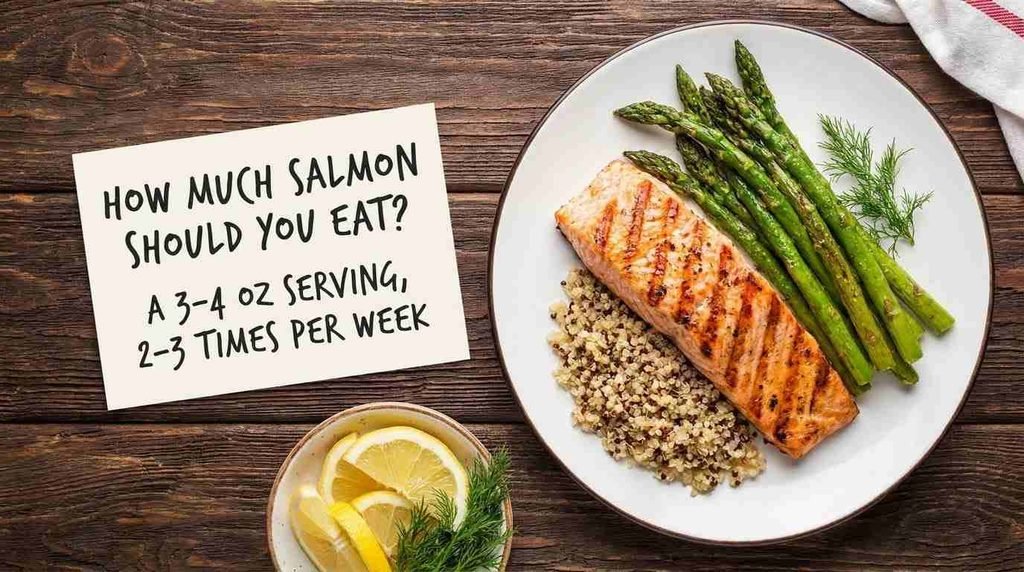
For most healthy adults, two servings of fish per week is a common recommendation. Salmon is a great fit because it is rich in omega-3 fats.
The U.S. Food and Drug Administration and the Environmental Protection Agency list salmon among the best choices for low mercury. They suggest two to three servings per week, with a serving being about 4 ounces for adults.
That means you can enjoy a 4 to 6 oz fillet a couple of times each week without worry. Always follow the advice of your own healthcare provider if you have special needs.
Daily Protein Needs
The standard recommended dietary allowance for protein is about 0.8g per kilogram of body weight for adults. A person who weighs 70kg would need around 56g per day.
Active people, older adults, and those building muscle often need more. Your doctor or dietitian can help you set a number that fits your body and goals.
A single 6 oz fillet can provide 38g to 43g of protein. That covers a large share of the day in one meal.
Who Should Be Careful With Salmon?
Salmon is safe and healthy for most people. A few groups should take extra care, which matters because this topic touches on health.
Pregnant and breastfeeding women should eat fish that is fully cooked and avoid raw or undercooked preparations. They should also be cautious with refrigerated cold-smoked salmon because of listeria risk, unless it is heated until steaming hot or comes from a shelf-stable can or pouch.
People with a fish allergy should avoid salmon completely. Allergic reactions can be serious, so always seek medical advice.
Other Things to Consider
People with high blood pressure should watch the sodium in smoked and canned salmon. Fresh salmon is naturally low in sodium.
Those taking blood-thinning medication should ask their doctor about large amounts of omega-3 fats. Small food portions are usually fine, but your doctor knows your situation best.
Young children can eat salmon too, as long as it is fully cooked and free of bones. Serve small portions that fit their age.
Easy Ways to Hit Your Protein Goal With Salmon
You do not need fancy recipes to enjoy salmon often. A few simple ideas can carry you through the week.
Bake a tray of fillets on Sunday and use them in lunches. Flake the fish over salads, rice bowls, or whole-grain wraps.
Try a salmon and avocado bowl with brown rice and cucumber. It gives you protein, healthy fat, and fiber in one dish.
Quick Meal Ideas
Breakfast can include a few slices of smoked salmon on whole-grain toast with a little cream cheese or avocado. That adds about 10g to 15g of protein before your day even starts.
For lunch, a 4 oz fillet over mixed greens gives you about 25g to 29g of protein. Add chickpeas or quinoa for even more.
For dinner, a 6 oz fillet with roasted vegetables and potatoes makes a balanced plate. It is simple, filling, and full of nutrients.
Budget Tips
Fresh salmon can be pricey. Frozen fillets are often cheaper and just as nutritious, since fish is typically frozen soon after being caught.
Canned salmon is another smart choice. It is affordable, shelf-stable, and still delivers strong salmon protein content, usually around 20g to 23g per 100g.
Buying in bulk and freezing individual portions helps you save money and cut waste.
Frequently Asked Questions
How much protein is in a 6 oz salmon fillet?
A cooked 6 oz fillet provides about 38g of protein if farmed and about 43g if wild. That is why 6 oz salmon protein is such a popular dinner target.
How much protein is in 8 oz of salmon?
Expect about 50g for farmed and 58g for wild. This 8 oz salmon protein amount is large, so it suits very active people best.
Is salmon high in protein?
Yes. With roughly 22g to 25g of protein per 100g when cooked, salmon is a high-protein food. It also gives you healthy fats, which most lean proteins lack.
How much protein is in smoked salmon?
About 18g per 100g, or roughly 5g per ounce. A 4 oz serving gives around 21g of smoked salmon protein.
Does wild or farmed salmon have more protein?
Wild salmon has more protein per 100g because it is leaner. Farmed salmon has more fat and calories but still delivers excellent protein.
Is salmon protein better than chicken?
Chicken breast has more protein per 100g, but salmon offers omega-3 fats, vitamin D, and a richer taste. Eating both is a great strategy.
Final Thoughts
Salmon is one of the best all-around foods you can put on your plate. A normal cooked fillet gives you 25g to 58g of high-quality salmon protein, depending on size and type.
Wild salmon leads on protein and calories. Farmed salmon is affordable and rich in omega-3 fats. Smoked salmon is convenient but higher in sodium.
Pick the type that fits your budget and goals, cook it to 145°F, and enjoy it a couple of times a week. Small, steady habits make the biggest difference.
Sources and Medical Disclaimer
Nutrient values in this article are rounded from USDA FoodData Central entries. Additional background comes from the Healthline salmon guide and the WebMD salmon nutrition overview.
This article is for general education and does not replace professional medical advice. Always speak with a qualified healthcare provider about your diet, allergies, pregnancy, or health conditions.