


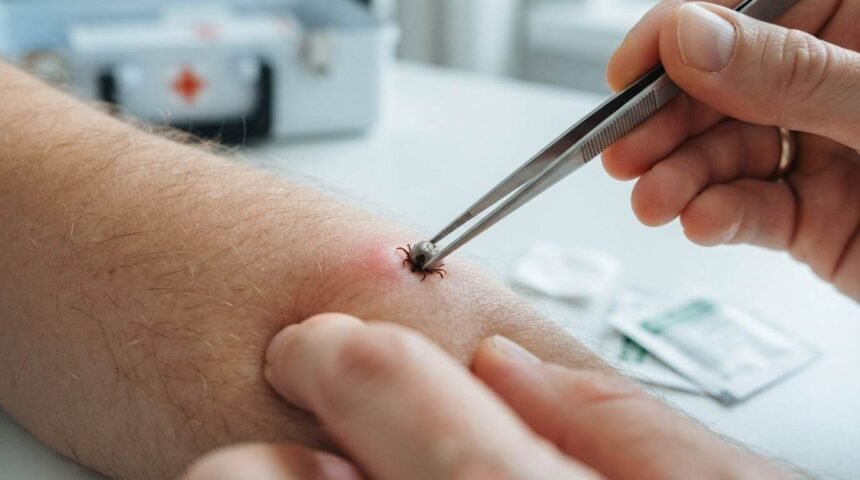
Safe tick removal protects you, your children, and your pets from infection. This guide shows exactly how to pull a tick out of skin with fine-tipped tweezers, which tools to avoid, and how to disinfect the bite afterward. You will also learn tick removal from dog and cat skin, how a tick removal tool or tick removal kit works, and when to call a doctor or vet.
Every step follows guidance from the CDC, Healthline, and WebMD. The sections are short and the language is plain, so you can follow along even when a tick is stuck to your skin and you feel stressed. You will find clear tables, myth busting, symptom timelines, and prevention tips.
Use this article as a practical reference, not a replacement for professional medical or veterinary care. If you feel unsure at any point, a clinician can finish the job safely. Keep this page bookmarked for the next time you find a tick.
What Tick Removal Really Means
Tick removal means taking the whole tick off the skin, head and mouthparts included, as quickly and gently as possible. It sounds simple, but small mistakes can leave mouthparts behind or squeeze the tick’s gut contents into the bite. Doing it right lowers the chance of infection.
A tick is not an insect. It is an arachnid, a cousin of spiders and mites. It attaches by pushing a barbed feeding tube into the skin, and many species release a sticky substance that helps them hold on.
That grip is why you cannot just brush a tick off once it has fed for a while. You need a steady, controlled pull. The good news is that proper tick removal takes about a minute and needs only basic tools.
Why Quick Tick Removal Matters
Ticks can carry bacteria, viruses, and parasites. Lyme disease is the best known, but ticks also spread anaplasmosis, babesiosis, ehrlichiosis, and Rocky Mountain spotted fever. The risk depends on the tick species, your region, and how long the tick stayed attached.
For Lyme disease, the CDC notes that transmission usually needs the tick to be attached for roughly 36 to 48 hours or more. That is a useful window, but it is not a guarantee. Some other germs can pass faster, so you should never wait.
The lesson is simple. Check your body and your pets often, and do tick removal the moment you spot one. Every hour counts.
Our Approach and Why You Can Trust It
This article follows the E-E-A-T approach: experience, expertise, authoritativeness, and trustworthiness. Because health advice can affect your wellbeing, it is treated as Your Money or Your Life content. That means the facts here come from major public health and medical sources, not guesswork.
The core instructions match the CDC page on Tick Removal – CDC. Supporting detail comes from How to Remove Ticks – Healthline and Removing Ticks Safely – WebMD. Where advice differs by situation, this guide says so.
This article is educational. It does not diagnose illness or replace a doctor or a veterinarian. When symptoms appear or the situation looks complicated, professional care comes first.
Know Your Tick Before You Start
Knowing the tick helps you judge the risk. Different species live in different places and carry different germs. You do not need to be an expert, but a quick look helps your doctor or vet later.
The table below lists common ticks in North America. Size and color change as a tick feeds, so a swollen tick can look very different from a hungry one. When unsure, save the tick and ask a professional.
| Tick Type | Common Name | Typical Habitat | Main Germs Linked |
|---|---|---|---|
| Ixodes scapularis | Blacklegged or deer tick | Woods, leaf litter, tall grass | Lyme disease, anaplasmosis, babesiosis |
| Dermacentor variabilis | American dog tick | Grassy fields, trails | Rocky Mountain spotted fever, tularemia |
| Amblyomma americanum | Lone star tick | Woods, brush, southern states | Ehrlichiosis, alpha-gal syndrome |
| Rhipicephalus sanguineus | Brown dog tick | Homes, kennels, yards | Rocky Mountain spotted fever in some regions |
The baby stage, called a nymph, is the size of a poppy seed. Nymphs cause many infections because people miss them. Check carefully, especially in warm months.
Tools You Need for Tick Removal
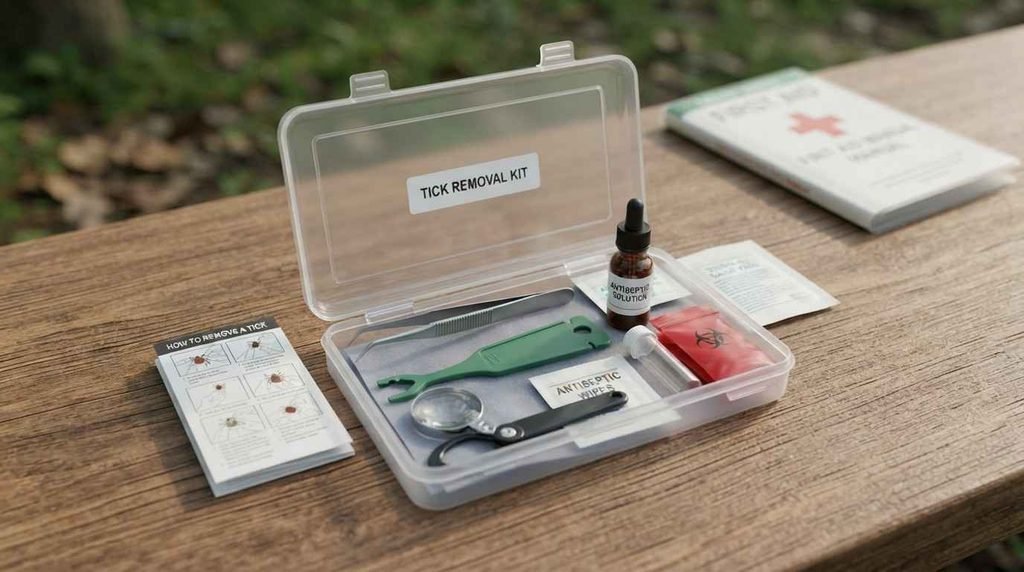
You do not need much. Fine-tipped tweezers are the standard choice. Many people also keep a dedicated tick removal tool in a first aid pouch, a bag, or a glove box.
A tick removal kit usually bundles tweezers or a hook-style tool with antiseptic wipes, gloves, and a small container. That is handy because everything is in one place when you are rushed. Keep one at home, one in the car, and one in your hiking pack.
The table below compares the common options. Pick what suits your hands and your pets.
| Tool | Best For | Strength | Watch Out For |
|---|---|---|---|
| Fine-tipped tweezers | People and pets | Precise grip close to the skin | Blunt tweezers can crush the tick |
| Tick hook or twister | Dogs, cats, small ticks | Lifts the tick with a gentle twist | Needs practice to use smoothly |
| Card-style removal tool | Quick travel use | Slides under the tick | Less control on tiny nymphs |
| Complete removal kit | Home and travel | Includes antiseptic and container | Check that tools are sturdy |
| Nitrile gloves | Everyone | Protects your skin from fluids | Do not skip them with pets |
Picking a Tick Removal Tool for Dogs
A tick removal tool for dogs should be easy to hold when your dog wiggles. Hook-style tools often work well on thick fur because they slip under the tick without pinching the body. Tweezers work too if the tips are fine and aligned.
If you share the home with both dogs and cats, choose a tool that fits small ticks. Cats have fine skin and a tick is easy to miss on them. A small hook or fine tweezers gives better control.
Whatever you choose, test it once on a dry run. Learning the motion before an emergency makes you faster and calmer. Clean the tool after each use.
Step-by-Step Tick Removal for People
This is the core method, and it matches the CDC guidance. Stay calm, work in good light, and take your time. A steady hand matters more than speed.
Step one: prepare. Wash your hands with soap and water. Put on gloves if you have them. Gather tweezers, rubbing alcohol, a small sealable container, and a clean cloth.
Step two: grip the tick. Use fine-tipped tweezers to grasp the tick as close to the skin as you can. Grip the head area, not the swollen body. Squeezing the body can push germs into the bite.
Step three: pull upward. Pull straight up with steady, even pressure. Do not jerk, twist, or rock the tick. A sudden movement can break off the mouthparts.
Step four: check the bite. Look at the skin and the tick. If small black bits remain, try to lift them out with clean tweezers. If they will not come out easily, leave them alone and let the skin heal.
Step five: clean and dispose. Clean the bite and your hands with rubbing alcohol or soap and water. Place the tick in a sealed bag or container, or flush it down the toilet. Note the date and the body area for later.
That is the whole process for standard tick removal. It takes less than two minutes once you have the tools ready.
Special Cases in Tick Removal Human Care
Some situations need extra care. Tick removal human cases involving children, the scalp, ears, or private areas can be tricky. The method stays the same, but the setup changes.
For children, stay calm and explain what you are doing. Have another adult hold the child still and use a bright lamp. A kind voice keeps the child from twisting, which protects the skin and the tick’s mouthparts.
For the scalp, part the hair and use a comb to expose the tick. Ask a helper to hold a mirror or a flashlight. If the tick sits on an eyelid, in the ear canal, or in a sensitive area, see a doctor instead of trying it yourself.
If a tick is already engorged, hard to grip, or partly embedded, urgent care can help. A clinician can remove it safely and check for signs of infection. There is no shame in asking for help.
Step-by-Step Dog Tick Removal
Dog tick removal follows the same logic as human removal, with a few changes. Your dog may squirm, so a helper makes a big difference. Treats and calm praise keep things easy.
Wear gloves, because tick fluids can carry germs. Part the fur around the tick so you can see where it joins the skin. Common hiding spots include ears, neck, armpits, belly, between the toes, and under the collar.
Then follow these actions for tick removal from dog skin. Use fine tweezers or a hook-style tick removal tool for dogs. Grip the tick close to the skin, pull up slowly with steady pressure, and avoid twisting or squeezing.
Afterward, clean the bite with a pet-safe antiseptic or mild soap and water. Dispose of the tick in sealed alcohol or a sealed bag. Wash your hands thoroughly and clean your tool.
Watch the bite for several days. Redness that spreads, swelling, or pus means it is time to call your vet. Also watch your dog for fever, tiredness, limping, or loss of appetite in the weeks after.
Common Hiding Spots on Dogs
Ticks love warm, thin-skinned areas. Run your fingertips slowly over your dog after every walk in grass or woods. A tick often feels like a small, firm bump.
Check the ears, around the eyes, under the chin, and along the neck. Then move to the chest, armpits, groin, tail base, and between the toes. This takes two minutes and prevents many problems.
Long-haired breeds need extra care. A brush or comb helps you spot ticks hidden in thick fur. Make the check part of your routine and your dog will get used to it.
Tick Removal Cat Guide
Tick removal cat care needs a gentle hand. Cats groom themselves, so they often remove ticks on their own, but not always. Outdoor cats and cats living near woods or tall grass face the highest risk.
Cats are more sensitive than dogs to many chemicals. Never use dog tick products on a cat, because some contain permethrin, which is highly toxic to cats. Ask your vet before using any treatment.
To remove a tick from a cat, wear gloves and keep the cat calm, ideally with a helper wrapping it in a towel. Use fine-tipped tweezers or a small hook tool, grip close to the skin, and pull straight up. Clean the spot with a pet-safe antiseptic and call your vet if the cat seems unwell.
Watch for tiredness, fever, loss of appetite, pale gums, or breathing changes in the days after. Some tick-borne illnesses, such as cytauxzoonosis, can turn serious fast in cats. Quick veterinary care can save a life.
Tools to Avoid During Tick Removal
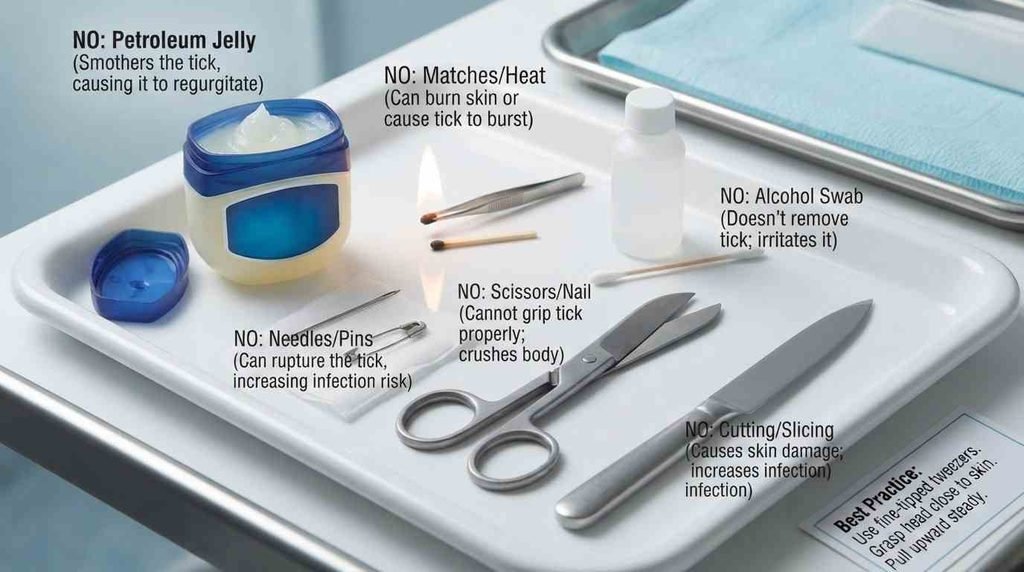
Old home remedies are popular and dangerous. They can stress the tick, which may then release more saliva or gut contents into the bite. They can also burn the skin or leave mouthparts behind.
The table below lists methods to skip. If you see any of these in an online video, close the page and use tweezers instead. Plain, steady tick removal beats every trick.
| Method or Tool | Why People Try It | Why It Is a Bad Idea | What to Do Instead |
|---|---|---|---|
| Petroleum jelly | To smother the tick | The tick can stay attached for longer | Pull with tweezers right away |
| Nail polish | To suffocate the tick | Slow and may agitate the tick | Use fine-tipped tweezers |
| Lit match or hot needle | To make the tick let go | Burns skin and may cause the tick to regurgitate | Never use heat |
| Essential oils or alcohol on the tick | To make it back out | Not proven and may irritate skin | Remove, then clean the skin |
| Fingernails or bare fingers | Nothing else at hand | Easy to crush the body | Use a tool or a tissue as a last resort |
| Blunt or wide tweezers | Common household item | Slip and squeeze the tick | Choose fine, pointed tips |
The same rule applies to pets. Do not use fire, chemicals, or sprays directly on a tick attached to your dog or cat. A proper tick removal tool for dogs is safer than any home trick.
If you have no tweezers at all, a clean tissue or a thread loop can work for a moment. Pull gently upward and see a clinician if you cannot get the whole tick. Do not wait days hoping it will fall off.
Disinfection After Tick Removal
Disinfection is the step many people skip. Once the tick is out, the skin has a tiny open wound. Cleaning it reduces the chance of a skin infection.
Wash the area with soap and water. Then apply rubbing alcohol, an iodine scrub, or another antiseptic. Wash your own hands well, even if you wore gloves.
Clean your tool with rubbing alcohol before you put it away. This stops germs from moving to the next person or pet. If you used a kit, restock any wipes you used.
For pets, use a product your vet approves. Avoid strong chemicals that your dog or cat might lick off. A simple wash with mild soap and water is often enough for a small bite.
Keep an eye on the area for the next few weeks. A small red bump is normal and often fades in a few days. A spreading rash, warmth, or pus is not normal.
What to Do With the Tick Afterward
Do not crush a tick with bare fingers. Put it in a sealed bag, a small jar with rubbing alcohol, or wrap it tightly in tape. Flushing it down the toilet also works.
Consider saving the tick for a short time. Place it in a labeled bag with the date and the body area where you found it. If you become sick, a doctor or vet can use that information to guide testing and treatment.
Some labs offer tick testing, but results do not always change treatment. A positive result does not prove you are infected, and a negative result does not prove you are safe. Treat symptoms and risk first, not the lab report alone.
Symptoms to Watch After a Tick Bite
Most bites cause nothing serious. Still, watch for changes in the weeks after, because some illnesses show up late. Early treatment works best.
The table below compares typical warning signs. It is a guide, not a diagnosis. If you notice any of these, contact a professional.
| Who | Early Warning Signs | When They May Appear |
|---|---|---|
| Humans | Expanding red rash, sometimes a bull’s-eye shape | 3 to 30 days after the bite |
| Humans | Fever, chills, headache, muscle aches, tiredness | A few days to several weeks |
| Humans | Joint pain or swelling, facial drooping | Days to months in later stages |
| Dogs | Fever, lethargy, loss of appetite | One to several weeks |
| Dogs | Limping, swollen joints, bruising or nosebleeds | One to several weeks |
| Cats | Fever, weakness, pale gums, hiding | Days to two weeks |
A rash is not always present. Many people never see the bite or the rash, so do not rely on skin changes alone. If you feel flu-like after an outdoor trip in tick country, tell your doctor about possible exposure.

When to See a Doctor or Vet
Because this is health content, safety comes first. See a doctor if you cannot remove the whole tick, if the mouthparts stay in the skin, or if the bite area looks infected. Also see one if a rash or fever develops after a tick bite.
Some people should call a doctor even after a simple removal. This includes young children, pregnant people, and those with weak immune systems. In certain high-risk cases, a doctor may consider a single preventive antibiotic dose soon after the bite, but only a clinician can decide that.
For pets, call your vet when you see a tick you cannot remove cleanly or when your pet acts sick. Ask about blood tests for tick-borne disease and about prevention products. Do not give human medicine to a dog or cat without veterinary advice.
Call emergency services for severe symptoms. These include trouble breathing, a stiff neck with a high fever, confusion, or fainting. When in doubt, get help early.
ICD 10 Code for Tick Removal
People often search for the icd 10 code for tick removal when they need paperwork or billing details. There is no single code just for removing a tick. Coders usually describe the bite itself and where it happened on the body.
A common starting point is the external cause code W57, which covers bites or stings from nonvenomous insects and other nonvenomous arthropods. It is usually paired with a site-specific injury code, such as an insect bite on a certain body part. The exact code depends on the body area, the visit type, and any complication.
Coding rules change, and payers differ. Ask your clinic’s billing office or a certified coder to confirm the right code for your visit. Do not guess when money or medical records are involved.
Preventing Ticks and Easier Tick Removal
The best tick removal is the one you never need. Prevention reduces bites and makes checks quicker. Combine several habits for the best protection.
The table below gives practical steps for people, dogs, and cats. Use only products labeled for the correct species. Read every label.
| Area | Prevention Habit | Extra Tip |
|---|---|---|
| People | Use EPA-registered repellent and wear long sleeves outdoors | Tuck pants into socks on trails |
| People | Shower soon after being outdoors and check your whole body | Check behind knees, scalp, and waistline |
| Clothing | Dry clothes on high heat for 10 minutes or more | Kills ticks that hitched a ride |
| Dogs | Use a vet-approved preventive and check after walks | Keep a tick removal kit near the door |
| Cats | Use only cat-safe products approved by a vet | Never use dog products on cats |
| Yard | Mow grass, clear leaf litter, and add a barrier near woods | Keep play areas away from brush |
Stay on the center of trails when hiking. Avoid brushing against tall grass and low branches. These small choices lower your exposure a lot.
After each outing, make a quick check part of your routine. It takes two minutes and can prevent a long illness. Teach children to help, so the habit lasts.
Frequently Asked Questions About Tick Removal
Can I Wait to See a Doctor After Tick Removal?
If the tick came off whole and you feel fine, you can monitor the bite at home. Watch for a rash, fever, or aches for several weeks. If anything shows up, call your doctor.
What if the Head Stays in the Skin?
Try gently lifting any remaining parts with clean tweezers. If they do not come out, leave them and keep the area clean. The skin will usually push them out on its own, but see a clinician if it looks infected.
Is Tick Removal From Dog Skin Different From Human Removal?
The method is nearly the same: a fine grip near the skin and a steady upward pull. The main differences are fur, squirming, and the need for pet-safe antiseptic. When in doubt, ask your vet.
Should I Use a Tick Removal Kit or Plain Tweezers?
Either works if used correctly. A tick removal kit simply puts the tools in one place and adds antiseptic and a container. Plain fine-tipped tweezers are enough if you also have rubbing alcohol and a sealed bag.
Can Cats and Dogs Pass Ticks to People?
Pets do not pass germs directly to people through a tick bite, but ticks can ride on pets into your home. Those ticks can then bite you. That is why checking your pets and doing prompt tick removal protects the whole household.
Final Thoughts on Safe Tick Removal
Safe tick removal comes down to a few habits. Keep fine tweezers or a proper tick removal tool ready, pull straight up with steady pressure, and clean the area well. Skip the old tricks, because they only add risk.
Do the same for your dogs and cats, using pet-safe products and calm handling. Watch for symptoms for several weeks and call a doctor or vet when something seems off. A little preparation turns a scary moment into a routine task.
For the official steps, read Tick Removal – CDC, How to Remove Ticks – Healthline, and Removing Ticks Safely – WebMD. Share this guide with friends, family, and fellow pet owners.
Medical disclaimer: This article is for general education only. It is not medical or veterinary advice and does not replace care from a licensed professional.