


Wondering about the best time to weigh yourself? This simple guide explains why the morning, after using the bathroom and before eating, gives the most reliable number. You will learn why your weight jumps up and down because of water and salt, whether daily or weekly weigh-ins work better, and how using the same scale on a flat surface keeps your tracking honest.
We explain when is the best time to weigh yourself for weight loss, muscle gain and general health, using plain language and clear tables. We also cover common mistakes, special situations such as medical conditions, and how to avoid becoming obsessed with the scale.
The advice follows trusted sources like Healthline, Cleveland Clinic and Verywell Fit, plus real-world lessons from fitness communities. By the end, you will have a calm, practical routine you can start tomorrow morning. This article is educational and not medical advice, so please talk to a healthcare professional about personal health concerns.
Introduction: One Number, Many Opinions
Almost everyone who steps on a scale has the same question. What is the best time to weigh yourself, and does it even matter? The honest answer is yes, it matters, but not for the reason most people think.
Your body weight is not a fixed number. It moves up and down all day, and sometimes by a few pounds. The scale cannot tell the difference between fat, muscle, water, food and, well, a very large lunch.
That is why timing and routine matter so much. When you weigh yourself under the same conditions each time, the daily noise gets smaller. In this guide, you will learn exactly how to do that in simple steps.
Who Is Behind This Advice? (E-E-A-T and YMYL)
This article follows the E-E-A-T idea: experience, expertise, authoritativeness and trustworthiness. The advice is built on guidance from respected health publishers and on well-known physiology, such as how the body stores and releases water. It is not based on fads or miracle claims.
Weight and health fall under “Your Money or Your Life” (YMYL) topics, because they can affect your wellbeing. So we keep claims careful and point you to reliable sources. For more reading, you can visit the Healthline guide on the best time to weigh yourself and the Cleveland Clinic article on weighing yourself.
We also share practical lessons from everyday lifters and dieters, such as those discussed on Reddit r/Fitness. Treat those stories as helpful anecdotes, not proof. If you have a medical condition, always follow your doctor’s instructions first.
Why Weighing Yourself Is Useful at All
A scale is a simple tool, and like any tool, it works best when used well. Regular weigh-ins can show you trends that are hard to notice by eye. They can help you spot slow weight gain before it becomes a bigger problem.
For people trying to lose weight, the scale gives feedback on whether the plan is working. For people building muscle, it shows whether they are eating enough to grow. For everyone else, it can be a quiet health check.
Still, the scale is only one piece of information. It does not measure your fitness, your energy, your strength or your happiness. Think of it as one dashboard light, not the whole car.
The Short Answer: Best Time to Weigh Yourself
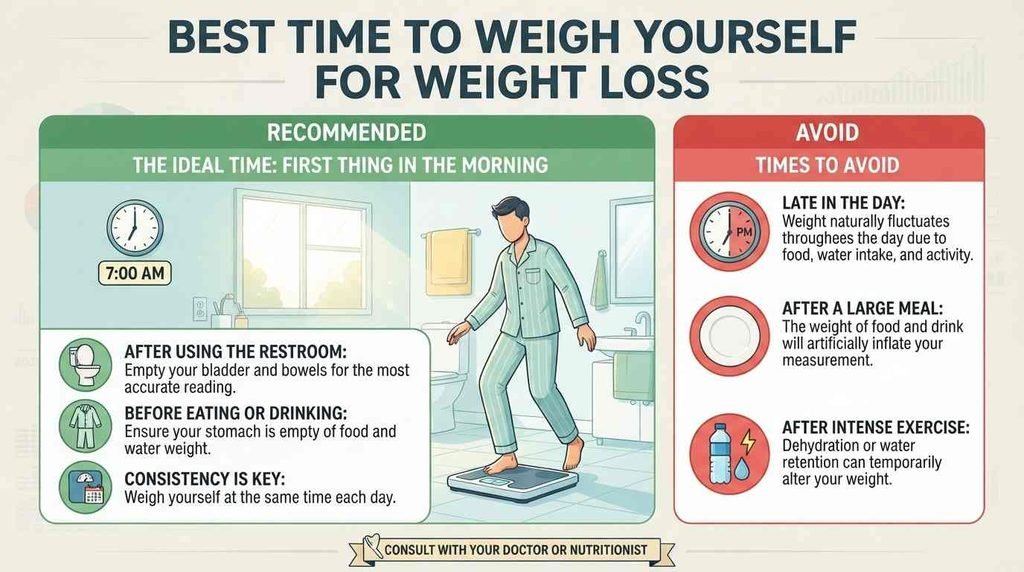
If you only remember one thing, remember this. The best time to weigh yourself is in the morning, right after you wake up and use the bathroom, before you eat or drink anything. Wear little or no clothing, and use the same scale every time.
This timing works because your body has gone several hours without food or water. Your stomach is empty, and your weight is usually at its lowest and most stable point of the day. That makes comparisons from one day to the next much fairer.
This is also the answer most experts give when people ask, “when is the best time to weigh yourself?” It is not magic. It is just consistent, and consistency is what makes the numbers meaningful.
The Morning Fasted After Bathroom Rule
Let us break the rule into three simple parts. First, weigh yourself in the morning. Second, do it after you have used the toilet. Third, do it before you have eaten or had anything to drink.
Using the bathroom first removes waste that adds weight but has nothing to do with your body fat. Skipping food and drinks removes the weight of whatever you are about to consume. Together, these steps give you a clean baseline.
Many people ask, “what is the best time to weigh yourself, exactly?” The answer is within a few minutes of getting up, most days, at about the same hour. Even a small habit like keeping the scale next to your bathroom door can make it easy.
Table 1: The Morning Weigh-In Checklist
| Step | What to Do | Why It Matters |
|---|---|---|
| 1. Wake up | Weigh within about 15–30 minutes of waking | Keeps timing consistent |
| 2. Use the bathroom | Empty your bladder and bowels first | Removes waste weight |
| 3. Stay fasted | Do not eat or drink before stepping on | Avoids food and fluid weight |
| 4. Minimal clothing | Wear underwear or nothing | Clothes add changing weight |
| 5. Same scale, same spot | Use the same flat, hard floor | Reduces measurement error |
| 6. Write it down | Record the number right away | Builds a trend you can review |
Why Morning Beats Evening for Most People
Through the day, your weight usually creeps up. You eat meals, drink fluids, and your body holds extra food in your digestive system. By evening, many people weigh a pound or two more than they did that morning.
That evening number is not fat gain. It is simply the weight of everything you have eaten and drunk, plus the water your body is holding. It can make you feel discouraged for no real reason.
If you weigh yourself at night, it can still work, as long as you do it consistently at night. The problem comes from mixing morning and evening numbers. Comparing a Monday morning weight to a Tuesday night weight will always give a misleading story.
Why Your Daily Weight Fluctuates: Water and Salt
Here is the part that surprises most people. Your weight can swing by a few pounds in a day or two without any change in body fat. The main reason is water, which makes up a big share of your body.
Salt is a major player. When you eat a salty meal, your body holds extra water to keep the balance right. That can raise the scale the next morning, even though you did not gain any real fat.
Carbohydrates also hold water. Your muscles store carbs as glycogen, and each bit of glycogen is stored with several times its weight in water. So after a high-carb day, you may weigh more, and after a low-carb day, you may weigh less, mostly because of water.
Other Reasons the Scale Jumps Around
Water and salt are not the only causes. Hormones play a role, especially during the menstrual cycle, when many women notice temporary water retention. This is normal and usually settles on its own.
Digestion matters too. If you have not had a bowel movement for a day or two, the scale may show a higher number. Travel, poor sleep, stress and hard workouts can also cause the body to hold water for a short time.
Alcohol, certain medicines and hot weather can change your fluid balance as well. After a tough workout, your muscles may hold extra water for repair. None of these changes mean you have gained fat, so try not to panic over a single number.
Table 2: Common Causes of Daily Weight Changes
| Cause | What Happens | Typical Effect on Scale |
|---|---|---|
| Salty meal | Body holds extra water | Short-term increase |
| High-carb day | More glycogen and water stored | Short-term increase |
| Low-carb day | Less glycogen and water stored | Short-term decrease |
| Menstrual cycle | Hormonal water retention | Temporary increase |
| Hard workout | Muscles hold water for repair | Temporary increase |
| Constipation | Waste stays in the body | Higher reading |
| Alcohol or dehydration | Changes fluid balance | Can go up or down |
| Poor sleep or stress | Hormones change water balance | Temporary increase |
Fat Gain vs Water Weight: How to Tell the Difference
It helps to remember a basic fact. Gaining one pound of real body fat takes a large calorie surplus over many days. You cannot gain a pound or two of fat overnight, even after a big dinner.
So when the scale jumps two pounds in one day, it is almost always water, food or waste. Real fat change shows up slowly, as a trend over weeks. This is why single numbers are not very useful, while trends are.
A simple way to check is to look at the direction over time. If the weekly average keeps rising across several weeks, you may be gaining real weight. If it jumps up and then drifts back down, it was likely water.
Daily vs Weekly Weigh-In Tracking
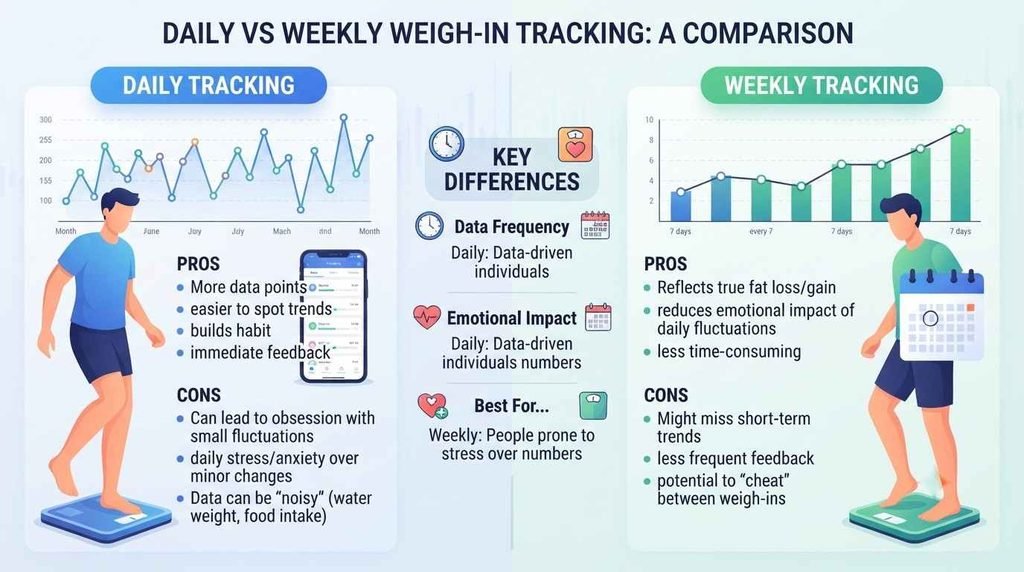
Next comes a common debate. Should you weigh yourself every day or just once a week? Both approaches can work, and the right choice depends on your personality and your goals.
Daily weigh-ins give you more data points, which helps you see the true trend. Some studies suggest that people who weigh themselves often tend to do better at losing weight or avoiding weight regain. You can read more about this on Verywell Fit’s guide to when to weigh yourself.
Weekly weigh-ins are calmer, but they give you only one number. If that one day happens to be a high-water day, you might feel upset for no reason. That is why many people prefer daily weighing with a weekly average.
Table 3: Daily vs Weekly Weigh-Ins
| Feature | Daily Weigh-In | Weekly Weigh-In |
|---|---|---|
| Number of data points | 7 per week | 1 per week |
| Sees short-term noise | Yes | Mostly hidden |
| Best for spotting trends | Yes, with an average | Limited |
| Risk of stress | Higher for some people | Lower |
| Effort required | Small daily habit | Very little |
| Best for | Data lovers and strict goals | People who dislike daily numbers |
How to Use a Weekly Average
The weekly average is the secret weapon of smart trackers. Weigh yourself each morning for seven days and write down the numbers. Then add them up and divide by seven.
Compare this week’s average to last week’s average. That one comparison tells you far more than any single day. If the average drops by a small amount, your plan is working, even if some days looked worse.
Many people use a simple notes app or a spreadsheet. Others use a scale app that calculates trends automatically. Whichever method you choose, focus on the average, not on the daily wiggle.
Same Scale and Flat Surface Consistency
The scale itself matters as much as the timing. Different scales can show different numbers, sometimes by a pound or more. So pick one scale and stay with it.
Place it on a hard, flat floor, such as tile or wood. Soft surfaces like carpet can make the scale tilt and give wrong readings. Also try to keep the scale in the same exact spot, since even small tilts can change the number.
Stand still, with your weight evenly spread on both feet. Do not lean on a wall or a counter. These small details keep the reading clean and trustworthy.
Table 4: Scale Setup Tips
| Tip | Why It Helps | Quick Action |
|---|---|---|
| Use one scale only | Different scales read differently | Stop switching between scales |
| Hard, flat floor | Prevents tilt and wrong readings | Avoid carpet and rugs |
| Same spot every time | Keeps the setup consistent | Mark the spot lightly |
| Stand still | Avoids movement errors | Wait for the number to settle |
| Check the batteries | Weak batteries can cause errors | Replace them when needed |
| Reset if required | Some scales need zeroing | Tap or step on and off first |
Digital Scales, Analog Scales and Smart Scales
Most people today use digital scales. They are easy to read and usually accurate enough for home tracking. Look for a scale that shows small changes, such as tenths of a pound or tenths of a kilogram.
Smart scales add extra features, like body fat estimates. These estimates use a tiny electrical signal, and they can change a lot depending on how hydrated you are. So treat body fat numbers as rough guides, not exact facts.
If you want the most reliable body weight, the basic number is usually the best. Pay attention to the trend, not to the exact decimal. And remember, the best scale is the one you will use consistently.
What to Wear When You Weigh Yourself
Clothing might seem like a small detail, but it can add up. A pair of jeans and a sweatshirt can easily add a pound or two. Shoes can add even more.
The easiest approach is to weigh yourself with no clothes at all, or just in underwear. That removes one source of error. If you prefer to wear something, wear the same thing every time.
Keep it simple. The goal is to remove as many variables as you can, so that the only thing changing is you. This one habit takes only a few seconds and improves your data a lot.
How Fast Should the Scale Move?
It helps to have realistic expectations. For weight loss, a slow and steady pace of around half a kilogram to one kilogram per week, or about one to two pounds, is commonly described as healthy for many adults. Faster loss is possible at first, mostly because of water.
For muscle gain, the scale should move even more slowly. Gaining much faster than that usually means extra fat is coming along with the muscle. Patience is a big part of building a healthy body.
If the scale does not move for a week or two, do not panic. Your body may be holding water, or the plan may need a small change. Look at your average over a few weeks before making big decisions.
Best Time to Weigh Yourself for Weight Loss
If you are trying to lose weight, consistency is your friend. Use the morning routine, weigh daily or a few times per week, and track the weekly average. This approach gives you clear feedback without confusing noise.
Pay attention to your weekly trend and also to other signs of progress. Check how your clothes fit, how your energy feels, and how your workouts are going. Together, these signals give a more complete picture than the scale alone.
Many people on a diet also ask, “what is the best time to weigh yourself if I eat late?” Even then, the morning is still the most stable moment. Late meals can raise the number temporarily, but by the next morning most of that has settled.
Best Time to Weigh Yourself for Muscle Gain
Building muscle also benefits from tracking. In this case, you want the scale to rise slowly and steadily. The same morning routine works well, with a weekly average as your guide.
Muscle gain can hide behind water changes, especially if you are using a new supplement or a different training plan. Give it several weeks before judging. Photos, measurements and strength numbers are also useful partners to the scale.
If your weight is climbing too fast, you may be eating more than you need. If it is not moving at all, you may need a bit more food. Small adjustments, made slowly, usually work better than big changes.
Best Time to Weigh Yourself for Maintenance
Once you reach a comfortable weight, the scale becomes a gentle guard rail. Weighing a few times a week, or even daily with a calm mindset, can help you catch small gains early. Catching a few pounds is much easier than undoing ten.
Set a personal range, such as two or three pounds up or down from your goal weight. If your average stays inside the range, relax. If it drifts out, you can adjust your habits a little.
Maintenance is where consistency really pays off. The same time, the same scale and the same simple routine make the numbers easy to trust. That keeps the process boring, and boring is good.
Morning vs Evening: A Quick Comparison
Some people cannot weigh in the morning because of shift work or a busy schedule. That is fine. The key is to be consistent with whatever time you choose.
The morning routine tends to give the most stable number. Evening numbers tend to be higher and more variable. But a steady evening routine still tells you about your trend.
Do not mix the two. Pick one time, and stick to it, so that your comparisons stay fair. A consistent imperfect routine beats an inconsistent perfect one every time.
Special Situations: Health Conditions and Pregnancy
Some people have good medical reasons to weigh themselves in a specific way. For example, people with certain heart or kidney conditions may be told to weigh daily, because sudden weight gain can signal fluid buildup. In those cases, always follow the exact instructions from your care team.
During pregnancy, weight gain is expected and healthy, but the pattern should follow your doctor’s guidance. Do not try to use general weight loss advice at that time. Your healthcare provider can tell you how and when to track.
If you take medicines that affect fluids or appetite, your weight may shift for those reasons. Talk to your doctor if you notice large, unexplained changes. This article is for general education and cannot replace personal medical advice.
When the Scale Becomes a Problem
For some people, the scale can become a source of stress. If you feel anxious, guilty or upset after weighing yourself, it may be time to step back. The scale is a tool, not a judge of your worth.
If you notice an unhealthy focus on weight, extreme dieting, or fear of food, please speak with a doctor or a mental health professional. Support is available, and asking for help is a sign of strength. Your wellbeing matters more than any number.
A helpful trick is to weigh less often, or to focus on other measures of progress. Strength, energy, sleep, mood and how your clothes fit are all valuable. You are far more than a number on a scale.
Common Weigh-In Mistakes to Avoid
The first mistake is changing the time or the conditions from day to day. Weighing before breakfast on Monday and after dinner on Tuesday creates confusion. Keep the routine the same.
The second mistake is reacting to single numbers. One high reading is not a failure, and one low reading is not a victory. Always look at the weekly average.
The third mistake is switching scales or placing the scale on a soft surface. The fourth is ignoring other signs of progress. And the fifth is letting the number control your mood, which helps no one.
Your Simple 7-Step Weigh-In Routine
Here is a simple routine you can start tomorrow. Step one: put your scale on a hard, flat floor and leave it there. Step two: wake up and use the bathroom before anything else.
Step three: step on the scale without eating or drinking, wearing little or nothing. Step four: write the number down. Step five: repeat daily or a few times per week.
Step six: calculate the weekly average. Step seven: compare it with the previous week, and adjust slowly if needed. This is the practical answer to the best time to weigh yourself, and it takes less than a minute a day.
Frequently Asked Questions
What is the best time to weigh yourself? The morning, after using the bathroom and before eating or drinking, with minimal clothing and the same scale each time.
Is it okay to weigh yourself every day? Yes, for most people. Just focus on the weekly average instead of single numbers, and take a break if it causes stress.
Why did I gain two pounds overnight? Most likely water, salt, food or waste, not fat. Check your weekly trend before worrying.
Should I weigh myself before or after a workout? Before breakfast and exercise is best for consistency, because workouts and sweat can change the number quickly.
When’s the best time to weigh yourself if I work night shifts? Choose a consistent time after you wake up and use the bathroom, before eating. Consistency matters more than the clock.
Can I trust smart scale body fat numbers? Treat them as rough estimates, since hydration can change them a lot. The basic weight and its trend are more reliable.
Conclusion: Keep It Simple and Consistent
The best time to weigh yourself is not a secret. It is the morning, after the bathroom, before food and drink, on the same scale and the same flat floor. Done this way, the number becomes a fair and useful signal.
Remember that your weight changes daily because of water, salt, food and hormones. Do not let one number ruin your day. Use the weekly average to see the real story.
If you want to learn more, visit trusted sources like Healthline, Cleveland Clinic and Verywell Fit. For real-life tips, browse Reddit r/Fitness. And if you have any health concerns, talk to a qualified healthcare professional. Start tomorrow morning, stay consistent, and let the trend guide you.
Disclaimer: This article is for educational purposes only and is not medical advice. Consult a qualified healthcare professional for personal health concerns.