
The rapid development and deployment of COVID-19 vaccines introduced the world to a medical term that many had never heard before: mRNA. While the technology seemed to appear overnight, it was the culmination of decades of rigorous scientific research. Yet, despite widespread usage, confusion remains regarding the mechanisms, safety, and history of this technology.
Whether you are a science enthusiast or simply someone looking to make informed health decisions, understanding how mRNA vaccines work explained in clear, non-technical language is essential. This article breaks down the complex biology into a simple, digestible narrative, exploring how these vaccines train our immune systems without ever introducing the actual virus into our bodies.
What is mRNA? The Body’s Instruction Manual
To understand the vaccine, we first need to understand the biology of our own cells. In the central dogma of molecular biology, DNA is the master blueprint stored in the nucleus of our cells. However, your body doesn’t build proteins directly from DNA.
Instead, it uses a messenger—Messenger RNA (mRNA). Think of DNA as a reference book in a library that cannot be checked out. mRNA is a photocopy of a specific page from that book, which is taken to the construction site (the ribosome) to build a specific protein.
According to the National Human Genome Research Institute, mRNA exists solely to carry instructions. Once the protein is made, the mRNA “photocopy” is shredded and recycled by the cell. This is a crucial point: mRNA is transient and fragile; it does not remain in your body permanently.
How mRNA Vaccines Work Explained: The Step-by-Step Process
Traditional vaccines often use weakened or killed viruses to trigger an immune response. mRNA vaccines take a smarter, surgical approach. They don’t use the virus at all; they use the genetic code for a harmless piece of the virus.
1. The Design
Scientists identify the genetic sequence for the “spike protein”—the distinct protrusion found on the surface of viruses like SARS-CoV-2. They create a synthetic mRNA sequence that codes for this specific protein.
2. The Delivery Vehicle: Lipid Nanoparticles
Because mRNA is so fragile, it would be destroyed immediately if injected directly into the bloodstream. To protect it, scientists wrap the mRNA in a microscopic fat bubble called a lipid nanoparticle (LNP). This fatty coating allows the mRNA to slide through the cell membrane and enter the cell’s cytoplasm.
3. Protein Production
Once inside the cell (usually muscle cells at the injection site), the LNP dissolves, releasing the mRNA. The cell’s ribosomes read the instructions and begin producing the harmless spike protein. It is important to note, as emphasized by the Centers for Disease Control and Prevention (CDC), that the mRNA never enters the nucleus of the cell where your DNA is kept. It cannot alter your genetic makeup.
4. The Alarm System
After producing the spike proteins, the cells display them on their surface. Your immune system spots these foreign proteins and sounds the alarm. It recognizes that these proteins don’t belong there and begins producing antibodies and activating T-cells to attack them.
5. Memory Creation
Once the threat is neutralized, the body breaks down the spike proteins and the mRNA instructions. What remains are “memory B cells” and “memory T cells.” If you are exposed to the actual virus in the future, your immune system remembers the spike protein and can launch a rapid defense.
Comparison: mRNA vs. Traditional Vaccines
To better understand the innovation, it helps to compare mRNA technology with older vaccine methods used for diseases like measles or the flu.
| Feature | mRNA Vaccines (e.g., Pfizer, Moderna) | Traditional Viral Vector/Inactivated (e.g., J&J, Flu Shot) |
|---|---|---|
| Active Ingredient | Genetic instructions (mRNA) for a viral protein. | A weakened virus, killed virus, or viral shell. |
| Production Speed | Extremely fast; chemical synthesis in a lab. | Slower; requires growing viruses in eggs or cells. |
| Interaction with DNA | None. Does not enter the nucleus. | Viral vectors inject DNA into the nucleus (though still do not integrate into the genome). |
| Risk of Infection | Zero. No virus is present. | Extremely low, but theoretically possible with live-attenuated vaccines in immunocompromised people. |
| Storage | Often requires ultra-cold storage due to RNA fragility. | Standard refrigeration is usually sufficient. |
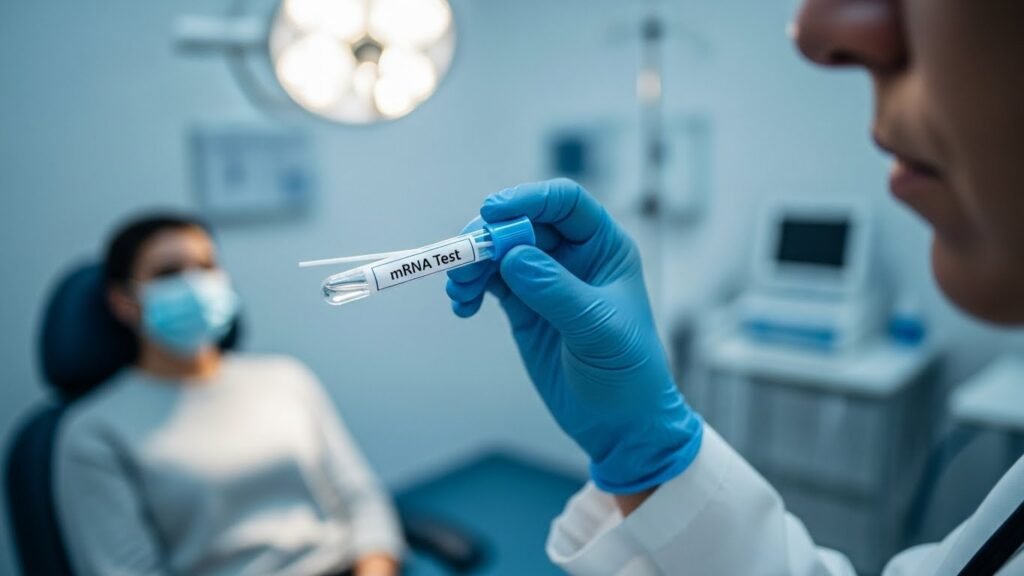
The History: An “Overnight Success” decades in the Making
A common misconception is that mRNA vaccines were rushed. While the specific vaccines for COVID-19 were developed quickly, the underlying technology has been under research since the 1990s.
The breakthrough came thanks to the work of scientists like Katalin Karikó and Drew Weissman, who won the Nobel Prize for discovering how to modify mRNA so it wouldn’t trigger a massive inflammatory response before it could do its job. Their research paved the way for the rapid response we saw in 2020. Before COVID-19, mRNA was already being studied for Zika, rabies, and influenza.
Safety, Side Effects, and Monitoring
No medical intervention is without risk, but the safety profile of mRNA vaccines has been established through clinical trials involving tens of thousands of participants and real-world data from billions of doses.
Common Side Effects
Most people experience mild to moderate side effects, which are actually signs that the immune system is working. According to the World Health Organization (WHO), these commonly include:
- Pain at the injection site
- Fatigue
- Headache
- Muscle pain
- Chills
- Fever
Serious Adverse Events
Serious reactions are rare. There have been documented cases of myocarditis (inflammation of the heart muscle), primarily in young males. However, studies by the American Heart Association indicate that the risk of myocarditis from a COVID-19 infection is significantly higher than the risk from the vaccine.
The Food and Drug Administration (FDA) and global health agencies continue to monitor safety data through systems like VAERS (in the US) and the Yellow Card scheme (in the UK).
The Future of mRNA Technology
The success of mRNA vaccines against SARS-CoV-2 is just the beginning. The versatility of this platform—essentially being able to “print” instructions for any protein—opens doors to treating non-infectious diseases.
Cancer Vaccines
BioNTech and Moderna are currently conducting clinical trials for personalized cancer vaccines. The goal is to sequence a patient’s tumor, identify specific mutations, and create an mRNA vaccine that trains the immune system to attack only the cancer cells. The National Cancer Institute highlights this as one of the most promising frontiers in oncology.
HIV and Malaria
Researchers are tackling complex viruses that have evaded traditional vaccines for decades. The National Institutes of Health (NIH) has reported promising early results in using mRNA technology to stimulate the production of broadly neutralizing antibodies against HIV.
Addressing Common Myths
To fully cover how mRNA vaccines work explained simply, we must address lingering myths:
- “It changes your DNA.”
- False. mRNA cannot penetrate the nuclear barrier where DNA resides. It is chemically impossible for mRNA to integrate into your genome without specific enzymes (reverse transcriptase) that these vaccines do not possess.
- “It affects fertility.”
- False. According to Johns Hopkins Medicine, there is no evidence that the vaccine affects fertility in men or women, while COVID-19 infection itself has been linked to erectile dysfunction and potential sperm count reduction.
- “The ingredients are toxic.”
- False. The vaccine consists of mRNA, lipids (fats), salts, and sugar. The salts and sugar act as buffers to keep the mixture stable, similar to what is found in Gatorade or an IV bag.
Conclusion
The science behind mRNA vaccines represents a triumph of modern biology. By utilizing the body’s natural protein-making machinery, these vaccines offer a high-tech, safe, and effective method for preventing severe disease. They act as a temporary tutor for our immune system, leaving behind a lasting lesson on how to fight specific pathogens.
As we look toward the future, the applications of this technology extend far beyond a single pandemic, offering hope for cures to diseases that were previously thought untreatable. If you have further questions about your eligibility for vaccines or specific health concerns, always consult with a healthcare professional.
Stay curious, stay informed, and trust the rigorous process of scientific discovery.