If you have ever peered into a sandwich at a trendy health café, you have likely encountered the delicate, tangled web of green-tipped shoots known as alfalfa sprouts. These crunchy additions are more than just a garnish; they are the result of alfalfa sprouts seeds transforming into a nutrient-dense “living food.” While they may appear fragile, these tiny sprouts are packed with phytonutrients and enzymes that can give your daily diet a significant upgrade.
In this guide, we will explore why organic seeds from the Medicago sativa plant are becoming a staple in home gardening, how they benefit your health, and the safest way to grow them in your own kitchen.
What Are Alfalfa Sprouts Seeds?
Alfalfa is a member of the legume family, originally cultivated as forage for livestock because of its rich mineral content. However, when the alfalfa sprouts seeds undergo seed germination, they produce young shoots that are exceptionally tender and palatable for humans. Unlike microgreens, which are grown in soil and harvested after they develop leaves, sprouts are grown in water and consumed in their entirety—roots, stems, and all.
Because they are harvested just days after the seed cracks open, they contain a concentrated burst of life energy. Incorporating these into a sprout salad or a wrap is an easy way to boost your intake of plant-based protein and essential vitamins without adding significant calories.
The Nutritional Profile of Alfalfa Sprouts
Despite their high water content, alfalfa sprouts are surprisingly nutritious. They are particularly famous for their high levels of vitamin K, which plays a critical role in bone metabolism and blood clotting. Let’s look at how they compare to other popular sprouting varieties.
| Nutrient (per 100g) | Alfalfa Sprouts | Mung Bean Sprouts | Broccoli Sprouts |
|---|---|---|---|
| Calories | 23 kcal | 30 kcal | 35 kcal |
| Protein | 4g | 3g | 2g |
| Vitamin K (% DV) | 38% | 28% | 80% |
| Vitamin C (% DV) | 14% | 15% | 60% |
As you can see, while broccoli sprouts are the king of vitamin C, alfalfa provides a robust amount of dietary fibre and protein for very few calories. You can find more detailed data on sprout nutrition at Nutrition Value.
Health Benefits of Medicago Sativa
The antioxidant properties of alfalfa have been studied for decades. Beyond basic nutrition, these sprouts offer functional health benefits that can support long-term wellness.
1. Cardiovascular Health
Studies suggest that alfalfa may help lower cholesterol levels. The plant contains saponins, which are compounds known to reduce the absorption of cholesterol in the gut. This makes them a heart-healthy addition to your diet, as supported by the British Heart Foundation.
2. Managing Blood Sugar
There is evidence to suggest that alfalfa sprouts seeds may assist in regulating blood glucose levels. For those looking for natural ways to support metabolic health, adding these to a balanced meal can be beneficial. For broader advice on managing glucose, visit Diabetes UK.
3. Relief from Menopausal Symptoms
Alfalfa is rich in phytoestrogens, which are plant compounds that mimic the hormone oestrogen. According to research published on Nature.com, these compounds may help reduce hot flushes and other symptoms associated with menopause.
How to Grow Alfalfa Sprouts Seeds at Home
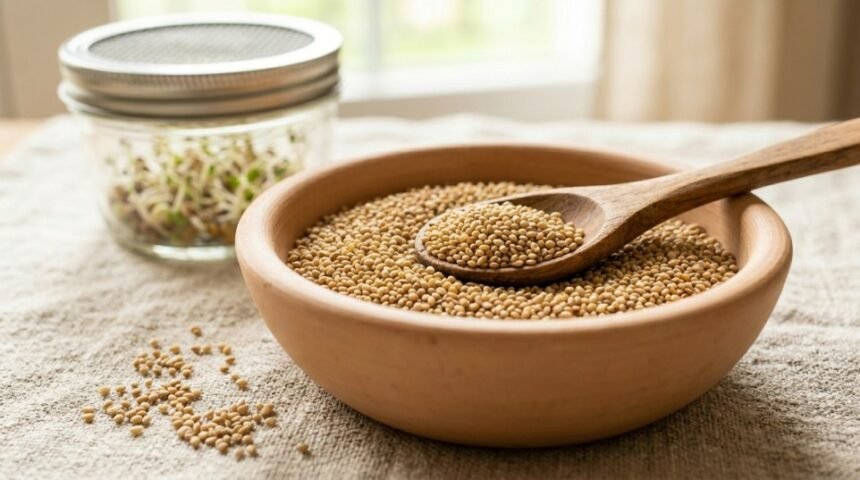
One of the joys of alfalfa sprouts seeds is that you don’t need a backyard to grow them. All you need is a sprouting jar, some water, and a little bit of patience. Follow these steps for successful home gardening on your windowsill:
- Clean and Soak: Place one tablespoon of organic seeds in a jar. Cover with cool water and soak for 8 to 12 hours.
- Rinse and Drain: Using a mesh lid, drain the water thoroughly. Rinse the seeds with fresh water and drain again.
- The Dark Phase: Place the jar in a cool, dark place (like a kitchen cupboard) for the first two days. Rinse and drain at least twice daily.
- Bring on the Colour: Once shoots appear, move the jar to a spot with indirect sunlight. This allows the sprouts to develop chlorophyll and turn a vibrant green colour.
- Harvest: Usually, by day 5 or 6, your sprouts are ready. Give them a final rinse to remove any loose hulls.
For more advanced tips on container growing, check out the RHS guide to indoor vegetables.
Culinary Uses: Beyond the Garnish
While often used in sandwiches, the culinary uses for alfalfa sprouts are vast. Their mild, nutty flavour complements many dishes:
- Smoothies: Toss a handful into your morning green smoothie for added phytonutrients.
- Wraps and Tacos: Use them as a crunchy, fresh layer in falafel wraps or fish tacos.
- Spring Rolls: Incorporate them into fresh rice paper rolls alongside prawns and mint.
- Stir-fries: Add them at the very last second to keep their crunch.
For more inspiration, BBC Good Food offers excellent ideas for incorporating sprouts into gourmet meals.
A Note on Food Safety
Because sprouts require warm, humid conditions to grow, they are also prone to bacterial growth like Salmonella and E. coli. Practising proper food safety is essential. The FDA recommends that children, the elderly, and pregnant women cook sprouts thoroughly rather than eating them raw to minimise risk.
Always purchase organic seeds specifically labelled for sprouting, as these are tested for pathogens. Avoid seeds intended for agricultural planting, as they may be treated with chemicals.
Final Thoughts
Investing in alfalfa sprouts seeds is a cost-effective way to ensure a constant supply of fresh, nutrient-dense produce. Whether you are looking to improve your vitamin K intake, support your heart health, or simply add a satisfying crunch to your lunch, these tiny seeds offer a world of benefits. By following a clean growing process and utilising high-quality seeds, you can enjoy this superfood safely and sustainably.
For more information on plant-based diets, refer to Harvard Health or the NHS for general healthy eating guidelines.
Frequently Asked Questions (FAQs)
Can I grow alfalfa sprouts without a sprouting jar?
Yes, you can utilise a simple glass jar with a piece of muslin or cheesecloth secured by a rubber band over the top. The key is ensuring that air can circulate and water can be drained effectively to prevent mould growth.
Are alfalfa sprouts safe to eat every day?
For most healthy adults, they are safe in moderation. However, due to their high vitamin K content, individuals on blood-thinning medication should consult their doctor. You can find more safety information on Mayo Clinic.
How long do fresh sprouts last in the fridge?
Once harvested and dried thoroughly, alfalfa sprouts typically stay fresh for 3 to 5 days in a sealed container in the refrigerator. If they become slimy or develop an off-odour, they should be discarded immediately.
Where can I find scientific research on alfalfa?
Peer-reviewed studies on the antioxidant properties and medicinal uses of alfalfa can be found on PubMed and ScienceDirect.
Do I need to wash the seeds before sprouting?
Yes, it is best practice to rinse your alfalfa sprouts seeds before the initial soak to remove any dust or debris. Always use filtered or potable tap water. For more on safe food handling, visit Medical News Today and WebMD.
If you want to learn more about the technical side of growing, Gardeners’ World provides excellent resources for beginners.