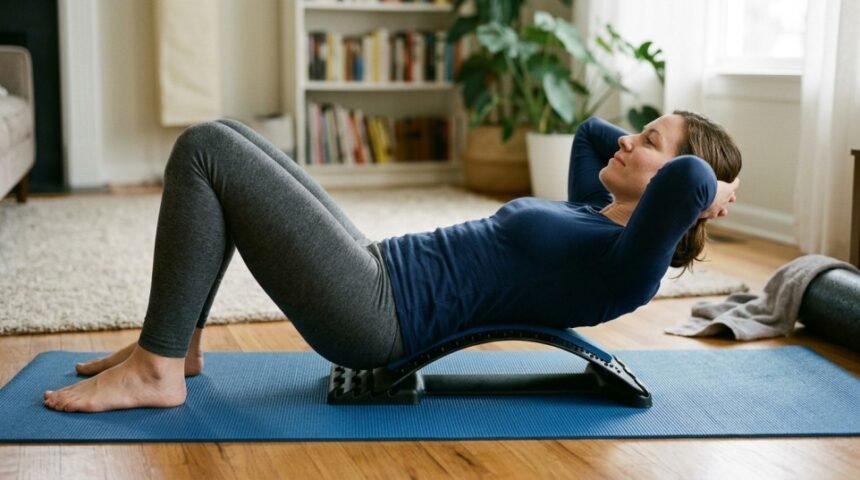
If you have spent any time scrolling through social media recently, you have likely encountered the viral trend of the back cracker. These arched, often plastic devices promise a satisfying “pop” and instant relief from the aches and pains of daily life.
With sedentary lifestyles becoming the norm, chronic back pain relief at home has become a priority for many. But beneath the satisfying crunch and the enthusiastic testimonials, a serious question remains: are these devices actually safe for your spine, or are they a recipe for injury?
This article explores the science, safety, and efficacy of using a back cracker for spinal alignment and tension relief, helping you decide if this gadget belongs in your wellness routine.
What is a back cracker?
A back cracker, often marketed as an orthopaedic back stretcher or a “spine deck,” is a simple mechanical device designed to stretch the back muscles and mobilise the spinal joints. Most models feature an arched piece of plastic that can be adjusted to three or four different levels of curvature.
The premise is straightforward: you lay your spine over the arch, allowing gravity to pull your shoulders and pelvis down. This action creates a stretch along the front of the spine and compresses the back, often resulting in an audible release of gas from the facet joints—the “crack” that gives the device its name.
While they are popular as chiropractic alternative devices, it is crucial to understand that they do not perform the same function as a targeted adjustment from a qualified professional. Instead, they provide a passive stretch that can help alleviate mechanical back pain management issues caused by poor posture.
The science of the “pop”
To understand the appeal, we must understand the noise. That popping sound, known technically as cavitation, occurs when a joint is stretched enough to lower the pressure inside the joint capsule. This causes dissolved gases (nitrogen, oxygen, and carbon dioxide) to form a bubble, which then collapses.
According to the Cleveland Clinic, this release can trigger a temporary feeling of relief and increased range of motion. It releases endorphins, the body’s natural painkillers, which explains why the sensation can be somewhat addictive.
However, noise does not equal alignment. A spine deck safety assessment reveals that while the sound feels productive, it does not necessarily mean a vertebral subluxation has been corrected. It simply means the joint was mobilised.
Potential benefits of using a back cracker
When used correctly, there are tangible lumbar stretcher benefits. For individuals who sit at desks for prolonged periods, the spine often becomes locked in a forward-flexed position (kyphosis). A back cracker forces the spine into extension, countering this slump.
1. Decompression and Extension
Many users utilise these tools for spinal decompression at home. By stretching the abdominal muscles and the psoas, the device helps open up the intervertebral spaces. This can be particularly soothing for those feeling the compressive effects of gravity throughout the day.
2. Postural Correction
Acting as a postural correction board, the device encourages the natural lordotic curve of the lumbar spine. Regular, gentle use can help retrain the back muscles to tolerate an upright posture more easily. For a holistic approach to recovery, many combine this stretching with topical aids. You might wonder, Does magnesium spray help with muscle recovery and better sleep?, as magnesium can further relax tight paraspinal muscles post-stretch.
3. Tension Release
We often hold stress in our thoracic and lumbar regions. Using the device as one of your muscle tension release techniques can physically force the muscles to let go. This pairs well with other relaxation methods, such as Relieving neck tension with a neck cloud: What you need to know, which targets the cervical spine specifically.
Safety concerns and risks
Despite the benefits, self-manipulation risks are significant if the device is used improperly or by the wrong candidate.
Instability and Hypermobility
If you have a spine that moves too much (hypermobility), forcibly cracking it can lead to instability. The ligaments may become overstretched, reducing their ability to support the vertebrae. The Mayo Clinic warns that spinal manipulation carries risks, particularly if you have existing instability.
Aggravating Injuries
For those with specific conditions, a back cracker can be dangerous. Herniated disc precautions are vital here. If you have a posterior disc herniation, bending backward (extension) might relieve pain, but for other types of disc issues or stenosis, it could pinch the nerves further, exacerbating pain.
Underlying Bone Conditions
Individuals with osteoporosis or osteopenia (low bone density) should avoid high-pressure mechanical devices. The force exerted by the arch could, in severe cases, cause rib or vertebral fractures. Always consult a GP or physiotherapist, similar to the advice given by the NHS regarding new exercise regimes.
Professional vs. at-home devices
It is essential to distinguish between a gadget and medical treatment. A chiropractor or osteopath spends years learning the anatomy of the spine. They apply specific force to a specific joint in a specific direction.
In contrast, a back cracker is a blunt instrument. It stretches a large segment of the spine simultaneously. While it can serve as a valid arch stretching device, it lacks specificity.
Research published by the National Institutes of Health (NIH) suggests that while spinal manipulation is effective for low back pain, diagnosis is key. A plastic arch cannot diagnose why your back hurts. Using sciatica relief gadgets without knowing the root cause of your sciatica (e.g., piriformis syndrome vs. a slipped disc) can be counterproductive.
How to use a back cracker safely
If you have been cleared by a professional and want to try thoracic spine mobility tools, follow these guidelines to minimise injury:
- Start on the Lowest Setting: Never begin on the highest arch. Your spine needs time to adapt.
- Positioning is Key: Place the device on a non-slip surface, like a yoga mat. Align the wider end with the base of your spine.
- Breathe Deeply: Relaxation is crucial. If you tense up in anticipation of pain, the muscles will guard the spine, preventing the stretch. This concept of deep relaxation is similar to the principles behind Grounding sheets: The science behind earthing for physical wellness, where lowering the body’s stress response aids healing.
- Short Durations: Start with 1-2 minutes. Lying in an extended position for too long can cause muscle spasms upon standing.
- Roll Off, Don’t Sit Up: When finishing, roll onto your side rather than sitting straight up. This protects your lower back from sudden flexion.
Complementary therapies for back health
A back cracker should not be your sole method of pain management. It works best as part of a broader wellness toolkit.
Hydration and Nutrition: The discs in your spine require water to remain plump and shock-absorbing. Staying hydrated is essential. While some trends focus on vessels, like The benefits of using a copper water bottle for daily hydration, the key is simply consistent water intake. Additionally, systemic inflammation affects pain levels. Nutrition plays a role; for instance, understanding The nutritional benefits of beef liver pills: A comprehensive overview can help ensure you have the micronutrients needed for bone and tissue repair.
Alternative Pain Relief: If the back cracker feels too aggressive, consider gentler options. Myofascial release for back pain can be achieved with foam rollers or even acupressure. For stress-related tension, you might explore A guide to ear seeds: Do they really help with stress and anxiety?, which uses pressure points to calm the nervous system.
Sleep Hygiene: Your sleeping position dictates how your spine recovers overnight. If you struggle with sleep quality or breathing, which impacts oxygenation to muscles, investigate Mouth tape for better sleep: Benefits and safety considerations. Better breathing often equates to less morning stiffness.
Holistic Detox: Sometimes, back pain is visceral or referred from internal organs. Therapies like those discussed in How to use a castor oil pack for digestive health and detoxing can help reduce abdominal inflammation that might be pulling on the lower back.
When to see a doctor
If your back pain is accompanied by fever, weight loss, or loss of bladder/bowel control, seek emergency care immediately. These are red flags, as outlined by the National Institute of Neurological Disorders and Stroke.
Furthermore, if you experience pain radiating down your legs, consult sources like Spine-health to understand the difference between muscular tightness and nerve compression. Using a back cracker on an inflamed nerve can worsen the condition.
Lifestyle adjustments for long-term relief
Relying solely on a gadget ignores the root cause of back pain. Incorporating movement is non-negotiable. Walking, swimming, and yoga are superior to any static device.
Consider your overall environment. Even small changes, like breathing efficiency, matter. Check Can a nasal dilator improve your breathing and deep sleep quality? to ensure you are oxygenating your tissues effectively. Similarly, reducing overall body inflammation through hygiene—such as Why using a tongue scraper should be part of your oral hygiene routine—contributes to a lower systemic inflammatory load.
Stress reduction is also critical. High cortisol levels cause muscles to tighten. Tools that promote relaxation, such as How a scalp massager can promote hair health and daily relaxation, can indirectly benefit your back by lowering overall body tension.
For exercise advice, reputable sources like Harvard Health offer safe stretching protocols that do not require equipment.
The Bottom Line
So, is the back cracker safe? For a healthy individual looking for a deep stretch and temporary relief from postural fatigue, yes, it is generally safe when used with caution. It acts as an effective orthopaedic back stretcher to counter the effects of sitting.
However, it is not a cure-all. It cannot fix a herniated disc, scoliosis, or degenerative joint disease. If you ignore herniated disc precautions, you risk injury.
Think of the back cracker as a supplement to, not a substitute for, active recovery. Strengthening your core, improving your workstation ergonomics (perhaps verified by Physiopedia), and maintaining a healthy weight are the true pillars of spinal health.
Always listen to your body. If the “crack” hurts, stop immediately. While gadgets are fun, the best tool for spinal alignment remains a strong, flexible, and mobile body supported by professional medical advice when needed. Consult the Arthritis Foundation for more on managing chronic joint conditions.