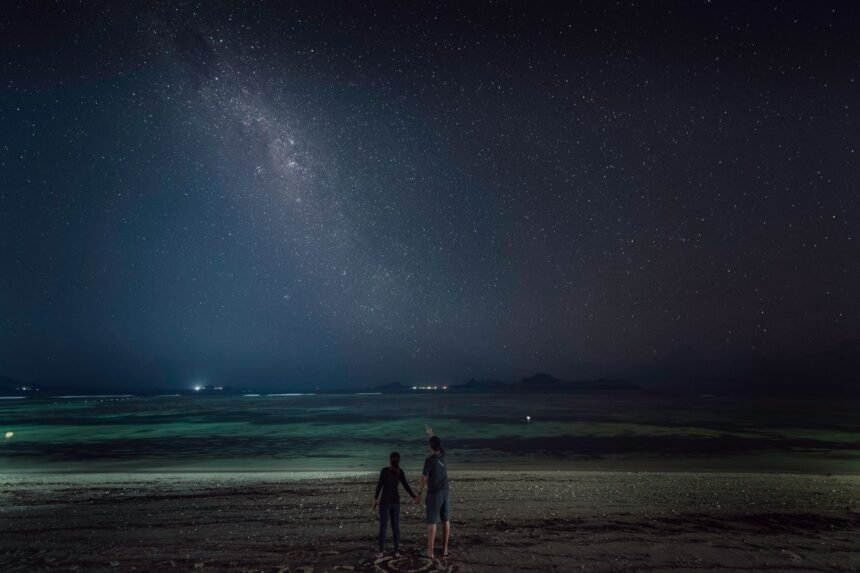
Imagine walking along a shoreline at midnight, where every footstep ignites a neon blue spark and the crashing waves resemble liquid sapphires. This isn’t a scene from a fantasy film; it is the reality of a bioluminescence beach. These mesmerising displays are among the most rare natural phenomena on Earth, drawing travellers and scientists alike to witness the ocean’s living light.
While the sight is undeniably beautiful, it is rooted in complex marine biology. Understanding the science behind the glow not only enhances the experience but also highlights the delicate balance of our coastal ecosystems. In this guide, we explore the causes, the best locations, and how to responsibly enjoy this underwater light show.
What Causes a Bioluminescence Beach to Glow?
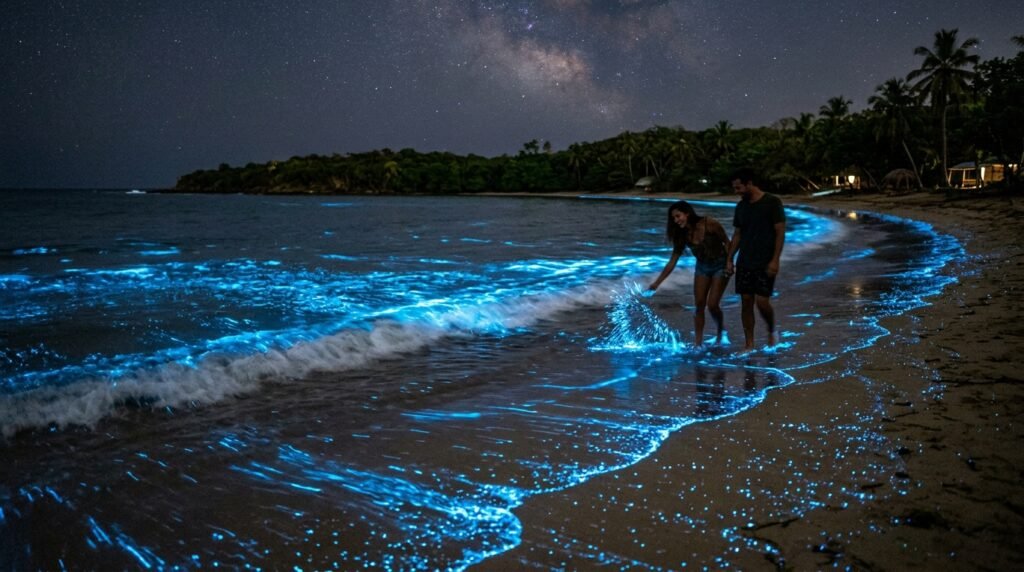
The ethereal blue light seen at a bioluminescence beach is primarily caused by microscopic organisms called phytoplankton. Specifically, a group known as dinoflagellates, such as the species Noctiluca scintillans (often called “sea sparkle”), are the most common culprits. When these tiny organisms are agitated by physical movement—like a breaking wave, a boat hull, or a splashing hand—they emit a brief flash of light.
This light is the result of a precise chemical reaction occurring within the organism’s cells. Two substances, luciferin and luciferase, react with oxygen to produce energy in the form of light. This process is remarkably efficient, producing almost no heat, which is why it is often referred to as “cold light.” Researchers at the Scripps Institution of Oceanography have found that this flash serves as a defence mechanism to startle predators or attract larger creatures that might eat those predators.
The Role of Dinoflagellate Blooms
When environmental conditions—such as water temperature, nutrient levels, and currents—are just right, these organisms can multiply rapidly. These dinoflagellate blooms can sometimes be seen during the day as a red tide phenomenon, where the water takes on a rusty or brownish colour. However, it is only at night that the phytoplankton glow transforms the shoreline into a glowing spectacle.
Top Destinations for Bioluminescent Magic
While bioluminescence can occur in many parts of the ocean, certain locations are famous for their consistent and vibrant displays. Whether you are looking for a tropical bioluminescent bay or a rugged coastline, here are the top spots:
- Mosquito Bay, Vieques, Puerto Rico: Widely considered the brightest in the world, home to high concentrations of Pyrocystis fusiformis.
- Vaadhoo Island, Maldives: Famous for the “Sea of Stars,” where the sand itself seems to twinkle.
- Jervis Bay, Australia: A stunning location where the Noctiluca scintillans often creates a vivid blue surf.
- Toyama Bay, Japan: Unique for its Firefly Squid, which create a different type of bioluminescent display.
- Luminous Lagoon, Jamaica: A shallow bay where the glow is incredibly bright due to the warm, brackish water.
To help you plan your trip, we have compared three of the most popular destinations below:
| Location | Primary Organism | Best Season | Visibility |
|---|---|---|---|
| Mosquito Bay, PR | Pyrocystis fusiformis | Year-round | Very High |
| Vaadhoo Island, Maldives | Dinoflagellates | June to October | High |
| Jervis Bay, Australia | Noctiluca scintillans | May to August | Variable |
Health and Safety: Can You Swim in a Bioluminescent Beach?
Swimming in a bioluminescence beach is often high on travel bucket lists, but it is important to consider health and safety first. While the light itself is harmless, the conditions that cause it can sometimes pose risks. According to the NHS, certain types of algal blooms can produce toxins that are harmful to humans and marine life.
If the glow is associated with a heavy red tide phenomenon, it is best to stay out of the water. These blooms can cause skin irritation, respiratory issues if toxins are inhaled in the sea spray, or even severe illness if contaminated shellfish are consumed. Always check local environmental reports from authorities like the National Oceanic and Atmospheric Administration (NOAA) before diving in.
Furthermore, ocean conservation is paramount. Many bioluminescent bays are fragile. Sunscreens, insect repellents, and even the oils from human skin can disrupt the delicate chemical balance required for these organisms to thrive. To protect these UNESCO-recognised and ecologically significant areas, many tours now prohibit swimming and instead offer glass-bottom kayak excursions.
The Best Time to See Bioluminescence
Timing is everything when searching for a bioluminescence beach. Even in the most active locations, the glow can be elusive. To maximise your chances, consider the following factors:
- Moon Phase: The darker the night, the better. Plan your visit during a New Moon. Even a small amount of moonlight can wash out the phytoplankton glow.
- Light Pollution: Avoid areas with heavy artificial lighting. Modern light pollution is a major hurdle for witnessing rare natural phenomena.
- Weather Conditions: Warm water temperatures and calm seas often encourage dinoflagellate growth. However, heavy rain can sometimes “wash out” the concentration of organisms in a bay.
- Seasonal Variation: Research the best time to see bioluminescence for your specific destination, as many blooms are seasonal and dependent on nutrient upwelling.
NASA’s Ocean Color project provides satellite data that scientists use to track these blooms from space, highlighting just how massive these events can be.
Protecting Our Glowing Oceans
As tourism to bioluminescence beach locations increases, so does the pressure on these ecosystems. Organisations like the Ocean Conservancy and the Marine Conservation Society emphasise the importance of “leaving no trace.” Climate change and rising sea temperatures are also shifting the patterns of these blooms, sometimes causing them to appear in new locations or disappear from traditional ones.
Supporting sustainable tourism and reducing plastic waste are vital steps in ensuring future generations can experience this magic. Educational resources from the Woods Hole Oceanographic Institution provide deeper insights into how we can protect the microscopic life that powers our oceans’ glow.
Frequently Asked Questions (FAQs)
Is bioluminescence harmful to touch?
Generally, the organisms that create bioluminescence are not harmful to touch. However, some blooms (red tides) can contain toxins that cause skin irritation or respiratory discomfort. It is always safest to check local safety advisories and avoid swimming if you have open cuts or sensitive skin.
Can you see bioluminescence with the naked eye?
Yes, absolutely. In fact, the human eye often perceives the glow better than many standard cameras. To capture it on film, you usually need a camera with long-exposure settings and a tripod. The underwater light show is best experienced in person where your eyes can adjust to the darkness.
Does bioluminescence happen every night?
No, it is highly dependent on environmental factors like water temperature, nutrient availability, and tide cycles. While some places like Mosquito Bay in Puerto Rico have a high frequency of glow, it is never 100% guaranteed. Checking recent sightings on social media or local forums can help you gauge the current activity.
What is the best way to photograph a bioluminescent beach?
To photograph a bioluminescence beach, you need a camera that allows manual control. Use a wide aperture (f/2.8 or lower), a high ISO (1600-3200), and a shutter speed of 5 to 15 seconds. Ensure your camera is on a steady tripod to prevent blur from the moving waves.
For more information on marine life and environmental health, you can visit the World Wildlife Fund (WWF) or the Royal Society of Biology.