
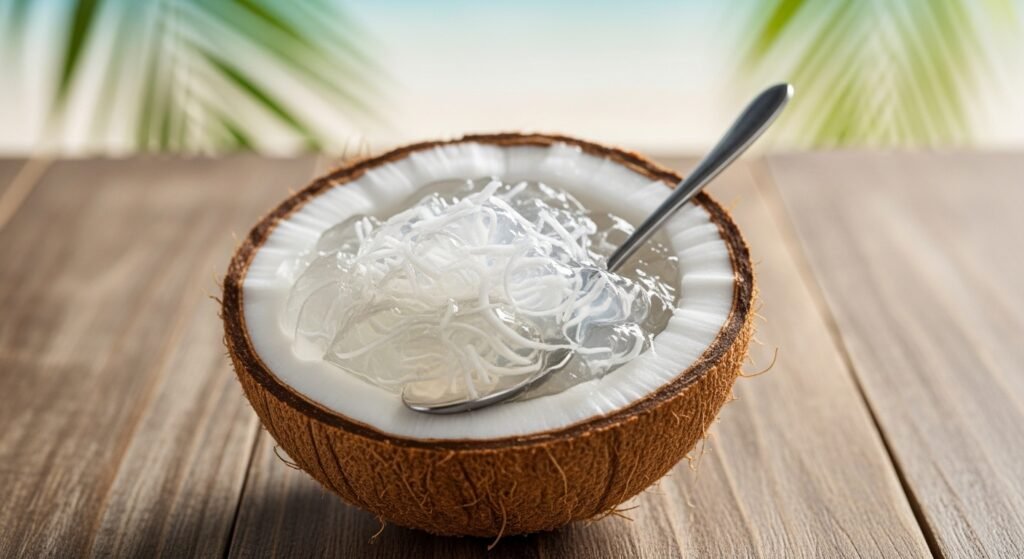
You may have seen small, translucent cubes sitting at the bottom of your bubble tea or mixed into a colourful fruit salad. This chewy treat is called coconut jelly, or nata de coco.
It is distinct from the soft, opaque jelly made from coconut milk. Instead, this version is translucent, firm, and has a satisfying chew. While it is a traditional Filipino dessert ingredient, it has become popular all over the world, including here in the UK.
Many people enjoy it for its unique texture. However, it also offers some surprising health benefits. It is high in dietary fibre and naturally free from fat. This makes it a popular vegan gelatin alternative UK shoppers often look for.
In this article, we will explore what coconut jelly is, its nutritional value, and how it might fit into a healthy diet.
What Is Coconut Jelly (Nata de Coco)?
Nata de coco is a chewy, translucent, jelly-like food product. The name comes from Spanish, meaning “cream of coconut”. Despite the name, it does not contain cream.
It is produced through a process called Acetobacter xylinum fermentation. This sounds complex, but it is quite natural. Beneficial bacteria are added to coconut water. These bacteria produce fine fibres of cellulose, which rise to the surface and form a solid “mat” or gel.
Because it is made from cellulose, it is technically a bio-cellulose food product. This is the same type of fibre found in plants and vegetables.
After the gel forms, it is cut into cubes. The raw cubes are boiled and washed to remove the sour taste of fermentation. Finally, they are usually soaked in syrup to make them sweet.
This coconut gel production process results in a food that is very different from gelatine or agar-agar. It stays firm even when cooked and has a distinctive “snap” when you bite into it.
Nutritional Profile and Calories
Coconut jelly is naturally low in calories. Most of its structure is water and fibre. This makes it a great choice if you want a low calorie chewy topping for your yoghurt or drinks.
However, the nutritional profile changes based on how it is packaged. Most canned nata de coco is preserved in heavy sugar syrup.
Typical Nutrition (per 100g serving in syrup):
* Calories: 100–150 kcal (mostly from added sugar)
* Carbohydrates: 25–30g
* Fibre: 2–4g
* Fat: 0g
* Protein: 0g
If you rinse off the syrup, or buy a sugar-free nata de coco recipe version, the calorie count drops significantly. The raw jelly itself has very few calories.
For more on understanding food labels in the UK, you can visit the NHS Eat Well guide.
Benefits for Digestion and Gut Health
One of the main reasons people consume nata de coco is for its fibre content. The fibrous jelly cubes are made of cellulose, which acts as insoluble fibre in our bodies.
Insoluble fibre helps move food through your digestive system. It adds bulk to your stool and can help prevent constipation. Because our bodies cannot fully break down cellulose, it passes through the gut largely intact, sweeping waste along with it.
These nata de coco digestive benefits are particularly helpful for those who struggle with irregular bowel movements. A diet high in fibre is essential for a healthy gut.
According to the British Nutrition Foundation, adults should aim for 30g of fibre a day. Adding coconut jelly to your diet is a fun way to inch closer to that goal.
Can Coconut Jelly Help With Weight Loss?
Many people look for sweet treats that won’t ruin their diet. Coconut jelly can be a helpful tool for weight management, provided you choose the right type.
Because it is high in fibre and water, it is quite filling. This feeling of fullness, or satiety, can stop you from snacking on other high-calorie foods. The coconut water gel texture requires chewing, which also signals to your brain that you are eating a substantial amount of food.
Replacing high-fat desserts like cake or ice cream with a bowl of fruit and coconut jelly can significantly reduce your calorie intake. It serves as a healthy fruit salad addition that adds volume without adding fat.
However, you must be careful with the syrup. If you are trying to lose weight, always drain the syrup from the jar and rinse the jelly with water.
For more tips on maintaining a healthy weight, check the British Heart Foundation website.
Impact on Cholesterol and Blood Sugar
Coconut jelly is naturally free from cholesterol. This is good news for your heart health. Unlike desserts made with cream or butter, nata de coco does not add saturated fat to your diet.
When it comes to nata de coco cholesterol levels, you have nothing to worry about. It is a safe food for those monitoring their lipid profile.
Blood sugar is a different story. While the jelly itself does not spike blood sugar, the syrup it comes in certainly will. If you have diabetes or are monitoring your glucose, you must be cautious.
Using the raw jelly or sugar-free versions ensures you get the fibre benefits without the glucose spike. The fibre may even help slow down the absorption of sugar from other foods.
For advice on managing sugar intake, Diabetes UK offers excellent resources.
How to Use Coconut Jelly in Food and Drinks
Coconut jelly is incredibly versatile. Its neutral flavour allows it to absorb the taste of whatever liquid it is soaked in. Here are some popular ways to use it:
1. Bubble Tea
This is perhaps the most famous use in the UK today. A bubble tea coconut jelly topping provides a nice alternative to tapioca pearls. It is lighter and adds a refreshing crunch.
2. Fruit Salads
Mix the cubes with tinned or fresh fruit. The jelly adds a different texture that complements soft fruits like melon or peaches.
3. Yoghurts and Puddings
Top your morning yoghurt with a spoonful of rinsed jelly. It mimics the texture of fruit chunks but with more chew.
4. Cold Drinks
In hot weather, add jelly cubes to iced tea or lemonade. It makes the drink fun to eat and drink at the same time.
You can find more creative ways to use coconut ingredients on BBC Good Food.
Simple Ways to Make Coconut Jelly at Home
Making nata de coco from scratch is a science project. It requires specific bacteria cultures and weeks of waiting. It is not like making standard jelly where you just add hot water to powder.
However, you can easily prepare store-bought raw jelly to suit your taste.
1. Buy Raw Jelly: Look for “raw” or “unsweetened” nata de coco at Asian supermarkets.
2. Boil: Boil the cubes in water for 10 minutes to soften them and remove any sour vinegar smell.
3. Soak: Drain the water. Create a syrup using your sweetener of choice (sugar, honey, or a sugar-free alternative). Add flavourings like pandan, vanilla, or fruit juice.
4. Wait: Let the jelly soak in the fridge overnight. It will absorb the sweetness and flavour.
This method gives you total control over the sugar content. It is the best way to create a sugar-free nata de coco recipe that fits your diet.
Always ensure you handle food safely in the kitchen. Gov.uk provides guidelines on safe food preparation.
Potential Downsides and Sugar Content
While coconut jelly is healthy in its raw form, the commercial versions have downsides. The main issue is sugar.
Producers boil the jelly in thick syrup to preserve it. A single serving can contain over 20 grams of sugar if you consume the liquid. This can lead to weight gain and tooth decay if eaten in excess.
Also, because it is high in fibre, eating too much at once can cause bloating or gas. If your body is not used to a high-fibre diet, start with a small amount.
Finally, while rare, some people may be allergic to coconut products. If you have a known allergy, avoid it. For more on managing dietary conditions, Coeliac UK is a great resource for gluten-free living, confirming that nata de coco is naturally gluten-free.
The Bottom Line
Coconut jelly, or nata de coco, is a delicious and chewy treat with several health benefits. It is a high-fibre, low-calorie food that can support digestion and help you feel full.
It is a versatile ingredient, serving as a great bubble tea coconut jelly topping or a healthy fruit salad addition. Because it is plant-based, it is also an excellent vegan gelatin alternative UK households can enjoy.
However, you must be mindful of the sugar syrup found in canned varieties. To get the most health benefits, rinse the jelly thoroughly or make your own flavoured version at home with less sugar.
By making smart choices, you can enjoy this unique dessert as part of a balanced, healthy lifestyle.
Helpful External Resources:
* Guts UK – Information on fibre and gut health.
* Medical News Today – Benefits of fermented foods.
* The Vegan Society – Exploring plant-based alternatives.