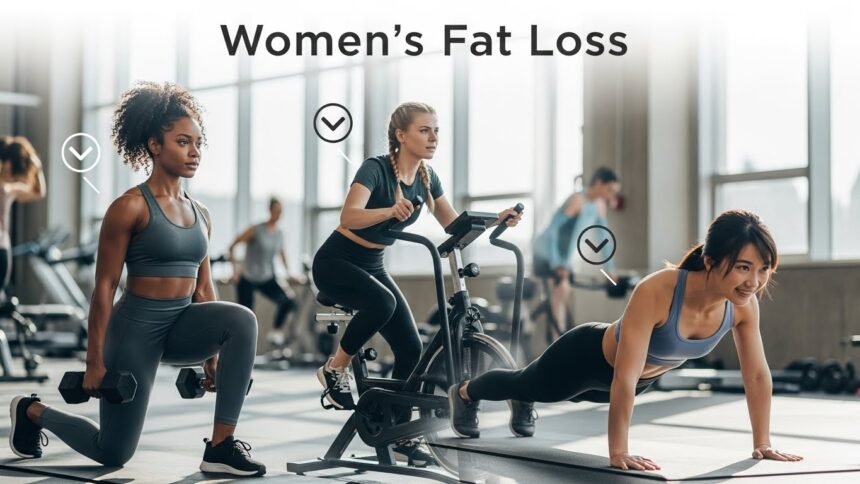
For decades, the fitness industry marketed a singular narrative to women seeking to lose weight: spend hours on the treadmill, restrict calories heavily, and avoid heavy weights to prevent becoming “bulky.” Fortunately, science has dismantled this archaic advice. Today, we understand that resistance training is not just a tool for bodybuilders but a metabolic powerhouse for everyone.
Understanding the strength training benefits for fat loss women seek requires a shift in mindset. It is about moving away from shrinking yourself and toward empowering your physiology. This article explores why picking up iron is the most effective strategy for sustainable fat loss, improved body composition, and long-term health.
The Physiology of Fat Loss: It’s Not Just About Calories Out
The traditional model of weight loss relies on the “calories in, calories out” equation. While an energy deficit is necessary for fat loss, how you achieve that deficit matters immensely. Cardio primarily burns calories during the activity. However, strength training alters how your body processes energy around the clock.
The Afterburn Effect (EPOC)
One of the most significant advantages of high-intensity resistance training is a phenomenon known as Excess Post-exercise Oxygen Consumption (EPOC). After a heavy lifting session, your body requires oxygen and energy to repair muscle fibers and restore homeostasis. This process keeps your metabolism elevated for hours, sometimes up to 24-48 hours post-workout. According to the American Council on Exercise (ACE), this “afterburn” can significantly contribute to total daily energy expenditure compared to steady-state cardio.
Increasing Resting Metabolic Rate (RMR)
Muscle tissue is metabolically expensive. It requires more energy to maintain than fat tissue. By building lean muscle mass, you effectively increase your Resting Metabolic Rate (RMR)—the number of calories your body burns while doing nothing. Research published by the National Institutes of Health (NIH) confirms that resistance training is effective at increasing RMR, which helps prevent the metabolic slowdown often associated with dieting.
Debunking the “Bulky” Myth
A common fear preventing women from lifting heavy is the dread of developing a masculine, bulky physique. This fear is biologically unfounded for the vast majority of women. Hypertrophy (muscle growth) relies heavily on testosterone. As noted by the Endocrine Society, women produce significantly less testosterone than men—typically only about 5% to 10% of male levels.
Without exogenous hormonal supplementation, women who lift heavy weights develop a “toned” or firm appearance—which is simply visible muscle with lower body fat—rather than massive bulk. The strength training benefits for fat loss women actually result in a smaller, tighter physique because muscle is denser than fat.
Body Composition vs. Weight Loss
The scale can be a deceptive liar. It does not differentiate between water, glycogen, bone, muscle, and fat. When you rely solely on cardio and dieting, you risk losing muscle mass along with fat, which can result in a “skinny fat” physique and a slower metabolism.
Strength training prioritizes body composition—the ratio of fat mass to lean mass. You might weigh the same on the scale but wear a size smaller in jeans because you have replaced volume (fat) with density (muscle). The Centers for Disease Control and Prevention (CDC) emphasizes that while BMI is a screening tool, it does not assess body fatness directly, making body composition a better health metric for active individuals.

Comparison: Cardio vs. Strength Training
To visualize why resistance training is superior for long-term management, consider the following comparison of how these modalities affect the female body.
| Feature | Steady-State Cardio | Strength Training |
|---|---|---|
| Calorie Burn During Activity | High | Moderate |
| Calorie Burn After Activity (EPOC) | Low / Minimal | High |
| Impact on Muscle Mass | Can lead to muscle loss (catabolic) | Builds/Maintains muscle (anabolic) |
| Metabolic Adaptation | Metabolism may slow down as weight drops | Metabolism increases or maintains |
| Bone Density Impact | Minimal (unless high impact) | High (increases bone mineral density) |
| Body Shape Change | Smaller version of current shape | Reshapes and contours the body |
Hormonal Health and Insulin Sensitivity
Fat loss is not merely a caloric issue; it is a hormonal one. Insulin is a storage hormone; when insulin levels are chronically high, fat burning is inhibited. Resistance training is a potent tool for managing insulin.
Muscle tissue acts as a “sponge” for glucose. By lifting weights, you increase the number of insulin receptors on your muscle cells, allowing your body to handle carbohydrates more efficiently. The American Diabetes Association recommends resistance training as a key component in managing blood glucose levels, which directly correlates to easier fat loss and reduced abdominal fat storage.
Bone Health: A Critical Consideration for Women
While aesthetic goals often drive the initial interest in fitness, the health benefits of lifting extend deep into the skeletal system. Women are at a higher risk for osteoporosis than men as they age.
Resistance training provides the mechanical stress necessary to stimulate bone remodeling. According to the National Osteoporosis Foundation, weight-bearing and muscle-strengthening exercises are essential for building and maintaining bone density. This ensures that as you lose weight, you remain robust and injury-free.
Mental Resilience and Consistency
The journey of fat loss is psychological as much as it is physical. Chronic cardio can often lead to burnout and fatigue. In contrast, strength training provides tangible, performance-based goals—lifting a heavier weight, performing a full push-up, or mastering a squat.
This shift from “exercising to burn off a meal” to “training to get stronger” fosters a healthier relationship with food and body image. Harvard Health reports that exercise, particularly resistance training, significantly reduces symptoms of anxiety and depression, keeping you motivated to stick to your fat loss plan.
Practical Steps to Start
To maximize the strength training benefits for fat loss women, your routine should prioritize compound movements and progressive overload.
- Prioritize Compound Lifts: Focus on exercises that use multiple joints and muscle groups, such as squats, deadlifts, lunges, push-ups, and rows. These burn more calories and elicit a greater hormonal response.
- Apply Progressive Overload: You must challenge your muscles to see change. This means gradually increasing the weight, reps, or intensity over time.
- Rest and Recovery: Muscles grow and fat is utilized during rest, not just during the workout. Ensure you are getting adequate sleep, as poor sleep signals the body to store fat. The Sleep Foundation highlights the bidirectional relationship between quality sleep and effective exercise.
- Cardiovascular Health: Don’t abandon cardio entirely. It is vital for heart health. The American Heart Association suggests a combination of strength and aerobic training for optimal cardiovascular health.
Conclusion
The narrative has shifted. The strength training benefits for fat loss women are undeniable, offering a path to weight loss that protects your metabolism, strengthens your bones, and empowers your mind. It is time to stop fearing the weight room and start embracing the barbell.
By focusing on building strength, you are not just losing fat; you are building a machine that burns fat more efficiently. If you are ready to transform your body and your health, step off the treadmill and pick up a weight. Your body will thank you for the challenge.