If you have ever stepped outside on a hazy day and felt an immediate stinging sensation in your eyes, you are not alone. Eye irritation smog is a growing concern for urban dwellers worldwide. As our cities expand and air pollution levels fluctuate, our eyes—the most sensitive exposed organs—often bear the brunt of the environmental damage.
Smog is a complex cocktail of Volatile organic compounds (VOCs), nitrogen oxides, and ground-level ozone. When these chemicals interact with the moisture on the surface of your eyes, they can cause a range of uncomfortable symptoms, from mild redness to severe inflammation. In this guide, we will explore why smog affects your vision and, more importantly, how you can protect yourself.
How Smog Damages the Ocular Surface
The ocular surface is protected by a thin layer of liquid known as the tear film. This film is essential for maintaining clear vision and keeping the eye lubricated. However, environmental pollutants can disrupt this delicate balance.
One of the primary ways eye irritation smog occurs is through the introduction of Fine particles (PM2.5). These microscopic particles are small enough to bypass the eye’s natural defences, leading to oxidative stress. This process damages the cells on the surface of the eye and triggers an inflammatory response.
Common Symptoms of Smog Exposure
- Red eyes that appear bloodshot or glassy.
- A persistent gritty sensation, as if sand is trapped under the eyelids.
- Excessive watering or tearing as the eye attempts to flush out toxins.
- Blurry vision or sensitivity to bright lights.
- Itching, which is often mistaken for a typical allergic reaction.
Comparing Smog Irritation vs. Seasonal Allergies
It can be difficult to distinguish whether your discomfort is caused by eye irritation smog or traditional hay fever. The table below outlines the key differences to help you identify the cause of your symptoms.
| Feature | Smog-Induced Irritation | Seasonal Allergies |
|---|---|---|
| Primary Cause | Chemical pollutants and particulate matter. | Pollen, mould spores, and pet dander. |
| Main Symptom | Burning, stinging, and burning sensation. | Intense itching and sneezing. |
| Tear Film Impact | Severely reduced tear film stability. | Increased mucus production (stringy discharge). |
| Duration | Lasts as long as the air quality is poor. | Persists throughout the pollination season. |
5 Practical Tips to Manage Eye Irritation Smog
Protecting your vision does not require you to stay indoors indefinitely. By adopting a few simple habits, you can significantly reduce the impact of dry eye syndrome caused by poor air quality.
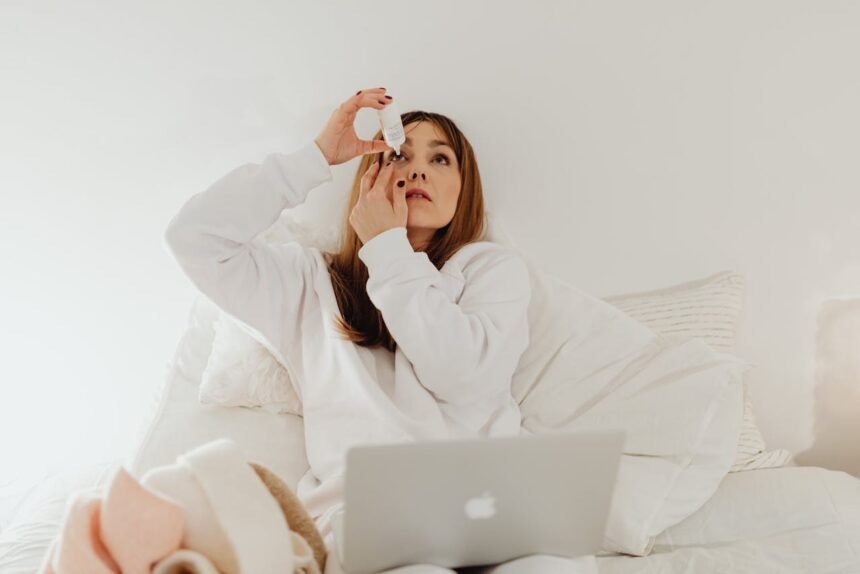
- Use Lubricating Eye Drops: Often referred to as “artificial tears,” lubricating eye drops can help wash away pollutants and restore moisture. Opt for preservative-free versions if you need to use them frequently.
- Wear Protective Eyewear: When heading outdoors on high-pollution days, wearing wrap-around sunglasses or protective eyewear creates a physical barrier between your eyes and the toxic air.
- Optimise Your Indoor Air: Utilise a high-quality HEPA air purifier to remove particulate matter from your home environment. Ensure windows are kept closed during peak traffic hours.
- Practice Good Hygiene: After spending time outdoors, wash your face and eyelids with cool water to remove any lingering chemical residue. Avoid rubbing your eyes, as this can push particles deeper into the cornea.
- Stay Hydrated: Drinking plenty of water supports the body’s ability to produce high-quality tears, which is essential for keeping your eyes healthy.
When to See a Specialist
While most cases of eye irritation smog resolve once the air quality improves, chronic exposure can lead to more serious conditions. If your red eyes are accompanied by severe pain, a sudden change in vision, or a yellow discharge, you should consult an optometrist or ophthalmologist immediately.
Untreated irritation can occasionally progress to Conjunctivitis (pink eye) or cause microscopic abrasions on the surface of the eye. A professional can prescribe medicated drops to reduce inflammation and prevent long-term damage.
The Long-term Outlook
As we navigate an era of increasing environmental challenges, understanding the link between air quality and ocular health is vital. By staying informed about local air quality indices and taking proactive steps to moisturise and protect your eyes, you can mitigate the discomfort of eye irritation smog and maintain clear, healthy vision for years to come.
Frequently Asked Questions (FAQs)
Can smog cause permanent damage to my eyes?
While most smog-related irritation is temporary, long-term exposure to high levels of pollution has been linked to chronic dry eye and increased risk of cataracts. Protecting your eyes daily is the best way to prevent cumulative damage.
Are contact lens wearers more at risk from smog?
Yes. Contact lenses can trap fine particles (PM2.5) against the eye, leading to increased irritation and potential infection. On high-smog days, it is often safer to wear glasses instead of contacts.
Do “redness relief” drops work for smog irritation?
You should be cautious with “get the red out” drops. These often contain vasoconstrictors that shrink blood vessels but do not address the underlying dryness. Overuse can actually lead to “rebound redness.” Stick to preservative-free lubricating eye drops for better long-term results.
Does washing my eyes with tap water help?
Splashing your closed eyelids with cool tap water can help remove particles from the skin. However, you should avoid getting tap water directly into your eyes, as it may contain impurities or microorganisms. Use sterile saline or dedicated eye washes for internal rinsing.