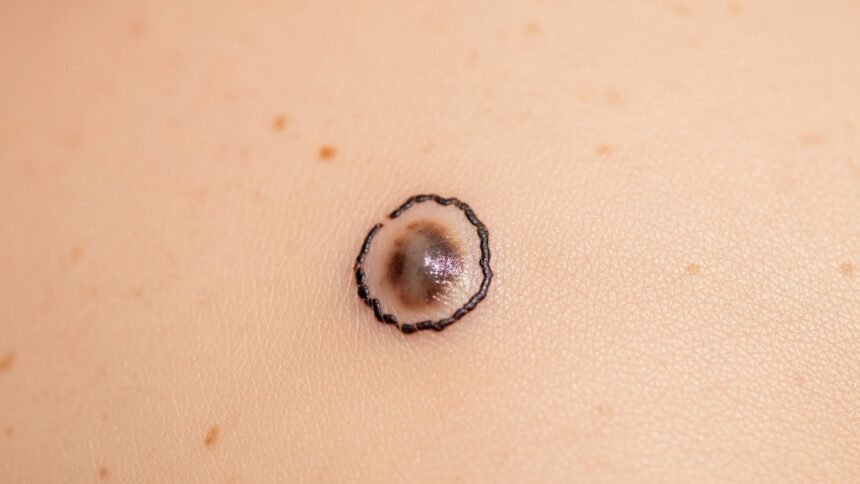
Checking your skin for changes is a vital part of maintaining your overall health. However, the skin on your back often gets neglected simply because it is difficult to see.
While most moles are perfectly harmless, spotting a potential problem early can make a significant difference in treatment outcomes. Melanoma, a serious form of skin cancer, can develop anywhere on the body, but the back is a particularly common site for men in the UK.
Because this area is hard to inspect on your own, knowing exactly what to look for and how to check effectively is crucial. You do not need to be a medical expert to identify warning signs, but you do need to be vigilant.
If you notice a mole that looks different from the others or is changing in appearance, it is always best to err on the side of caution. This guide will walk you through the specific suspicious mole symptoms to watch for and provide practical tips for monitoring your back.
According to Cancer Research UK, early diagnosis of melanoma greatly increases the chances of successful treatment. Therefore, taking a few minutes to check your back could save your life.
What Is a Suspicious Mole?
A suspicious mole is essentially any growth on the skin that exhibits characteristics different from a standard, benign mole. Normal moles, also known as nevi, are usually evenly coloured, round or oval, and smaller than a pencil eraser. They tend to stay the same size and shape over many years.
In contrast, a mole that requires medical attention often behaves differently. It might grow rapidly, change texture, or bleed without injury. These changes can be subtle at first, which is why establishing a baseline of what your skin normally looks like is so important.
Dermatologists often refer to the ‘Ugly Duckling’ sign. This concept suggests that most of an individual’s moles resemble each other. A potential melanoma will often stand out like an ugly duckling because it looks distinctively different from your other moles.
It is also important to note that suspicious lesions can arise from existing moles or appear as new spots on the skin. While sun exposure is a primary cause, genetics also play a role. The NHS advises that anyone with a history of sunburn or a family history of skin cancer should be extra vigilant.
Identifying Symptoms: The ABCDE Rule
When checking your back, or asking a partner to help, the most effective framework to use is the ABCDE rule. This checklist helps you analyse specific features of a mole that may indicate it is cancerous.
A for Asymmetry
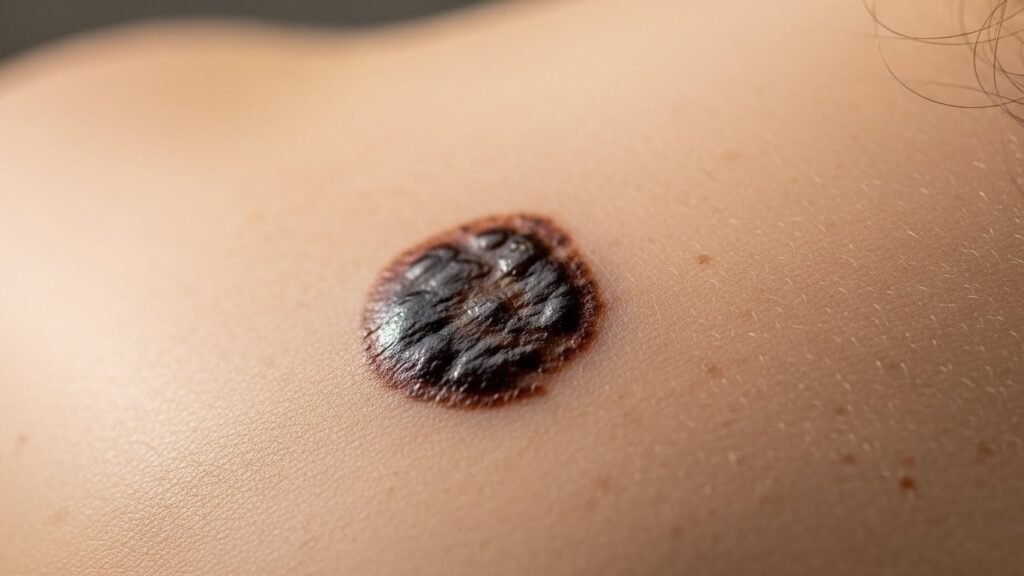
Benign moles are usually symmetrical. If you were to draw a line through the middle of a normal mole, the two halves would match. In a suspicious mole, the two halves often do not look the same. Asymmetry is a strong indicator that the cells are dividing unevenly.
B for Border
Pay close attention to the edges of the mole. A harmless mole typically has a smooth, clearly defined border. Suspicious moles often have:
- Blurred or ragged edges.
- Notched or scalloped outlines.
- Borders that seem to fade into the surrounding skin.
Irregular borders are a key warning sign of melanoma and should be examined by a professional.
C for Colour
Consistency is key with normal moles; they are usually a single shade of brown or tan. A mole that contains multiple colours or shades is a warning sign. Look out for:
- Different shades of brown, tan, or black.
- Patches of red, white, or blue.
- Darkening of the mole over time.
The British Skin Foundation highlights that uneven colour distribution is a classic symptom of melanoma.
D for Diameter
While melanomas can be tiny, anything larger than 6mm in diameter (roughly the size of a pencil eraser) should be monitored closely. However, do not ignore smaller spots if they exhibit other signs from this list. Many skin cancers start small and grow outwards.
E for Evolving
This is arguably the most critical factor. Any mole that changes in size, shape, or colour over weeks or months is suspicious. This includes:
- Elevation (becoming raised).
- New symptoms like itching, crusting, or bleeding.
- A feeling of tenderness in the area.
For a visual guide on these stages, Healthline offers excellent resources to help you distinguish between benign and malignant growths.
Practical Steps to Check Your Back
Since you cannot view your back directly, you need a strategy to ensure you are not missing anything. Relying solely on a bathroom mirror often leaves blind spots.
1. The Two-Mirror Technique
Use a full-length wall mirror and a smaller handheld mirror. Stand with your back to the full-length mirror. Hold the hand mirror in front of you and manoeuvre it until you can see the reflection of your back in the wall mirror. This allows you to scan the upper, middle, and lower back.
2. Enlist a Partner
Asking a spouse, family member, or close friend is the most reliable method. They can get a close-up view and may notice changes you would miss in a reflection. Ask them to take high-quality photos of your back every few months to compare changes.
3. Use Technology
There are various apps designed to help map your moles, but a simple folder of photos on your phone works well. Consistency is vital. Try to take photos in the same lighting conditions each time.
Comparison: Normal vs. Suspicious Moles
Use this table to quickly differentiate between a standard mole and one that requires a GP visit.
| Feature | Normal Mole (Benign) | Suspicious Mole (Potential Melanoma) |
|---|---|---|
| Symmetry | Symmetrical; halves match. | Asymmetrical; halves do not match. |
| Edges | Smooth, even, and distinct. | Ragged, blurred, or notched. |
| Colour | One uniform colour (tan/brown). | Multiple colours (black, red, white). |
| Size | Usually under 6mm. | Often larger than 6mm (but can be smaller). |
| Surface | Smooth to the touch. | May be scaly, crusty, or bleed. |
| Evolution | Stays the same for years. | Changes shape, size, or colour rapidly. |
| Sensation | Painless and asymptomatic. | May itch, tingle, or feel tender. |
Risk Factors You Should Know
While anyone can develop a suspicious mole, certain factors increase your likelihood. Being aware of these can help you decide how frequently you need to check your back.
Key risk factors include:
- Pale Skin: If you burn easily or have natural red or blonde hair, your risk is higher.
- UV Exposure: A history of intense sun exposure or use of tanning beds significantly increases risk. See guidelines from GOV.UK on sun safety.
- High Mole Count: Having more than 50 moles on your body puts you in a higher risk category.
- Family History: If a close relative has had melanoma, your risk is increased.
Organisations like Macmillan Cancer Support provide extensive support and information for those with higher risk profiles.
Frequently Asked Questions
Does a suspicious mole always itch or hurt?
No. In fact, many melanomas are completely painless in the early stages. While itching, tenderness, or pain are warning signs, the absence of pain does not mean a mole is safe. Visual changes are often the first indicator.
Can I get a suspicious mole if I never sunbathe?
Yes. While UV radiation is the leading cause, genetics play a major role. Skin cancer can also develop in areas not exposed to the sun. However, protection remains your best defence, as outlined by the World Health Organization.
What happens if I find a suspicious mole?
Do not panic. Schedule an appointment with your GP immediately. They may refer you to a dermatologist for further examination or a biopsy. According to NICE guidelines, prompt referral is standard procedure for suspected lesions.
Are raised moles more dangerous than flat ones?
Not necessarily. Melanoma can be flat or raised. Nodular melanoma, a particularly aggressive form, often presents as a raised, firm bump. However, a flat mole that changes shape is equally concerning. The British Association of Dermatologists provides leaflets explaining the different presentations of skin lesions.
How often should I check my back?
Most experts recommend a thorough self-exam once a month. This frequency allows you to spot changes early without becoming obsessive. If you are at high risk, your doctor may suggest more frequent checks.
The Bottom Line
Spotting a suspicious mole on your back requires a proactive approach and a bit of assistance, but it is a habit worth building. By familiarising yourself with the ABCDE rule—Asymmetry, Border, Colour, Diameter, and Evolving—you can act as your own first line of defence against skin cancer.
Remember, your goal is not to diagnose yourself but to identify changes that warrant professional review. If you see something that does not look right, or if a mole is itching, bleeding, or changing, contact your GP immediately.
Prioritise your skin health by avoiding sunbeds and wearing high SPF sunscreen. As noted by Patient.info, prevention and early detection are the most powerful tools we have. Stay vigilant, check your back monthly, and protect your skin to ensure you stay healthy for years to come.