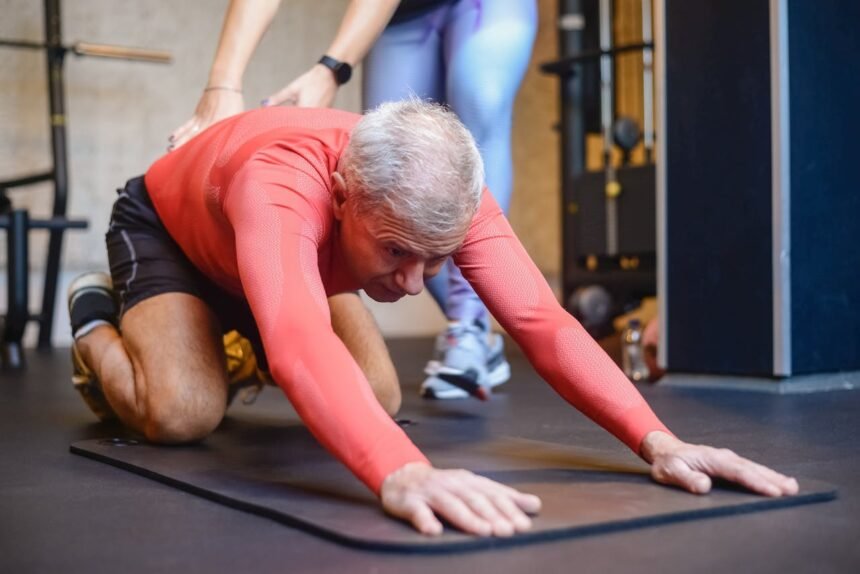
Ever felt like your body is a rusted gate hinge? You know the feeling—that morning stiffness that lingers until your third cup of tea, or the way your back protests after sitting at a desk for just an hour. If you feel “tight” despite regular stretching, you aren’t alone. What you likely need isn’t just more stretching, but a dedicated focus on mobility exercises.
While many people use the terms interchangeably, there is a distinct difference between flexibility vs mobility. Flexibility is the ability of a muscle to lengthen passively. Mobility, however, is the ability of a joint to move actively through its intended range of motion. According to the NHS, maintaining this movement is vital for everyday tasks, from tying your laces to reaching the top shelf.
Why Mobility is the Secret Sauce of Longevity
Focusing on joint health is one of the most proactive steps you can take for your long-term wellbeing. As we age, our joints naturally lose some of their lubrication and the surrounding tissues become less elastic. Integrating mobility exercises into your week can counteract these effects, helping you maintain functional fitness as the years go by.
Research published by the Mayo Clinic suggests that regular movement helps keep your joints supple and reduces the risk of falls. Furthermore, a systematic review in the British Journal of Sports Medicine highlights that movement-based interventions are critical for injury prevention in both athletes and sedentary individuals.
Flexibility vs Mobility: What’s the Difference?
To understand why mobility exercises are so effective, it helps to see how they differ from traditional static stretching. The Harvard Health Letter explains that while flexibility is a component of mobility, it is only one piece of the puzzle.
| Feature | Flexibility | Mobility |
|---|---|---|
| Focus | Muscle length and elasticity. | Joint controlled movement. |
| Activity Level | Passive (holding a pose). | Active (moving through a range). |
| Benefit | Temporary muscle lengthening. | Improved movement patterns. |
| Goal | Reaching a certain point. | Moving safely and efficiently. |
Essential Mobility Exercises for Your Daily Routine
Integrating these movements doesn’t require a gym membership. Most are simple bodyweight movements that can be done in your living room. The Physiopedia database notes that consistency is more important than intensity when it comes to neurological adaptations in movement.
1. Cat-Cow Stretch
This classic yoga transition is excellent for thoracic spine health. It helps synchronise your breath with movement while gently mobilising each vertebra. It is often recommended by experts at the Arthritis Foundation for those with back discomfort.
2. Controlled Articular Rotations (CARs)
CARs involve taking a specific joint—like your shoulder or hip—through its full circular range of motion under tension. This technique, often used in physical therapy, helps the brain “map” the joint’s capabilities, improving core stability and control.
3. The World’s Greatest Stretch
This is a staple in dynamic stretching routines. It targets the hips, hamstrings, and the spine in one fluid motion. It is a fantastic hip opener that addresses the tightness caused by prolonged sitting. For a guide on dynamic movement, check Medical News Today.
4. 90/90 Hip Switches
Sit on the floor with one leg at a 90-degree angle in front of you and the other at 90 degrees to the side. Switch the position of your legs without using your hands. This is one of the most effective hip openers for improving internal and external rotation.

The Science of Active Recovery
Many people mistakenly believe that “rest days” mean doing nothing. However, the National Strength and Conditioning Association (NSCA) advocates for active recovery. Using mobility exercises on your off-days keeps the blood flowing to your muscles without the stress of heavy lifting or high-impact cardio.
A study found in the Nature Journal suggests that regular movement can actually reduce systemic inflammation, which is a major contributor to joint stiffness. By maintaining your daily routine of mobility, you are essentially “greasing the groove” for your nervous system.
- Increased blood flow: Helps deliver nutrients to cartilage.
- Better posture: Corrects imbalances from “computer neck.”
- Enhanced performance: Improved movement patterns lead to better gym gains.
- Stress reduction: Controlled breathing during mobility lowers cortisol.
Safety and Best Practices
Before you dive into a new functional fitness programme, it is essential to listen to your body. The American Academy of Orthopaedic Surgeons warns that forcing a joint past its comfortable limit can lead to ligament strain. If you have chronic pain, consider consulting a professional. Organisations like the Chartered Society of Physiotherapy provide resources for finding specialised help.
For those managing chronic conditions, Action on Pain offers support on how to move safely without exacerbating symptoms. Remember that mobility exercises should feel like a “productive discomfort,” never a sharp or electric pain.
How to Build Your Mobility Circuit
- Warm-up (2 mins): Gentle walking or arm circles to raise body temperature.
- Upper Body (3 mins): Thoracic rotations and neck CARs.
- Lower Body (5 mins): 90/90 switches and deep squats.
- Integration (2 mins): Full-body movements like “The World’s Greatest Stretch.”
For more detailed exercise guides, WebMD offers a comprehensive library of movements suited for all levels. You can also explore the Cleveland Clinic’s insights on how functional movement improves daily life.
Finally, consistency is the key. You wouldn’t expect to brush your teeth once and have perfect dental health for life; your joints require the same daily maintenance. Research from the Cochrane Library indicates that long-term adherence to movement programmes is the single best predictor of physical independence in later life.
Frequently Asked Questions (FAQs)
How often should I do mobility exercises?
Ideally, you should incorporate mobility exercises into your daily routine. Even 5 to 10 minutes every morning can make a significant difference in how you feel and move throughout the day.
Can mobility exercises help with back pain?
Yes, many forms of back pain are caused by stiffness in the thoracic spine or hips. By improving the mobility of the joints above and below the lower back, you can often relieve the pressure on the lumbar region.
Do I need equipment for mobility training?
Most mobility exercises are bodyweight movements. While tools like foam rollers or resistance bands can be helpful, they are not strictly necessary to see improvements in your range of motion and functional fitness.