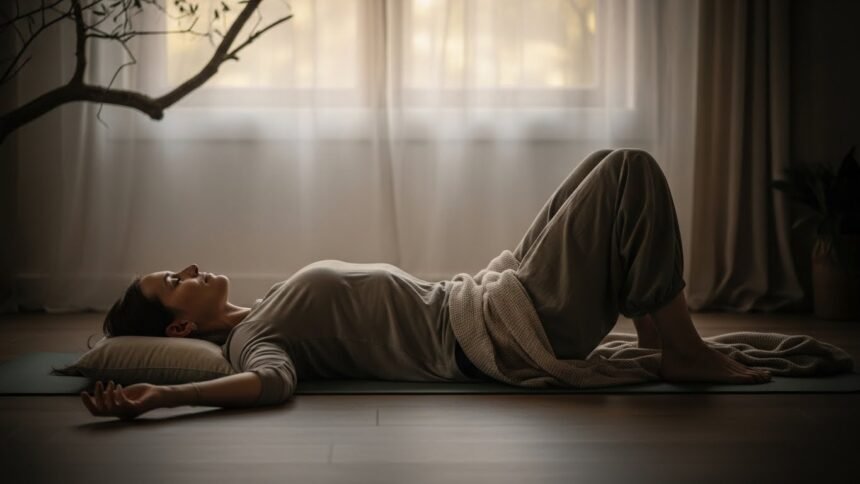
In a modern world that glamorizes the hustle, the concept of “doing nothing” often feels counterintuitive, if not entirely impossible. We are constantly plugged in, overstimulated, and mentally fatigued. While traditional sleep is essential, many find that even after eight hours in bed, they wake up feeling groggy and mentally scattered. This is where the ancient practice of Yoga Nidra comes into play. Often referred to as “yogic sleep,” this systematic form of guided relaxation offers a pathway to profound restoration.
More than just a power nap, utilizing yoga nidra for clarity can reset the nervous system, declutter the subconscious mind, and provide a sense of calm that permeates daily life. In this comprehensive guide, we will explore the science, the practice, and the profound benefits of this transformative art of letting go.
What is Yoga Nidra?
Yoga Nidra is a state of consciousness between waking and sleeping. It is a practice where the body is completely relaxed, yet the practitioner remains inwardly aware. Unlike meditation, which often requires focus and concentration (Dharana), Yoga Nidra requires nothing but the act of lying down and listening.
According to the Yoga Journal, the roots of this practice can be traced back to the tantras of Yoga philosophy, though it was systematized in the 20th century by Swami Satyananda Saraswati. It moves the practitioner through the Pancha Maya Kosha (five layers of self), leaving them with a sense of wholeness.
The Difference Between Sleep and Nidra
While the body enters a sleep-like state, the mind remains at a borderline level of activity. In traditional sleep, you lose consciousness. In Yoga Nidra, you retain a trace of awareness, which prevents the mind from drifting into the unconscious chaos of dreams, allowing for a deep cleaning of mental impressions, or Samskaras.
The Science of Deep Relaxation
To understand why yoga nidra for clarity is so effective, we must look at what happens physiologically during the practice. The primary mechanism involves shifting the autonomic nervous system from the sympathetic mode (fight or flight) to the parasympathetic mode (rest and digest).
Brain Wave Regulation
During a typical session, brain waves slow down significantly.
- Beta (14-40 Hz): The waking state of logic and critical thinking.
- Alpha (9-13 Hz): The state of relaxation and daydreaming.
- Theta (4-8 Hz): The state of deep meditation, REM sleep, and hypnosis.
- Delta (1-3 Hz): Deep, restorative sleep.
Research highlighted by Psychology Today suggests that Yoga Nidra helps practitioners access the Theta and Delta states while remaining conscious. This access allows for neuroplasticity—the brain’s ability to reorganize itself by forming new neural connections. This is crucial for breaking habitual thought patterns and achieving mental clarity.
Yoga Nidra for Clarity: How It Works
Mental fog often stems from an overloaded working memory and emotional residue. When we hold onto stress, our cortisol levels spike, inhibiting the prefrontal cortex—the area of the brain responsible for decision-making and focus.
1. Reducing Cognitive Load
By systematically relaxing the body and breath, Yoga Nidra signals to the brain that there is no immediate threat. According to the National Institutes of Health (NIH), chronic stress affects memory and mood. By lowering cortisol, Nidra frees up cognitive resources, allowing for sharper focus and improved problem-solving skills upon waking.
2. Emotional Decompression
We often carry emotional baggage in the body—tight shoulders, a clenched jaw, or a heavy chest. The body scan component of Nidra releases these physical holdings, which often correspond to emotional blockages. This release is essential for emotional intelligence and clarity.
Comparison: Yoga Nidra vs. Meditation vs. Sleep
Many newcomers confuse these three distinct states. The table below outlines the key differences and how they contribute to mental health.
| Feature | Yoga Nidra | Mindfulness Meditation | Traditional Sleep |
|---|---|---|---|
| Primary Goal | Deep systemic relaxation & subconscious clearing | Focus, awareness, and presence | Physical restoration & memory consolidation |
| Body Position | Savasana (Lying down) | Seated (usually) | Lying down |
| State of Awareness | Conscious of the borderline state (Hypnagogic) | Fully awake and alert | Unconscious |
| Brain Waves | Alpha, Theta, Delta | Beta, Alpha, Gamma | Delta, Theta |
| Effort Required | Minimal (Passive) | Moderate (Active focus) | None |
| Impact on Clarity | High: Clears subconscious blocks | High: Trains attention span | Medium: Resets fatigue |
The Components of a Practice
A typical session lasts anywhere from 20 to 45 minutes. It follows a specific structure designed to withdraw the senses (Pratyahara) and turn inward.
Setting the Sankalpa (Intention)
At the beginning of the practice, you are asked to set a Sankalpa—a short, positive affirmation. This is like planting a seed in the fertile soil of the relaxed mind. For those seeking yoga nidra for clarity, a Sankalpa might be: “My mind is clear, calm, and focused.”
Rotation of Consciousness
This is a rapid body scan where you move your awareness to different parts of the body. This technique, known as sensory homunculus saturation, engages the sensory-motor cortex, effectively distracting the mind from ruminating thoughts. The Cleveland Clinic notes that body scanning helps ground the nervous system, reducing anxiety symptoms.
Breath Awareness
Simply observing the breath without changing it creates a bridge between the conscious and subconscious mind. This promotes the “relaxation response,” a term coined by researchers at Harvard Health.
Benefits Beyond Mental Clarity
While achieving a clear mind is a primary motivator, the ripple effects of this practice are vast.
- Insomnia Relief: Because it mimics the onset of sleep, it trains the body to fall asleep faster. The Sleep Foundation recognizes relaxation techniques as effective interventions for insomnia.
- Trauma Recovery: Organizations like the Department of Veterans Affairs have explored Yoga Nidra (specifically the iRest protocol) for helping veterans manage PTSD, demonstrating its power to heal deep psychological wounds.
- Pain Management: By altering the relationship to sensation, practitioners often report lower perceived pain levels.
How to Start Your Practice
Integrating Yoga Nidra into your life is surprisingly easy because it requires no physical flexibility or endurance.
- Create a Sanctuary: Find a quiet, dimly lit room. Use blankets to keep warm, as body temperature drops during deep relaxation.
- Use a Guide: Unlike sitting meditation, Nidra is best practiced with a recording. You can find resources on apps like Insight Timer or through the Yoga Nidra Network.
- Time it Right: Practicing yoga nidra for clarity is best done in the early afternoon (the “siesta” time) to recharge for the rest of the day, or right before bed to improve sleep quality.
- Remain Still: Physical stillness induces mental stillness. Try to remain motionless for the duration of the practice.
Conclusion
The art of letting go is not about giving up; it is about giving in to the restorative powers of your own body and mind. By regularly practicing yoga nidra for clarity, you are not merely resting; you are actively debugging your nervous system. You sweep away the accumulated stress of the day, allowing your natural intelligence and focus to shine through.
In a world that demands constant output, Yoga Nidra offers a radical and necessary act of input—restoring your energy so you can engage with life more fully, calmly, and clearly. Tonight, lie down, close your eyes, and allow yourself the permission to simply be.
Disclaimer: This article is for informational purposes only and is not a substitute for professional medical advice. If you are dealing with severe trauma or mental health issues, please consult with a healthcare professional or reference the American Psychological Association for resources.