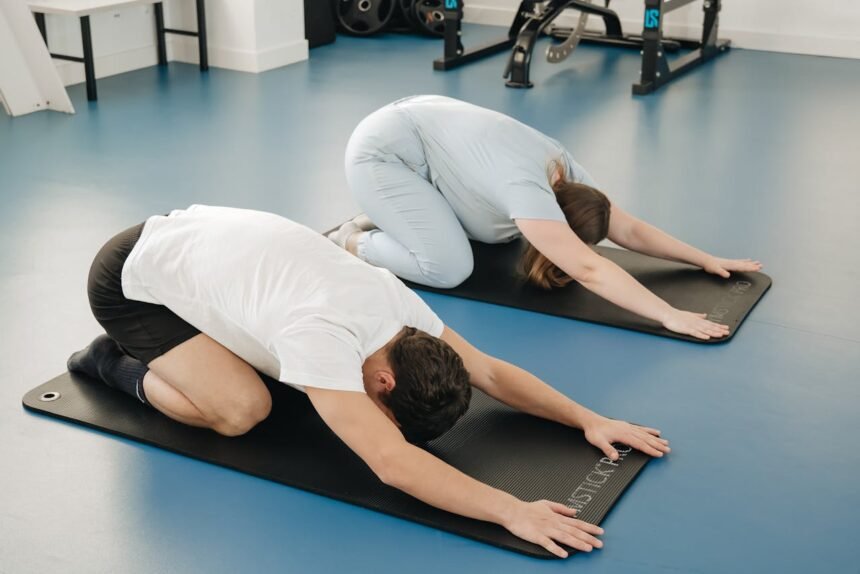
If you spend your day hunched over a laptop or scrolling through your phone, you might feel a nagging ache in your shoulders or a stiffness in your neck. While we often blame our lower back for discomfort, the real culprit is frequently located higher up. Thoracic mobility—the ability of your mid-back to move freely—is a cornerstone of physical health that many of us unintentionally ignore.
The thoracic spine is the longest region of your back, consisting of 12 vertebrae that connect to your ribs. When this area becomes stiff, it creates a “bottleneck” that forces your neck and lower back to work overtime, leading to back pain and reduced functional movement. In this guide, we will explore why prioritising your mid-back is essential for long-term health and how you can reclaim your movement today.
What is Thoracic Mobility and Why Does it Matter?
Thoracic mobility refers to the degree of movement available in the middle section of your spine. Unlike the lower back (lumbar spine), which is designed for stability, the thoracic spine is built for rotation, flexion, and extension. Maintaining optimal thoracic mobility is vital for protecting your spinal health and ensuring your body can handle daily physical stresses.
When you lose this flexibility, often due to a sedentary lifestyle, your body compensates. This lack of movement can lead to a rounded-back posture known as kyphosis. Over time, this affects everything from how you breathe to how you lift weights at the gym.
The Ripple Effect of Mid-Back Stiffness
The thoracic spine acts as a bridge between the upper and lower body. When it lacks mobility, the following areas suffer:
- Shoulders: Poor mobility limits your overhead mobility, making it harder to reach for high shelves or perform exercises like shoulder presses.
- Neck: A stiff mid-back often leads to “forward head posture,” putting immense strain on the cervical spine.
- Lower Back: If your mid-back won’t rotate, your lower back will try to do it for you, which often results in injury.
Signs You Have Poor Thoracic Mobility
It can be difficult to know if your mid-back is the problem. Common indicators of mid-back stiffness include difficulty looking over your shoulder while driving, persistent tension between your shoulder blades, or a feeling of “tightness” in your chest when taking a deep breath.
Optimising your thoracic spine anatomy involves regular movement and targeted exercises. Use the table below to see how a mobile spine compares to a stiff one.
| Feature | Mobile Thoracic Spine | Stiff Thoracic Spine |
|---|---|---|
| Postural Alignment | Upright, neutral shoulders. | Rounded shoulders, forward head. |
| Breathing | Deep, diaphragmatic breaths. | Shallow, chest-focused breathing. |
| Shoulder Movement | Full 180-degree reach. | Restricted or painful reaching. |
| Injury Risk | Low risk of compensatory pain. | High risk of neck/lower back pain. |
The Benefits of Improving Your Range of Motion
Investing time in thoracic mobility offers far more than just back pain relief. It enhances your overall range of motion and allows your muscles to function as intended. For athletes, it is a game-changer for athletic performance, particularly in sports requiring rotation like golf, swimming, or tennis.
Improved Breathing Mechanics
Your ribs are attached to your thoracic vertebrae. If the spine is stiff, the rib cage flexibility decreases, which can restrict your lungs. Enhancing mobility allows for better breathing mechanics, ensuring more oxygen reaches your muscles during exercise.
Better Scapular Stability
The shoulder blades (scapulae) sit on top of the thoracic cage. A mobile spine provides a stable base for the shoulder blades to glide, which is essential for scapular stability and preventing rotator cuff injuries.
5 Exercises to Optimise Thoracic Mobility
Consistency is key when working on your vertebral health. Incorporate these movements into your daily routine for effective posture correction.
- The Cat-Cow: On all fours, alternate between arching your back and tucking your chin to your chest. This gently warms up the entire spine.
- Thread the Needle: From a quadruped position, slide one arm under the opposite shoulder, reaching as far as possible to encourage rotation.
- Open Books: Lying on your side with knees bent, rotate your top arm across your body to touch the floor behind you, keeping your hips stacked.
- Foam Rolling: Place a foam roller horizontally across your mid-back and gently lean back over it to improve extension.
- Bench T-Spine Stretch: Kneel in front of a bench, place your elbows on it, and drop your head between your arms to stretch the upper back and lats.
By pairing these stretches with core strength training, you can ensure that your mobility gains are permanent and supported by strong musculature.
Frequently Asked Questions (FAQs)
How often should I work on thoracic mobility?
For the best results, aim to perform mobility exercises at least three to four times a week. If you have a desk job, doing a few minutes of “Open Books” or “Cat-Cow” every day can significantly reduce the negative effects of sitting.
Can poor thoracic mobility cause chest pain?
Yes, stiffness in the mid-back and ribs can sometimes cause a sensation of tightness or sharp pain in the chest area (costochondritis). However, you should always consult a medical professional to rule out cardiac issues if you experience chest pain.
Is thoracic mobility the same as flexibility?
Not quite. Flexibility refers to the ability of a muscle to lengthen, while mobility is the ability of a joint to move actively through its intended range of motion. Thoracic mobility requires both muscle length and joint health to function correctly.
Summary
Prioritising your thoracic mobility is one of the most effective ways to safeguard your body against the rigours of modern life. By focusing on rotation, extension, and rib cage movement, you can alleviate pain, improve your posture, and enhance your physical performance. Start small, stay consistent, and your spine will thank you for years to come.