


In this guide, you will learn the key differences in pink eye vs allergies. We cover the symptoms of pink eye vs allergies, the signs of pink eye vs allergies, and simple clues you can check at home. You will also find helpful notes on pink eye vs allergies in toddler cases and pink eye vs allergies in dogs.
We also explain the pink eye contagious period, safe home relief methods, and when to use drops. Every section uses plain language, short paragraphs, and easy tables. Use it as a trusted starting point, but see a doctor if you are unsure or your eyes feel worse.
=====================================================
Pink Eye vs Allergies: 7 Signs to Tell the Difference
What Are Pink Eye and Eye Allergies?
Pink eye is the common name for conjunctivitis. The conjunctiva is the thin, clear layer that covers the white of your eye and lines your eyelids. When it gets inflamed, the eye looks pink or red.
Pink eye has several causes. Viruses are the most common, and bacteria cause many other cases. Allergies, irritants like smoke, and contact lens problems can cause it too.
Eye allergies happen when your eyes react to something harmless, like pollen or pet dander. Your body releases histamine, and the eyes become itchy, red, and watery. This is called allergic conjunctivitis, and it is not an infection.
Why Pink Eye vs Allergies Is So Confusing
Many people mix up pink eye vs allergies because both turn the eyes red. Both can cause watering and puffy eyelids. Both can make you want to rub your eyes.
The difference is the cause. One group is infectious and can spread to others. The other group is a reaction to triggers and cannot spread at all.
That is why a correct guess matters. It affects whether your child can go to school, whether you need a prescription, and which drops are safe. Taking a few minutes to compare symptoms can save you worry.
Why You Can Trust This Guide (E-E-A-T and YMYL)
Health advice is “Your Money or Your Life” (YMYL) content. Mistakes can harm real people. So this guide follows experience, expertise, authoritativeness, and trust.
The medical facts match guidance from respected sources. These include CDC: Conjunctivitis, Mayo Clinic: Pink Eye, and NHS: Conjunctivitis. You can read them to double-check anything here.
This article cannot diagnose you or your child. Only a trained clinician can do that. Use it to understand your options and to ask better questions.
Pink Eye vs Allergies: The Main Differences
The table below gives a quick view of pink eye vs allergies. No single sign settles the question, because the overlap is real. Look at the whole pattern instead.
| Feature | Viral Pink Eye | Bacterial Pink Eye | Eye Allergies |
|---|---|---|---|
| Main feeling | Gritty, burning | Sore, sticky | Intense itching |
| Discharge | Watery or clear | Thick, yellow or green | Clear and watery, sometimes stringy |
| Eyes affected | Often starts in one, may spread to the other | One or both | Almost always both |
| Other symptoms | Cold, sore throat, swollen glands | Crusted lashes, especially in the morning | Sneezing, runny nose, itchy nose |
| Contagious? | Yes | Yes | No |
| Typical timing | Days to a few weeks | A few days to two weeks | Lasts while the trigger is present |
Use this table as a guide only. Some people have more than one problem at once. For example, you can have allergies and catch a viral infection in the same week.
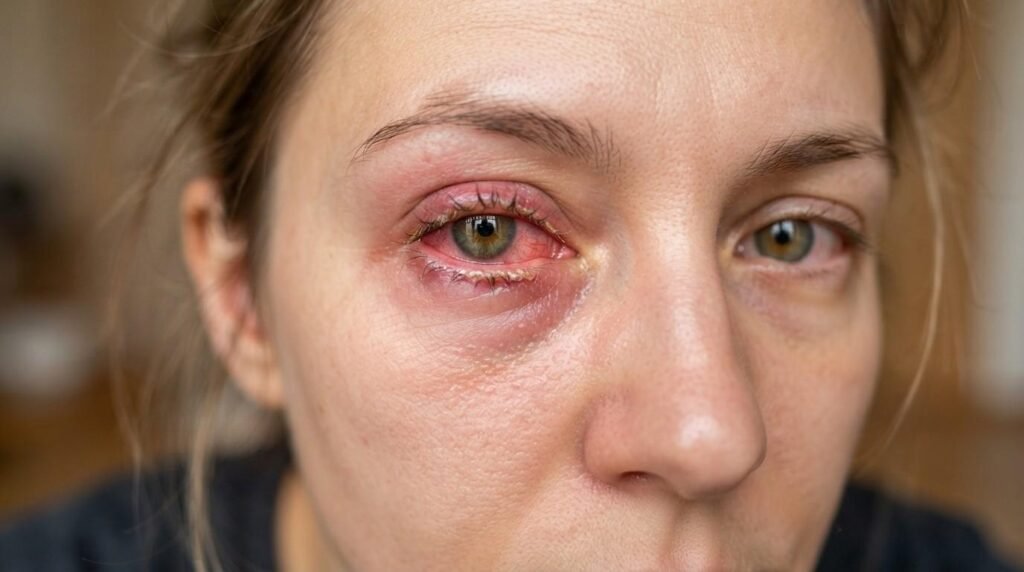
Symptoms of Pink Eye vs Allergies
Let us look at the symptoms of pink eye vs allergies in more detail. Understanding each group makes the clues easier to spot.
Viral Pink Eye Symptoms
Viral pink eye often comes with a cold or sore throat. The eye feels gritty, as if sand is in it. Discharge is usually thin and watery.
It often starts in one eye and moves to the other within days. Eyelids may look swollen. Light may feel uncomfortable.
Bacterial Pink Eye Symptoms
Bacterial pink eye often causes thicker discharge. It can be yellow or green. Lashes may stick together after sleep.
The eye feels sore and looks red. One or both eyes can be affected. Many mild cases improve in a few days.
Allergy Symptoms
Allergic eyes itch, and the itch can be intense. Eyes are red and watery, and eyelids may look puffy. Both eyes are usually affected.
Many people also sneeze or have a runny or stuffy nose. Symptoms often follow exposure, like a walk in pollen or time with a pet. They return as long as the trigger is around.
Signs of Pink Eye vs Allergies You Can Check Today
The signs of pink eye vs allergies are easier to see when you ask the right questions. Here is a simple checklist. Go through it slowly.
Is Itching the Main Problem?
Strong itching points toward allergies. Infections tend to feel gritty, sore, or sticky instead. If you cannot stop rubbing, think allergy first.
Rubbing makes the eyes redder and puffier. It can also spread germs if an infection is present. Try not to rub, no matter the cause.
What Does the Discharge Look Like?
Thick yellow or green discharge suggests bacteria. Watery discharge can be viral or allergic. Stringy, clear mucus is common in allergies.
Wake-up crusting that glues the lashes together is a clue for infection. Wipe gently with a clean, damp cloth. Use a fresh cloth each time.
Are Other Symptoms Present?
Sneezing and a runny nose suggest allergies. A cold, sore throat, or fever suggests a viral infection. Ear pain in a child may point to a bacterial problem.
Think about timing too. Did symptoms start after pollen season began, or after someone at home got sick? That context helps.
One Eye or Both Eyes?
Allergies usually affect both eyes together. Infections often start in one eye. They may then spread to the other.
This is not a firm rule. Some infections hit both eyes at once. Some allergies affect one eye more.
Has Anyone Around You Been Sick?
If a family member, classmate, or coworker has red eyes, infection becomes more likely. Pink eye spreads easily in homes and schools. Allergies do not spread from person to person.
On the other hand, if several people feel itchy in spring, pollen may be the cause. Ask around. It gives helpful clues.
What Makes It Better or Worse?
Allergy symptoms improve away from the trigger. They may worsen outdoors, near pets, or around dust. Antihistamine drops or tablets often help.
Infections do not follow the trigger pattern. They run a course over days. Allergy medicine will not fix them.
Is Your Vision Affected?
Mild blur from discharge can happen and clears with wiping. But strong pain, light sensitivity, or true vision loss is not typical. Those signs need quick medical care.
Never ignore them. They can signal a more serious eye problem. Call your doctor the same day.
How To Tell Pink Eye vs Allergies at Home
Many people wonder how to tell pink eye vs allergies without a doctor. A few simple steps can help you decide your next move. Remember, this does not replace a medical exam.
First, look at both eyes in good light. Note the color, swelling, and discharge. Write it down if you can.
Second, think about your day. Where have you been, and who have you been around? Did you use a new makeup product or start wearing contacts for longer?
Third, check for allergy partners. Look for sneezing, a runny nose, or itchy skin. Think about pollen, pets, dust, and mold.
Fourth, check for infection partners. Look for fever, a cold, ear pain, or thick discharge. Think about contact with sick people.
Finally, decide whether to call a doctor. If you are unsure, it is smart to ask. A quick visit can sort it out.
Here is a simple rule of thumb. Itchy, watery, both eyes, plus sneezing often means allergies. Sticky, gritty, thick discharge, spreading, or a recent illness often means infection.
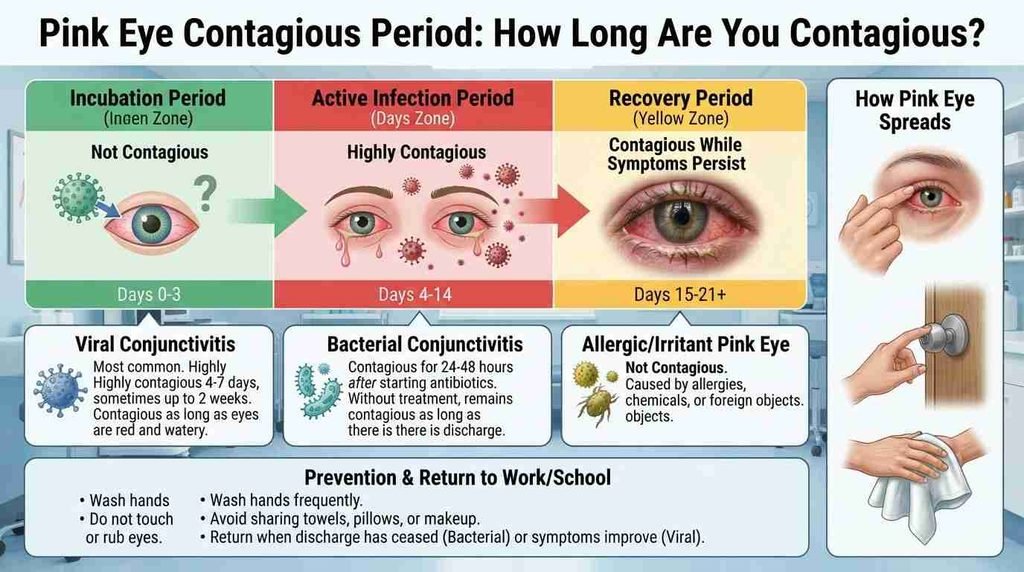
Pink Eye Contagious Period: How Long Are You Contagious?
This is one of the most searched questions about pink eye. The answer depends on the type. Allergic pink eye is never contagious, which is a key point in pink eye vs allergies.
Viral and bacterial pink eye spread through contact. Touching infected discharge, then touching your eyes, is the usual route. Shared towels, pillowcases, and eye makeup can spread it too.
Here is the contagious period by type.
| Type | Contagious? | How Long | Notes |
|---|---|---|---|
| Viral | Yes | As long as symptoms last, such as tearing and discharge; often 1 to 2 weeks, sometimes longer | Antibiotics do not help |
| Bacterial | Yes | While symptoms last, or until antibiotic treatment is started | Many schools use 24 hours of treatment as a return guide |
| Allergic | No | Not applicable | No need to stay home because of contagion |
| Irritant or chemical | No | Not applicable | Rinse and avoid the irritant |
Rules vary by school, daycare, and workplace. Always check your local policy. Ask your doctor when it is safe to return.
A helpful general guide is this. If the eye is still red with discharge, treat it as contagious. When the eye is white, dry, and comfortable, the risk drops a lot. Doctors note that some viruses may still spread for a short while as symptoms fade.
How To Stop Pink Eye From Spreading
Wash your hands often with soap and water. Do this before and after touching your eyes or applying drops. Avoid touching your face.
Use a clean towel each time and do not share it. Change pillowcases daily while symptoms last. Wash used linens in hot water.
Throw away eye makeup used during the infection. Do not share makeup, drops, or contact lenses. Clean glasses regularly.
Wear glasses instead of contacts until your doctor says it is safe. Replace your lens case. Ask about whether to discard the lenses you were wearing.
Pink Eye vs Allergies in Toddler: What Parents Should Know
Parents often search for pink eye vs allergies toddler advice at night when a child wakes with red, crusty eyes. It is scary, and toddlers cannot explain how they feel. Here is how to think it through.
Toddlers get pink eye often because they touch their faces and share toys. Daycare spreads germs fast. Allergies can also affect young children, especially in pollen season.
Watch the whole child, not only the eyes. Does your toddler have a cold, fever, or ear pulling? Or are they sneezing, itching, and rubbing both eyes?
Clues for Pink Eye vs Allergies in Toddler Cases
For pink eye vs allergies in toddler cases, here are the main clues. Sticky yellow or green discharge and crusted lashes suggest infection. Rubbing and a runny nose suggest allergy.
A child with an infection may be fussy and may have a fever. A child with allergies is usually otherwise well, but itchy. Both can have puffy eyelids.
Here is a quick toddler guide.
| What You See | May Suggest | What To Do |
|---|---|---|
| Thick yellow or green discharge, crusting | Bacterial pink eye | Call your pediatrician |
| Watery eyes with cold symptoms | Viral pink eye | Comfort care, call if worsening |
| Itchy, rubbing both eyes, sneezing | Allergies | Avoid triggers, ask about safe drops |
| Fever, eyelid swelling, or pain | Possible deeper infection | See a doctor promptly |
| Newborn with red or sticky eyes | Needs urgent care | Seek medical care right away |
Do not give leftover drops or adult medicine to a child. Doses and drops are not the same for children. Always check with a pediatrician or pharmacist.
Daycare and School Return
Ask the daycare or school about its pink eye rule. Some require a doctor’s note. Some use 24 hours after starting antibiotic drops for bacterial cases.
Allergic eyes do not need time off for contagion. A note from your doctor can help explain this. It prevents confusion.
Comfort Tips for Toddlers
Use a clean, damp cloth to wipe crusts from the inside corner outward. Use a fresh cloth each time. Wash hands after.
Trim your child’s nails if they keep scratching. Distract them with a book or a show. Keep them cool and rested.
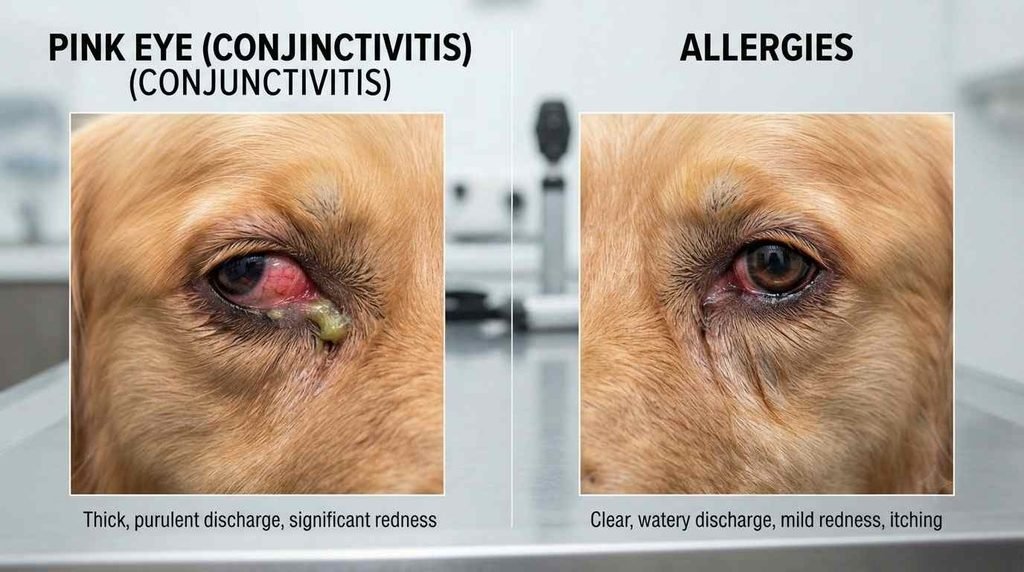
Pink Eye vs Allergies in Dogs: A Note for Pet Owners
Pet owners also look up pink eye vs allergies in dogs. Dogs can get red, watery, itchy eyes too. And as with people, there are many possible causes.
Dogs can have conjunctivitis from infection, allergies, irritants like dust or smoke, dry eye, or something stuck in the eye. They can also have other eye problems that look similar. That is why a vet check matters.
Signs to watch include redness, squinting, pawing at the eye, and discharge. Allergic dogs often itch elsewhere too. They may lick their paws, scratch their skin, or have ear problems.
Do not use human eye drops on your dog unless your vet says so. Some products can harm dogs. Never use leftover prescription drops from another pet or person.
Call the vet quickly if your dog squints, has a cloudy eye, green discharge, or seems in pain. Eye problems in dogs can get worse fast. Early care protects sight.
For pink eye vs allergies in dogs, the safe approach is simple. Keep the area clean, stop your dog from rubbing, and book a vet visit. Wash your hands after cleaning around the eyes, and ask your vet if any other precautions are needed at home.
Home Relief Methods for Red, Itchy Eyes
Home care can ease discomfort while you wait or while the condition clears. It works best for mild cases. It does not replace medical advice.
Cool Compress
A cool, clean washcloth over closed eyes can soothe itching and swelling. Use it for a few minutes at a time. It is a favorite for allergies.
Use a fresh cloth each time if you suspect infection. Do not reuse it on the other eye. Wash it in hot water.
Warm Compress
A warm, clean cloth can loosen crusted discharge. It may feel comforting with infection. Make sure it is comfortably warm, never hot.
Wipe gently from the inner corner outward. Use a new cloth for each wipe. Wash your hands before and after.
Artificial Tears
Lubricating drops, often called artificial tears, can ease dryness and irritation. They can also rinse allergens from the eye surface. They are available without a prescription.
Choose preservative-free drops if you use them often. Keep the bottle tip clean and do not touch it to your eye. Do not share bottles.
Avoid Triggers for Allergies
Keep windows closed on high pollen days. Shower and change clothes after being outdoors. Wash bedding often in hot water.
Use dust-proof covers if dust mites bother you. Keep pets out of the bedroom if dander is the trigger. A clean home helps a lot.
Stop Wearing Contact Lenses
Switch to glasses until your eyes are fully better. Lenses can trap germs and allergens. They can worsen irritation.
Ask your doctor before going back to lenses. Replace your lens case. Throw away lenses worn during an infection if advised.
Do Not Rub, and Skip Risky Home Remedies
Rubbing makes things worse. Skip unproven remedies like putting milk, tea bags, or herbal mixes in the eye. They can bring in germs.
Stick to clean water, clean cloths, and doctor-approved drops. If you feel unsure, ask a pharmacist. They can guide you safely.
When To Use Drops for Pink Eye vs Allergies
Drops can help a lot, but only if you choose the right kind. Using the wrong drop can waste time and sometimes cause harm. The key point in pink eye vs allergies is that each needs different drops.
Here is a simple guide.
| Situation | Drops That May Help | Important Notes |
|---|---|---|
| Allergies | Antihistamine eye drops, artificial tears | Ask a pharmacist about the right product and age limits |
| Viral pink eye | Artificial tears, cold compresses | Antibiotic drops do not work on viruses |
| Bacterial pink eye | Prescription antibiotic drops or ointment, if a doctor advises | Mild cases may clear on their own; follow the doctor’s plan |
| General irritation or dryness | Artificial tears | Use preservative-free if used often |
| Contact lens wearer with red eye | See a doctor before using drops | Some infections need urgent treatment |
Antibiotic eye drops are prescription medicine. They only help bacterial infections. They do nothing for viruses or allergies.
Your doctor may skip antibiotics for a mild bacterial case. Many clear on their own in a few days. In other cases, antibiotics shorten the illness and reduce spread.
Use antihistamine drops only for allergy symptoms. They can relieve itching. Follow the label and stop if your eyes feel worse.
Be careful with “get the red out” drops. They shrink blood vessels and can cause rebound redness if overused. They are not a cure for infection or allergies.
Never use steroid drops without a doctor’s guidance. They can make some infections much worse. Do not use old or leftover drops.
How To Apply Drops Safely
Wash your hands first. Tilt your head back and gently pull the lower lid down. Place one drop in the pocket without touching the tip to your eye.
Close your eyes for a minute. Press lightly near the inner corner. Wait about five minutes before another drop.
Do not share drops with anyone. Use the full course if antibiotics are prescribed, unless your doctor says otherwise. Throw away bottles as the label directs.