



Eye twitching is one of the most common little annoyances people notice in daily life. It can feel like a soft flutter, a quick tug, or a repeating pulse in your eyelid. Most of the time, it is harmless and fades on its own.
Still, it is natural to ask why is my eye twitching when it starts without warning. In this guide, you will learn the most common eye twitching causes, from stress and poor sleep to too much caffeine and screen time. You will also see what people mean by left eye twitching meaning and right eye twitching meaning, and what science actually says about it.
We also cover eye twitching for days, simple ways to reduce stress and fatigue, and the warning signs that mean you should see a doctor. Every section is written in plain language, with short paragraphs and easy tables. Use it as a practical, trustworthy starting point, not as a replacement for medical care.
=====================================================
Eye Twitching: Causes, Meaning, and When to Worry
What Is Eye Twitching?
Eye twitching is a small, involuntary movement of the eyelid muscles. You do not choose it, and you cannot easily stop it. It often feels bigger to you than it looks to others.
Doctors call the most common type “myokymia.” The word comes from Greek and means “muscle wave.” It usually affects one eyelid, most often the lower one.
Almost everyone has eye twitching at some point. It can last a few seconds or a few minutes. It may come and go over several days.
People often say “my eye is twitching” when the eyelid is the part that moves. The eyeball itself is usually still. That small detail matters when you describe it to a doctor.
Why This Guide Is Trustworthy (E-E-A-T and YMYL)
Health topics fall under “Your Money or Your Life” (YMYL) content. That means accuracy matters more than speed. So this guide follows experience, expertise, authoritativeness, and trust.
The facts here match guidance from respected medical sources. These include Healthline: Eye Twitching and Cleveland Clinic: Eyelid Twitching. You can read them to double-check anything you see below.
Real-life experience also matters. Many readers share their stories on Quora: Eye Twitching. Those stories help you feel less alone, but they are not medical advice.
Types of Eye Twitching
Not every twitch is the same. Knowing the type helps you understand how serious it may be. The table below keeps it simple.
| Type | What It Feels Like | How Common | Usually Serious? |
|---|---|---|---|
| Myokymia (eyelid twitch) | Small flutter in one eyelid | Very common | No, usually harmless |
| Benign essential blepharospasm | Frequent blinking, eyes squeezing shut | Uncommon | Can affect daily life |
| Hemifacial spasm | Twitching spreads to one side of the face | Rare | Needs a doctor’s check |
Most people only ever have the first type. It is linked to everyday habits. It fades once those habits improve.
The other two types are less common. They tend to last longer and get stronger over time. A doctor can tell them apart with a simple exam.
Why Is My Eye Twitching? Common Causes
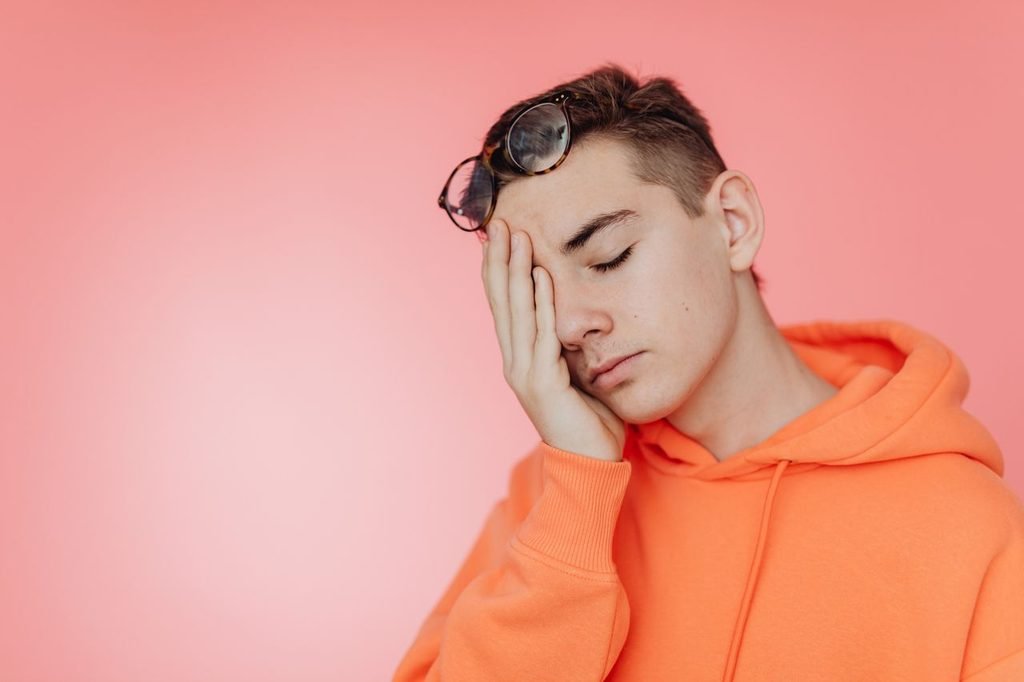
Many people search why is my eye twitching after a rough week. That is a smart clue. Lifestyle triggers are behind most cases.
Eye twitching causes are often small things that add up. One late night may not do it. Stress, poor sleep, and caffeine together often do.
Here are the most common triggers.
| Trigger | How It Can Cause a Twitch | Easy Fix |
|---|---|---|
| Stress | Tense nerves and muscles around the eye | Short breaks, deep breathing |
| Lack of sleep | Tired eye muscles misfire | Aim for 7 to 9 hours |
| Too much caffeine | Overstimulates nerves | Cut back slowly |
| Screen strain | Tired, overworked eye muscles | The 20-20-20 rule |
| Dry or irritated eyes | Surface irritation triggers spasms | Lubricating drops |
| Alcohol or nicotine | Affects the nervous system | Reduce or avoid |
| Bright light or wind | Irritates the eye surface | Sunglasses, protective eyewear |
These triggers appear again and again in medical guidance. They are listed by trusted clinics as the main drivers of the most common type. The good news is that you can change most of them.
Eye Twitching Causes: A Closer Look
Stress and Anxiety
Stress puts your body on high alert. Muscles stay tight, even small ones around the eyes. That tension can set off a twitch.
Many people notice a twitch during exams, deadlines, or family worries. It often settles when the stressful period ends. That pattern is a helpful sign.
Fatigue and Poor Sleep
When you are tired, your nerves fire less smoothly. The eyelid muscle can twitch as a result. It is your body asking for rest.
Shift work, late-night scrolling, and travel all play a part. Even a few short nights can be enough. Catching up on sleep often brings relief.
Too Much Caffeine
Coffee, tea, energy drinks, and some sodas contain caffeine. Caffeine stimulates the nervous system. Too much can make muscles jumpy.
If you notice a twitch after your third cup, take that seriously. Cut back slowly to avoid headaches. Many people see improvement within days.
Eye Strain and Screen Time
Hours on a phone or computer tire your eyes. You also blink less, which dries the surface. Both can trigger a twitch.
Poor lighting and glare make it worse. So does an outdated glasses prescription. An eye exam can rule that out.
Dry Eyes and Allergies
Dry or itchy eyes make you rub them. Rubbing irritates the eyelid even more. That can start a cycle of twitching.
Allergies add to the problem. Histamine and eye rubbing both play a role. Treating the allergy often calms the twitch.
Alcohol, Nicotine, and Diet
Alcohol and nicotine both affect the nervous system. They can also disturb your sleep. That makes a twitch more likely.
Some people link twitches to low magnesium or other nutrient gaps. The evidence is limited and mixed. A balanced diet is a safe, sensible step.
Medications
Some medicines can cause eyelid twitching as a side effect. This includes certain drugs used in Parkinson’s care. Never stop a prescribed medicine on your own.
If you suspect a medicine, speak with your doctor. They may adjust the dose or switch the drug. Bring a full list of what you take.
Left Eye Twitching
Left eye twitching is very common. It has the same causes as twitching in the right eye. There is no special medical reason for the left side.
The left eyelid may twitch for a few seconds. It may also repeat a few times in one day. Both patterns are usually harmless.
Often, one eye twitches more because of habit. For example, you may rest that side on your hand. You may also strain that eye more on screens.
Left Eye Twitching Meaning
Many cultures give a meaning to left eye twitching. Some folk beliefs say it signals good news. Others say it warns of bad luck.
These ideas are traditions, not science. The left eye twitching meaning in folklore changes by country and community. There is no proof that an eyelid twitch predicts the future.
The real left eye twitching meaning is much simpler. Your eyelid muscle is tired, stressed, or irritated. Rest and healthy habits are the best response.
Left Eye Twitching for Female
Searches for left eye twitching for female are very common. Many people believe the side or gender changes the meaning. Medically, it does not.
Women may notice more twitching during certain life stages. Hormone shifts, poor sleep, and stress can play a part. Pregnancy and the postpartum period are examples.
Busy routines also matter. Juggling work, family, and sleep loss can trigger a twitch. Self-care is not a luxury here; it is treatment.
Nothing about the left side is special for women. The same tips apply to everyone. If it lasts, see a doctor.
Right Eye Twitching
Right eye twitching works the same way as the left. The eyelid muscle fires on its own for a short time. Triggers include stress, tiredness, caffeine, and screens.
Many people feel worried when it happens on one side only. That is normal, because myokymia usually affects one eye. One-sided twitching alone is not a red flag.
Watch the pattern over a week. If it fades, you likely fixed the trigger. If it stays or spreads, take note and plan a visit.
Right Eye Twitching Meaning
Folklore also gives right eye twitching meaning in many traditions. In some, it is a sign of good luck or a visitor. In others, it differs by gender or time of day.
These beliefs are fun, but they are not medical facts. The right eye twitching meaning from a health view is practical. Your body is reacting to strain.
Compare the two sides. Folk beliefs about the left eye and the right eye differ by culture. The medical reality is identical for both.
Here is the key point. Tradition changes from place to place. The medicine stays the same.
Why Is My Right Eye Twitching?
If you keep asking why is my right eye twitching, start with a checklist. Ask yourself a few simple questions. Most answers come from daily habits.
Did you sleep poorly this week? Did you drink more coffee than usual? Have you been on screens for long hours?
Also think about stress, allergies, and dry air. Air conditioning and heaters dry the eyes quickly. Wind and smoke can irritate them too.
If none of these fit, take a closer look at the timeline. A twitch that lasts weeks needs a check-up. Your doctor can look for less common causes.
Eye Twitching for Days: Is It Normal?
Eye twitching for days can feel unsettling. It may come in waves and repeat many times. Still, it is often tied to ongoing stress or sleep loss.
A twitch that lasts several days is not always serious. Habits that continue will keep the trigger alive. Fix the trigger, and the twitch usually fades.
Medical sources suggest seeing a doctor if it continues for more than a few weeks. Some say to check in after about one week if it keeps getting worse. Use your comfort level as a guide.
Here is a simple timeline to help.
| How Long It Lasts | What It Usually Means | What To Do |
|---|---|---|
| Seconds to minutes | Normal muscle flutter | Ignore it, blink gently |
| A few days | Stress, fatigue, caffeine, or strain | Rest, hydrate, cut caffeine |
| One to two weeks | A trigger you have not fixed yet | Review habits, try eye drops |
| More than a few weeks | May need a medical check | See an eye doctor |
| Any time with other symptoms | Possible underlying issue | Get medical advice soon |
Notice that time alone is not the full story. Other symptoms matter just as much. We cover those warning signs below.
Eye Twitching Meaning: What Does It Really Mean?
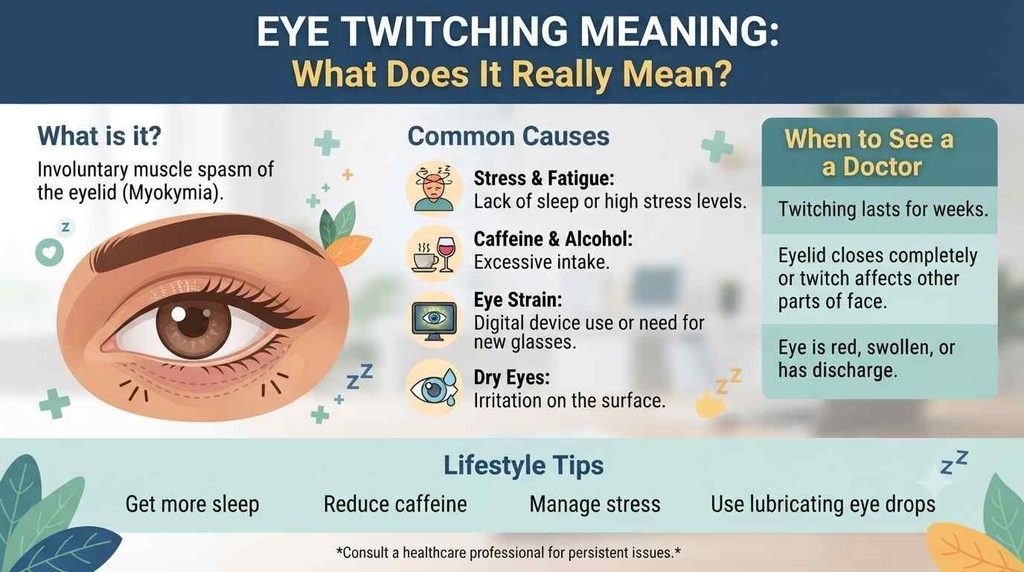
The eye twitching meaning depends on who you ask. A folk storyteller gives one answer. A doctor gives another.
Medically, eye twitching meaning is usually “your eyelid is overworked.” It is a small signal, not a prediction. Most cases need only lifestyle changes.
Rarely, it points to a nerve or brain condition. In those cases, other symptoms almost always appear too. That is why the warning signs matter.
Rare Causes of Eyelid Spasms
Benign Essential Blepharospasm
This condition starts with more blinking in both eyes. Over time, the eyelids may squeeze shut. Light sensitivity and dry eyes often come with it.
Doctors do not know the exact cause. It is a movement disorder of the muscles around the eyes. Treatment is available and often helpful.
Hemifacial Spasm
This one affects one side of the face. It may start around the eye and then spread. A blood vessel pressing on a facial nerve is a common cause.
It is rare, but it needs a proper check. Brain imaging is sometimes used to rule out other issues. Treatments include botulinum toxin injections and, in some cases, surgery.
Nervous System Conditions
Very rarely, eye twitching can be one sign of a brain or nervous system disorder. In these cases, it is almost always joined by other symptoms. Examples include weakness, drooping, or facial changes.
Please do not panic over a simple twitch. Most people with a twitch do not have any of these. Just know the red flags and act when they show up.
Reducing Stress and Fatigue to Calm a Twitching Eyelid
The best plan for common eye twitching is to treat the cause. For most people, that means lowering stress and fighting fatigue. Small steps work better than big plans you cannot keep.
Build a Better Sleep Routine
Sleep is the first thing to fix. Aim for seven to nine hours each night. Go to bed and wake up at the same time.
Dim the lights an hour before bed. Keep phones away from your pillow. A cool, dark room helps your body relax.
Manage Stress Daily
You do not need a perfect routine. Try five minutes of slow breathing. Take a short walk after lunch.
Write down what is on your mind. Talk to a friend or family member. If stress feels heavy, consider speaking with a counselor.
Cut Back on Caffeine
Reduce caffeine a little each day. A sudden stop can cause headaches. Swap one coffee for water or herbal tea.
Avoid energy drinks, especially late in the day. Track your intake for a week. You may be surprised by the total.
Rest Your Eyes From Screens
Use the 20-20-20 rule. Every 20 minutes, look at something 20 feet away for 20 seconds. Blink often to keep your eyes moist.
Adjust screen brightness to match the room. Use a larger font if you squint. Keep the screen slightly below eye level.
Pick two habits to start. Add more once they feel easy. Consistency beats perfection.
A Simple 7-Day Reset Plan
A short reset can break the twitch cycle. You do not need to change your whole life. Focus on a few steps for one week.
Day one and two: fix your sleep. Set a bedtime and keep it. Skip screens for the last hour of the day.
Day three and four: cut caffeine in half. Drink more water. Add a ten-minute walk outside.
Day five and six: add screen breaks. Use the 20-20-20 rule every hour at least. Use lubricating drops if your eyes feel dry.
Day seven: review how you feel. Is the twitch less frequent or weaker? If yes, keep going with the same plan.
If nothing changes after two weeks, do not keep guessing. A doctor can look deeper. That is the right next step.
Set Up an Eye-Friendly Workspace
Your desk setup can quietly strain your eyes. Small changes make a big difference. Start with the screen.
Place your monitor about an arm’s length away. The top of the screen should sit at or just below eye level. Tilt it slightly back to reduce glare.
Light matters just as much. Avoid a bright window directly behind or in front of you. Use soft, even lighting instead of harsh overhead bulbs.
Check your glasses too. An old prescription forces your eyes to work harder. Book an eye exam once a year or as advised.
Sleep Hygiene Checklist
Good sleep is a skill you can practice. These simple rules help most people. Try them for two weeks.
- Keep a fixed wake-up time, even on weekends
- Avoid caffeine after early afternoon
- Keep the bedroom cool, dark, and quiet
- Stop heavy meals close to bedtime
- Limit alcohol, since it breaks up deep sleep
- Put away phones and laptops before bed
- Get daylight in the morning to set your body clock
If you still cannot sleep well, talk to a doctor. Sleep problems have many causes. Treating them helps your whole body.
Stress Relief Techniques That Work
Stress relief does not need special tools. It needs a few minutes and some practice. Pick what fits your day.
Slow Breathing
Breathe in slowly for four seconds. Hold for a moment. Breathe out gently for six seconds.
Repeat for five minutes. Your heart rate slows down. Your muscles loosen up.
Progressive Muscle Relaxation
Tense one muscle group for five seconds. Then let it go completely. Move from your feet up to your face.
Pay special attention to your jaw and forehead. Many people hold tension there without noticing. Relaxing it can ease the eyes too.
Movement and Fresh Air
A brisk walk lowers stress hormones. Stretching helps neck and shoulder tension. Both support better sleep.
Even ten minutes counts. Do it daily if you can. Regular movement is a strong habit for eye and body health.
Time Off and Connection
Take real breaks from work. Spend time with people who lift you up. Laughter is a natural stress reducer.
If worry or low mood feels constant, reach out for help. A counselor or doctor can support you. You do not have to handle it alone.
Nutrition and Hydration for Healthy Eyes
You cannot eat your way out of every twitch. Still, good nutrition supports nerves and muscles. It also supports your overall energy.
Drink water regularly through the day. Mild dehydration can leave you tired and dry. Keep a bottle at your desk.
Eat a variety of colorful fruits and vegetables. Include leafy greens, nuts, seeds, beans, and fish. These foods offer vitamins and minerals your body uses every day.
Limit sugary drinks and highly processed snacks. They can cause energy crashes. Steady meals keep your energy steady too.
Be careful with supplements. Some can interact with medicines. Ask a healthcare professional before starting any.
Twitching Eyelids in Children and Older Adults
Children can get eyelid twitches too. Common triggers include tiredness, screen time, and stress at school. Most cases fade as routines improve.
Encourage regular sleep and outdoor play. Limit long hours on tablets and phones. Have a doctor check if the twitching is frequent or comes with other signs.
Older adults may notice eyelid twitches more often. Dry eyes and medicine side effects are common reasons. A regular eye exam is a good safeguard.
Any sudden change at any age deserves attention. Weakness, drooping, or vision changes should be checked quickly. Trust your instincts and ask a professional.
Myths and Facts About Twitching Eyelids
Many myths float around online. Here are a few worth clearing up. Knowing the facts reduces worry.
Myth: A twitching eyelid means something terrible is coming. Fact: It is usually a sign of tiredness or stress. No evidence shows that it predicts events.
Myth: Only one eye can twitch, so it must be dangerous. Fact: Myokymia commonly affects just one eyelid. That alone is not a warning sign.
Myth: It always means a brain problem. Fact: That is very rare, and other symptoms nearly always appear. Most people are simply overtired.
Myth: You must take supplements to stop it. Fact: Lifestyle habits matter most. Supplements are not a guaranteed fix.
Allergies, Dry Eye, and Contact Lenses
Irritated eyes are a quiet trigger for many people. Allergies, dry air, and long lens wear all play a part. Treating the surface often calms the muscle.
For allergies, avoid rubbing your eyes. Rinse your face after being outdoors in high pollen season. Ask a pharmacist about safe allergy drops or tablets.
For dry eyes, blink fully and often. Use a humidifier in dry rooms. Keep air conditioning vents pointed away from your face.
For contact lenses, follow your eye doctor’s wear schedule. Never sleep in lenses unless they are approved for it. Switch to glasses for a few days if your eyes feel sore.
Always wash your hands before touching your eyes. Replace lens cases regularly. Good hygiene prevents infections that can irritate the lids.
Tracking Your Symptoms
A small symptom diary can be very useful. It helps you spot patterns you would otherwise miss. It also helps your doctor give better advice.
Write down the date and time of each twitch. Note which eyelid it affects and how long it lasts. Add your sleep hours, caffeine, stress level, and screen time.
After a week or two, look for links. You may see that twitches follow late nights or extra coffee. That insight tells you exactly what to change first.
Bring the diary to your appointment if you go. Doctors love clear, simple facts. It saves time and leads to better care.
Questions To Ask Your Doctor
A visit goes better with a few prepared questions. Write them down before you go. Here are some good ones.
- What type of twitching do I have?
- Could a medicine I take be causing it?
- Do I need an eye exam or other tests?
- Which habits should I change first?
- What symptoms mean I should come back sooner?
Do not be shy about asking. Clear answers reduce worry. You are your own best health advocate.
Home Remedies for a Twitching Eyelid
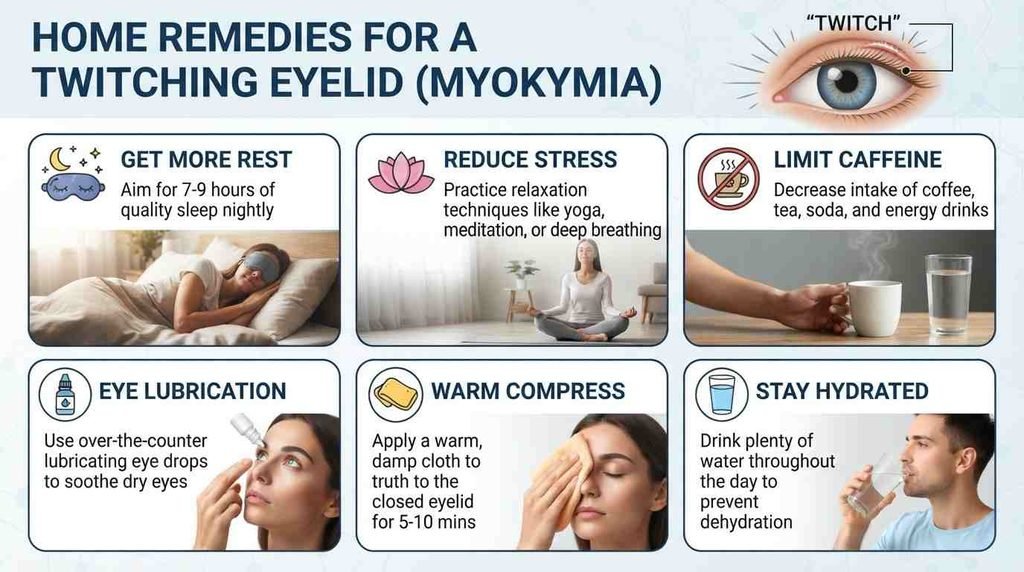
Simple home care helps many people. These tips are gentle and low risk. They work best alongside the habits above.
Warm Compress
Warm a clean cloth with comfortable water. Rest it gently over your closed eyelid. Hold for a few minutes.
The warmth relaxes the muscle. It also helps if your eyes are dry. Never use a compress that feels too hot.
Gentle Eyelid Massage
Use clean hands. Lightly press and circle around the eyelid. Stop if it feels painful.
Do not rub your eye hard. Rubbing can make irritation worse. Gentle is always better.
Lubricating Eye Drops
Artificial tears can calm dry, irritated eyes. Choose preservative-free drops if you use them often. Follow the label directions.
If your eyes stay red or sore, stop and check with a doctor. Do not share drops with others. Replace the bottle as directed.
Eat and Drink Well
Drink enough water through the day. Eat balanced meals with fruits, vegetables, and whole grains. Foods with magnesium, such as nuts, seeds, and leafy greens, are a healthy choice.
Do not start high-dose supplements without advice. More is not always better. Ask your doctor or pharmacist first.
When to See a Doctor About Eye Twitching
Most eye twitching is harmless. But some signs need a professional. It is wise to know them.
See a doctor or eye specialist if:
- The twitching does not go away within a few weeks
- Your eyelid closes completely with each twitch
- You have trouble opening the eye
- The twitching spreads to other parts of your face
- The area feels weak or stiff
- Your eye is red, swollen, or has discharge
- Your eyelid is drooping
- Your vision changes
If any of these appear suddenly, get urgent medical care. Do not wait it out. Sudden facial weakness, trouble speaking, or severe headache need emergency help.
Always trust your instincts. If something feels wrong, ask for help. It is better to check than to worry.
What To Expect at the Doctor’s Visit
Your doctor will ask when the twitching started. They will ask how often it happens. They will also ask about sleep, stress, caffeine, and medicines.
An eye exam checks for dryness, irritation, and vision problems. Sometimes a neurological exam follows. Imaging is used only when needed.
Most visits end with simple advice. You may leave with a plan for sleep, stress, and eye care. That alone often solves the problem.
Medical Treatments for Persistent Twitching
Most people never need treatment beyond habits. When twitching is persistent, doctors have options. The right choice depends on the cause.
| Treatment | Used For | Notes |
|---|---|---|
| Lifestyle changes | Common myokymia | First step, safe, effective for most |
| Lubricating drops | Dry eye related twitching | Easy and low risk |
| Botulinum toxin (Botox) injections | Blepharospasm, hemifacial spasm | Wears off, repeat doses needed |
| Medication changes | Drug-related twitching | Only under a doctor’s care |
| Tinted lenses | Light sensitive cases | Can reduce triggers |
| Surgery | Severe hemifacial spasm | Rare, for nerve pressure |
Botox may sound strange for a twitch. Small, careful doses relax the overactive muscle. It can bring real relief for the right patient.
Always discuss risks and benefits first. Each treatment can have side effects. Your doctor will guide you.
How To Prevent Eyelid Twitching
Prevention follows the same path as treatment. Healthy habits lower your risk. They also help your whole body.
Keep a steady sleep schedule. Limit caffeine and alcohol. Take regular breaks from screens.
Manage stress in small, steady ways. Keep your eyes moist and protected. Get regular eye exams, especially if you wear glasses.
Wear sunglasses in bright light and wind. Use a humidifier if the air is dry. Small changes protect your eyes day after day.
Frequently Asked Questions
Is a twitching eyelid serious?
Usually not. Most eye twitching is linked to stress, fatigue, or caffeine. See a doctor if it lasts or comes with other symptoms.
How long does a twitch last?
It can last seconds, minutes, or a few days. Some people have eye twitching for days or even weeks. Persistent cases deserve a check-up.
Can stress cause it?
Yes, stress is one of the top triggers. It tightens muscles and disturbs sleep. Managing stress often stops the twitch.
Does the left or right side matter?
No, not medically. Left eye twitching and right eye twitching share the same causes. Folk meanings are traditions, not science.
Can lack of sleep cause it?
Yes, tiredness is a very common cause. Rest allows your eye muscles to recover. Aim for a regular sleep routine.
Can I stop it right away?
You may not stop it instantly. A warm compress, rest, and eye drops can help. Fixing the trigger brings the best long-term relief.
Key Takeaways
- Eye twitching is common and usually harmless
- Stress, poor sleep, caffeine, and screen strain are the top eye twitching causes
- Left and right sides share the same medical causes
- Folk meanings are traditions, not proven facts
- Rest, hydration, and breaks from screens help most people
- See a doctor if it lasts weeks or comes with other symptoms
Final Thoughts
Eye twitching can feel strange and even scary. But in most cases, it is a small message from a tired body. Listen to it, adjust your habits, and give yourself time.
If you keep asking why is my eye twitching, use this guide as your checklist. Track your sleep, caffeine, stress, and screen time. Then act on what you find.
And remember, your doctor is always the best source for personal advice. If your twitch is long-lasting or comes with warning signs, do not wait. Take care of your eyes, and they will take care of you.
About This Guide
This guide was written to be clear, calm, and useful. It uses plain language so anyone can follow it. It avoids scare tactics and miracle claims.
The medical points come from well-known health sources. Where evidence is limited, the guide says so. Where something is only folklore, it says that too.
Health information changes over time. Guidelines are updated as new research appears. Check with your doctor for the latest advice that fits you.
You are the expert on your own body. Notice what changes, and what helps. Combine that experience with professional guidance for the best results.
If you found this guide helpful, share it with someone who is worried about a twitchy eyelid. A little clear information can ease a lot of stress. Small, steady habits protect your eyes for years.
Medical Disclaimer
This article is for general education only. It is not medical advice, diagnosis, or treatment. Always speak with a qualified healthcare professional about your health.