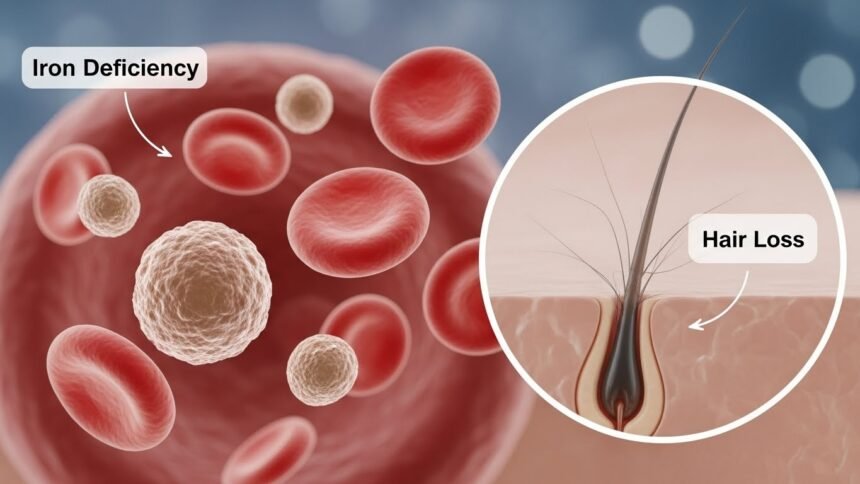
Hair loss is a surprisingly common concern that affects millions of people, yet it remains a deeply personal and often distressing experience. While genetics and hormonal changes are frequently cited culprits, nutrition plays a far more critical role than many realise. Specifically, iron deficiency hair loss is a prevalent issue, particularly among women of childbearing age.
When your body lacks sufficient iron, it enters survival mode, diverting oxygen to vital organs like the heart and lungs while deprioritising non-essential functions—including hair growth. Recognising the connection between your iron levels and the health of your hair is the first step toward recovery.
In this article, we will explore the science behind iron deficiency anaemia, how it disrupts the hair growth cycle, and the practical steps you can take to restore both your health and your hair volume.
Overview: The Iron-Hair Connection
To understand why iron deficiency leads to hair shedding, we must look at the biology of the hair follicle. Hair cells are some of the fastest-dividing cells in the body. However, they are also considered non-essential tissue by the body’s biological triage system.
Iron is an essential component of haemoglobin, a protein in red blood cells that carries oxygen from the lungs to the rest of the body. When iron levels are low, your body cannot produce enough haemoglobin. Consequently, oxygen delivery to the scalp is restricted.
Without adequate oxygen, hair follicles cannot sustain the rapid cell division required for growth. This forces hair out of the growing phase (anagen) and into the resting phase (telogen) prematurely. This condition is medically known as telogen effluvium.
Unlike genetic male or female pattern baldness, which usually presents as a receding hairline or a specific bald patch, iron deficiency hair loss typically manifests as diffuse thinning across the entire scalp. You may notice more hair in your shower drain, on your pillow, or in your hairbrush.
The Role of Ferritin
It is not just about the iron circulating in your blood; it is about the iron you have in storage. Ferritin is a blood protein that contains iron. It helps your doctor understand how much iron your body has stored.
Research suggests that for optimal hair growth, ferritin levels need to be significantly higher than the bare minimum required to prevent anaemia. Even if your blood count (haemoglobin) is normal, low ferritin stores can still trigger hair shedding.
Causes and Risk Factors
Iron deficiency does not happen overnight. It is a gradual process that occurs when the intake of iron does not match the body’s daily losses or demands. Several factors contribute to this imbalance.
1. Inadequate Dietary Intake
The body cannot produce iron; it must be absorbed from food. A diet lacking in iron-rich foods is a primary cause. There are two types of dietary iron:
- Heme iron: Found in animal products (meat, poultry, fish) and is easily absorbed.
- Non-heme iron: Found in plant foods (spinach, beans, lentils) and is harder for the body to absorb.
Vegetarians and vegans are at a higher risk if they do not carefully plan their diets to maximise non-heme iron absorption.
2. Blood Loss
For many women, menstruation is the leading cause of iron deficiency. Heavy menstrual bleeding (menorrhagia) depletes iron stores faster than diet can replenish them. Additionally, chronic blood loss from conditions like ulcers or piles can lead to deficiency.
3. Malabsorption Issues
Even if you eat plenty of iron, your body might not be absorbing it. Digestive disorders such as Coeliac disease or inflammatory bowel disease (Crohn’s, ulcerative colitis) can damage the lining of the gut, impairing nutrient absorption. According to the NHS, if you have been diagnosed with a malabsorption condition, you should monitor your iron levels closely.
Recognising the Signs
Hair loss is often a late-stage symptom of iron deficiency. By the time you notice significant thinning, your body has likely been low on iron for some time. It is vital to look for other accompanying symptoms.
Common signs of iron deficiency anaemia include:
- Extreme fatigue and weakness: Feeling tired despite getting enough sleep.
- Pale skin: Especially noticeable on the inner lower eyelids.
- Shortness of breath: Particularly during exercise or climbing stairs.
- Cold hands and feet: Poor circulation due to low oxygen.
- Brittle nails: Nails that chip easily or have a spoon-shaped depression (koilonychia).
- Cravings for non-food items: A condition called pica, involving cravings for ice, dirt, or starch.
If you are experiencing hair thinning alongside any of these symptoms, it is crucial to consult a GP rather than simply buying over-the-counter hair supplements.
Diagnosis: What to Ask Your GP
Self-diagnosing iron deficiency can be dangerous, as too much iron is toxic. You need a simple blood test. When visiting your GP, ask for a Full Blood Count (FBC) and a Ferritin test.
According to the Cleveland Clinic, standard lab ranges for ferritin can vary, but many dermatologists believe that ferritin levels below 30 ng/mL are strongly associated with hair loss. For regrowth to occur, some experts recommend aiming for levels closer to 70 ng/mL or higher, though individual needs vary.
Treatment and Management
Treating iron deficiency hair loss is a two-pronged approach: correcting the underlying deficiency and nurturing the hair follicles.
1. Iron Supplementation
If your blood tests confirm a deficiency, your GP will likely prescribe ferrous fumarate, ferrous sulphate, or ferrous gluconate.
- Dosage: Follow your doctor’s instructions precisely.
- Absorption: Take iron supplements on an empty stomach if tolerated.
- Enhancement: Take your supplement with a source of Vitamin C (like a glass of orange juice), which significantly boosts absorption.
- Avoid: Do not take iron with tea, coffee, milk, or antacids, as these inhibit absorption.
Note: Iron supplements can cause side effects like constipation or black stools. If you struggle with these, speak to your doctor about gentler formulations.
2. Dietary Adjustments
Improving your diet is essential for long-term maintenance. Focus on incorporating high-iron foods into your daily meals.
| Food Source | Type of Iron | Benefits |
|---|---|---|
| Red Meat | Heme | Highest absorption rate; rich in B12. |
| Organ Meats (Liver) | Heme | Extremely nutrient-dense (eat in moderation). |
| Shellfish (Oysters) | Heme | High in zinc, which also supports hair. |
| Spinach & Kale | Non-Heme | Rich in Vitamin C to help absorption. |
| Lentils & Beans | Non-Heme | Great source of protein and fibre. |
| Fortified Cereals | Non-Heme | An easy way to boost daily intake. |
For a comprehensive list of nutrient-dense options, check out this guide on Healthline.
3. Patience with Regrowth
It is important to manage expectations. Hair growth is a slow process. Once iron levels are restored, it may take 3 to 6 months for shedding to stop and for new growth to become visible. According to the British Association of Dermatologists, telogen effluvium is usually reversible, but the recovery timeline requires patience.
Practical Tips for Hair Health
While treating the internal deficiency, you must also be gentle with your external hair care to minimise further loss.
Gentle Styling
Hair that is shedding due to iron deficiency is fragile. Avoid tight hairstyles like high ponytails or braids that pull on the roots (traction alopecia). Minimise the use of heat styling tools like straighteners and curling tongs. If you must use a hairdryer, use a cool or warm setting rather than hot.
Scalp Care
A healthy scalp promotes healthy hair. Ensure you are washing your scalp regularly to remove buildup, but avoid harsh sulphates that strip natural oils. Gentle scalp massage can improve blood circulation, potentially aiding nutrient delivery to the follicles.
Stress Management
Stress can exacerbate hair loss. High cortisol levels can push more hair follicles into the resting phase. Incorporating stress-reduction techniques such as yoga, meditation, or simply walking in nature can support your overall recovery. Support groups like Alopecia UK can also be invaluable for the emotional aspect of hair loss.
Review Other Medications
Ensure that no other medications you are taking are contributing to hair loss. Some blood pressure medications, antidepressants, and even high doses of Vitamin A can trigger shedding. Discuss this with your healthcare provider.
The Bottom Line
Iron deficiency hair loss is a distressing condition, but it is also highly treatable. It is the body’s way of signalling that it needs support. By addressing the root cause—low iron stores—you can reverse the thinning and encourage new growth.
Remember that hair regrowth lags behind iron recovery. You may feel physically better weeks before you see changes in the mirror. Consistency with your diet and supplements is key.
If you suspect your hair loss is due to iron deficiency, do not self-medicate. Visit your GP for a proper blood panel. With the right diagnosis and treatment plan, your hair volume can be restored, and your energy levels will return.
Key Takeaways:
- Hair loss is a common symptom of low ferritin levels.
- Dietary changes alone may not be enough to correct a severe deficiency.
- Always take iron with Vitamin C and avoid caffeine around the time of your dose.
- Patience is required; recovery takes several months.
For more in-depth information on how nutrition impacts your health, refer to authoritative sources like Harvard T.H. Chan School of Public Health or research published by the National Institutes of Health.