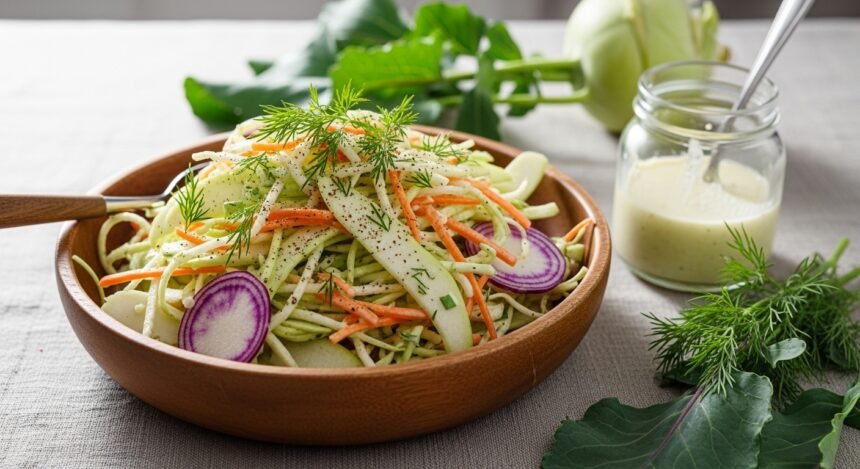
If you are looking to revitalise your salad rotation, it is time to meet the German turnip. Despite its somewhat alien appearance, kohlrabi is a powerhouse of plant-based nutrition that offers a crisp, refreshing alternative to traditional cabbage. A well-crafted kohlrabi slaw is more than just a garnish; it is a vibrant, crunchy addition to any meal that packs a significant nutritional punch.
In this guide, we will explore why this often-overlooked vegetable deserves a spot in your kitchen, how it supports your gut health, and the best way to prepare a kohlrabi slaw that will impress even the most sceptical eaters.
What is Kohlrabi?
Kohlrabi is a member of the cruciferous vegetables family, making it a close relative to broccoli, kale, and cauliflower. According to the NHS, incorporating a variety of vegetables into your diet is essential for long-term wellness. The name kohlrabi translates to “cabbage turnip,” which perfectly describes its mild, slightly sweet flavour and remarkably crunchy texture.
When eaten as raw kohlrabi, the vegetable has a consistency similar to an apple but with a peppery undertone. This makes it the ideal base for a summer side dish that stays crisp even after being dressed, unlike traditional leafy salads that can wilt quickly in the heat.
Nutritional Benefits of Kohlrabi Slaw
Choosing a kohlrabi slaw over a standard potato salad or mayonnaise-heavy coleslaw offers numerous health advantages. It is naturally a low carb recipe choice, making it suitable for those managing their blood sugar levels, a practice often recommended by Diabetes UK.
Here is a breakdown of why this vegetable is a nutritional superstar:
- Immune System Support: One cup of kohlrabi provides more than 100% of your daily requirement for vitamin C, which WebMD notes is vital for collagen production and immune function.
- Digestive Wellness: High in dietary fibre, kohlrabi helps maintain a healthy digestive tract. Experts at The British Nutrition Foundation emphasise that fibre is crucial for preventing constipation and supporting a healthy weight.
- Antioxidant Rich: It contains various phytochemicals that help combat oxidative stress. Research published in ScienceDirect highlights how these compounds can protect cells from damage.
- Heart Health: Like many vegetables in its family, kohlrabi contains potassium, which is essential for maintaining healthy blood pressure levels, as supported by the American Heart Association.
Kohlrabi vs. Traditional Cabbage: A Comparison
While both are healthy, there are distinct differences in their nutritional profiles and culinary uses. The following table illustrates why you might choose kohlrabi for your next slaw.
| Feature | Kohlrabi | Green Cabbage |
|---|---|---|
| Texture | Crisp, water-rich, apple-like | Leafy, slightly chewy |
| Vitamin C Content | Very High (approx. 62mg per 100g) | Moderate (approx. 36mg per 100g) |
| Primary Flavour | Sweet and mild | Earthy and pungent |
| Best Use | Raw slaws and matchstick salads | Fermentation (sauerkraut) and braising |
How to Make the Perfect Kohlrabi Slaw
The secret to a world-class kohlrabi slaw lies in the preparation of the vegetable and the balance of the healthy salad dressing. Follow these steps to ensure a perfect result every time.
1. Prepare the Kohlrabi
Kohlrabi has a thick, fibrous outer skin that must be removed. Use a sharp knife rather than a vegetable peeler to cut away the tough exterior until you reach the pale, crisp interior. For the best crunchy texture, grate the kohlrabi or cut it into thin matchsticks (julienne).
2. The Zesty Dressing
Instead of heavy cream or sugar-laden store-bought dressings, utilise apple cider vinegar. This adds a bright acidity that cuts through the sweetness of the vegetable. Combine it with extra virgin olive oil, a touch of Dijon mustard, and fresh herbs like parsley or coriander. Examine.com suggests that healthy fats like olive oil can actually improve the absorption of fat-soluble vitamins found in the vegetables.
3. Mix and Marinate
Combine your shredded kohlrabi with complementary ingredients like carrots, Granny Smith apples, or radishes. Let the slaw sit for at least 15 minutes before serving. This allows the flavours to meld and the dietary fibre to soften slightly without losing its bite.
Health Impacts: From Gut to Heart
Regularly consuming kohlrabi slaw can have profound effects on your long-term health. The journal Nature has featured various studies on how diverse plant intake positively influences the gut microbiome, which is linked to everything from mood to metabolic health.
Furthermore, the immune system support provided by the high vitamin C and antioxidant content helps the body defend against seasonal illnesses. As noted by the Cleveland Clinic, a diet rich in cruciferous vegetables is a cornerstone of preventative nutrition. Incorporating these into meal prep ideas ensures you have a ready-to-eat source of nutrients throughout a busy work week.
For those focused on heart health, the combination of low sodium, high potassium, and zero cholesterol makes this slaw an ideal dietary choice. The Harvard T.H. Chan School of Public Health consistently ranks cruciferous vegetables as some of the most heart-protective foods available.
Expert Tips for the Best Slaw
- Keep it Fresh: Buy kohlrabi with the leaves still attached if possible; this is a sign of freshness. The leaves themselves are edible and can be cooked like kale or spinach!
- Add Protein: To turn your kohlrabi slaw into a full meal, add grilled chicken, chickpeas, or toasted sunflower seeds.
- Texture Contrast: Add some toasted nuts or seeds just before serving to enhance the crunchy texture.
- Storage: Unlike lettuce salads, this slaw keeps well in the fridge for up to 48 hours, making it one of the best meal prep ideas for a healthy lunch.
For more inspiration on how to use kohlrabi and other unique vegetables, websites like BBC Good Food and EatingWell offer a variety of creative recipes. If you are interested in the specific micronutrient density, Medical News Today provide comprehensive breakdowns of kohlrabi’s chemical composition.
Finally, always remember that while a low carb recipe like this is beneficial, balance is key. Consulting a professional at the Mayo Clinic or a registered dietitian can help you tailor your diet to your specific health needs.
Frequently Asked Questions (FAQs)
Can I eat the skin of the kohlrabi?
While technically edible if the vegetable is very young and small, the skin of most kohlrabi found in supermarkets is extremely tough and woody. It is highly recommended to peel it deeply to reveal the tender flesh inside for the best kohlrabi slaw experience.
Is kohlrabi slaw better than traditional coleslaw?
“Better” is subjective, but from a nutritional standpoint, kohlrabi slaw often contains more vitamin C and fibre than cabbage-based versions. It also maintains its crunchy texture longer once dressed, making it superior for picnics and meal prep ideas.
Is this recipe suitable for a keto diet?
Yes, kohlrabi is relatively low in net carbs compared to other root vegetables. When prepared as a low carb recipe with an oil-and-vinegar-based healthy salad dressing, it is an excellent choice for those following ketogenic or low-glycemic eating programmes.
How long does kohlrabi slaw stay fresh?
Because kohlrabi is a sturdy vegetable, the slaw can remain fresh and crisp in an airtight container in the refrigerator for 2 to 3 days. This makes it a fantastic option for those looking to save time during the week.