Embarking on a new fitness journey can feel daunting, but what if your gym came with fresh air, scenic views, and the gentle lapping of water? Rowboat fitness offers a unique, holistic approach to physical activity, combining the tranquility of nature with an incredibly effective full-body workout. Far from being an elite sport, recreational rowboating is an accessible and rewarding way for beginners to build strength, endurance, and improve overall well-being.
This comprehensive guide is designed for those new to the oar, providing a simple yet structured plan to build your rowboat fitness routine from the ground up. We’ll cover everything from essential gear and basic technique to a progressive workout schedule and complementary exercises, ensuring your journey is safe, enjoyable, and sustainable.
Why Choose Rowboat Fitness for Your Journey?
Rowboat fitness isn’t just about moving water; it’s about moving your entire body in a harmonious, rhythmic fashion. This makes it an ideal choice for a diverse range of individuals seeking a sustainable path to better health.
Full-Body Engagement
Unlike many forms of exercise that isolate specific muscle groups, rowing engages nearly every major muscle in your body. From your legs, glutes, and core to your back, shoulders, and arms, each stroke delivers a comprehensive full-body workout. This integrated approach leads to balanced muscle development and improved functional strength, crucial for daily activities and overall physical resilience.
Low Impact, High Reward
For individuals concerned about joint health or recovering from certain injuries, rowboat fitness is a remarkably low-impact activity. The smooth, gliding motion of rowing places minimal stress on knees, hips, and ankles, making it an excellent alternative to high-impact exercises like running. Despite its gentleness on the joints, rowing delivers significant cardiovascular benefits, boosting heart health and lung capacity effectively.
Mental Well-being and Nature’s Gym
Beyond the physical benefits, rowing offers profound advantages for mental health. Spending time outdoors, surrounded by nature, has been proven to reduce stress, improve mood, and enhance cognitive function. The rhythmic, meditative quality of rowing, combined with fresh air and natural beauty, provides a powerful antidote to modern life’s pressures, offering significant mental health benefits. It’s a chance to disconnect from screens and reconnect with yourself and the environment.
Essential Gear for Your Rowboat Fitness Adventure
Before you dip an oar, ensuring you have the right equipment is paramount for safety and comfort.
The Right Rowboat
For beginners, a stable, easy-to-handle recreational rowboat is ideal. These boats are generally wider and more forgiving than competitive racing shells. Consider renting or borrowing different types to find what feels most comfortable before committing to a purchase. Key features to look for include comfortable seating, secure oarlocks, and a design that tracks straight in the water.
Safety First: PFDs and Essentials
Safety should always be your top priority. A properly fitting Personal Flotation Device (PFD) is non-negotiable and legally required in many areas. Beyond the PFD, pack essentials like:
- Water bottle: Staying hydrated is crucial.
- Sun protection: Hat, sunglasses, and high-SPF sunscreen.
- Basic first-aid kit: For minor cuts or scrapes.
- Whistle or horn: For signaling in emergencies.
- Map/GPS: If exploring unfamiliar waters.
Comfortable Clothing and Hydration
Opt for athletic clothing that allows for a full range of motion. Moisture-wicking fabrics are excellent for keeping you dry and comfortable. Layers are advisable, especially in changeable weather. Always bring more water than you think you’ll need, particularly on warmer days or longer sessions.
Before You Start: Safety and Fundamentals
Proper technique not only maximizes your workout’s effectiveness but also prevents injury.
Basic Rowing Technique
Mastering the fundamental rowing technique is crucial. A basic stroke involves four phases:
- The Catch: Arms extended forward, body leaning slightly forward from the hips, shins vertical, knees bent.
- The Drive: Push off with your legs first, then swing your back, and finally pull with your arms. This sequence—legs, core, arms—is vital.
- The Finish: Legs flat, body leaned slightly back, hands pulled to your chest.
- The Recovery: Extend your arms first, then lean forward from the hips, and finally bend your knees, sliding forward to return to the catch position.
Focus on smooth, controlled movements rather than raw power. Many local clubs or outfitters offer introductory lessons, which are highly recommended for beginners.
Pre-Workout Warm-up
A proper warm-up prepares your muscles and cardiovascular system for activity, reducing the risk of injury. Aim for 5-10 minutes of light cardio and dynamic stretches. Examples include:
- Arm circles (forward and backward)
- Torso twists
- Leg swings
- Light jogging in place or walking around the boat launch.
Focus on warming up the large muscle groups that will be active during rowing, especially your legs, core, and back. A proper warm-up improves blood flow and muscle elasticity, enhancing performance and safety.
Post-Workout Cool-down
After your rowing session, a 5-10 minute cool-down helps your heart rate return to normal and prevents muscle soreness. This should include gentle static stretches, holding each stretch for 20-30 seconds. Focus on stretching the major muscles used:
- Hamstrings
- Quads
- Glutes
- Lower back
- Shoulders and chest
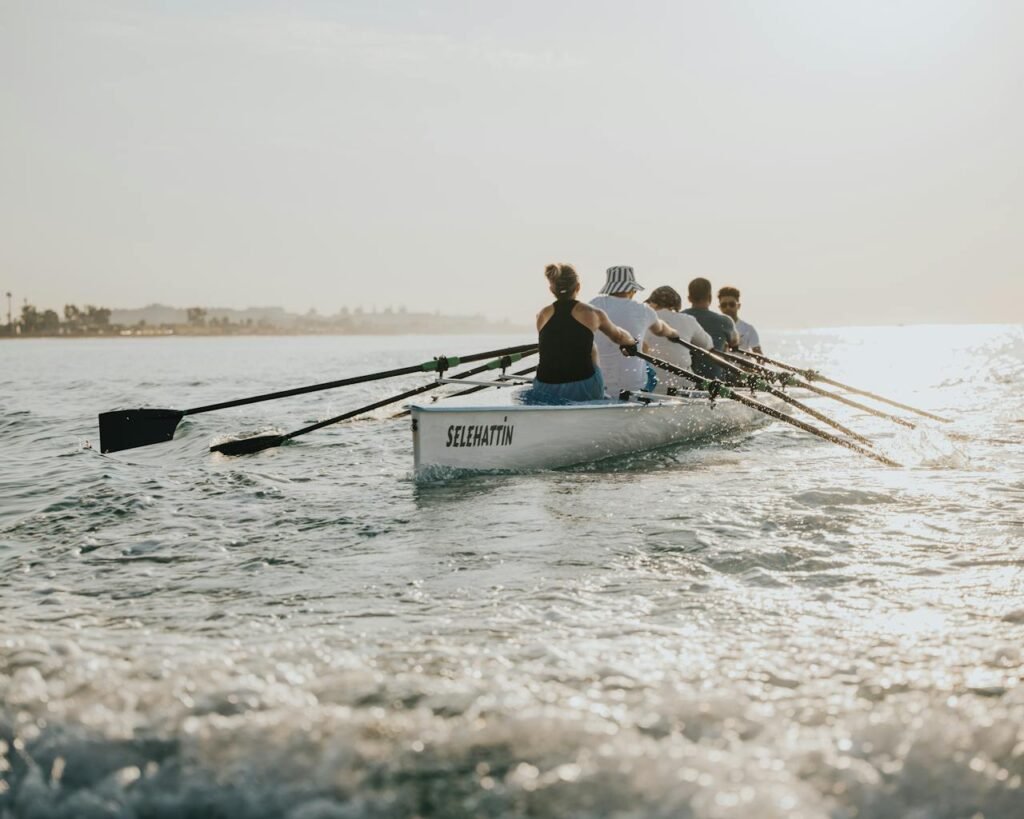
Your Simple Beginner Rowboat Fitness Routine (The Core Plan)
This 6-week progressive routine is designed to gradually build your endurance, strength, and confidence on the water. Remember the progressive overload principle, which means slowly increasing the duration or intensity of your workouts over time. Listen to your body and adjust as needed.
Weekly Rowboat Fitness Plan for Beginners
| Week | Days per Week | Duration per Session (Active Rowing) | Intensity Level | Focus Area |
|---|---|---|---|---|
| 1-2 | 2-3 | 15-20 minutes | Low (Easy Pace) | Basic technique, comfort on water |
| 3-4 | 3 | 25-30 minutes | Low-Moderate | Sustained effort, endurance building |
| 5-6 | 3-4 | 30-35 minutes | Moderate | Introducing short bursts of higher intensity |
Week 1-2: Building Your Base
- Goal: Familiarize yourself with the boat, water, and basic rowing technique. Focus on smooth, controlled strokes rather than speed.
- Frequency: 2-3 sessions per week, with at least one rest day between.
- Duration: 15-20 minutes of active rowing per session.
- Intensity: Easy conversational pace. You should be able to hold a conversation comfortably.
- Example Session: 5 min warm-up, 15-20 min easy rowing (focus on technique), 5 min cool-down.
Week 3-4: Increasing Stamina
- Goal: Extend your endurance and build your cardiovascular capacity.
- Frequency: 3 sessions per week.
- Duration: 25-30 minutes of active rowing per session.
- Intensity: Low to moderate. You should still be able to talk, but with some effort.
- Example Session: 5 min warm-up, 25-30 min steady-state rowing, 5 min cool-down. Pay attention to your breathing and maintain a consistent pace.
Week 5-6: Introducing Intervals
- Goal: Introduce variations to challenge your body and improve power.
- Frequency: 3-4 sessions per week.
- Duration: 30-35 minutes of active rowing per session.
- Intensity: Moderate, with short bursts of higher intensity.
- Example Session: 5 min warm-up, then:
- 25-30 minutes of rowing, incorporating 4-5 “intervals” of 1-2 minutes at a faster, harder pace, followed by 3-4 minutes of recovery at an easy pace.
- End with 5 min cool-down.
- Important: During the faster intervals, maintain good form. Don’t sacrifice technique for speed.
Complementary Exercises for Enhanced Rowboat Fitness
To support your rowboat fitness journey and prevent imbalances, incorporate a few simple land-based exercises into your routine on non-rowing days.
Core Strength
A strong core is the foundation of powerful rowing strokes and crucial for preventing back pain.
- Planks: Hold a plank position for 30-60 seconds, focusing on keeping your body in a straight line.
- Crunches/Bicycle Crunches: Engage your abdominal muscles.
- Bird-dog: Improves core stability and balance.
Flexibility
Maintaining flexibility in your hips, hamstrings, and shoulders will improve your rowing range of motion and reduce stiffness.
- Hamstring stretches: Seated forward fold or standing toe touches.
- Hip flexor stretches: Kneeling lunge stretch.
- Shoulder and chest stretches: Doorway stretch or arm-across-chest stretch.
Upper Body Strength
While rowing works the upper body, specific exercises can enhance muscle endurance.
- Resistance band rows: Mimic the rowing motion.
- Light dumbbells: Bicep curls and triceps extensions.
- These exercises contribute to overall strong core muscles and greater resilience.
Nutrition and Hydration: Fueling Your Rowboat Fitness
Your body needs proper fuel to perform and recover. Focus on a balanced diet rich in:
- Complex carbohydrates: Whole grains, fruits, and vegetables for sustained energy.
- Lean protein: Chicken, fish, beans, lentils for muscle repair and growth.
- Healthy fats: Avocados, nuts, seeds for overall health and energy.
Equally important is staying properly hydrated. Drink water consistently throughout the day, not just during your workouts. Carry a water bottle with you in the boat and sip regularly.
Tracking Progress and Staying Motivated
Consistency is key. Keeping a simple log of your workouts can be incredibly motivating. Note down:
- Date and time of your session
- Duration of active rowing
- Perceived effort level
- Any observations about your technique or how you felt
- Weather conditions
Celebrate small victories, whether it’s rowing a little further, feeling stronger, or simply enjoying the tranquility of being on the water. Set realistic SMART goals (Specific, Measurable, Achievable, Relevant, Time-bound) to keep yourself accountable and engaged.
Frequently Asked Questions (FAQ)
Q1: Is rowboat fitness suitable for someone completely new to exercise?
A1: Yes! Rowboat fitness is excellent for beginners due to its low-impact nature and full-body engagement. Start slowly, focus on technique, and gradually increase your duration and intensity as outlined in our plan. Consulting a doctor before starting any new exercise routine is always recommended.
Q2: What if I don’t own a rowboat?
A2: No problem! Many parks, lakes, and coastal areas offer rowboat rentals by the hour or day. Joining a local rowing club is also a fantastic option, as they often provide boats, coaching, and a supportive community.
Q3: How often should I train for optimal results?
A3: For beginners, 2-3 times a week is a great starting point. As you build endurance and confidence (around weeks 5-6), you can increase to 3-4 times a week. Listen to your body and ensure adequate rest days for recovery.
Q4: Can I use a rowing machine (ergometer) to supplement my outdoor rowboat fitness?
A4: Absolutely! A rowing machine is an excellent tool for practicing technique and building endurance, especially when outdoor conditions aren’t ideal. The biomechanics are very similar, making it a perfect complement to your on-water training.
Conclusion
Building a beginner rowboat fitness routine is an enriching journey that promises not just physical strength but also mental clarity and a deeper connection with nature. By starting with the right gear, understanding basic technique, and following a progressive plan, you can safely and effectively integrate this rewarding activity into your lifestyle. Embrace the challenge, enjoy the serenity of the water, and witness the transformative power of fitness on your journey to a healthier, happier you. So, grab those oars, cast off, and let the adventure begin!