Finding the motivation to cook a nutritious meal after a long, exhausting day is a struggle we all face. The last thing you want to do is navigate a mountain of washing up once you have finally finished eating. However, maintaining a balanced diet is crucial for your long-term health and energy levels.
This is where one-pan paleo dinners become a game-changer for your evening routine. By combining high-quality proteins and fibre-rich vegetables in a single vessel—be it a roasting tray, skillet, or wok—you can create meals that are both nutrient-dense and remarkably simple to clean away.
The Paleo diet, which focuses on whole foods like lean meats, fish, fruits, vegetables, nuts, and seeds, naturally lends itself to this style of cooking. It eliminates processed ingredients, grains, and dairy, prioritising foods that our ancestors might have thrived on.
In this article, we explore how to master the art of the one-pan paleo dinner, providing you with evidence-based tips and delicious ideas to maximise flavour while minimising stress.
What Is the Paleo Diet?
The Palaeolithic (Paleo) diet is designed to resemble what human hunter-gatherer ancestors ate thousands of years ago. Although it is impossible to know exactly what human ancestors ate in different parts of the world, researchers believe their diets consisted of whole foods.
By following a whole-food-based diet and leading physically active lives, hunter-gatherers presumably had much lower rates of lifestyle diseases, such as obesity, diabetes, and heart disease. For a deeper dive into the specifics, you can read this comprehensive guide to the paleo diet which outlines the fundamental principles.
Key Components
- Eat: Meat, fish, eggs, vegetables, fruits, nuts, seeds, herbs, spices, healthy fats and oils.
- Avoid: Processed foods, sugar, soft drinks, grains, most dairy products, legumes, artificial sweeteners, vegetable oils, margarine, and trans fats.
A common misconception is that Paleo is solely about consuming vast quantities of meat. In reality, a balanced Paleo approach emphasises a high intake of plant matter. According to the British Nutrition Foundation, increasing your intake of plant foods is vital for getting enough dietary fibre, which supports digestive health.
The Benefits of One-Pan Cooking
Cooking your entire meal in a single pan is not just about saving time on washing up; it also has culinary and nutritional advantages. When you roast or sauté proteins alongside vegetables, the juices and fats from the meat help to season and cook the vegetables, enhancing the overall flavour profile without the need for excessive additives.
1. Nutrient Retention
Methods often used in one-pan cooking, such as roasting or quick sautéing, can help preserve heat-sensitive vitamins better than boiling, where nutrients often leach into the water.
2. Satiety and Blood Sugar Control
By combining proteins and fats with low-glycaemic vegetables in one dish, you naturally create a meal that stabilises blood sugar. Diabetes UK notes that understanding the glycaemic index of foods, like swapping white potatoes for sweet potatoes, can help manage energy levels effectively.
3. Food Safety
Cooking poultry and meats in a dedicated single pan reduces the risk of cross-contamination in the kitchen, a key factor in food safety management outlined by GOV.UK guidelines.
5 Actionable One-Pan Paleo Meal Concepts
Here are five adaptable concepts that require minimal equipment and adhere strictly to Paleo principles.
1. Lemon and Herb Salmon Traybake
Oily fish like salmon are excellent sources of omega-3 fatty acids. The British Heart Foundation champions these fats for their role in maintaining a healthy heart.
- Method: Place salmon fillets on a baking tray surrounded by asparagus and cherry tomatoes. Drizzle with olive oil and lemon juice. Bake at 200°C for 12–15 minutes.
- Why it works: The acid from the lemon cuts through the richness of the salmon, while the asparagus cooks in the same timeframe as the fish.
2. Sweet Potato and Beef Hash
This skillet meal is perfect for utilising leftovers. While red meat provides essential iron, it is important to choose unprocessed cuts. Cancer Research UK advises limiting processed meats, so opt for fresh minced beef or steak strips rather than cured options to reduce cancer risks.
- Method: Dice sweet potatoes and sauté in a large skillet until soft. Add minced beef, onions, and peppers. Cook until browned.
- Why it works: It is hearty, filling, and provides complex carbohydrates for sustained energy.
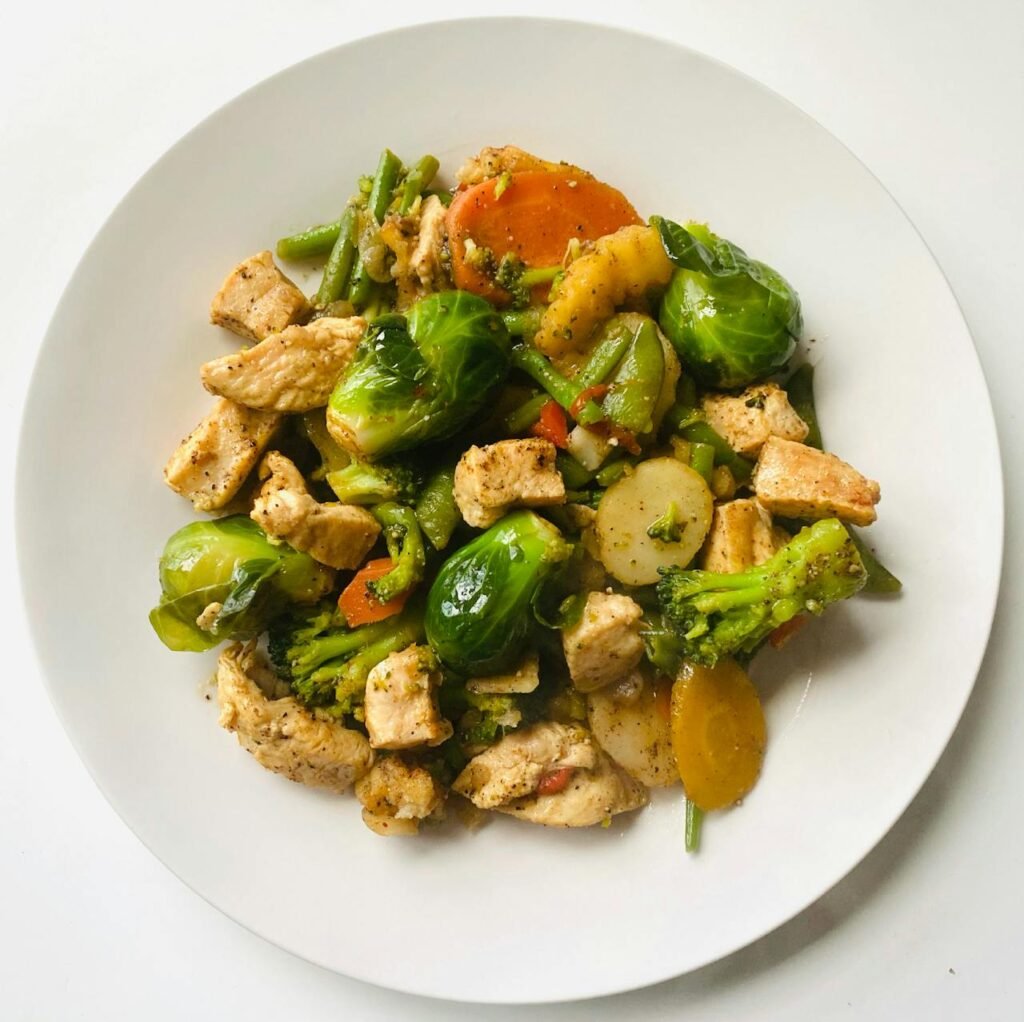
3. Mediterranean Chicken Skillet
Chicken is a staple lean protein. To ensure a balanced diet, as recommended by the NHS Eatwell Guide, pair it with a variety of colourful vegetables.
- Method: Sear chicken thighs in a pan, then add courgettes, aubergines, and kalamata olives. Transfer to the oven or cover and simmer.
- Why it works: The Mediterranean flavours develop deeply as the vegetables stew in the chicken juices.
4. Paleo Shakshuka
A North African dish that is naturally Paleo-friendly if you omit the bread.
- Method: Simmer a sauce of tomatoes, peppers, onions, and cumin in a cast-iron skillet. Crack eggs directly into the sauce and cover until the whites are set.
- Why it works: Eggs are a complete protein source. Research published in PubMed suggests high-protein breakfasts or dinners can significantly improve satiety and appetite control.
5. Sausage and Fennel Roast
High-quality, high-meat content sausages (gluten-free and filler-free) can be part of a Paleo diet in moderation.
- Method: Toss fennel wedges, red onions, and apple slices in a tray. Top with sausages. Roast until caramelised.
- Why it works: The sweetness of the apple complements the pork and fennel perfectly.
Comparison: Cooking Methods for Paleo Dinners
Choosing the right method for your one-pan meal affects both the flavour and the nutrient density. See the comparison below.
| Feature | Roasting (Traybake) | Sautéing (Skillet) | Braising (Dutch Oven) |
|---|---|---|---|
| Best For | Root vegetables, chicken pieces, salmon. | Minced meats, leafy greens, stir-fries. | Tougher cuts of meat, stews. |
| Oil Required | Moderate (to coat ingredients). | Low to Moderate. | Low (liquid does the work). |
| Clean-up | Very Easy (use parchment paper). | Easy (one pan to scrub). | Moderate (pot may need soaking). |
| Texture | Crispy, caramelised. | Seared, tender-crisp. | Soft, melting, saucy. |
| Nutrient Loss | Low (juices are retained/consumed). | Moderate (heat exposure). | Low (nutrients stay in the sauce). |
Tips for Success
To ensure your one-pan dinners are successful every time, consider these practical tips:
- Cut Uniformly: Ensure all root vegetables are cut to the same size so they cook evenly.
- Mind the Crowding: If you overcrowd a roasting tray, vegetables will steam rather than roast. Use two trays if necessary, or a larger pan.
- Budgeting: Eating healthy can seem expensive, but buying seasonal vegetables significantly cuts costs. The BBC offers excellent advice on budget healthy eating, suggesting that planning meals around what is in season saves money and improves flavour.
- Avoid Ultra-Processed Foods: Even when looking for shortcuts, avoid pre-packaged sauces which often contain hidden sugars and stabilisers. A study in The Lancet highlights the adverse health outcomes associated with high consumption of ultra-processed foods.
Frequently Asked Questions
Can I use white potatoes on a Paleo diet?
Strict Paleo excludes white potatoes due to their high starch content and glycaemic index. However, many modern adaptations of the diet, often called “primal,” allow them. Sweet potatoes are generally preferred for their superior nutrient profile.
Is a one-pan dinner enough food?
Yes, provided you balance the macronutrients. Ensure your pan includes a substantial portion of protein (roughly the size of your palm) and plenty of fibrous vegetables. You can always add a side salad if the volume feels low.
How do I store leftovers?
One-pan meals make excellent leftovers. Store them in airtight glass containers in the fridge for up to 3 days. Reheat thoroughly until piping hot before eating.
Do I need a cast-iron skillet?
While not strictly necessary, a cast-iron skillet is ideal because it holds heat well and can move from the hob to the oven safely. A sturdy stainless steel pan or a ceramic baking tray also works perfectly fine.
The Bottom Line
Adopting a Paleo lifestyle does not require you to spend hours in the kitchen or generate a sink full of dirty dishes. By utilising one-pan cooking methods, you can prepare meals that are nutrient-dense, satisfying, and aligned with your health goals.
Prioritise whole ingredients, focus on high-quality proteins, and do not be afraid to experiment with different vegetable combinations. Ultimately, the best diet is one that you can sustain long-term, and simplifying your cooking process is a major step toward that sustainability.
Start with one of the recipes above tonight, and enjoy the benefits of minimal clean-up and maximum flavour.