



Every late summer, millions of people start sneezing and blame a cold. Often the real cause is a weed that grows along roadsides, fields, and vacant lots. If your nose runs, your eyes itch, and you feel tired just as the leaves begin to turn, ragweed allergy symptoms may be the reason.
This guide explains what are ragweed allergy symptoms, how they differ from a cold or flu, and why they hit hardest in fall. You will learn the usual signs in ragweed allergy symptoms in adults, the warning signs of severe ragweed allergy symptoms, and why ragweed allergy symptoms cough can sometimes point to asthma.
We also cover what triggers fall ragweed allergy symptoms, including wind, weather, and time of day. You will find a simple pollen calendar, practical indoor control steps for your home, car, and workplace, and a clear section on when symptoms are not allergy at all. Finally, we explain how doctors diagnose the problem, which treatments can help, and which foods may cause an itchy mouth.
Everything here is written in plain language and based on reputable medical sources. Use it to understand your body, make a plan, and know when to call a professional. It is general education, not a diagnosis.
What Is Ragweed, and Why Does It Cause Allergies?
Ragweed is a common weed that belongs to the genus Ambrosia. It grows across North America and is especially common in the East and Midwest. You will often see it in empty lots, along highways, beside farm fields, and in neglected corners of suburban yards.
The plant itself is not harmful to touch for most people. The problem is its pollen. A single ragweed plant can release up to a billion tiny pollen grains. These grains are light and dry, so the wind carries them easily.
When you breathe in pollen, your immune system may mistake it for a threat. Your body then releases chemicals such as histamine. Histamine causes the sneezing, itching, and swelling that people know as hay fever. Doctors call this seasonal allergic rhinitis.
Ragweed is one of the most common causes of hay fever in the United States. The condition affects more than 23 million people in the country, and ragweed is a leading cause. That is why ragweed allergy symptoms show up on so many seasonal health searches each autumn.
Ragweed Is Not Goldenrod
Many people blame goldenrod, the tall plant with bright yellow flowers. Goldenrod blooms at the same time as ragweed, so it takes the blame. In truth, goldenrod pollen is heavy and sticky. Insects carry it, not the wind. Ragweed has small, dull green flowers that you rarely notice, yet it fills the air with pollen.
Why Ragweed Pollen Is So Hard to Avoid
Ragweed pollen can travel a long way. Researchers have documented it moving several miles through the air, and in one documented case it traveled as far as 400 miles. This means you can have ragweed allergy symptoms even if no ragweed grows near your home. Clearing your own yard helps, but it will not solve the whole problem.
What Are Ragweed Allergy Symptoms? The Core Signs
If you are asking what are ragweed allergy symptoms, the list will look familiar. Most signs affect the nose, eyes, and throat. They tend to appear within minutes to hours of breathing in pollen. They also come back each year at nearly the same time.
Here are the most common ragweed allergy symptoms:
- Frequent sneezing, often in long bursts
- A runny nose with thin, clear mucus
- A stuffy or blocked nose
- Itchy nose, roof of the mouth, or throat
- Itchy, red, or watery eyes
- Swollen eyelids or dark circles under the eyes, sometimes called allergic shiners
- Postnasal drip, which is mucus draining down the back of the throat
- Cough and a scratchy throat
- Headache or pressure around the eyes and forehead
- Tiredness and a general run-down feeling
Not everyone gets every sign. Some people mostly have eye symptoms. Others only feel blocked up. The pattern matters more than any single symptom. If the same cluster appears every August through October, ragweed is a strong suspect.
Skin Reactions
A smaller group of people react to ragweed on the skin. Touching the plant or being exposed to its particles can cause itchy red streaks 24 to 48 hours later. The rash may blister and can last two to three weeks. It usually clears on its own, but a doctor can help if it is painful or widespread. Hives can also appear in some people with allergies.
Ragweed Allergy Symptoms in Adults
Many people think hay fever is mainly a childhood problem. In fact, ragweed allergy symptoms in adults are very common, and some people develop the allergy for the first time in their 20s, 30s, or even later. An allergy can also fade or change over the years.
Adults often report the following patterns:
- Work and focus problems. A blocked nose, headache, and tiredness make it harder to concentrate.
- Poor sleep. Congestion at night leads to snoring, mouth breathing, and waking up tired.
- Sinus pressure. Swollen nasal passages can trap mucus, leading to facial pain and a heavy feeling.
- Worse asthma. Adults who already have asthma may notice more wheezing and chest tightness in ragweed season.
- Food reactions. Some adults develop an itchy mouth after eating certain raw fruits, a condition we explain later in this guide.
Why Allergies Can Start in Adulthood
Doctors do not fully know why some adults develop new allergies. Moving to a new region, being exposed to a lot more pollen, and changes in the immune system may all play a part. If you moved to the Midwest or East, where ragweed is common, you may suddenly feel the difference.

Severe Ragweed Allergy Symptoms
For most people, hay fever is annoying but manageable. For others, it becomes a heavy burden. Severe ragweed allergy symptoms are not defined by one test. Doctors usually look at how strongly the symptoms affect sleep, work, school, and daily life, and how well medicines control them.
You may be dealing with severe ragweed allergy symptoms if you notice any of these:
- Nasal congestion so bad that you cannot sleep or breathe through your nose
- Constant sneezing that interrupts work or conversation
- Eyes so swollen or itchy that you cannot wear contact lenses or focus on a screen
- Symptoms that continue despite regular over-the-counter medicines
- Frequent sinus infections or ear pressure during the season
- Wheezing, chest tightness, or shortness of breath
- Itchy mouth or throat after eating certain foods
If this sounds like you, book a visit with a doctor or allergist. Stronger treatments exist, and you do not have to just “tough it out.”
Signs That Need Urgent Care
Some severe ragweed allergy symptoms are warning signs of a medical emergency. Call your local emergency number or go to the nearest emergency room if you have:
- Trouble breathing, or wheezing that does not improve with your rescue inhaler
- Swelling of the lips, tongue, or throat
- A tight throat or trouble swallowing
- Hives together with dizziness, vomiting, or faintness
- Blue or gray lips or fingertips
- Chest pain or confusion
Pollen allergy alone rarely causes a full anaphylactic reaction. However, if you also have a food allergy or asthma, breathing symptoms should always be taken seriously. Do not wait to see whether they pass.
Ragweed Allergy Symptoms Cough: When Is It More Than a Tickle?
A cough is one of the most overlooked signs. Many people link ragweed allergy symptoms cough to a lingering cold, but the cause is often different. Let’s look at why it happens.
Why Ragweed Makes You Cough
There are three common reasons for ragweed allergy symptoms cough:
- Postnasal drip. Extra mucus drips from the nose onto the back of the throat. The throat becomes irritated, and you cough to clear it.
- Throat irritation. Pollen can land directly on the throat and trigger an itchy, tickling cough.
- Airway inflammation. In people with asthma, pollen can swell the airways and tighten the muscles around them. The result is coughing, wheezing, and a sense of shortness of breath.
The first two usually cause a dry or mildly wet cough that is worse at night or in the morning. The third is more serious and needs a doctor’s attention.
The Ragweed and Asthma Link
Ragweed is one of the main triggers behind what experts call the September asthma peak. Every year, asthma-related emergency visits and hospital stays rise in mid-September. This is the same time that ragweed pollen counts are usually highest and children are returning to school.
If you have asthma, your doctor may suggest updating your asthma action plan before ragweed season starts. Keep taking daily controller medicine as prescribed, and always carry your quick-relief inhaler.
How to Tell Allergy Cough From Other Coughs
An allergy-related cough often comes with sneezing, itchy eyes, and a runny nose. A cough from an infection usually comes with fever, body aches, or thick colored mucus. Still, symptoms can overlap, so a doctor is the best judge when a cough lasts longer than a week or two.
See a doctor soon if your ragweed allergy symptoms cough comes with any of these:
- Wheezing or a whistling sound when you breathe
- Chest tightness
- Shortness of breath while walking or talking
- A cough that wakes you up at night most days
- A cough that lasts more than three weeks
What Triggers Fall Ragweed Allergy Symptoms?
Now let’s answer a question many people ask each autumn: what triggers fall ragweed allergy symptoms? The main trigger is breathing in ragweed pollen. However, weather, time of day, and your habits decide how strong the effect will be.
Warm, Dry, Breezy Days
Pollen release is greatest when the air is warm, the humidity is low, and a breeze is blowing. Wind lifts pollen from the plants and spreads it across large areas. If you wake up to a clear, breezy fall morning, expect higher levels than on a calm, damp day.
Time of Day
Ragweed pollen levels are usually highest in the morning, once the dew has dried, and into late morning. High levels can last until late afternoon. This is different from tree and grass pollen, which tends to peak in the evening. If you plan outdoor exercise in fall, mid-afternoon or evening is often easier on your nose than early morning.
Weather Changes
Rain can wash pollen out of the air for a short time. After the rain stops, though, levels can climb quickly. Thunderstorms can be tricky, because they can break pollen into smaller pieces that reach deep into the lungs. Some people with asthma notice flare-ups around storms.
Yard Work and Outdoor Activities
Raking leaves, mowing, and clearing weeds stir up pollen, dust, and mold. These chores are among the most common what triggers fall ragweed allergy symptoms situations people report. If you must do yard work, wear a pollen-filtering mask and shower afterward.
Ragweed Pollen Calendar: When Does Ragweed Season Start and End?
Knowing the calendar helps you plan ahead. Exact timing depends on where you live, but a general pattern holds across much of North America.
A General Seasonal Timeline
| Period | What Usually Happens | What You Can Do |
|---|---|---|
| Early to mid-August | Plants begin to flower and release pollen. Symptoms start for sensitive people. | Begin medicine as advised. Start tracking pollen counts. |
| Late August | Pollen counts climb steadily. | Keep windows closed on windy days. Plan outdoor time later in the day. |
| Early to mid-September | Counts usually reach their highest levels. This overlaps with the school-year asthma spike. | Review your asthma plan. Shower before bed. |
| Late September to October | Pollen stays high, then slowly decreases. Warm spells can bring a rebound. | Keep daily precautions. Change clothes after being outdoors. |
| November | Season usually ends, especially after several nights of freezing temperatures. | Wash bedding and clean filters. Review what worked. |
The season generally lasts about 6 to 10 weeks in a given area. In southern states it may start earlier or end sooner, while northern areas can begin a little later. A warm fall with a late frost can stretch the season.
Where to Find Pollen Counts
Local pollen counts and air quality alerts are easy to find. Many weather apps include a pollen forecast. You can also check daily air quality alerts for your area to plan outdoor time on high-risk days. When counts are high, treat that day as a “stay inside the house, windows closed” day.
When Symptoms Are Not Allergy: Cold, Flu, COVID-19, Sinus Infection, or Asthma?
Not every runny nose in fall is ragweed allergy symptoms. Many infections look similar, and treating the wrong problem wastes time. Here is how to tell them apart. Remember that this is a guide, not a diagnosis.
Quick Comparison Table
| Feature | Ragweed Allergy | Cold | Flu | COVID-19 | Sinus Infection |
|---|---|---|---|---|---|
| Itchy eyes, nose, or throat | Very common | Uncommon | Uncommon | Uncommon | Uncommon |
| Sneezing | Very common, often in bursts | Common | Sometimes | Sometimes | Less common |
| Fever | No | Rare, low | Common, often high | Common, but not always | Possible |
| Body aches | No | Mild | Common, often strong | Common | Mild |
| Mucus | Thin and clear | Clear, then may turn thick | Variable | Variable | Thick, yellow or green, with facial pain |
| Loss of taste or smell | Uncommon, mild if present | Mild | Uncommon | Can occur | Can occur from blockage |
| How long it lasts | Weeks, as long as pollen stays high | About 7 to 10 days | About 1 to 2 weeks | Varies | Often more than 10 days |
| Seasonal pattern | Same time each year | Any time | Mostly fall and winter | Any time | After a cold or allergy flare |
Clues That Point to Allergy
Allergy is more likely if:
- Your eyes and nose are intensely itchy
- Symptoms start at the same time every year
- You have no fever and no body aches
- Your symptoms get worse outdoors, on windy days, or after yard work
- Your mucus is clear and watery
- Your symptoms last for weeks without becoming worse and then better
Clues That Point to Something Else
Think about an infection or another cause if:
- You have a fever, chills, or strong body aches
- Mucus becomes thick and colored, along with facial pain
- Symptoms start suddenly and improve in about a week
- Others around you are sick
- You have a sore throat that comes with swollen glands
- You were recently exposed to someone with the flu or COVID-19
When It May Be Asthma
If you have wheezing, shortness of breath, or chest tightness, it may be asthma, either on its own or triggered by pollen. Allergy and asthma often travel together, and each can make the other worse.
When to Test for COVID-19 or Flu
If you are unsure, a home COVID-19 test or a visit to a clinic for a flu test can settle the question quickly. This matters most if you live with older adults, babies, or people with weak immune systems. Treating the wrong condition can delay proper care.
Other Conditions That Mimic Allergy
Doctors also consider a few other problems when hay fever medicine does not seem to help:
- Non-allergic rhinitis. This causes a runny or blocked nose without an allergic cause. Strong smells, smoke, cold air, and changes in weather may trigger it.
- Chronic sinusitis. Long-lasting sinus swelling that can continue for 12 weeks or longer.
- Medication side effects. Overuse of decongestant nose sprays can cause rebound congestion.
- Reflux. Stomach acid reaching the throat can cause cough and throat clearing.
- Structural issues. A deviated septum or nasal polyps can block airflow.
For a plain-language overview of the condition, read a plain-language overview of hay fever, its usual signs, and how it is diagnosed.

How Doctors Diagnose Ragweed Allergy
If your symptoms repeat every year and disrupt your life, ask an allergist for testing. The process is simple and quick, and it can confirm whether your ragweed allergy symptoms come from pollen or something else.
Step 1: Medical History
Your doctor will ask when symptoms begin, how long they last, what makes them worse, and whether you have asthma, eczema, or food reactions. A symptom diary helps a lot. Write down dates, symptoms, and weather conditions for a few weeks.
Step 2: Physical Exam
The doctor may look inside your nose for pale, swollen tissue and check your eyes, throat, and lungs.
Step 3: Skin Prick Test
In a skin test, a tiny amount of a diluted allergen is placed on the skin, usually on the forearm or back. If you are allergic, a small itchy, raised bump appears within about 15 minutes. It looks worse than it feels and is generally well tolerated.
Step 4: Blood Test
If skin testing is not possible, for example because you take certain medicines or have a skin condition, a blood test can measure allergy antibodies to ragweed. Results take longer but can be just as helpful.
Do not stop any medicine before testing unless your doctor says so. Some antihistamines can affect skin test results, so your allergist will give you clear instructions.
Treatment Options for Ragweed Allergy Symptoms
There is no cure for ragweed allergy, but good treatments exist. The best plan depends on how severe your symptoms are and how your body responds. Allergy specialists advise that starting medicine about two weeks before your usual peak can make the season more comfortable.
Avoid the Trigger
You cannot avoid pollen completely, but you can reduce exposure. Check the indoor control section below for specific steps.
Antihistamines
Antihistamines block the effect of histamine. They help with sneezing, itching, and runny nose. Newer, non-drowsy versions are available without a prescription. Older ones can cause sleepiness, so be careful when driving. Ask a pharmacist which type suits you.
Nasal Steroid Sprays
Steroid nasal sprays calm the swelling inside the nose. Many allergists consider them among the most effective options for nasal symptoms. They work best when used every day, not only on bad days. Full effect can take several days.
Decongestants
Decongestant pills and sprays can relieve a blocked nose, but they have limits. Nasal decongestant sprays should not be used for more than a few days in a row, as they can cause rebound stuffiness. People with high blood pressure, heart disease, glaucoma, or prostate problems should ask a doctor before using decongestant pills.
Saline Nasal Rinses
Rinsing your nose with a saline solution washes away pollen and thins mucus. Use distilled, boiled and cooled, or properly filtered water, and clean your device after each use. Never use plain tap water straight from the faucet for nasal rinsing.
Immunotherapy: Shots and Tablets
For people with severe or long-lasting symptoms, immunotherapy trains the immune system to tolerate the allergen.
- Allergy shots. Small, increasing amounts of allergen are given by injection, usually over several years. Many people see a lasting drop in symptoms.
- Under-the-tongue tablets. A daily tablet that dissolves under the tongue is available for ragweed. It is often started about 12 weeks before the season begins and continued through it. Your allergist will explain safety rules, including what to do if you have asthma.
Immunotherapy is not for everyone. Your allergist will discuss your health history, risk of reactions, and time commitment.
What About Natural Remedies?
Evidence level matters, especially in health topics. Saline rinses have good support. Claims about honey, herbal supplements, or special teas are usually based on limited or weak research. Some herbal products contain ingredients related to ragweed, such as chamomile and echinacea, and may cause reactions in people with ragweed allergy. Always check with a clinician before using supplements, particularly if you are pregnant, take other medicines, or have asthma.
Indoor Control: How to Keep Pollen Out of Your Home, Car, and Workplace
You cannot control the wind, but you can control your space and how often ragweed allergy symptoms flare indoors. Small changes add up, and many are free.
At Home
- Keep windows and doors closed during ragweed season, especially in the morning and on dry, breezy days.
- Use air conditioning with the recirculate setting, and clean or replace filters on schedule.
- Use a HEPA filter. A true HEPA filter in a bedroom air purifier or vacuum can capture fine particles.
- Shower before bed. Pollen collects in hair and on skin. Washing it off keeps it off your pillow.
- Change clothes as soon as you come in, and keep outdoor shoes near the door.
- Dry laundry indoors. Sheets and towels on an outdoor line become pollen traps.
- Wash bedding weekly in hot water.
- Vacuum and damp-dust often. Dry dusting can send particles back into the air.
- Wipe pets when they come in. Fur can hold pollen like a sponge.
- Control humidity between 30 and 50 percent to discourage mold and dust mites.
In the Car
- Keep windows closed and use recirculated air.
- Replace the cabin air filter, usually once a year or as the manufacturer advises.
- Wipe the dashboard and seats with a damp cloth.
- Keep a tissue pack and a small bottle of saline spray in the glove box.
At Work
- Keep a spare jacket or change of clothes if you work outdoors.
- Place a small air purifier near your desk if allowed.
- Avoid propping open doors on high-pollen mornings.
- Ask your employer to maintain ventilation filters and keep vents clean.
- Take your medicine as scheduled, even if you are busy.
Outdoors When You Must Go
- Pick later afternoon or evening for exercise when possible.
- Wear sunglasses to keep pollen out of your eyes.
- Wear a pollen-filtering mask for chores such as raking leaves.
- Pre-treat with an antihistamine or nasal spray if your doctor suggests it. Allergy groups note that taking it about two hours before heavy exposure can help.
- Rinse your nose and face when you return.
Ragweed and Food: Oral Allergy Syndrome
Some people with ragweed allergy notice an itchy mouth after eating certain raw foods. This is called oral allergy syndrome, or pollen-food allergy syndrome. It happens because proteins in some fruits and vegetables look similar to proteins in ragweed pollen. Your immune system gets confused and reacts.
Foods Linked to Ragweed
Allergy groups list several foods related to ragweed that may cause trouble, including:
- Bananas
- Melons, such as watermelon, cantaloupe, and honeydew
- Cucumber
- Zucchini
- Mango
- Artichoke
- Sunflower seeds
- Chamomile tea
- Echinacea products
What the Reaction Feels Like
Symptoms usually appear within minutes and stay in the mouth and throat. They include itching, tingling, a scratchy throat, or mild swelling of the lips, mouth, or tongue. For most people, the reaction is brief and mild.
Simple Ways to Manage It
- Cooked, canned, or peeled versions of the food often cause fewer problems, because heat and processing can change the proteins.
- Try avoiding trigger foods only during ragweed season if your symptoms are mild.
- Keep a food and symptom diary.
- Do not ignore swelling of the throat, trouble swallowing, or breathing problems. These need urgent care.
Anyone who has had a stronger reaction to food should see an allergist. Do not experiment on your own.
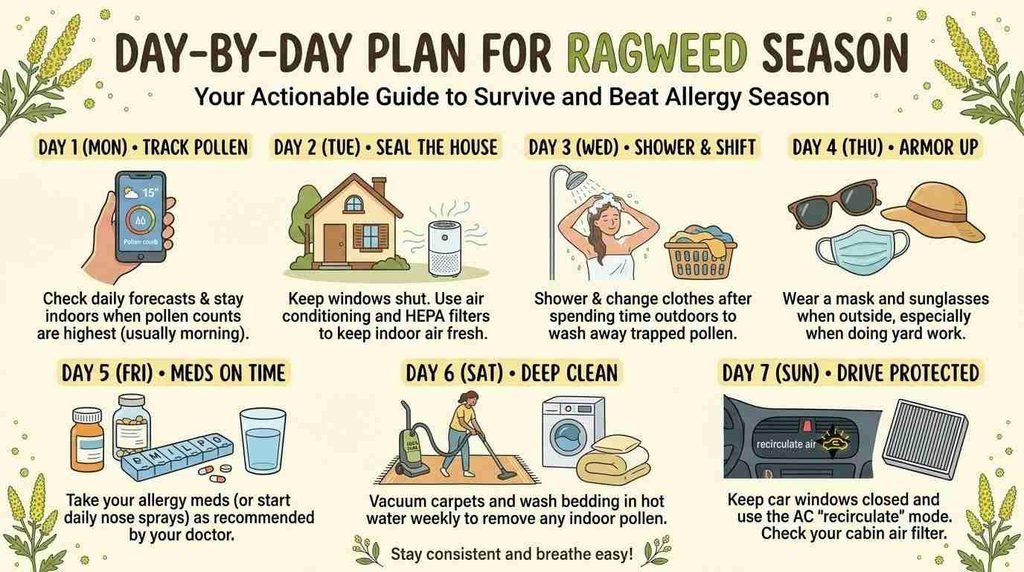
Day-by-Day Plan for Ragweed Season
Knowing facts is useful, but a plan is better. Use this simple routine to stay ahead of your ragweed allergy symptoms.
Before the Season: Late July to Early August
- See your doctor or allergist if your symptoms were hard to control last year.
- Ask about starting medicine about two weeks before your usual first symptoms.
- If you are interested in tablet immunotherapy, ask early, because it is started well before the season.
- Clean or replace filters at home and in the car.
- Update your asthma action plan, if you have asthma.
During the Season: August to October
- Check the pollen forecast each morning.
- Keep windows closed and use air conditioning.
- Take medicine every day as directed.
- Shower and change clothes after time outdoors.
- Rinse your nose with saline once or twice a day.
- Write down symptoms in a diary.
After the Season: November
- Wash bedding and curtains.
- Note which steps helped most.
- Talk to your doctor about long-term options such as immunotherapy.
Living Well With Ragweed Allergy
A ragweed allergy is a seasonal challenge, not a life sentence. Most people can keep ragweed allergy symptoms under control with a mix of smart habits, the right medicines, and, when needed, immunotherapy. Over time, you will learn your own pattern. You may notice that you feel worse on windy days, after yard work, or when you skip your medicine.
Sleep is a good place to start. Cool, clean bedroom air, a pre-bed shower, and a saline rinse can improve rest. Good rest then helps the immune system work more smoothly. If ragweed allergy symptoms are affecting your mood, school, or work performance, tell someone. This is a real health problem, and you deserve proper support.
Tips for Parents
Children may not describe symptoms clearly. Watch for frequent nose rubbing, mouth breathing, dark circles under the eyes, snoring, and a nighttime cough. Talk to a pediatrician if symptoms repeat each fall. Schools can also help by keeping a child’s inhaler available and reducing outdoor time on high-pollen days.
Frequently Asked Questions
What are ragweed allergy symptoms?
The most common signs are sneezing, a runny or stuffy nose, itchy and watery eyes, an itchy throat, postnasal drip, cough, and tiredness. They usually appear every year from late summer to fall. Some people also get headaches, hives, or skin rashes. If you want a short list of what are ragweed allergy symptoms, think “nose, eyes, throat, and energy.”
What triggers fall ragweed allergy symptoms?
The main cause is breathing in ragweed pollen. Dry, warm, windy days and mornings tend to be the worst. Yard work, open windows, and outdoor laundry can make it worse. When people ask what triggers fall ragweed allergy symptoms, the short answer is pollen plus weather plus exposure habits.
Can ragweed allergy symptoms cause a cough?
Yes. Ragweed allergy symptoms cough is common and often comes from postnasal drip or throat irritation. In people with asthma, it may signal airway inflammation, which needs medical care if it includes wheezing, chest tightness, or shortness of breath.
Are severe ragweed allergy symptoms dangerous?
They can be. Severe ragweed allergy symptoms that include trouble breathing, throat swelling, or wheezing that does not respond to a rescue inhaler need emergency help. Even without those signs, heavy symptoms that disrupt sleep and work deserve a visit to an allergist.
Do ragweed allergy symptoms in adults differ from those in children?
The signs are similar, but ragweed allergy symptoms in adults are often mistaken for a long cold. Adults also tend to report fatigue, poor concentration, and sinus pressure. Allergy can begin at any age, so a new pattern in adulthood is worth checking.
How long do ragweed allergy symptoms last?
They last as long as you are exposed to pollen. In most places, that means roughly 6 to 10 weeks, from August until a hard frost or early November. Medicine can control symptoms but does not make the season shorter.
Conclusion
Ragweed pollen is small, but its effect is large. Knowing the ragweed allergy symptoms that matter, such as sneezing, itchy eyes, congestion, and cough, helps you take action early. Remember that severe ragweed allergy symptoms such as wheezing, throat swelling, or trouble breathing need urgent care, and that a lingering cough may point to asthma.
Use the pollen calendar to plan ahead, follow the indoor control steps to cut your exposure, and learn when symptoms are not allergy so you do not miss a flu, COVID-19, or sinus problem. Talk to an allergist about medicines and immunotherapy if your symptoms are hard to control. With a clear plan, you can get through ragweed season with less misery and more energy.
Medical Disclaimer
This article is for general education only. It is not medical advice and does not replace a visit with a doctor, allergist, or pharmacist. If you have trouble breathing, swelling of the lips or throat, or any symptom that worries you, seek emergency care right away. Always talk to a qualified clinician before starting, stopping, or changing any medicine.