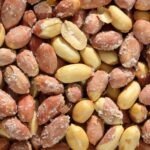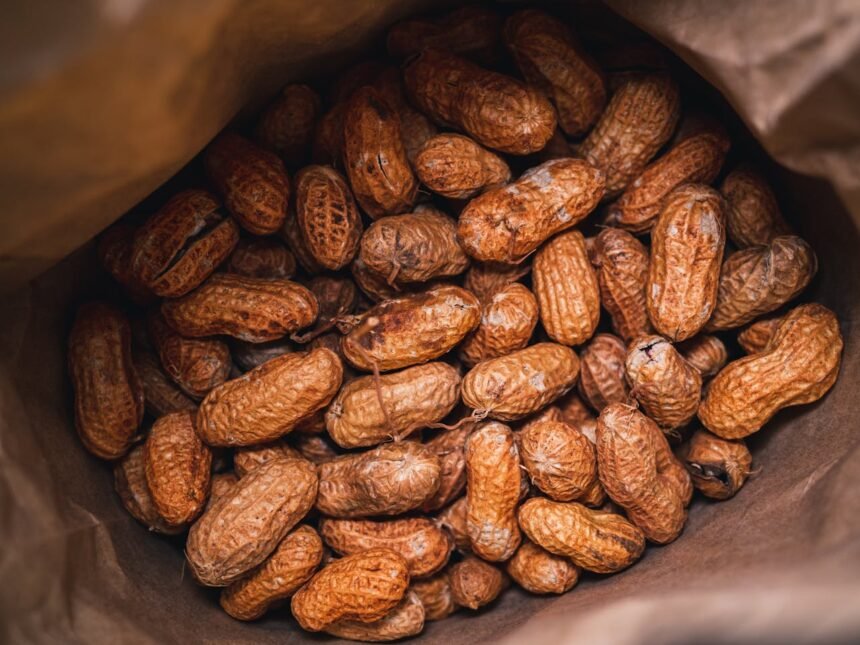
While the peanut aisle in your local supermarket might seem straightforward, the world of groundnuts is surprisingly diverse. Among the four primary market types of peanuts grown today—Runner, Virginia, Valencia, and Spanish—the Spanish peanut stands out as a distinct culinary gem. Known for their petite size, reddish-brown skins, and robust, nutty profile, these legumes are a favourite among confectioners and peanut butter enthusiasts alike.
Often overlooked in favour of the larger Virginia types commonly found in shell-on snacks, Spanish peanuts possess a unique set of characteristics that make them indispensable in the food industry. Their high oil content, in particular, sets them apart, influencing everything from their roasting behaviour to their shelf life.
Whether you are looking to create artisan confections or simply seeking a plant-based protein source to bolster your diet, understanding the nuances of this variety is essential. This article explores the nutritional benefits, culinary applications, and distinctive traits of Spanish peanuts.
Overview
Spanish peanuts (Arachis hypogaea subspecies fastigiata) are defined by their small kernel peanuts cluster and the vibrant red skins that adhere tightly to the nut. Unlike the larger Virginia or Runner varieties, Spanish peanut plants exhibit a vertical growth habit, with nuts clustering tightly around the central taproot. This growth pattern aids in harvesting, particularly in the sandy loam soils where they thrive.
Taxonomically, they are legumes, related to beans and lentils, though nutritionally they fit firmly into the nut category. What truly distinguishes them in the marketplace is their flavour density. Because they have a higher ratio of skin to meat and a significant oil concentration, they offer a more intense nutty flavour profile than their blander counterparts.
This variety is predominantly grown in the warmer climates of the southern United States, specifically Texas and Oklahoma, as well as parts of South Africa and South America. Historically, their hardiness and resistance to certain blights made them a reliable crop, though today they are chosen specifically for their processing qualities.
While Runner peanuts have become the industry standard for commercial peanut butter due to yield consistency, Spanish peanuts remain the gold standard for gourmet butters and candies. Their specific oil composition and sugar content allow them to roast to a deep, rich brown without becoming bitter, a trait known as the “Spanish roast.”
Characteristics and Nutritional Profile
Understanding the makeup of Spanish peanuts reveals why they are such a powerhouse ingredient. Their composition is directly responsible for their culinary versatility and health benefits.
The High Oil Advantage
One cannot discuss this variety without addressing peanut oil extraction. Spanish peanuts boast the highest oil content of the main peanut types. This is not just about quantity; it is about the quality of the lipid profile. The high oil volume enhances the mouthfeel of peanut butter, reducing the need for added stabilisers or oils. It also makes them the preferred choice for extracting peanut oil, which has a high smoke point and neutral flavour suitable for frying.
Nutritional Breakdown
When examining Spanish peanut nutrition facts, it becomes clear that these small nuts are nutrient-dense. A standard 28-gram serving provides a substantial amount of monounsaturated fats, which are crucial for cardiovascular health.
According to the United States Department of Agriculture (USDA), peanuts are also rich in biotin, copper, manganese, and folate. The Spanish variety, specifically, packs a protein punch, offering roughly 7 to 8 grams per serving, making them an excellent snack for satiety.
Antioxidants in the Skins
The reddish-brown skin is not merely decorative; it is a repository of bioactive compounds. Red skin peanut benefits are largely attributed to the presence of resveratrol, the same antioxidant compound found in red wine. Research highlighted by the National Institutes of Health (NIH) suggests that peanut skins contain potent phenolic compounds that combat oxidative stress in the body.
Because Spanish peanuts are difficult to blanch (remove skins from), they are frequently sold and eaten with their skins intact. This means consumers are more likely to ingest these beneficial peanut skin antioxidants compared to other varieties where the skin is removed during processing.
Comparison with Other Varieties
When weighing Spanish vs runner peanuts, the difference lies in size and uniformity. Runners are medium-sized and uniform, making them easy to roast evenly on a massive industrial scale. Spanish peanuts are smaller and rounder.
Furthermore, while some modern breeds are being developed as high oleic peanut varieties to improve shelf life, traditional Spanish peanuts have a specific fatty acid balance that prioritises flavour intensity over long-term storage stability, which impacts how they should be handled in the kitchen.
Culinary Uses and Processing
The unique physical and chemical properties of Spanish peanuts dictate their best uses in the kitchen and factory. Their robust structure and high oil content make them particularly suited for specific applications.
Confectionery and Baking
Spanish peanuts are the undisputed kings of candy making. If you are looking for savory peanut brittle recipes, this is the variety you need. Their small size allows for better distribution within the candy matrix, ensuring every bite has a crunch. Furthermore, their high oil content prevents them from absorbing too much moisture from the sugar syrup, keeping the brittle crisp.
They are also excellent when processed into flour. For those interested in gluten-free baking, you might explore Roasted Peanut Flour: Gluten-Free Baking and Nutritional Gains, which often utilises the mash from oil-pressed nuts.
Peanut Butter Production
While Runners dominate the supermarket shelves, making homemade peanut butter with Spanish peanuts yields a superior, gourmet result. The natural oils are released quickly during grinding, creating a smoother, runnier consistency that carries a toasted, earthy flavour.
For a comparison of different nut profiles in spreads, it is worth reading A Guide to Valencia Peanuts: Sweetness and Nutrition Profile, as Valencia peanuts offer a sweeter, less oily alternative.
Oil Production
Due to the sheer volume of lipids in the kernels, Spanish peanuts are the primary source for artisan peanut oil. This oil is highly valued for deep frying turkeys and Asian cuisine. If you are adventurous, you can even learn about A Beginner Guide to Peanut Oil Pressing at Home to extract this liquid gold yourself.
Snacking and Roasting
Spanish peanuts are frequently sold as “red skin” nuts, roasted and salted. They are a classic bar snack because their flavour pairs exceptionally well with beverages. Roasting Spanish peanuts at home is a simple process, but one must watch them closely; their high oil content means they can go from perfectly roasted to burnt in a matter of seconds. For a detailed method, check out Dry Roasted Peanuts: A Heart-Healthy Snack Choice.
Tips for Selection and Storage
Because of their high oil content, Spanish peanuts are more susceptible to oxidation and rancidity than lower-fat varieties. Proper handling is critical to maintaining their quality.
Sourcing High-Quality Nuts
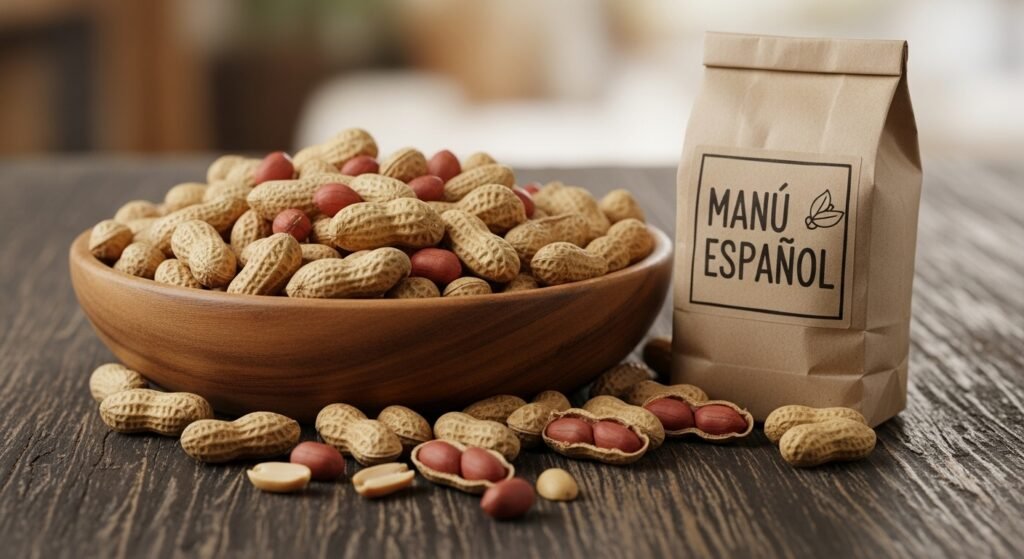
Finding raw Spanish peanuts UK suppliers can sometimes be a challenge, as they are a speciality import. Look for whole food shops or online retailers specialising in baking ingredients. Ensure the skins are intact and vibrant red, not dull or flaking excessive dust.
If you are interested in agricultural origins, you might find the history of Jungle Peanuts: Exploring the Wild Ancestor of Modern Legumes fascinating, as it contextualises where modern varieties like the Spanish peanut originated.
Storage Best Practices
Heat and oxygen are the enemies of the Spanish peanut.
- Cool and Dark: Always store these peanuts in a cool, dark cupboard.
- Refrigeration: If you have bought them in bulk, refrigeration is highly recommended. This slows down the breakdown of the oils.
- Freezing: For long-term storage (over three months), freeze them in an airtight container. They have low water content, so they freeze exceptionally well without changing texture.
Cardiovascular Considerations
For those integrating nuts into a diet for medical reasons, these peanuts are excellent heart-healthy nut snacks. The American Heart Association notes that replacing saturated fats with monounsaturated fats (like those in peanuts) can lower bad cholesterol. However, be mindful of sodium. Opt for unsalted or lightly salted varieties to maximise heart benefits.
Additional guidance on healthy eating can be found via the NHS Live Well website, which advocates for nuts as part of a balanced diet.
Growing Your Own
For the green-thumbed enthusiast, Spanish peanuts cultivation is possible even in temperate climates if you use cloches or a greenhouse. They require a long, warm growing season. You can learn more about this process in Growing Your Own: Best Practices for Organic Peanut Seeds and ensure you have the Essential Peanut Harvesting Tools for Small-Scale Growers ready for the autumn.
Emerging Trends
Innovation in the peanut sector is constant. From using skins for supplements to sprouting nuts for increased bioavailability, the industry is evolving. For a look at the cutting edge of legume consumption, read about Peanut Sprouts: The New Superfood You Should Try.
Also, while Spanish peanuts are usually roasted, other traditions utilise fresh nuts. For a contrast in preparation, see Where to Buy Green Peanuts Bulk for Traditional Recipes to understand the difference between dried and fresh legumes.
If you enjoy the red skins of the Spanish variety, you will find similar health advantages discussed in Red Skin Peanuts: Antioxidant Benefits and Culinary Uses.
The Bottom Line
Spanish peanuts are far more than just a bar snack. They are a nutrient-dense, flavour-packed legume that serves as a cornerstone for confectionery and gourmet peanut butter. Their small size belies their significant impact on culinary arts, offering a crunch and depth of flavour that other varieties struggle to match.
From their rich stores of monounsaturated fats to the resveratrol in their red skins, they offer compelling health benefits when consumed in moderation. Whether you are roasting them for a party or pressing them for oil, the Spanish peanut delivers big flavour and high versatility.
For more information on the role of nuts in disease prevention, resources from the Mayo Clinic and the Harvard T.H. Chan School of Public Health provide excellent data. Additionally, organisations like The Peanut Institute and the British Heart Foundation offer deep dives into lipid health. Always be aware of allergen risks, as outlined by the FDA and Medical News Today.