If you ate raw sprouts in recent weeks and now have diarrhea, cramps, and a fever, you are probably wondering whether it is Salmonella. The question is timely: the CDC and FDA are investigating a multistate outbreak linked to recalled broccoli sprouts, with 32 confirmed illnesses in six states as of September 24, 2026. This guide explains salmonella symptoms after eating sprouts, how soon they start, how long they last, when stool testing is useful, who is at higher risk, and exactly when to call a clinician or go to the emergency room.
Salmonella Symptoms After Eating Sprouts: The Short Version
- Main symptoms: diarrhea, fever, and stomach cramps. Nausea, vomiting, chills, headache, and loss of appetite are also common.
- Timing: symptoms usually begin within hours to a few days of eating contaminated food. The CDC gives a range of 6 hours to 6 days, and many people get sick within the first one to three days.
- Duration: most people feel better in 4 to 7 days without specific treatment.
- Call a clinician if: you have a fever of 102°F or higher, diarrhea lasting more than 3 days, bloody stools, vomiting that stops you keeping liquids down, or signs of dehydration.
- Higher-risk groups: adults 65 and older, children under 5, pregnant people, and anyone with a weakened immune system should call early.
- Stool testing: most useful for severe illness, bloody diarrhea, high-risk patients, and suspected outbreak exposure.
The Current Sprout Outbreak, Date-Stamped
The facts below come from the CDC and FDA investigation pages and are stamped as of September 24, 2026. The investigation is open, so numbers can change.
- Source: broccoli sprouts produced by Evergreen Fresh Sprouts, LLC of Moyie Springs, Idaho.
- Cases: 32 people infected with the outbreak strain, reported from six states: Idaho, Minnesota, Montana, Oregon, Utah, and Washington.
- Outcomes: 3 hospitalizations and no deaths reported.
- Illness onset dates: July 7, 2026, to September 3, 2026.
- Strain: Salmonella Bovismorbificans.
- Product distribution confirmed: Idaho, Montana, and Washington. The agencies note the product could have reached additional states.
- Recall: On September 10, 2026, the company recalled 215 cases of broccoli sprouts. The company stopped production and distribution on September 4, 2026, and is running a root-cause investigation.
How did investigators connect the illnesses to the sprouts? Of 27 patients interviewed, 26 reported eating sprouts or microgreens, and 22 specifically reported eating broccoli sprouts. Officials in Montana collected an unopened package of broccoli sprouts from a sick person’s home, and whole genome sequencing showed it was the same strain that made people sick. Traceback by the FDA and state officials also identified the company’s sprouts as a source.
The outbreak has grown since it was first announced. On September 9, 2026, the CDC reported 22 cases in four states and 2 hospitalizations. By September 24, the count was 32 cases in six states, with Minnesota and Oregon added. The CDC cautions that the true number of sick people is likely much higher than the reported count, because many people recover without seeing a doctor and are never tested. Illnesses that started in the last several weeks may also not yet be reported, since it can take 3 to 4 weeks to confirm that a sick person is part of an outbreak.
Check the CDC outbreak page and the FDA investigation page for anything newer than September 24 before relying on these figures.
This is a separate outbreak from the alfalfa sprouts
A second sprout-related outbreak is also under investigation: a multistate Salmonella and E. coli outbreak linked to alfalfa sprouts produced by Everything Sprouts, LLC in Minnesota. Montana health officials describe the broccoli sprout outbreak as appearing unrelated to that one. If you have eaten sprouts of any kind recently, check both notices, because the recalled products, strains, and risk periods differ.
Why Sprouts Cause Salmonella Outbreaks
Sprouts have a long record of causing foodborne illness, and the reason is built into how they are grown. Seeds can carry bacteria on or inside them, even when they look clean. The warm, humid, nutrient-rich conditions needed to sprout a seed are also ideal for bacteria to multiply. In a few days, a handful of bacteria on a seed can become a very large number on the finished sprouts.
Three features make this hard to fix at home:
- Washing does not remove it. Bacteria can be inside the seed or sheltered in the sprout tissue, so rinsing at home does not reliably make raw sprouts safe.
- Organic and “fresh” labels do not change the risk. Contamination can occur at the seed, the growing stage, or the packaging stage.
- Raw sprouts are not cooked. Unlike most vegetables, they are typically eaten raw on sandwiches, in salads, and in wraps, so there is no heat step to kill bacteria.
Cooking sprouts thoroughly until steaming hot kills Salmonella. This is why public health agencies recommend that children, older adults, pregnant people, and people with weakened immune systems avoid raw sprouts altogether, and that everyone else consider cooking them.
One detail in the current investigation is worth noting: one patient reported eating a microgreen mix that contained broccoli microgreens. Microgreens are not sprouts, and they are grown differently, but the case is a reminder to check the specific product and recall notice rather than relying on category names.
What Salmonella Symptoms Look Like
Salmonella infection (salmonellosis) is a gut infection. The bacteria multiply in the intestines, irritate the lining, and trigger fluid loss. The classic combination is diarrhea, fever, and abdominal cramps.
Common symptoms
- Diarrhea. Often watery. It can be severe, and in some people it contains blood or mucus.
- Fever. Usually low to moderate, though it can climb higher. Chills are common.
- Stomach cramps. Typically crampy, sometimes intense, and often centered around the belly button or lower abdomen.
- Nausea and vomiting. Present in many but not all patients.
- Headache, body aches, and fatigue. Usually as part of the general illness.
- Loss of appetite. Often lasts several days, sometimes longer than the diarrhea.
Most people do not have all of these, and the severity varies widely. A healthy adult might have a rough two or three days. An infant or an older adult might become dehydrated quickly.
What it often feels like
Many people describe a sudden start: a churning stomach, urgent diarrhea, and a fever that makes them feel flattened. The diarrhea may be frequent, with many trips to the bathroom a day. Cramping can come in waves. As the days pass, fever tends to settle first and stool frequency gradually falls, though the gut can stay sensitive and tired for a week or more.
Signs that it may be more than ordinary food poisoning
- Blood in the stool
- A high fever that persists
- Severe belly pain that is constant or getting worse
- Symptoms of dehydration
- Diarrhea that continues for more than a few days
How Soon Do Symptoms Start?
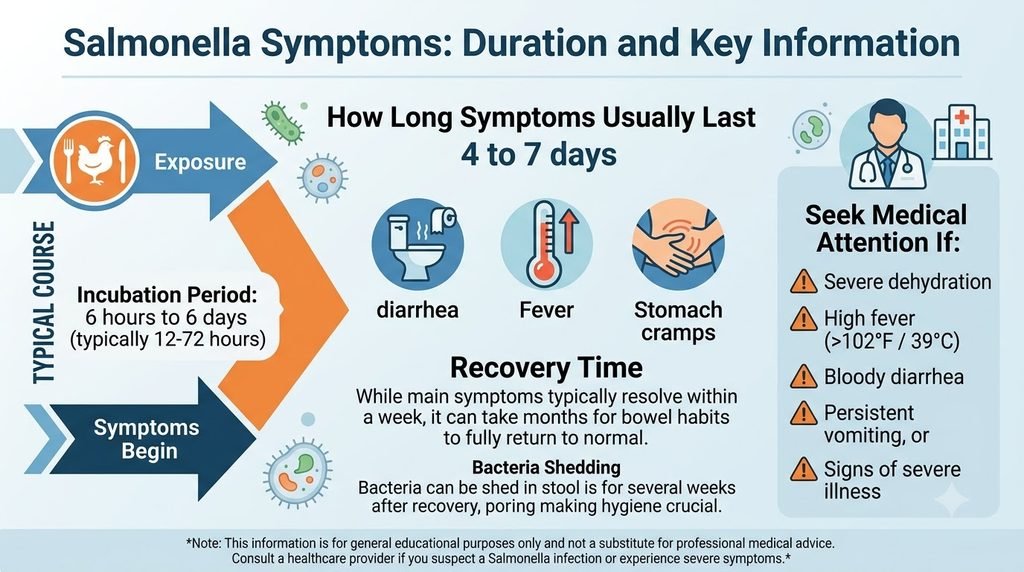
The time between eating the contaminated food and getting sick is the incubation period. For Salmonella, the CDC says symptoms usually begin 6 hours to 6 days after infection. In practice, many people get sick between roughly 12 and 72 hours, which is why people often blame the last meal they ate when it was actually something from a day or two earlier.
What shapes the timing?
- How many bacteria you swallowed. A larger dose tends to shorten the incubation and worsen symptoms.
- Your stomach acid and gut health. Antacids and acid-suppressing medicines can make it easier for bacteria to survive the stomach.
- Your age and immune status. Infants, older adults, and immunocompromised people often become ill more easily and more severely.
- How much of the food you ate. A few sprouts on a sandwich versus a large portion matters.
A simple way to think about your timeline
If you ate sprouts today, you would not expect to see symptoms in the next hour or two. Illness shortly after a meal, within an hour or so, is more often caused by toxins formed by other bacteria, such as Staphylococcus aureus or Bacillus cereus, or by a virus. If symptoms start a day or two after the sprouts, Salmonella becomes more plausible. If they start more than a week after, a different cause is likelier, though a recall exposure in the previous six days is still worth reporting to your clinician.
The outbreak numbers fit this pattern. Illnesses in this outbreak started between July 7 and September 3, and the company stopped production on September 4. That means people who ate recalled product could have become sick for several days afterward, and the last illness onset reported so far was September 3.
How Long Do Salmonella Symptoms Last?
In most healthy people, illness lasts about 4 to 7 days. Diarrhea may last a few days to a week, and cramps and fever often ease sooner. Some people feel tired or have loose stools for longer.
Two cautions apply:
- You can still spread the bacteria after you feel better. Salmonella can be shed in stool for days to weeks after symptoms stop, and sometimes longer. Careful handwashing matters well after you recover.
- Persistent or worsening illness needs a call. If you are not improving after three days, or you improve and then get worse, contact a clinician.
Salmonella vs Other Causes of Stomach Illness
Many stomach illnesses look alike in the first day. A few clues can help, though only testing and a clinician’s assessment can settle it.
| Illness | Typical onset after exposure | Key features |
|---|---|---|
| Salmonella | 6 hours to 6 days | Diarrhea, fever, cramps; lasts 4 to 7 days; may have blood in stool |
| Norovirus | 12 to 48 hours | Sudden vomiting is often prominent; usually lasts 1 to 3 days; spreads rapidly in households |
| Shiga toxin-producing E. coli | About 3 to 4 days (range 1 to 10) | Severe cramps and bloody diarrhea, often little or no fever; risk of kidney complications |
| Staph or Bacillus toxin food poisoning | 1 to 6 hours | Rapid vomiting and cramps; usually short-lived |
| Hepatitis A | Weeks (about 15 to 50 days) | Fatigue, nausea, dark urine, jaundice; different timeline entirely |
Some points to keep in mind:
- Sprouts can carry E. coli too. The separate alfalfa sprout outbreak involves both Salmonella and E. coli, so bloody diarrhea with severe cramps after sprouts deserves a prompt call to a clinician.
- Fever with diarrhea leans bacterial. Many viral stomach bugs cause vomiting and watery diarrhea with less fever, though there is plenty of overlap.
- Household patterns help. If several people who ate the same food became ill around the same time, a foodborne cause is more likely. If household contacts who did not eat it also get sick a day or two later, a virus such as norovirus is more likely.
When to Call a Clinician, and When to Go to the ER
Most cases of salmonellosis resolve at home. But some need medical attention, and a few are emergencies.
Call your clinician if you have
- A fever of 102°F or higher.
- Diarrhea that lasts more than 3 days without improving.
- Bloody or black stools.
- Vomiting that is frequent enough that you cannot keep liquids down.
- Signs of dehydration: very little urine, a dry mouth and throat, dizziness when standing, or unusual weakness.
- Any of the risk factors listed below, even with milder symptoms.
- Symptoms after eating a product named in a recall notice.
Go to the emergency room, or call 911, if you have
- Severe dehydration, with fainting, confusion, a very rapid heartbeat, or no urination for many hours.
- Severe or worsening abdominal pain, especially if the belly is rigid or very tender.
- A high fever with stiff neck, severe headache, or confusion.
- Bloody diarrhea with very little urine output, pallor, or unusual bruising, which can be a warning sign of kidney complications.
- Shortness of breath, chest pain, or a fast, pounding heartbeat.
- Symptoms in an infant who is not feeding, is unusually drowsy, or has no wet diapers.
When you call, tell the clinician what you ate, when you ate it, and whether the product was part of a recall. That information helps them decide whether to test and how urgently to see you.
Who Should Get Tested?
Most healthy adults with a mild illness do not need testing, because the result would not change treatment. Testing becomes more useful in specific situations.
When stool testing is worth considering
- Severe illness: high fever, bloody diarrhea, intense abdominal pain, or signs of dehydration.
- Symptoms lasting more than a few days without improvement.
- High-risk patients, including infants, older adults, pregnant people, and those with weakened immune systems, where an early diagnosis can guide treatment.
- A possible outbreak link, such as eating recalled sprouts and then becoming ill, where a positive result helps public health investigators connect cases.
- People in sensitive roles such as food handlers, healthcare workers, and childcare staff, for whom return-to-work rules often depend on test results or health department guidance.
What the test involves
A clinician will ask for a stool sample. Laboratories may use a traditional stool culture, which grows the bacteria so it can be identified, or a molecular panel that detects the genetic material of several gut pathogens at once. When a culture is positive, the lab can often do further typing, and the health department may use whole genome sequencing to compare it with the outbreak strain. This is the same kind of fingerprinting that matched the Montana sprout sample to the sick patients.
Blood tests are generally reserved for people who appear very ill or who may have bacteria in the bloodstream.
Why your test result matters beyond you
Salmonella infections are reportable to public health authorities. Each confirmed case that is typed and matched to the outbreak strain helps officials understand how far a contaminated product spread. That is one reason the CDC says its count is likely lower than the real number of infections: many people never get tested.
If you think your illness is linked to a recalled product, you can also report it to your local health department. Keep the packaging if you still have it, and do not eat the remaining product.
Treatment: What Helps at Home
The main treatment for uncomplicated salmonellosis is replacing lost fluids.
- Drink fluids steadily. Small, frequent sips work better than large amounts if you are nauseated.
- Use oral rehydration solutions when diarrhea is heavy, especially for children and older adults. They contain the right balance of salts and sugar.
- Rest. Your body is fighting an infection and losing fluids.
- Eat bland foods as your appetite returns. There is no need for a special diet, but heavy, greasy, or very sugary foods may be hard to tolerate for a few days.
- Wash your hands thoroughly after using the toilet and before preparing food, to protect others.
Antibiotics and anti-diarrheal medicines
Antibiotics are not routinely needed for healthy people with mild illness, and they do not necessarily shorten diarrhea. A clinician may prescribe them for severe infections, for people at high risk of complications, or when bacteria have spread to the bloodstream. Do not take leftover antibiotics.
Anti-diarrheal medicines can be a problem if you have a high fever or bloody stools, and are generally not recommended for children without medical advice. Check with a clinician or pharmacist before using them.
Fever reducers can help comfort, but follow label directions, and avoid giving aspirin to children and teenagers.
Who Is at Higher Risk of Severe Illness?
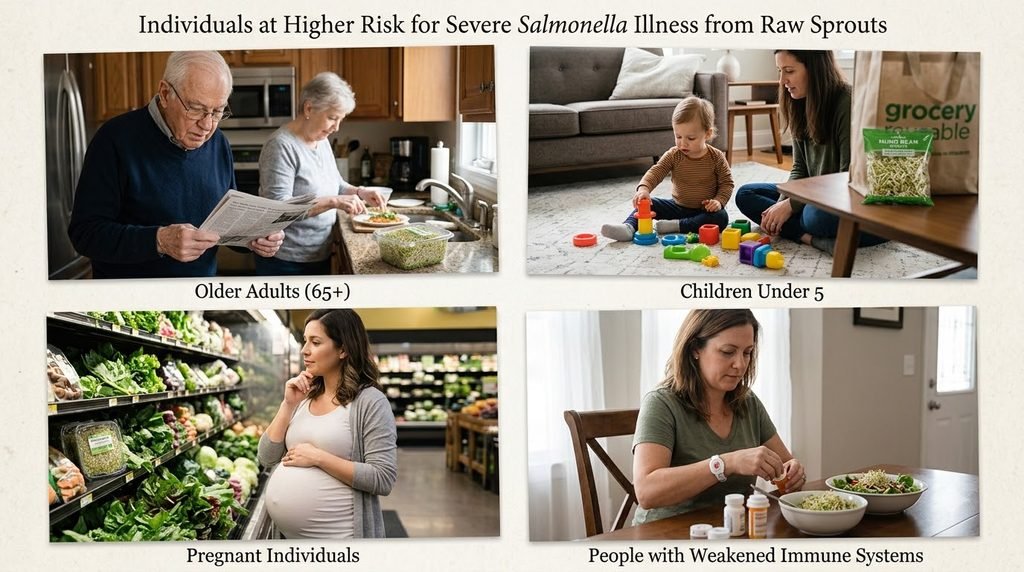
Anyone can get salmonellosis, but some people are more likely to become seriously ill:
- Children under 5, especially infants.
- Adults 65 and older.
- Pregnant people.
- People with weakened immune systems, including those receiving chemotherapy, taking immune-suppressing medicines, living with advanced HIV, or after an organ transplant.
- People with certain chronic conditions, such as sickle cell disease, inflammatory bowel disease, and some other long-term illnesses, where a clinician’s guidance is especially helpful.
- People taking medicines that reduce stomach acid, which can raise the risk of infection after exposure.
For these groups, the usual advice is to avoid raw sprouts entirely and to call a clinician early after any suspected exposure, even with mild symptoms.
Possible Complications
Most people recover fully, but complications are possible:
- Dehydration. The most common serious problem, particularly in young children and older adults.
- Bloodstream infection. The bacteria can spread from the gut into the blood, and from there to other sites such as bones, joints, or the lining of the heart or brain. This is more likely in infants, older adults, and immunocompromised people.
- Reactive arthritis. Some people develop joint pain, eye irritation, and urinary symptoms weeks after the infection. It usually resolves but can last for months.
- Prolonged bowel symptoms. Some people have irritable-bowel-type symptoms for a time afterward.
The CDC estimates that Salmonella causes about 1.35 million illnesses, 26,500 hospitalizations, and 420 deaths in the United States each year. Most of those infections are from food. That makes it one of the most common causes of bacterial food poisoning, even outside outbreak periods.
What to Do If You Already Ate the Recalled Sprouts
As of the September 24, 2026 update, the CDC advises people not to eat, sell, or serve recalled broccoli sprouts produced by Evergreen Fresh Sprouts, LLC. The recalled product was packed in 4-ounce bags. Here is a practical plan:
- Check your fridge and freezer. Look for the brand name on the package. Do not rely on appearance or smell; contaminated sprouts can look and smell normal. Check the FDA investigation page for the full list of recalled products and best-by dates.
- Throw the product away, or return it to the store where you bought it. If you are throwing it out, seal it in a bag first so pets and children cannot get to it.
- Do not wash it and eat it. Rinsing does not make recalled sprouts safe.
- Clean what it touched. Wash drawers, shelves, cutting boards, knives, and counters with hot, soapy water, then sanitize them. Wash dishcloths and reusable bags in hot water.
- Wash your hands with soap and water after handling the product or cleaning.
- Watch for symptoms for the next 6 days. You do not need treatment if you feel fine.
- If you are in a high-risk group and ate the product, call your clinician even if you feel well. Tell them about the recall.
- If you get sick, use the call-or-ER guidance above and mention the recalled sprouts so testing and reporting can happen.
Do not name or blame a store based on social media posts. Only the CDC, FDA, and state health departments confirm where a recalled product was sold, and distribution can extend beyond the states listed so far.
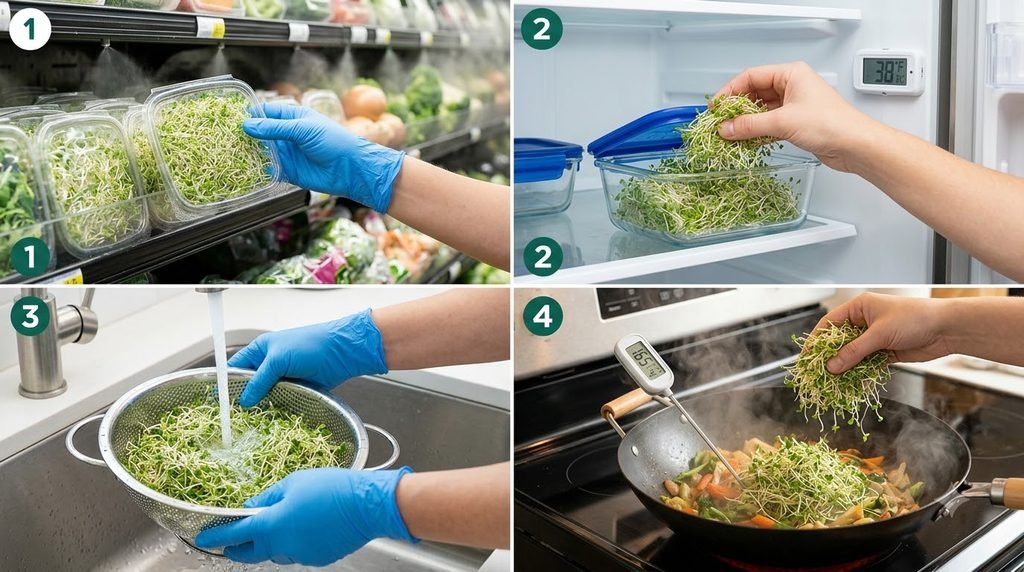
How to Handle Sprouts Safely in the Future
The safest approach for high-risk groups is to skip raw sprouts. For everyone else, these steps reduce the risk:
- Cook sprouts thoroughly until steaming hot. Adding them to hot stir-fries, soups, or noodle dishes works.
- Buy refrigerated sprouts only, and keep them at 40°F or below at home. Check the package for the “use by” date.
- Avoid sprouts that look slimy or smell musty, though remember that safe-looking sprouts can still be contaminated.
- Ask when eating out. Request that sprouts be left off sandwiches and salads if you are in a higher-risk group.
- Follow recall alerts. Sign up for FDA and CDC food safety notices, or check them whenever a new outbreak is in the news.
- Keep raw foods separate from ready-to-eat foods, and clean cutting boards and utensils between uses.
- Wash your hands before and after handling any raw produce, meat, or eggs.
Home-grown sprouts are not automatically safer. If you sprout seeds yourself, use seeds sold specifically for sprouting, keep everything clean, and still cook the sprouts if anyone at the table is at higher risk.
Frequently Asked Questions
What are the symptoms of Salmonella after eating sprouts?
The most common symptoms are diarrhea, fever, and stomach cramps, often with nausea, vomiting, chills, and headache. The diarrhea may be watery or bloody. Symptoms usually start within hours to several days of eating contaminated sprouts and last about 4 to 7 days in most healthy people.
How long after eating sprouts do Salmonella symptoms start?
The CDC says 6 hours to 6 days, with many people becoming ill within one to three days. Because the range is wide, think back over the previous week when you consider what might have caused the illness.
How long does Salmonella last?
Usually 4 to 7 days. Diarrhea can persist a little longer, and some people feel tired or have irregular bowel habits for a while. Call a clinician if you are not improving after three days.
How do I know if it is Salmonella or a stomach virus?
You cannot tell reliably from symptoms alone. A higher fever, cramping, and diarrhea that comes with a known food exposure suggest bacteria, while prominent vomiting and a household pattern suggest norovirus. A stool test can identify the cause when a diagnosis matters.
Should I get tested for Salmonella?
Testing makes the most sense if your illness is severe, you have bloody diarrhea, symptoms last more than a few days, you are in a high-risk group, or you may have eaten recalled sprouts. Healthy adults with mild illness usually do not need a test.
Do I need antibiotics for Salmonella?
Usually not. Most people recover with fluids and rest. A clinician may prescribe antibiotics for severe illness, bloodstream infection, or high-risk patients.
Which sprouts are recalled in the current outbreak?
As of September 24, 2026, the recall covers broccoli sprouts produced by Evergreen Fresh Sprouts, LLC, including 215 cases of 4-ounce bags. Check the FDA investigation page for the current product details, and note that a separate alfalfa sprout investigation involves a different company.
How many people are sick in the broccoli sprouts outbreak?
The CDC reported 32 people infected with the outbreak strain in six states, with 3 hospitalizations and no deaths, as of September 24, 2026. The true number is likely higher.
Can I get Salmonella from cooked sprouts?
Thoroughly cooking sprouts until steaming hot kills Salmonella. The risk comes mainly from raw or lightly cooked sprouts, or from cross-contamination, where raw sprouts touch other foods or surfaces.
Can Salmonella spread from person to person?
Yes. The bacteria can pass through stool-contaminated hands, surfaces, and food, particularly in households and childcare settings. Careful handwashing, especially after using the toilet and before preparing food, lowers the risk.
Is it safe to eat sprouts if I am pregnant?
Public health agencies advise pregnant people to avoid raw sprouts. Cooked sprouts are a lower-risk alternative. Discuss any concerns with your obstetric clinician.
Bottom Line
Salmonella symptoms after eating sprouts look like a typical bacterial stomach illness: diarrhea, fever, and cramps that begin within hours to a few days and clear in about a week. The sprouts matter because they are eaten raw and cannot be reliably washed clean, which is why they keep appearing in outbreak investigations. As of September 24, 2026, the CDC and FDA tie 32 illnesses in six states to recalled broccoli sprouts from Evergreen Fresh Sprouts, LLC.
If you have the product, throw it out and clean what it touched. If you get sick, hydrate, watch for red flags, and call a clinician if you have a high fever, bloody stools, diarrhea beyond three days, or signs of dehydration, or if you are in a higher-risk group. Mention the sprouts when you call.
This article is for general information and is not a substitute for medical advice. Outbreak counts change; always check the source dates. If you think you or a family member has food poisoning, contact a healthcare provider or your local health department.