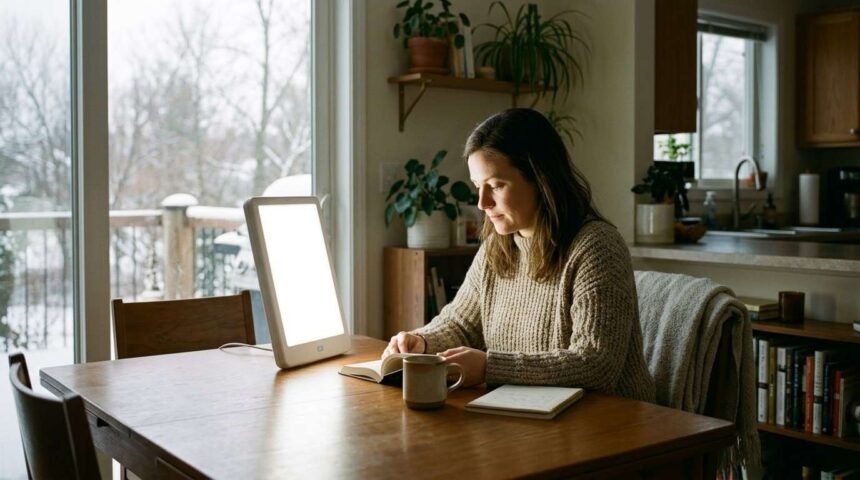
When the days get shorter, some people feel their energy, mood, and motivation fade along with the daylight. If that sounds like you, someone may have told you to try a bright light box. Light therapy for SAD is one of the best-known treatment options for winter-pattern seasonal affective disorder. The idea is simple, but the details matter a lot. The wrong time, distance, or device can make the whole thing feel useless.
This guide shows you light therapy for SAD how to use it, step by step. You will learn the standard routine: a 10,000 lux light box, used for 20 to 30 minutes in the morning. We will cover how to pick a safe device, where to place it, and how to fit it into a normal day. We will also talk about side effects, common mistakes, and who should speak to a doctor first. Everything is written in plain language, with no confusing jargon.
Before we start, one important point. A light box is a tool, not a cure-all. It is not a replacement for a proper assessment, and it is not a substitute for crisis support such as 988 in the United States. If you ever have thoughts of ending your life, please reach out for help right away. You deserve real human support, not just a lamp.
The information here follows guidance from the National Institute of Mental Health (NIMH) and MedlinePlus. It is for education only. Your own doctor or mental health professional knows your history and can tailor a plan to you. Think of this article as a friendly map, and your clinician as the guide who walks it with you. Let’s get started.
What Is Seasonal Affective Disorder (SAD)?
Seasonal affective disorder, or SAD, is a type of depression that follows the seasons. For most people, it begins in late autumn or early winter and eases in spring or summer. Doctors call this the winter pattern. A smaller group of people have the opposite pattern, with symptoms in spring and summer. This guide focuses on the winter pattern, because that is where light therapy is mainly used.
Common winter-pattern symptoms include low mood most of the day, nearly every day. Many people feel heavy, tired, and slow, even after a full night in bed. Sleeping far more than usual is common. So are strong cravings for carbs and sweet food, sometimes with weight gain. People also lose interest in things they normally enjoy and pull away from friends.
SAD is much more than feeling a little low when it is cold and dark. It is a real medical condition that can affect work, school, and relationships. It tends to return in a similar pattern each year, which is why it is called seasonal. The good news is that it is treatable. And because it is so predictable, you can plan ahead and start support early.
Why does it happen? Researchers believe shorter days change your body clock and brain chemistry. Less daylight may affect chemicals linked to sleep and mood, such as melatonin and serotonin. The exact cause is not fully settled, so nobody can give you one neat answer. What we do know is that bright light in the morning helps many people feel better. That is the whole reason light boxes exist.
For a trusted overview, you can read the NIMH seasonal affective disorder publication. It explains symptoms, causes, and treatment options in clear language. It is a good place to double-check anything you read online, including this article. Reliable sources matter a lot when the topic is your health. Always lean on official medical guidance first.
SAD vs Holiday Blues: A Quick Two-Minute Check
Many people mix up SAD with the holiday blues. The two can feel alike for a day or two, but they are not the same. Holiday blues are usually tied to stress, family pressure, money worries, or loneliness around festive times. They tend to ease once the event passes. SAD follows the seasons and lasts far longer.
Here is a simple check you can run in about two minutes. Ask yourself the questions below and answer honestly. There are no wrong answers. This is not a diagnosis, and it cannot replace a visit to a professional. It only helps you decide whether to book one.
- Has your low mood and low energy lasted more than two weeks?
- Is it hard to get through work, school, or home tasks?
- Are you sleeping much more than usual and still feeling tired?
- Are you craving carbs and sweets far more than normal?
- Did the same thing happen around this time last year?
If you said yes to several of these, it is worth making an appointment. The two key clues are how long it lasts and how much it affects daily life. A few sad days around a holiday is common and usually passes. Weeks of low mood that get in the way of normal life deserve proper attention. A doctor can also check for other causes, such as other forms of depression or physical health problems.
You can read more about the difference in the NIMH fact sheet on SAD and the winter blues, which is linked from the NIMH seasonal affective disorder topic page. It is short, clear, and written for everyday readers. Reading it before your appointment can help you describe your symptoms. That makes the visit faster and more useful.
How Does Light Therapy Work?
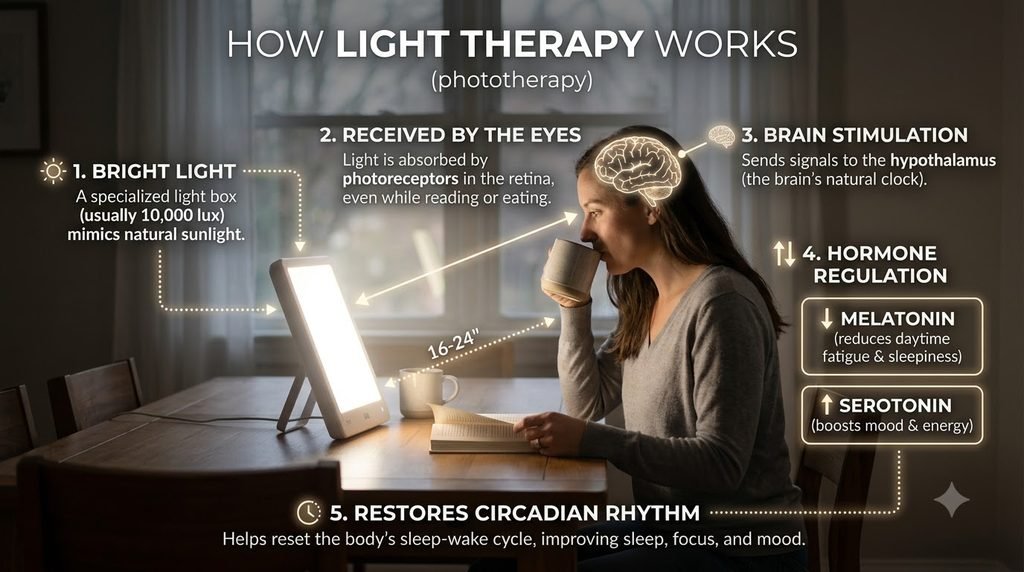
Light therapy means sitting near a special lamp, called a light box, that gives off very bright light. The brightness is far stronger than normal indoor lighting. A typical living room may be only a few hundred lux, while a light box reaches 10,000 lux. Lux is simply the unit used to measure how bright light is. A bright outdoor day is brighter still, and the box tries to copy that effect indoors.
Researchers think this bright light works through your eyes, not your skin. Light enters the eye and sends signals to the part of the brain that runs your body clock. In winter, mornings are dim, so that clock can drift out of step. A strong dose of morning light nudges it back into line. For many people, that improves sleep timing, energy, and mood.
Light therapy has been studied for years for winter-pattern SAD. It is widely used and often chosen early because it does not involve medicine. Still, it does not work for everyone, and results differ from person to person. That is why it helps to track how you feel. We will cover simple ways to do that later in this guide.
It is also worth saying what light therapy is not. It is not a tanning bed, and it is not a sunlamp. A proper SAD light box filters out harmful UV rays. You are not trying to get a tan; you are trying to give your eyes a safe, bright signal. Keep this difference in mind when you shop for a device.
Who Should Talk to a Doctor Before Starting?
Light therapy is considered safe for most people, but most is not everyone. A quick chat with a doctor before you begin is a smart move. It takes only a few minutes and can prevent problems later. This matters even more if you have any of the situations below. Let’s go through them one by one.
- Bipolar disorder: Bright light can trigger mania or hypomania in some people. Speak to your clinician before you try a light box.
- Eye conditions: If you have an eye disease, past eye damage, or diabetes that affects your eyes, get an eye check first.
- Light-sensitising medicines: Some medicines and herbal products can make your skin or eyes more sensitive to light. Ask your pharmacist if any of yours do.
- Light-sensitive skin: If your skin reacts strongly to light, check with your doctor.
- Other major health conditions or pregnancy: Ask your doctor whether light therapy fits your situation.
A proper diagnosis matters too. Low mood in winter could be SAD, but it could also be another kind of depression or a different health problem. A doctor can work out which one it is. That means you spend your time and money on the right treatment. It also means any other issue gets found early.
One more point, and it is a serious one. If your mood is so low that you have thoughts of harming yourself, a light box alone is not enough. That situation needs prompt human support from a professional or a crisis line. We will cover this in a dedicated section below. Please do not wait for the lamp to work first.
How to Choose the Right Light Box
Not every bright lamp is a SAD light box. Choosing a proper one is the first real step in light therapy for SAD how to use. Look for a device made for SAD, not a decorative lamp or an ordinary desk light. Here are the features that matter most. Keep this list on your phone when you shop.
10,000 Lux at a Stated Distance
The standard target is 10,000 lux. But a box can say 10,000 lux on the front and only deliver that at a very short distance. Check the product details for the distance at which it reaches 10,000 lux, which is often somewhere around 12 to 24 inches. If it only works a few inches from your face, it will be awkward to use. Pick a model that delivers 10,000 lux at a distance you can live with every day.
UV Filtering
Good light boxes filter out UV light, which protects your eyes and skin. Look for wording such as UV-free or UV-filtered in the specifications. Never use a tanning bed or a sunlamp as a substitute. They are not designed for this purpose, and they can cause real harm. If a product does not mention UV at all, treat that as a red flag.
Size and Light Spread
A larger panel lets you move around a little while still getting light. A small one means you must stay fairly still. Pick a size that matches how you plan to use it, such as at a desk or at the breakfast table. Bigger is not always better, but a very small panel can be frustrating. A flat, even surface is also more comfortable than a bare, glaring bulb.
Quality and Safety Checks
Choose a brand with clear instructions and a fair return policy. Read reviews that mention comfort and eye strain, not just looks. Make sure the listing states the lux and distance in plain numbers. Some devices are sold as medical devices in certain countries and others as wellness products. If you are unsure, ask your doctor or pharmacist for advice on a trusted model.
Price and Extra Features
Light boxes range from budget to premium. Extras like timers, adjustable brightness, and stands are handy but not essential. A built-in timer helps you stick to your 20 to 30 minutes. Paying more does not always mean better light. Focus on lux at distance, UV filtering, and comfort first.
Step-by-Step: How to Use Light Therapy for SAD
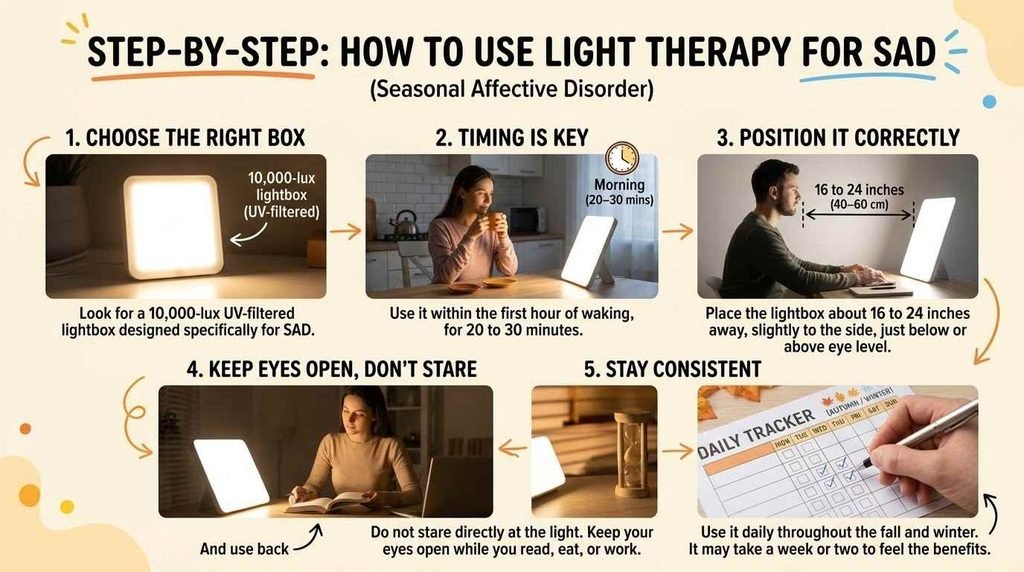
Now for the heart of this guide. This is the simple routine most people start with, and you can adjust it with your doctor’s advice. Follow these steps for the first couple of weeks, then review how you feel. Consistency matters more than perfection. Treat it like brushing your teeth: small, boring, and daily.
Step 1: Read the Manual
Every light box is a little different. The manual tells you the right distance, the right session length, and any safety limits for that model. Skipping it is one of the easiest mistakes to make. Take five minutes to read it before your first session. If anything in it conflicts with advice from your doctor, follow your doctor.
Step 2: Use It in the Morning
Plan your session soon after you wake up, ideally within the first hour or so. Morning light is what helps reset your body clock. Set the box on a table or desk where you already spend time in the morning. Breakfast, coffee, and checking messages all work well. Using it late in the day can make it harder to fall asleep.
Step 3: Set the Right Distance and Angle
Place the light box at the distance listed for 10,000 lux. Position it slightly above eye level and angled gently down toward your face, if the design allows. The light should reach your eyes from the side or front, not from behind you. A small tilt can make a big difference to comfort. Adjust until it feels bright but not painful.
Step 4: Sit for 20 to 30 Minutes
The usual starting point is 20 to 30 minutes at 10,000 lux. Set a timer so you do not have to watch the clock. Some people prefer to start with a shorter session and build up, especially if they feel jittery. Always follow your device instructions and your clinician’s advice. Do not extend sessions hoping to speed things up.
Step 5: Keep Your Eyes Open, but Do Not Stare
You do not need to look straight into the light. In fact, you should not. Keep your eyes open and let the light reach them while you read, eat, or work. Glance at the box now and then if you like, but never stare at it. Closing your eyes cuts the benefit, because the light has to enter the eyes to work.
Step 6: Keep the Same Time Every Day
Your body clock loves routine. Aim to start at roughly the same time each morning, including weekends. Link it to a habit you already do, such as making tea or opening your laptop. That way you rarely forget it. Missing a few days is not a disaster, but regular use gives the best chance of a steady effect.
Step 7: Track How You Feel
Keep a simple daily note for the first few weeks. Rate your mood, energy, and sleep from one to ten. Add any side effects, like headache or eye strain. After two weeks, look back and see what changed. This record also helps your doctor decide whether to adjust your plan.
Why Morning Is the Best Time
Morning light is the signal your body clock expects. In nature, bright light arrives at dawn and tells your brain that the day has started. In winter, that signal is weak or late, so your clock can slip. A light box gives you a strong, reliable morning cue even on a grey day. That is why the standard advice is to use it early.
Timing matters for sleep as well. Bright light in the evening can push your body clock later, which makes it harder to fall asleep. People who use their light box late in the day often report restless nights. If your sleep gets worse, check the time of your session first. Moving it earlier is usually the first fix to try.
What if you have to wake up before sunrise, or work odd hours? The idea is still to use the light soon after you wake, whatever time that is. A night-shift worker, for example, should talk to a clinician about the best timing. Do not guess when your schedule is unusual. A little professional advice saves a lot of trial and error.
How Long Should Each Session Last?
The common guideline is 20 to 30 minutes a day with a 10,000 lux box. Some devices have different settings, so the manual comes first. A few people start with 10 to 15 minutes to see how they feel. Others build up to 30 minutes over several days. The goal is a steady daily habit, not a marathon session.
More is not always better. Sitting in front of the light for an hour will not make winter vanish faster. It can lead to headaches, eye strain, or restlessness. Stay within the time your device and your clinician recommend. If something feels off, shorten the session and tell your doctor.
Think of the session as a window you can use well. You can read, eat breakfast, answer emails, or plan your day. Many people find it becomes a calm start to the morning. Some even look forward to it. A pleasant routine is easier to keep.
Sample Morning Routines You Can Copy
Not sure how to fit 20 to 30 minutes into a busy morning? Here are three simple ideas. Pick the one that feels most natural. You can mix and match as your week changes. Remember to keep your eyes open and the light at the right distance.
- The breakfast routine: Place the box on the kitchen table. Eat, drink your tea or coffee, and scroll the news while it shines.
- The desk routine: Put the box beside your laptop. Start with emails or planning while the timer runs.
- The reading routine: Sit in a favourite chair with the box on a side table. Read a book or listen to a podcast for 20 to 30 minutes.
Whichever you choose, keep it consistent for at least two weeks. Habits stick best when they happen at the same time and place. If a routine stops working, change it without guilt. The only rule is that the light reaches your eyes in the morning. Everything else can flex.
When Will You Notice a Difference?
Response varies. Some people feel better within a few days, while others need a couple of weeks or more. Early signs are often better energy and an easier time getting up. Mood improvement may follow. Because the change can be gradual, your daily notes will help you spot it.
If you see no change after several weeks of steady use, do not just push harder. Check the basics first: Is the box really 10,000 lux at your distance? Are you using it in the morning, every day, for the right length? If all of that is correct and you still feel low, speak to your doctor. Other treatments may suit you better, or may work alongside the light.
Also remember that feeling better does not mean you should stop right away. Many people keep using the light through the dark months to hold on to the benefit. Your doctor can tell you when to taper off. Spring daylight usually makes that decision easier. Plan it together rather than guessing.
When to Start and Stop Each Season
Since SAD comes back each year, you can plan ahead. Many people find it useful to start light therapy in early autumn, before symptoms hit hard. Right now, in October, is a good moment to talk to your doctor about your plan. Starting early may keep the dip from growing. Your clinician can confirm what timing suits you.
Continuing through winter is common. Daylight returns gradually in spring, and many people can then reduce or stop sessions. Do this with your doctor’s guidance, especially if your symptoms were severe last year. Keep your light box somewhere easy to find for next autumn. A simple calendar reminder for the end of September can make next year smoother.
Side Effects and How to Handle Them
Most people tolerate light therapy well, and side effects are usually mild. They often settle within the first few days. Still, it is smart to know what to look out for. Here are the common ones and simple fixes. If anything feels worrying, stop and speak to a professional.
- Eye strain or glare: Move the box a little farther back or tilt it. Do not stare into it.
- Headache: Shorten the session or sit a bit farther away. Drink water and tell your doctor if it continues.
- Nausea or dizziness: Reduce the time and build up slowly.
- Feeling jittery or irritable: Try a shorter session, and check that you are not using it too late in the day.
- Trouble sleeping: Move your session earlier in the morning.
There is one side effect that needs extra care. In people with bipolar disorder, and sometimes in others, bright light can bring on a high-energy state called hypomania or mania. Warning signs include needing much less sleep, racing thoughts, unusual irritability, or doing risky things you normally would not. If you notice any of these, stop using the light and contact your clinician promptly. This is another reason to talk to a doctor before starting.
Also stop and get medical advice if you notice eye pain, vision changes, or anything that feels clearly wrong. Mild discomfort is common at first, but pain is not. Keep the manual and your notes handy when you call. They help your clinician understand what happened. It is always okay to ask for help early.
Common Mistakes to Avoid
Most of the frustration with light boxes comes from a handful of avoidable errors. Check this list if your results feel disappointing. Fixing one or two of these often makes the difference. None of them are your fault, since the instructions are rarely explained well.
- Using the light too late in the day. Evening use can disturb sleep and may cancel the benefit.
- Sitting too far away. The 10,000 lux rating only counts at the stated distance.
- Buying a weak or decorative lamp. A normal bright lamp does not reach the same level.
- Staring into the light. You only need it to reach your eyes while you do other things.
- Skipping days. Irregular use makes it harder for your body clock to settle.
- Using a tanning bed or sunlamp. These are unsafe and not designed for this purpose.
- Ignoring other symptoms. If your mood stays low, get proper assessment rather than adding more light.
- Stopping too soon. Some people quit after a week, just before the effect might build.
If you recognise yourself in this list, do not feel bad. Simply fix the problem and carry on. Small tweaks to timing and distance are often enough. Keep your notes so you can see the difference. Progress is easier to spot when it is written down.
Light Therapy Is Not a 988 Substitute
This section matters more than any other in the article. Light therapy can help many people with winter-pattern SAD. But depression can be serious, and a lamp cannot judge how safe you are. A light box does not assess risk, and it cannot replace a conversation with a trained person. If you are struggling, please do not rely on the box alone.
If you are in the United States and you are having thoughts of ending your life or harming yourself, call or text 988, the Suicide and Crisis Lifeline. You can find details on the 988 page from SAMHSA. If you are in immediate danger, call your local emergency number. If you are outside the US, contact your local emergency services or a crisis line in your country. Reaching out is a sign of strength, not weakness.
You do not have to be in a crisis to ask for help. Maybe you are just exhausted and no longer enjoy anything. That is reason enough to book a doctor’s visit. Tell them how long it has lasted and how it affects your days. Be honest, even if it feels awkward.
If someone you love seems very low, check in with them directly and kindly. Ask how they are really doing, and listen without judgement. Encourage them to see a professional, and offer to help them make the call. You do not need perfect words, only a calm and caring presence. Staying connected can matter more than you think.
Other Treatments That May Help
Light therapy is one tool among several. According to the NIMH, treatment for SAD can include light therapy, talking therapy, and medicine, and in some cases vitamin D. Which one suits you depends on your symptoms, history, and preferences. Many people use more than one. Your doctor can help you build a plan that fits.
Talking therapy. A type of cognitive behavioural therapy made for SAD helps you change unhelpful thoughts and habits linked to the winter months. It also teaches you to stay active when you feel like withdrawing. The skills last beyond a single season. This option is worth asking about if you prefer to avoid medicine or want extra support.
Medicine. Some people benefit from antidepressant medicine, prescribed and monitored by a doctor. A clinician may suggest starting before symptoms usually begin. Never start, stop, or change a medicine on your own. Always discuss side effects and expectations with your prescriber.
Vitamin D. Vitamin D is sometimes mentioned for SAD, but the evidence is mixed. Do not take large doses on your own, because too much can be harmful. If you are curious, ask your doctor about a blood test and a safe amount. The MedlinePlus overview of seasonal affective disorder is a helpful plain-language summary of these options.
Daily Habits That Support Light Therapy
Habits will not replace treatment, but they can make it work better. Think of them as the soil around the plant. Small, steady changes are easier to keep than a dramatic overhaul. Choose one or two to begin with. Add more when those feel natural.
- Get outside in daylight. A morning walk adds natural light on top of your light box session, even on cloudy days.
- Keep a regular sleep schedule. Go to bed and wake up at similar times, including weekends.
- Move your body. Gentle exercise such as walking or stretching can lift your mood.
- Stay connected. Plan regular contact with friends or family, even if it is only a short call.
- Eat regular, balanced meals. Try to include protein and fibre, and notice if sugar cravings take over.
- Brighten your space. Open curtains early and sit near windows during the day.
- Limit alcohol. It can worsen mood and disturb sleep.
Be kind to yourself about energy levels. On hard days, doing the light session and one small task is a win. You do not need a perfect routine. You need a workable one. Progress counts even when it is slow.
Frequently Asked Questions
Can I use a light box at night? No. Evening use can disturb your sleep and may push your body clock later. Stick to the morning unless your clinician gives different advice.
Can I just use a bright room light or my phone? Not as a replacement. Regular lighting and screens are far dimmer than a 10,000 lux light box, and phone light is a poor substitute.
Do I need to look straight at the light? No. Keep your eyes open and let the light reach them while you read or eat. Do not stare directly into it.
Can I wear glasses or contact lenses during a session? Usually yes. Tinted or dark sunglasses will reduce the light, so avoid them. Check your device manual if unsure.
Is light therapy safe for my eyes? A properly UV-filtered light box is considered safe for most people. If you have an eye condition or take medicines that increase light sensitivity, ask your doctor first.
Can children or teenagers use a light box? Talk to a paediatrician or mental health professional first. Young people should not start light therapy on their own.
Does light therapy work for summer-pattern SAD? Light boxes are mainly used for the winter pattern. If your symptoms appear in spring or summer, see a doctor for guidance.
How long should I keep using it each winter? Many people continue through the dark months and taper off as daylight returns. Your doctor can advise on the timing for you.
What if it does not work for me? Check lux, distance, timing, and consistency first. If you still feel low after several weeks, talk to your doctor about other options, which may be used alongside light.
Key Takeaways
- Use a SAD light box that gives 10,000 lux at a clear, stated distance and filters UV.
- Sit with it for 20 to 30 minutes, soon after waking, at the same time each day.
- Keep your eyes open, but do not stare into the light.
- Track your mood, sleep, and side effects for the first two weeks.
- Check with a doctor first if you have bipolar disorder, eye problems, or take light-sensitising medicines.
- Light therapy is not a substitute for professional assessment or for crisis support such as 988.
Final Thoughts
Shorter days do not have to mean a darker mood. For many people with winter-pattern SAD, a simple morning routine with a good light box makes the season easier. The recipe is not complicated: 10,000 lux, 20 to 30 minutes, early in the day, every day. Add good sleep, movement, daylight, and support from people you trust. Together, these small steps can make winter far more manageable.
If your symptoms are heavy, or if they do not improve, please see a healthcare professional. You do not have to push through alone. And if you ever feel unsafe, call or text 988 in the US, or contact your local emergency number or crisis service right away. Help is available, and you are worth it.